

* This podcast is AI-generated. I offer it to you because it presents the content in a casual conversational way. I hope you enjoy listening to it… and learn. 😊
– Dr. Joe Muscolino .
Purchase the E-booklet HERE.
To access complete education content on the Achilles Tendon Disorder
CLICK HERE!
Study Guide
I. Overview
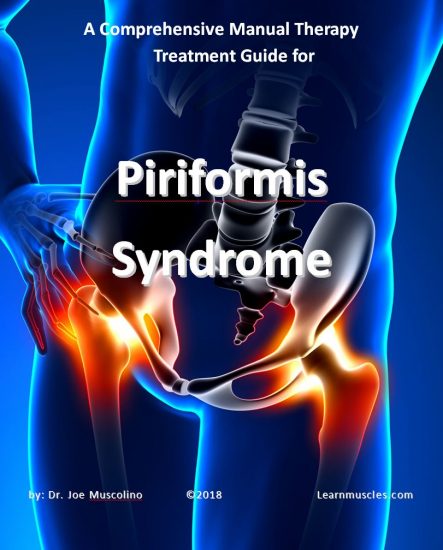
Piriformis Syndrome (PS) occurs when the piriformis muscle, located deep in the buttock, compresses the sciatic nerve, leading to sciatica symptoms. While the sciatic nerve typically runs beneath the piriformis, in about 15% of individuals, it pierces or passes above the muscle, increasing vulnerability to compression.
II. Causes
PS arises from a tight piriformis muscle, often due to:
- Sacroiliac Joint (SIJ) Dysfunction: A tight piriformis can stabilize a painful or unstable SIJ, including sprains, hypomobility, or hypermobility.
- Postural Habits: Prolonged sitting with legs crossed or laterally rotated thighs (e.g., driving) can promote piriformis shortening and tightness.
III. Signs and Symptoms
- Sciatica: Pain, tingling, numbness, or weakness radiating down the posterior thigh, leg, and foot.
- Buttock Pain: Tightness and pain localized to the buttock area.
- Lateral Thigh Rotation: Potential increase in external rotation of the thigh at the hip joint.
IV. Assessment/Diagnosis
- Confirm Sciatic Nerve Compression:History: Patient reports sensory/motor disturbances in the lower extremity.
- Orthopedic Tests: Straight Leg Raise (SLR), Slump Test, Cough Test, Valsalva Maneuver, and heel/toe standing assessments.
- Assess Piriformis Involvement:Palpation: Assess for tightness and pain in the piriformis muscle.
- Length Assessment: Employ stretches like the Figure 4 stretch or horizontal adduction to evaluate piriformis flexibility.
- Symptom Reproduction: Positive findings if palpation or stretching reproduces the patient’s sciatic symptoms.
- Differential Diagnosis:Rule out other causes of lower extremity referral, such as lumbar disc herniation, bone spurs, trigger points, and local lower extremity conditions.
V. Manual Therapy Treatment
- Moist Heat: Apply for 5 minutes to relax the piriformis.
- Soft Tissue Manipulation: Employ cross-fiber strokes, deep pressure techniques, and pin-and-stretch to release muscle tension.
- Stretching: Utilize Figure 4 stretch and/or horizontal adduction stretch.
- SIJ Mobilization: Address any SIJ restrictions to reduce the need for compensatory piriformis tightening.
VI. Self-Care
- Moist Heat: Apply at home for pain relief and muscle relaxation.
- Stretching: Perform the Figure 4 or horizontal adduction stretch regularly.
- Postural Awareness: Avoid prolonged sitting with crossed legs or laterally rotated thighs.
- Trigger Point Self-Release: Utilize tools like a tennis ball for self-massage.
VII. Medical Approach
Medical treatment may involve:
- Oral Steroidal Anti-inflammatories: Such as cortisone for inflammation reduction.
- Cortisone Injection: Administered into the gluteal region to reduce inflammation.
VIII. Precautions/Contraindications
- Avoid Direct Sciatic Nerve Pressure: Adjust pressure if sharp radiating pain occurs during palpation.
- Modify Stretching: Avoid Figure 4 stretch in individuals with knee joint issues.
Quiz
Instructions: Answer the following questions in 2-3 sentences each.
- Describe the typical anatomical course of the sciatic nerve and its relationship to the piriformis muscle.
- What are the two primary causes of a tight piriformis muscle that can contribute to Piriformis Syndrome?
- List three key signs and symptoms that suggest the presence of Piriformis Syndrome.
- How can a clinician confirm the presence of sciatic nerve compression during the assessment process?
- Briefly explain the concept of “symptom reproduction” and its significance in diagnosing Piriformis Syndrome.
- Name three other conditions that must be considered in the differential diagnosis of Piriformis Syndrome.
- Outline the four main components of manual therapy treatment for Piriformis Syndrome.
- What are two precautions or contraindications to consider when applying manual therapy for Piriformis Syndrome?
- Recommend two self-care strategies that patients can implement to manage Piriformis Syndrome at home.
- Describe the typical medical approach to addressing Piriformis Syndrome.
Answer Key
- The sciatic nerve typically exits the pelvis and runs beneath the piriformis muscle. However, in about 15% of people, the nerve pierces through or passes above the piriformis, making it susceptible to compression.
- Two common causes of a tight piriformis are: 1) dysfunction of the sacroiliac joint (SIJ), leading to compensatory piriformis tightness for stability, and 2) sustained postures involving lateral rotation of the thighs, such as driving or sitting with legs crossed.
- Key signs and symptoms include: sciatica (radiating pain, tingling, or numbness down the leg), localized buttock pain and tightness, and potential increased lateral rotation of the affected thigh.
- Sciatic nerve compression can be confirmed through a positive Straight Leg Raise (SLR) test, as well as other assessments like the Slump Test, Cough Test, Valsalva maneuver, and heel/toe standing.
- Symptom reproduction refers to the clinician’s attempt to recreate the patient’s sciatic symptoms by palpating or stretching the piriformis muscle. If successful, it strongly suggests that the piriformis is the source of the compression.
- Differential diagnoses for Piriformis Syndrome include lumbar disc herniation, bone spurs, myofascial trigger points referring pain to the lower extremity, and local lower extremity conditions mimicking sciatica.
- The four main manual therapy components are: 1) application of moist heat, 2) soft tissue manipulation techniques, 3) stretching of the piriformis muscle, and 4) mobilization of the sacroiliac joint if restrictions are present.
- Precautions include: avoiding excessive direct pressure on the sciatic nerve during palpation, as it can exacerbate symptoms, and modifying or avoiding the Figure 4 stretch in patients with knee joint issues to prevent stress on the knee.
- At-home self-care strategies include: 1) applying moist heat for pain relief and muscle relaxation, and 2) performing regular stretches like the Figure 4 or horizontal adduction to improve piriformis flexibility.
- The medical approach may involve prescribing oral steroidal anti-inflammatory medications like cortisone to reduce inflammation and pain, or administering cortisone injections directly into the gluteal region.
Essay Questions
- Discuss the role of the piriformis muscle in both hip and sacroiliac joint function. How do these roles contribute to the development of Piriformis Syndrome?
- Explain the rationale behind each of the four main components of manual therapy treatment for Piriformis Syndrome. How do these techniques specifically address the underlying causes and symptoms of the condition?
- Considering the differential diagnosis for Piriformis Syndrome, discuss the importance of a thorough assessment process. Describe how a clinician can differentiate Piriformis Syndrome from other conditions that present with similar symptoms.
- Analyze the case study of “Raj” provided in the source material. Describe how the therapist arrived at the diagnosis of Piriformis Syndrome and explain the rationale behind the chosen treatment plan.
- Develop a comprehensive patient education handout on Piriformis Syndrome. Include information on causes, symptoms, diagnosis, treatment options (both manual therapy and self-care), and prevention strategies.
Glossary of Key Terms
Piriformis Syndrome: A condition characterized by compression of the sciatic nerve by the piriformis muscle in the buttock, leading to sciatica symptoms.
Sciatic Nerve: The largest nerve in the body, originating from the lower spine and running down the back of each leg. It supplies sensation and motor function to the leg and foot.
Sciatica: Pain that radiates along the path of the sciatic nerve, often caused by nerve compression or irritation. Symptoms can include pain, tingling, numbness, or weakness in the buttock, leg, and foot.
Piriformis Muscle: A small, pear-shaped muscle located deep in the buttock. It is a lateral rotator of the thigh at the hip joint and also plays a role in stabilizing the sacroiliac joint.
Sacroiliac Joint (SIJ): The joint connecting the sacrum (triangular bone at the base of the spine) to the ilium (hip bone). It helps transfer weight and forces between the upper body and legs.
Slump Test: An orthopedic assessment used to assess the flexibility of the nervous system, often used to detect nerve root compression.
Valsalva Maneuver: A test that increases pressure in the abdomen and spinal canal, used to assess for conditions like nerve root compression.
Straight Leg Raise (SLR): A common orthopedic test used to assess for nerve root compression or irritation in the lower back.
Figure 4 Stretch: A stretch that targets the piriformis muscle by laterally rotating and adducting the flexed hip.
Horizontal Adduction Stretch: A stretch that targets the piriformis muscle by bringing the flexed knee across the body towards the opposite shoulder.
Pin-and-Stretch Technique: A soft tissue mobilization technique where the therapist applies pressure to a specific point on the muscle (pin) while simultaneously lengthening the muscle (stretch).
Soft Tissue Manipulation: Hands-on techniques used to release muscle tension, improve circulation, and reduce pain.
Mobilization: Techniques used to restore normal joint movement and reduce stiffness.
Trigger Point: A hypersensitive area within a muscle that can cause pain and referred pain patterns.
Overpronation: Excessive inward rolling of the foot during walking or running.
ced upon it.