


Most joints don’t suddenly fall apart. They grumble their way there—one tiny mechanical irritation at a time. People usually notice pain long after the real trouble started, often because certain muscles keep doing the heavy lifting while their partners barely pitch in.
When one side of a joint gets a little bossy—stronger, tighter, more stubborn—it nudges the joint off its ideal path. That shift is tiny, but it’s enough. Pressure stops being shared evenly, and the cartilage takes the hit, kind of like a tire that’s a bit misaligned and slowly wearing down one edge.
Research keeps pointing to the same story: persistent muscle imbalances change how joints move and how load spreads across surfaces. That’s one reason osteoarthritis develops in spots that take more of the load. What surprises most people is that the muscular issues often show up before any clear imaging changes. Catching them early isn’t an optional “nice to have”—it’s a smart long-term strategy for joint health.
Think of muscles as your body’s suspension. When part of that suspension gives up or overcompensates, every step or reach becomes a tiny knock on the joint. One by one by one.
The Biomechanical Foundations: How Imbalances Alter Joint Loading

Altered Joint Kinematics and Movement Patterns
Muscles work in teams, or at least they’re supposed to. When one group keeps dominating the conversation, the joint starts moving in slightly wonky patterns.
Picture the knee for a second. If the quadriceps keep overpowering the hamstrings, the tibia tends to slide forward a bit more than it should. The kneecap might drift off its nice, smooth groove. At the hip or shoulder, it’s the same vibe: some muscles go into overdrive, others snooze, and the ball doesn’t sit perfectly in the socket.
Both formal research and real-world experience when it comes to physical therapy show that even mild strength differences can reshape how someone climbs stairs or even stands up from a chair. The nervous system steps in with compensations—tilting the trunk, shifting weight, asking the low back to help out. These aren’t “bad” in the moment, but they funnel stress into tissues that weren’t designed for the job.
Uneven Contact Forces and Cartilage Stress Distribution
Cartilage isn’t fragile, but it’s picky—it does best with evenly shared load.
Throw a muscle imbalance into the mix and pressure starts landing on smaller, more vulnerable pockets of the joint. The inside or outside of the knee might take more than its share. Over time, the cartilage cells struggle to keep up with repairs, collagen fibers tire out, and the thinnest areas show up exactly where stress stayed highest.
You’ll see this on X-rays as uneven joint-space narrowing. You’ll feel it as a deep, dull ache that shows up when you stand too long or walk downstairs.
Subchondral Bone Changes and Accelerated Wear
Under the cartilage sits subchondral bone—firm but not rigid. When it’s overloaded for too long, it toughens up. It becomes denser (sclerosis), sometimes forming microfractures or tiny cysts.
Stiffer bone doesn’t absorb shock well, so more impact gets transmitted into already-tired cartilage. Together, they lose some of their cushion, and the joint wears down faster than it should.
Are Imbalances Related to Joint Problems?
To be clear: a muscle imbalance doesn’t automatically doom someone to arthritis. But it raises the odds, and that gets more pronounced when mixed with things like ligament laxity, extra body weight, or alignment quirks.
There’s plenty of evidence linking quadriceps weakness relative to bodyweight with higher risk of knee osteoarthritis. And the hip—the quiet troublemaker—often plays a starring role. Weak hip abductors or external rotators let the pelvis dip or the knee drift inward with each step. That inward drift loads the inner knee and stresses the ligaments and meniscus. Over months or years, that steady pressure contributes to joint degeneration.
How Do Muscular Imbalances Lead to Injury and Pain?

These imbalances don’t just wear the joint down slowly—they’re also great at setting up the perfect scenario for sudden injuries.
If one muscle group can’t counter its opposite quickly enough, the joint gets exposed to abrupt, poorly-controlled movement. Many ACL injuries happen because the quadriceps yank the shin forward faster than the hamstrings can hold it in place.
At the shoulder, strong internal rotators paired with weak external rotators and scapular stabilizers push the humeral head upward and forward. That crowds the space under the acromion. Tendons start getting cranky, and rotator cuff issues or osteoarthritis aren’t far behind.
And sometimes pain shows up simply because the muscles don’t absorb load the way they should. Joint surfaces and ligaments end up taking forces they weren’t built for. Swelling or discomfort shuts down muscle activation even further, feeding a cycle of weakness and degeneration—unless something like thoughtful physical rehab interrupts it.
Clinical Assessment: Diagnosing Muscle Imbalances
A good assessment starts simply: a quick conversation about what hurts, when it shows up, and what old injuries might still be influencing things. Then the clinician watches how you move—standing up, walking, squatting. These basic patterns usually reveal more than people expect.
Manual muscle testing gives a rough sense of strength differences. If the situation calls for something more exact, handheld or isokinetic dynamometry can measure torque in specific groups like the quadriceps/hamstrings, hip abductors, or shoulder rotators.
From there, functional movement is the real giveaway. A single-leg squat that wobbles inward or a lunge that shifts heavily to one side typically points straight to the underperforming muscles. Even a quick phone video of your gait can highlight things like pelvic drop, toe-out, or reduced knee extension tied to particular muscle imbalances.
Imaging—when it’s actually needed—tends to confirm the downstream effects: uneven cartilage wear, areas of denser bone, or subtle meniscal or labral changes. It shows what happened, not always why.
Evidence-Based Interventions: Correcting Imbalances to Protect Joints
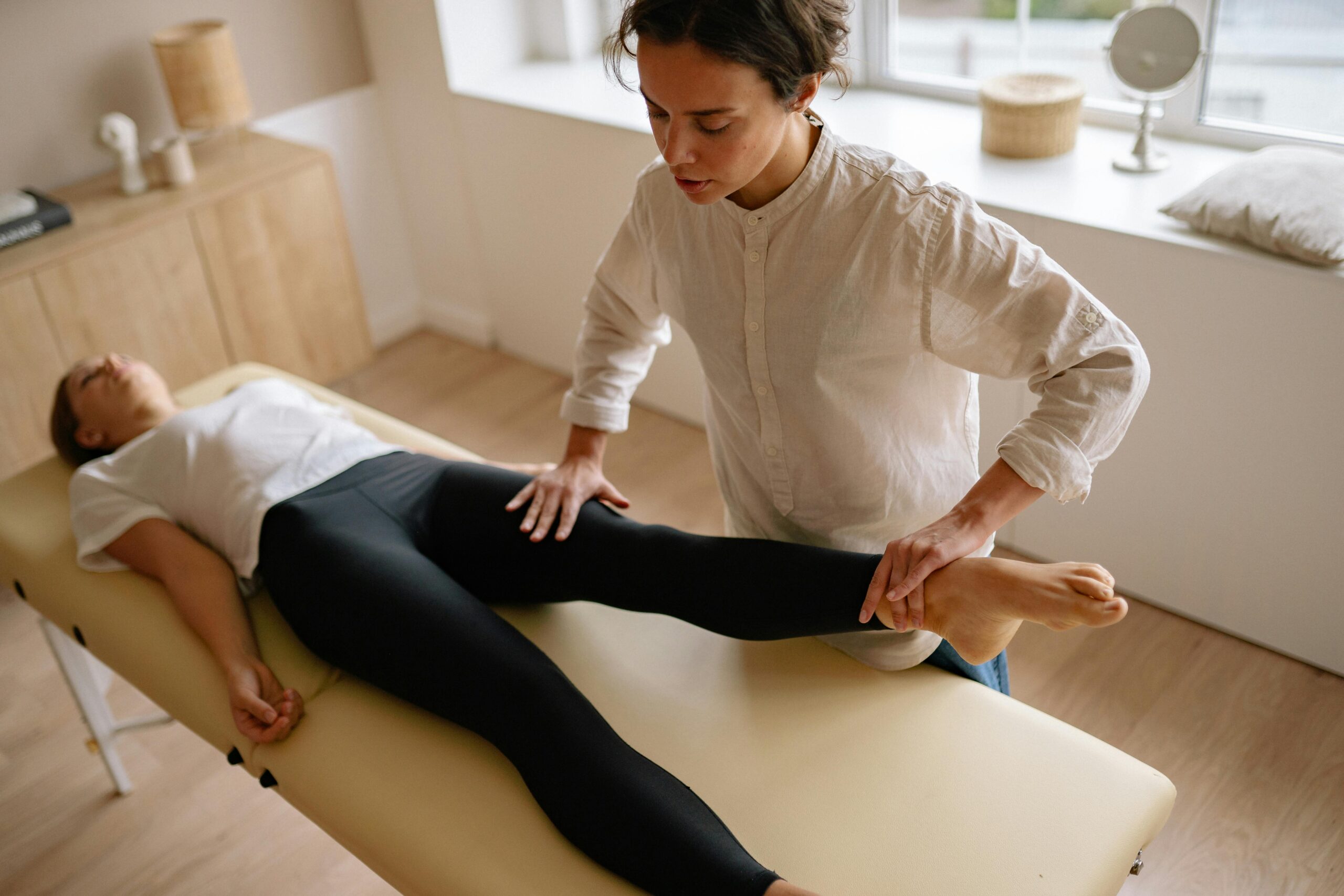
Physical therapy can’t reverse cartilage loss, but it can change the forces moving through a joint. When the right muscles start doing their share again, load spreads out more evenly. That usually means less irritation, better control, and a slower march toward further structural change. Strength programs for knee osteoarthritis are especially well supported—as long as people stick with them.
General exercise helps, but true muscle imbalances need targeted work. In most cases, that means strengthening the quiet muscle groups:
- Hip: clamshells, side-lying leg lifts, single-leg bridges, split squats
- Knee: quad sets, straight-leg raises, step-ups/downs, hamstring bridges or curls
- Shoulder: banded external rotation, rows, Ys, Ts
Quality beats load early on. Clean form builds patterns that protect the joint later.
Re-Training the Nervous System
Strength without good timing doesn’t change much. Therapists often use mirrors, tactile cues, or simple feedback tools to help people activate the right muscles at the right moment.
Balance work and light agility drills help rebuild proprioception so the joint stays controlled during unpredictable movements.
Manual Therapy and Load Management
Soft-tissue work, stretching, and joint mobilizations can quiet noisy muscles and make room for the weaker ones to engage.
Load also matters. Deep heavy squats, high-impact running, or aggressive overhead work might need to be dialed back temporarily, then reintroduced gradually.
Treatment Timelines and Realistic Expectations
A lot of people start noticing improvements—better control, less irritation—within 4–6 weeks. Bigger strength changes and deeper tissue adaptations usually take 3–6 months.
Pain often fades before the imbalance itself is truly fixed. Stopping early is one of the most common reasons symptoms come back.
Next Steps: Practical Rehab Progressions and Patient Education
Most good programs follow a loose flow:
- restore comfortable range of motion and basic activation
- build endurance and strength in the underperforming muscles
- integrate that strength into everyday life or sport-specific tasks
Regular check-ins with a physical therapist help keep things on track and prevent old compensations from sneaking back in.
A Balanced Takeaway for Long-Term Joint Health
Muscle imbalances aren’t mild posture quirks—they’re structural contributors to joint pain and many common injuries. By nudging a joint off its clean movement path and stacking pressure on small areas of cartilage and bone, they quietly wear things down over time.
The upside? They’re fixable. With targeted strength training, cleaner movement patterns, supportive manual therapy, and reasonable load management, you give your joints the conditions they need to age far more gracefully.
And the earlier these habits start—ideally long before imaging looks concerning—the more protective the long-term payoff tends to be.
Written by denise.smith.writing@gmail.com