

The Cellpeptides editorial team tracks the connective-tissue science that underlies conditions like this one closely, and the pathology at the center of frozen shoulder is a useful reminder of how much soft-tissue repair depends on collagen dynamics. The capsule inflammation that triggers the condition sets off a collagen-deposition process that can begin with no injury at all — no fall, no strain, no obvious cause. People following that recovery science, particularly those curious about shoulder-capsule healing, have increasingly turned to the research literature on peptides studied for collagen and soft-tissue repair, which they can Click here to explore. The team observes that literature as followers of tissue-recovery research, not as treatment advocates. What follows is the reported news.

What Actually Happens Inside a Frozen Shoulder
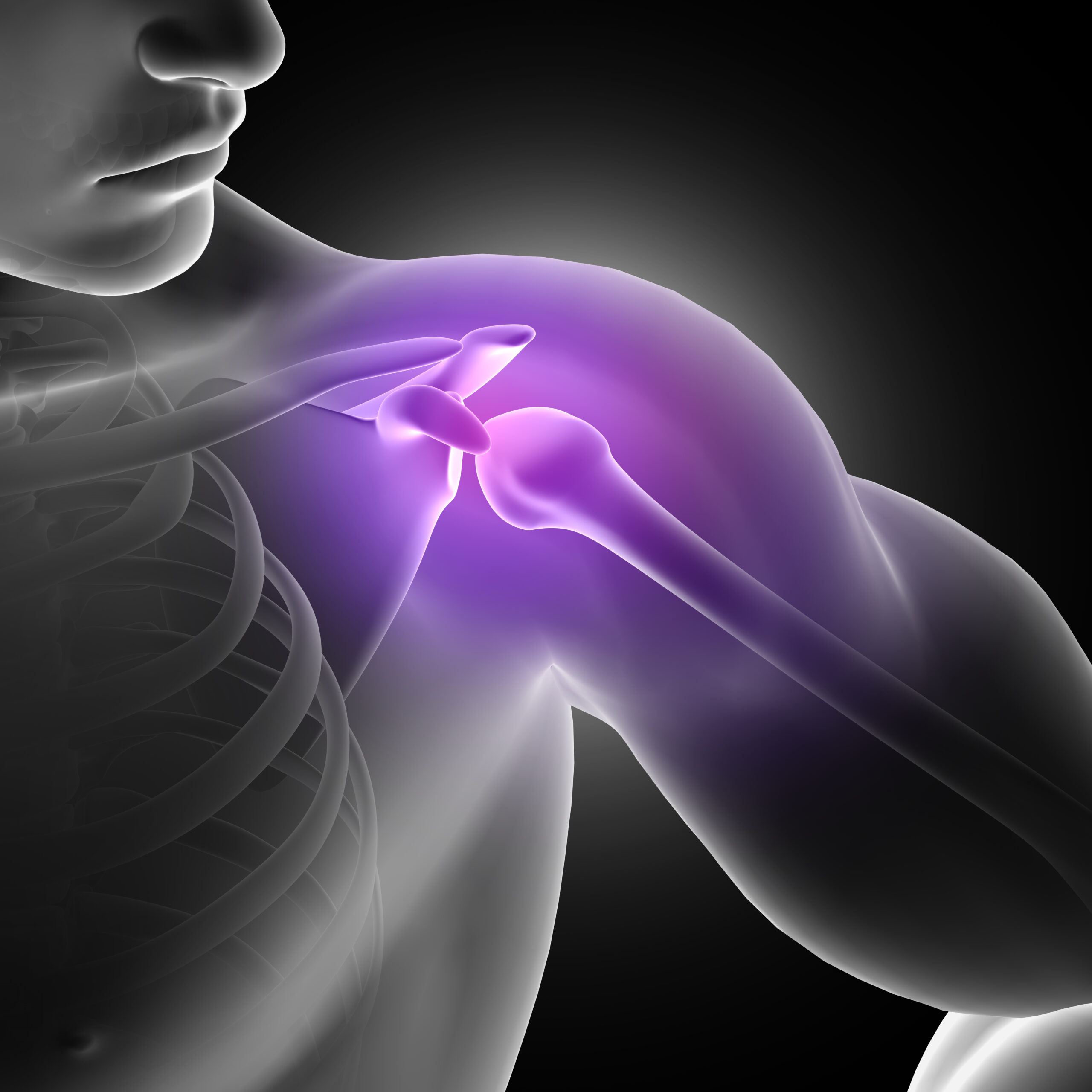
Frozen shoulder begins in the joint capsule, the fibrous tissue that surrounds and stabilizes the shoulder. According to The Straits Times, the process opens with inflammation of that capsule. As the inflammation subsides, cells begin depositing abnormal amounts of collagen, causing the capsule to thicken and contract. The result is a restriction in both active range of motion, meaning movement driven by the patient’s own muscle strength, and passive range of motion, meaning movement applied by a healthcare professional. Neither direction of movement escapes the tightening.
What makes this condition distinctly unusual is its specificity. The shoulder is the only large joint in the body known to freeze this way, and why that is the case remains unclear. Left without intervention, the condition may resolve over the course of a couple of years. But resolution of stiffness does not guarantee full recovery. Patients who forgo treatment may find that even when tightness decreases, their original range of motion does not return.
Risk Factors: Age, Sex, Hormones, and Immobility
The condition clusters in a well-defined demographic. Frozen shoulder typically affects people between the ages of 40 and 60. Chinese and Japanese doctors have historically referred to it as “the 50-year-old shoulder,” a label that reflects how consistently it appears in midlife, even if the biological reasons for that clustering remain incompletely understood.
“It typically affects those aged 40 to 60, but we still don’t fully understand why,” said Lester Tan Teong Jin, senior consultant orthopaedic surgeon at Oxford Orthopaedics.
Women in that age group carry a significantly higher risk than men. One proposed explanation points to age-related decreases in oestrogen levels, which are associated with increased inflammation. That association has not produced a full mechanistic account, but the hormonal angle remains a working hypothesis among clinicians.
Metabolic conditions also factor in. Associations exist between frozen shoulder and both diabetes and thyroid disease. “There is an association with diabetes and thyroid problems, but not all diabetics get it, and likewise those with thyroid problems,” Tan said. Elevated inflammation in people with poorly managed diabetes is one plausible link, and keeping the condition under control is associated with reduced risk.
Immobility is a separate and increasingly visible trigger. A growing number of cases involve pickleball players in their 50s and 60s. The sport itself is not necessarily the culprit. Luke Peter, a consultant at Ng Teng Fong General Hospital’s division of shoulder and elbow surgery, identified the pattern plainly. “There’s a risk of them wearing an arm sling for an excessive amount of time, which leads to the shoulder becoming stiff.” A minor injury prompts prolonged rest, the shoulder stops moving, and the capsule begins its slow contraction.

Treatment Options, From Physiotherapy to Surgery
Most frozen shoulder cases do not require surgery. Physiotherapy, comprising manual therapy and structured stretching, is the primary treatment approach. Pain management runs alongside it, typically through non-steroidal anti-inflammatory medications or steroid injections.
For patients whose capsule tightening does not respond adequately to physiotherapy alone, hydrodilatation offers a more direct intervention. The procedure involves injecting a steroid and saline solution into the joint, physically stretching the contracted capsule. Eileen Tay, senior consultant orthopaedic surgeon at The Orthopaedic Practice And Surgery, described its effect and its limits. “This significantly improves the range of motion of the shoulder, but should always be followed up with physiotherapy.” The injection creates space; the physiotherapy preserves it.
For severe cases that do not respond to those measures, surgical options exist. Arthroscopic capsular release uses keyhole techniques to divide the tightened tissue. Manipulation under general anaesthesia, with muscle-relaxing medications, involves stretching the shoulder in multiple directions to widen its range of movement. Both approaches remain options of last resort rather than routine pathways.
Tay offered patients a measure of reassurance on the overall trajectory. “The condition can be quite debilitating, but there is a 100 per cent chance of improvement.” The degree of that recovery, she noted, depends on the treatment chosen and on adherence.
The Patient Experience: Pain, Resistance, and What Finally Changed
The story of Tan Boon Foo, a 72-year-old retired tax consultant, illustrates the gap between knowing what is required and actually doing it. Tan described the symptoms that preceded his diagnosis in precise terms. “The pain was mild when I did things without stretching, but when I tried to reach out, I felt this stabbing pain and had to pull myself back.”
A steroid injection eventually gave him roughly a year of pain relief. That window was the first time he felt able to commit to mobility exercises. But before the injection, adherence was minimal. “I probably did 10 per cent of what was recommended, and it didn’t help,” he said.
Clinicians are clear that this pattern has consequences. Tay advises patients to avoid heavy lifting and exercises involving hard impact or sudden arm movements, including racquet sports, because these can aggravate inflammation or produce secondary injury. The guidance points toward consistency in low-load movement rather than intensity.
Tan’s pain eventually returned, requiring a second injection. His posture toward the prescribed exercises has since shifted. “I got scolded by the physiotherapist for not doing the exercises. Being the lazy guy that I am, I do it when I can.” The tone is self-deprecating, but the direction has changed. Two injections in, with pain again controlled, Tan is back to working through the exercises his physiotherapist has assigned. The condition is manageable. What it is not is passive — sustained effort, rather than watchful waiting, determines how much movement comes back.