

Dental conditions often present insidiously. There may not appear to be an urgent need for a filling or even root canal therapy — after all, the tooth looks fine and hasn’t caused any pain. But the truth is that a tooth is unlikely to heal itself, and minor defects can evolve into major ones long before the patient notices. Time is an ally to decay, fracture, and infection, rarely serving the best interests of a compromised tooth. That’s why early restorative care can be critical to saving natural teeth.
Restorative dentistry refers to treatments that maintain, restore, and stabilize teeth that would otherwise be lost or considerably weakened. A filling placed early may prevent more invasive procedures later, and a crown can save a weakened tooth that might otherwise need to be extracted. The earlier the intervention, the more natural structure can be preserved, and the fewer subsequent procedures are typically required. The advantages of preserving a natural tooth extend well beyond the tooth itself.

Why Natural Teeth Should Be Restored Early
A common adage among dentists is that natural teeth are the best — and this holds up. Natural teeth absorb force through the periodontal ligament and send sensory feedback to the brain, allowing precise control over chewing force. They also offer better spacing, articulation, and aesthetics than prosthetic alternatives. For these reasons, saving a tooth is generally preferable to extracting and replacing it.
Restoring natural teeth also protects periodontal structures. Teeth that are lost tend to cause adjacent teeth to migrate or erupt, creating new problems, while opposing teeth may over-erupt as well. Missing teeth reduce chewing efficiency, affect aesthetics, and contribute to long-term bone loss. Prosthetic replacement options exist, but they’re generally far more involved and costly than the restorative care that could have prevented the loss in the first place.
Patients looking to preserve their natural teeth often seek information on what can be done before extraction becomes necessary. Dental Implant Partners — the prosthetic practice of Dr. Belinda Gregory-Head, who has practiced for more than 25 years — provides restorative care for damaged or weakened teeth, built around a simple principle: treatment is most effective when it begins before a problem becomes severe. In many cases, the difference between a simple restoration and a much more involved procedure comes down to timing. A tooth treated while decay is limited or structural damage is still contained is usually easier to save.
How Minor Damage Can Lead to More Involved Treatment
Decay is one of the most common ways minor damage escalates. It rarely announces itself before reaching critical levels — a cavity confined to enamel and dentin can be treated with a simple tooth-colored filling, but once it reaches the pulp, root canal therapy or even extraction may become necessary. Many patients assume that a tooth without pain is a healthy tooth, but decay can progress painlessly for months.
Cracks and fractures follow a similar pattern. A minor hairline fracture might cause occasional sensitivity to biting or temperature, but left untreated, continued chewing can drive the crack deeper — eventually past the point where conventional restoration is possible, and into territory that requires a crown or more.
Restorations themselves can also fail and damage the tooth beneath them. Fillings wear down, break, or leak; crowns loosen or allow secondary decay to develop at the margin where they meet the tooth. Because these failures often remain undetected for a long time, many patients don’t realize there’s a problem until it presents as pain, swelling, or a visible fracture. A dentist familiar with the early signs of restoration failure can intervene before the damage compounds.
An Overview of Early Restorative Care
Early restorative care isn’t one specific procedure — it’s a category of more conservative treatments matched to the severity of the damage. Depending on the case, that might mean a filling, a more substantial inlay or onlay, a crown, or repair of a failed prosthetic. What unifies these approaches is timing: performed earlier in a defect’s progression, they limit long-term consequences and reduce the odds that more serious intervention will be needed down the road.
For most fillings, treatment involves removing affected tissue and replacing it with tooth-colored composite resin. When damage is more extensive, an inlay or onlay may better restore the tooth’s integrity, and a crown may be warranted if a significant portion of the biting surface has been lost — helping guard against further fracture. Bonding can also correct minor imperfections or reinforce a tooth’s structure against future cracking.

What Patients Should Know About Early Restorative Care
Early restorative care tends to be less invasive largely because it rarely requires removing significant tooth structure. A filling is a smaller undertaking than a crown, and a crown is smaller still than root canal therapy or extraction. Less invasive procedures also mean shorter healing times, fewer visits, and lower risk. And because minor defects are simpler to correct than major ones, addressing them early reduces the odds of needing further treatment at all.
There’s also a practical, human dimension to this: a small procedure is much easier to fit into a busy schedule than a major one. Many patients are already reluctant to seek dental care, particularly when they don’t feel an urgent need for it, and travel or a demanding schedule can push off treatment further. Ironically, a minor sensitivity that flares up at an inconvenient moment can be more disruptive day-to-day than a major procedure handled on your own terms.
How Earlier Treatment Offers More Options
Acting early doesn’t just limit invasiveness — it preserves choice. A defect caught before it spreads is less likely to compromise adjacent structures, which means the patient has more restorative options available and a wider range of viable approaches to choose from. A dentist can often recommend, from among several options, the one likely to last longest given the patient’s specific habits and lifestyle. Once damage progresses, some of those options fall away entirely.
Preventing More Extensive Prosthetic Work Later
A single filling, inlay, or onlay is far less involved than a full crown, but the real payoff of early care is what it prevents downstream. Stabilizing a tooth before further damage accumulates can mean the patient avoids a whole subsequent round of treatment altogether. This logic scales: just as a filling can substitute for a crown when caught early enough, more advanced procedures like root canal therapy can head off far more serious and costly interventions later.
The Financial Case for Early Restorative Care
Cost follows the same pattern as invasiveness. Addressing a small cavity early is reliably cheaper than treating the larger problem it would otherwise become — and this holds across essentially every category of restorative work. There’s also an indirect cost to delay: missed work time and general inconvenience add up, on top of the treatment itself.
How Early Restorative Care Protects Periodontal Structures
No tooth functions in isolation — damage to one tends to ripple outward to the rest of the mouth. A properly restored tooth continues to do its job, which means the patient chews evenly, avoids the periodontal problems that come with uneven occlusion, and keeps the surrounding teeth from drifting or over-erupting to compensate.
This matters especially for patients with bruxism or other conditions that place extra stress on their teeth and existing dental work. A restoration that’s no longer fully functional is more likely to fracture under that added force; restoring it before that happens keeps the bite stable. Patients who take early restorative care seriously tend to sidestep a whole category of downstream complications.
There’s also a behavioral dimension: a tooth that feels even slightly compromised often gets avoided during chewing, which can leave it more vulnerable to further wear, and can make eating — or even concentrating on other tasks — genuinely harder. Addressing the problem early removes that daily friction and restores confidence along with function.
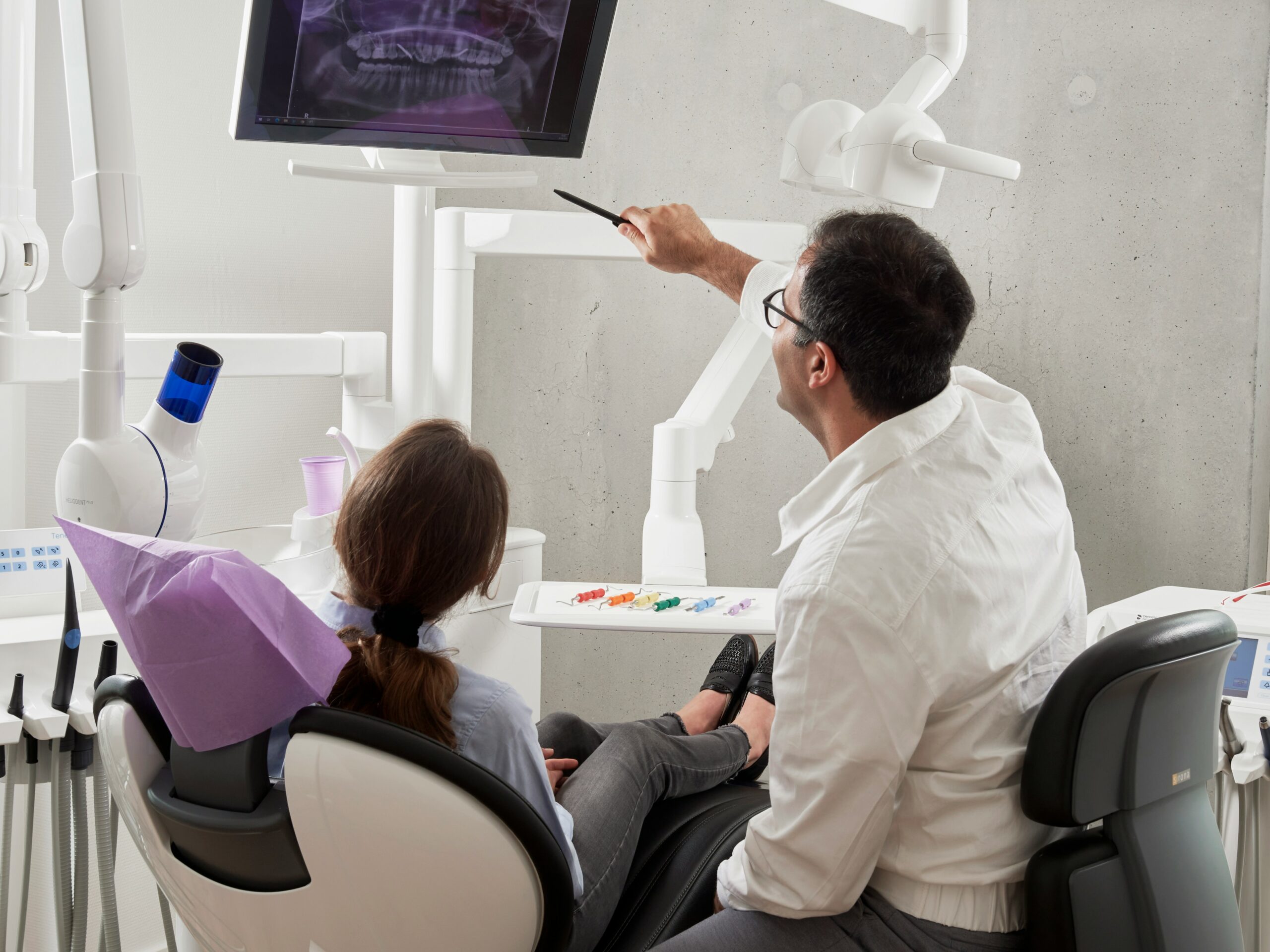
How Early Treatment Can Save Teeth That Would Otherwise Be Lost
The benefits of restoring one tooth early extend to the rest of the mouth. A tooth that’s functioning properly doesn’t force neighboring teeth to compensate for it, which matters most for patients who already have other compromised teeth or who grind at night — conditions where added stress on the bite can otherwise cost them additional teeth. Treating an affected tooth early keeps that added burden from ever reaching the rest of the dentition.
The Biomechanical Case for Early Restorative Care
Viewed biomechanically, the case for early treatment is hard to overstate: catching a minor defect early lets a dentist correct nearly all of its downstream effects before they compound, easing the load on the periodontium as a whole. This is arguably the most important lens on the issue, because it makes clear exactly why waiting rarely serves the patient as well as acting sooner does.
Written by Sarah Williams