By Cindy Knox | Research materials analyst covering peptide supply chains. Fact-checked by Elena Cook, Editor | Last updated July 2026
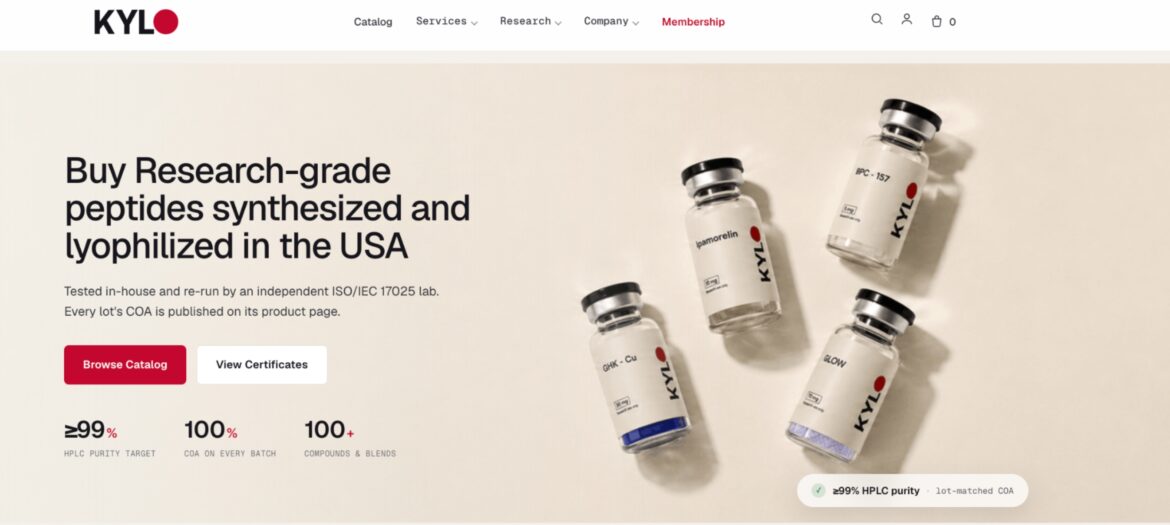
Kylo Peptides is a US research peptide supplier known in scientific circles for synthesizing and lyophilizing peptides in the United States. It publishes a certificate of analysis for every lot and states a purity target of 99% or better by HPLC. It claims to test the purity first in its own lab, second time from Janoshik Analytical and third from Freedom Labs.
But can these claims be trusted in 2026? We checked the published documents, testing methodology, pricing, and shipping terms. This Kylo Peptides review is about what we found when our auditors checked the live catalog.
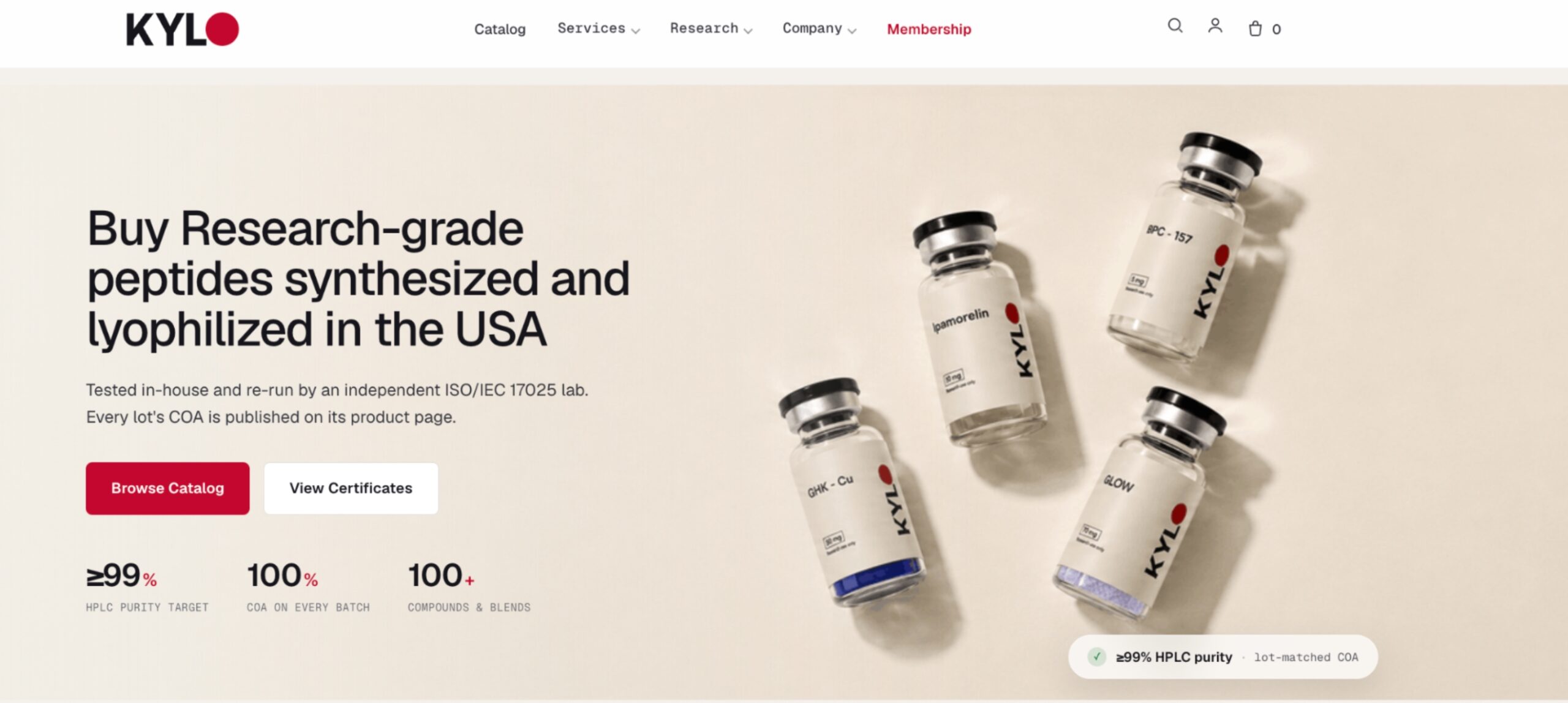
The use of this image is permitted by KYLO to the author of this article
The Growing Importance of Quality in the Research Peptide Industry
Quality is the determining factor in the research peptide category because a research peptide cannot be judged by its appearance. We pulled up several listings, and the product photos were identical: a small glass vial of white powder. The only thing that separated them was the certificate behind each one.
Why More Researchers Are Paying Attention to Peptide Quality
Researchers check the paperwork first because a bad compound gives bad results. A vial that fails identity confirmation produces data nobody can use, and repeating that work costs far more than the price gap between a cheap vial and a tested one.
Consistency is the other half of it. When one batch tests differently from the last, a long study loses its baseline. That is why we looked for lot numbers on every listing rather than a single product-level document.
The buying order has flipped. Earlier, buyers used to compare prices first and check results later. Every experienced researcher we know now opens a certificate before they buy peptides online.
What Separates a Reliable Peptide Supplier From the Rest
A reliable peptide supplier publishes results you can check without asking anyone. HPLC purity for peptides is the headline number, and identity is confirmed separately by mass spectrometry.
When we assess any peptide vendor, we run through six things:
- Batch-specific certificates. We look for one document per lot, not one report reused across batches.
- Independent testing. If the only results on the page came from the vendor’s own lab, that is where we stop.
- A lab you can look up. We check whether the certificate names the laboratory and gives us something to verify it with.
- A disclosed method. We want the analytical technique behind the number, not just the number.
- Business transparency. We look for a registered company, a real address and contact routes that work.
- Customer support. A phone number and an email, not a form that goes nowhere.
Kylo cleared all six, which is less common than it sounds. The address, entity name, and support contacts are all published in the footer and easy to locate.
Why Transparency Has Become a Major Industry Standard
Transparency became the industry standard because researchers started checking. A percentage of purity on a page used to be enough. Now analysts want clarity about the analytical method, the laboratory’s name, and a batch number they can match to the vial in front of them.
The shift is practical rather than ideological. Knowing what a research material contains protects every result built on it, and no purchase price makes back a wasted study.
Documentation is also what builds trust in a supplier you have not used before. A vendor that publishes full test data invites scrutiny. One that publishes a single number is asking for trust it has not earned yet.
Kylo Peptides: Brand Overview
Kylo Peptides has also highlighted its quality-control approach through external announcements, including a published press release discussing its independent testing standards, US-based production approach, and commitment to transparent documentation. Readers can review the announcement through WKOW’s online features coverage for additional company background.
What Is Kylo Peptides?
Kylo Peptides is a US research peptide supplier founded in 2021 by a team of process chemists and QC analysts. It makes and sells lyophilized peptides for in-vitro laboratory research, and it does not sell anything else.
They knew which batches ran clean and which ones needed rechecks and improvements. They saw how far one batch could drift from the one before it. And they watched all of it disappear behind a single number on a page, with no way for the customer to check any of it.
So in 2021 they left to build the supplier they had wanted to work for. Kylo makes and freeze-dries its peptides in the United States, tests every batch in its own lab, then verifies it at two independent laboratories, Janoshik Analytical and Freedom Labs. After several years supplying labs directly, they opened the catalog online in 2026.
Kylo Peptides’ Approach to Research Materials
Kylo does not import finished vials and relabel them, so the manufacturing record and the testing chain remain within a single operation. Fewer handoffs mean fewer places a batch record can go missing.
US-made research peptides also shorten the distance between the bench and the certificate. The company documents its process on a published methodology page and sets out its standards under quality.
Every vial carries a lot number. That number matches a certificate on the product page, which lets a laboratory track which batch produced which result over the course of a long study.
Labeling is deliberately plain. The site publishes no dosing guidance, and nothing on a product page suggests a use outside the laboratory.
The Role of Education in Kylo’s Customer Experience
Kylo puts research information on the page rather than behind a contact form. Each listing shows the compound, the format, the sizes available, and a certificate link, so a laboratory can assess it without emailing anyone.
The site also runs a blog covering peptide chemistry and handling. There is no dosing information or fixed protocols and no human-use content anywhere on the site. Kylo treats education as helping a researcher handle material correctly, not as telling anyone what to do with it.
Exploring Kylo Peptides’ Research Product Range
The Kylo Peptides catalog covers single compounds and pre-weighed blends, grouped by research category rather than by what sells fastest. Every item ships as a lyophilized powder for in-vitro laboratory use only.
BPC-157 is a synthetic pentadecapeptide based on a sequence found in gastric juice. Laboratory interest centers on cellular signaling and tissue models, which makes it one of the more widely stocked research peptides across the market.
TB-500 is a synthetic fragment of thymosin beta-4, a naturally occurring actin-binding protein. It appears in research on cell migration and the cytoskeleton. Kylo also sells it as part of the Wolverine Stack, paired with BPC-157, for $139.95.
GHK-Cu is a copper-binding tripeptide. Research interest sits around extracellular matrix and cellular processes, and it appears in two of Kylo’s blends alongside BPC-157 and TB-500.
CJC-1295 and Ipamorelin are studied together in hormone-pathway signaling research. One is a growth-hormone-releasing hormone analog, and the other is a ghrelin receptor agonist. Kylo lists them individually and as a pre-weighed blend at $89.95.
Emerging Research Compounds
MOTS-c is a mitochondrial-derived peptide of 16 amino acids, studied in metabolic pathway research. Kylo offers it in two sizes, starting at $54.95.
NAD+ is a coenzyme rather than a peptide. It is included for cellular energy metabolism work and is one of the few non-peptide items in the catalog.
GLP-1 related compounds appear under coded catalog names and are studied in incretin pathway research. GLP1 (S) 10mg lists at $79.95.
Blends are pre-weighed at the listed ratios and lyophilized together, and LC-MS independently verifies their compositions before release. Each blend carries its own certificate rather than reusing the certificates of its constituent compounds. Current blends include the GLOW Stack at $159.95, the KLOW Stack at $179.95, and the Wolverine Stack at $139.95.
Bacteriostatic water is listed separately at $14.95 to $19.95, in 3mL and 10mL sizes. It never ships bundled with a peptide order.
Beyond the standard catalog, Kylo also offers bulk production, custom peptides and proteins, and laboratory services, all quoted individually.
What Makes Kylo Peptides Different?
Three things separate Kylo Peptides from most peptide companies, and a researcher can check all three before placing an order.
Focus on Research Transparency
Kylo publishes the independent laboratory’s actual report, not a summary of it. Nothing is recycled between batches, and nothing is self-issued.
Product pages clearly state the compound, size, and format, with no marketing language attached. Pricing is publicly available, with the standard and member figures side by side. Nothing sits behind a quote request.
Each certificate carries an accession number issued by the testing laboratories. That identifier is what makes a published document verifiable, because it points back to the lab rather than the vendor.

Quality Control Through Testing Documentation
Every lot runs through a full analytical panel before release. No batch ships until that panel is on file, and the results appear in the public COA library.
Batch-specific information is the whole point. A certificate tied to a product line tells you nothing about your vial. A lot-matched COA tells you exactly what you received.
When a lot is still being tested, the product page says so rather than showing an older result. That is a small detail with real weight, because the easiest way to fake continuity is to leave last quarter’s certificate up.
Attention to Product Presentation and Handling
Every vial is labeled with its lot number, which is what makes the certificate matching work in the first place.
Consumables travel separately. Bacteriostatic water and syringes are listed as their own products, because packaging them with peptides would imply a use Kylo does not support.
Understanding Kylo Peptides’ Testing and Quality Process
Kylo Peptides tests every lot thrice. The first round runs in its own laboratory. The second round runs at Janoshik Analytical and third at Freedom Labs.
Why COAs Matter When Evaluating Peptide Suppliers
A certificate of analysis for peptides is the only proof of what is in the vial. It should tell you four things:
- Product identity. Confirmation that the molecule is what the label says it is.
- Purity analysis. The measured percentage and the method used to produce it.
- Batch details. A lot number that matches the vial in your hand.
- Testing methods. Which analytical techniques were used, and by whom.
Without those four, a purity claim is a marketing statement rather than a measurement. This is the single biggest difference between peptide companies that publish and peptide companies that assert.
What Researchers Should Look For in Peptide Testing Reports
A complete report covers more than one figure. Look for HPLC analysis for purity, mass spectrometry for identity, a batch number, and the name of the laboratory that ran the tests.
Kylo’s published panel covers appearance, purity by HPLC-UV, identity by LC-MS, net content, heavy metals by ICP-MS, sterility and endotoxin under USP <85>. The purity target is 99% or better, and the exact value for your lot is stated on that lot’s certificate rather than promised in advance.
Purity indicates the fraction of the powder that is the target compound. Net content tells you how much compound is actually in the vial. A high purity figure on a light vial is still a short measure.
Kylo’s Commitment to Documentation Transparency
ISO 17025 peptide testing means an outside body has audited that laboratory’s methods, equipment calibration, and technical competence against an international standard. The accreditation covers the laboratory, not the peptide, which is why a reliable lab carries more weight than an unnamed one.
Certificates sit on the product pages themselves and in the public COA library. Checking a lot does not mean hunting through a separate archive or emailing support.
The Kylo Peptides Ordering Experience
Ordering from Kylo Peptides is built around finding the paperwork before you buy.
Website Experience and Product Navigation
Products are grouped by research category, which matches how laboratory researchers actually search. Certificate links sit on the listings themselves.
Each product page shows the compound, available sizes, the standard price, and the member price. Stock status is stated plainly, including when an item is unavailable.
From Order Placement to Delivery
Kylo ships same-day on weekday orders placed before 2 PM PST, Monday through Friday. US orders above $200 ship free, and the full terms are published in the shipping policy.
Orders carry shipment protection, and there is a separate return and refund policy rather than a single blended terms page. You can follow a shipment through order tracking.
Contact runs through a published phone number and support email, both listed on the contact page, rather than a form alone.
Packaging Quality and Product Protection
Vials arrive sealed and labeled with the lot number that matches the published certificate. The label is the link between what you ordered and what you can verify.
Lyophilized material does not need cold-chain shipping, which is why standard dispatch is normal for research peptides rather than a corner being cut.
Storage becomes your responsibility upon arrival, and storage of lyophilized peptide is specific. Sealed vials belong in a freezer, away from light and moisture.
Following that guidance protects the purity you paid for. A vial stored warm will not match its certificate for long, and the paperwork cannot tell you what has happened.
Customer Perspective: What Users Appreciate About Kylo Peptides
Researchers tend to value three things about Kylo Peptides: a short ordering process, visible documentation, and accessible support.
Smooth Ordering Experience
The path from listing to checkout is short. Prices are public, stock status is visible, and nothing requires a sales conversation first.
Same-day dispatch on weekday orders before the afternoon cutoff means an order placed in the morning usually moves the same day. For a laboratory working to a schedule, predictable dispatch matters more than a headline discount.
Product information is complete on the page itself. Compound, size, format, price and certificate all sit in one place.
Interest in Product Transparency
Certificate links are on the product listings, so checking many takes seconds rather than an email exchange. That access is the difference between documentation that exists and documentation you can use.
Each certificate carries an accession number. A researcher can confirm the document with that lab rather than with the vendor, which is what independent verification actually means.
Kylo also maintains a reviews page, so researcher feedback sits alongside the technical documentation rather than being kept off the site.
Reliable Communication and Support
Kylo publishes a phone number and a support email. For a supplier, easily reachable support does real work because a researcher with a question about a batch needs somewhere to take it.
Kylo Peptides Social Media Presence
Beyond its website documentation, Kylo Peptides maintains social media channels where it shares company updates, product announcements, research education content, and brand news. These channels can help researchers follow updates outside the main website.
- Instagram: https://www.instagram.com/kylopeptides/
- Youtube: https://www.youtube.com/@KyloPeptides
- X/Twitter: https://x.com/kylopeptides
- LinkedIn: https://www.linkedin.com/company/kylo-peptides/
Comparing Kylo Peptides With Modern Research Suppliers
Kylo Peptides differs from traditional peptide vendors in various categories.
| Category | Kylo Peptides | Traditional suppliers |
|---|---|---|
| Product information | Compound, size, format and price on every listing | Varies |
| Testing documentation | Published per lot, matched to the vial number | Depends on supplier |
| Testing rounds | In-house lab, then verifies it at two independent laboratories, Janoshik Analytical and Freedom Labs | Often internal only |
| Lab identity | ISO/IEC 17025 accredited | Often unnamed |
| Research focus | Research use only, no dosing content anywhere | Different approaches |
| Customer education | Blog, FAQ, reconstitution and handling guides | Varies |
Transparency has become a competitive advantage because it is the one claim a vendor cannot fake. Anyone can write “premium quality” on a page for free. Publishing a dated certificate from an accredited laboratory costs money and invites scrutiny of the result.
Modern researchers evaluate suppliers accordingly. They open a certificate before opening a cart, and when comparing two peptide vendors, they notice which one completes that check faster. Learning how to evaluate a peptide supplier is mostly learning where each one hides the paperwork.
Why Documentation Matters More Than Marketing Claims
Documentation matters more than marketing because only one of the two can be checked.
A trustworthy peptide supplier leans on:
- Testing records tied to the batch you receive
- Documentation you can verify with the laboratory directly
- Clear communication about what is and is not in stock
- Accurate product descriptions with no implied use
Rather than:
- Unsupported claims about purity or quality
- Overpromising what a research compound does
The test is simple. Ask what a claim would cost the vendor if it turned out to be false. “Highest purity available” costs nothing. A dated certificate carrying a lot number and a laboratory accession number costs a great deal, which is exactly why it carries weight.
Key Strengths of Kylo Peptides
Kylo Peptides has three main strengths a researcher can verify:
Research-focused product selection. The catalog covers single compounds and pre-weighed blends across the research categories laboratories buy most, including tissue repair, dermatological, mitochondrial, growth hormone axis, incretin, cellular health and neuropeptide work. Blends are verified as finished mixtures rather than inheriting component paperwork.
Commitment to transparency. Every lot carries a certificate of analysis published on its product page and in a public COA library, matched to the number printed on the vial. Each one includes an accession number from the accredited laboratories that ran the tests. The quality and methodology pages set out the standards behind them.
Professional customer experience. Public pricing with no quote requests, same-day weekday dispatch before 2 PM PST, free US shipping on orders over $200, shipment protection, a published returns policy, order tracking, and consumables listed separately from compounds.
Things Researchers Should Consider Before Choosing Any Peptide Supplier
Properly evaluating a peptide supplier takes about fifteen minutes once you know where to look. Run these five checks on every peptide vendor you consider, including this one.
- Testing documentation: Open a certificate for the exact product you want, not a sample document and not a category page. Confirm the lot number matches what gets printed on the vial. Read the whole panel rather than just the purity figure, because identity, net content and contaminant screens each tell you something different.
- Company transparency: Find the registered legal entity, a physical address and working contact routes. A supplier that hides its own name is telling you something before you ask.
- Product labeling: Check that the compound, the size and the format are stated plainly, and that nothing on the page implies a use outside the laboratory.
- Customer support: Look for a phone number or an email rather than a form alone, and test whether anyone answers before you need them to.
- Research-use compliance: Research-use language should appear sitewide and leave no room for interpretation. There should be no dosing guidance anywhere, and consumables should not arrive bundled with compounds.
Keep the results side by side when comparing two vendors. Among the best peptide companies, the one that makes each check faster is usually the one with the least to hide.
FAQs About Kylo Peptides
What is Kylo Peptides known for?
Kylo Peptides is known for testing every batch three times, once in-house and again at two independent ISO/IEC 17025 laboratories.
Are Kylo Peptides products for research use only?
Yes. All products are sold for research, laboratory or analytical purposes only and are not for human or veterinary consumption. Kylo Labs LLC is a chemical supplier, not a compounding pharmacy under 503A of the Federal Food, Drug, and Cosmetic Act, nor an outsourcing facility under 503B.
Does Kylo Peptides provide testing documentation?
Yes. Every released lot carries a certificate published on its product page and in the public COA library, matched to the lot ID printed on the vial.
Why are COAs important for peptide products?
A certificate of analysis is the only proof of what is in the vial, since every research peptide looks identical as a white powder. It should report purity by HPLC, identity by mass spectrometry, net content, heavy metals, and endotoxin.
What types of research peptides does Kylo offer?
Kylo stocks single compounds and pre-weighed blends, including BPC-157, TB-500, GHK-Cu, CJC-1295 with Ipamorelin, MOTS-c, and NAD+. The full range is on the catalog page.
How does Kylo Peptides maintain product transparency?
Certificates are published per lot rather than per product line; each carries a laboratory accession number you can verify independently, and pages state when a lot is still in testing instead of showing an older result.
How does Kylo compare with other peptide suppliers?
Kylo differs from most peptide vendors in testing structure rather than catalog. Many publish their own internal results or a single third-party figure. Kylo runs three rounds and publishes the independent one.
What should researchers look for when choosing a peptide vendor?
Open a certificate for the exact product, confirm the lot number matches the vial, read the whole panel rather than just purity, look up the testing laboratory, and find the registered legal entity behind the site.
Final Thoughts: Is Kylo Peptides Worth Considering in 2026?
This Kylo Peptides review set out to see whether the documentation holds together. On the evidence published, it does. Every batch gets a lot-matched certificate; two independent accredited labs verify it, and synthesis happens in the US under conditions the company documents.
Less selection and a slightly higher price in exchange for documentation that can be independently confirmed is a fair deal. Before a large purchase, order a single product, match its certificate to the delivered lot, and decide from there.
Disclaimers
All products referenced here are sold for research, laboratory, or analytical purposes only and are not for human or veterinary consumption. They are not drugs, supplements, or food.
The U.S. Food and Drug Administration has not evaluated any statement in this article. Nothing here is medical advice or a recommendation for personal use. Research compounds should be handled only by qualified professionals in appropriate laboratory settings.
Pricing, catalog contents, and policy terms were checked against the vendor’s published information in July 2026 and can change without notice. Verify current details on kylopeptides.com before ordering.