
By Elena Ross, Reviewed for research accuracy by Editor, Zak Mandes
Peptides such as Retatrutide, Semaglutide, and Tirzepatide are among those that scientists have investigated as potential weight loss drugs. They fall into three categories, depending on the purpose of the investigation into their effectiveness in promoting weight loss.
On the other hand, Tesamorelin is being looked at to see how it affects the fat around our organs and our overall body composition. Then there is MOTS-c, which is still in the very early stages of study regarding its effects on our metabolism.
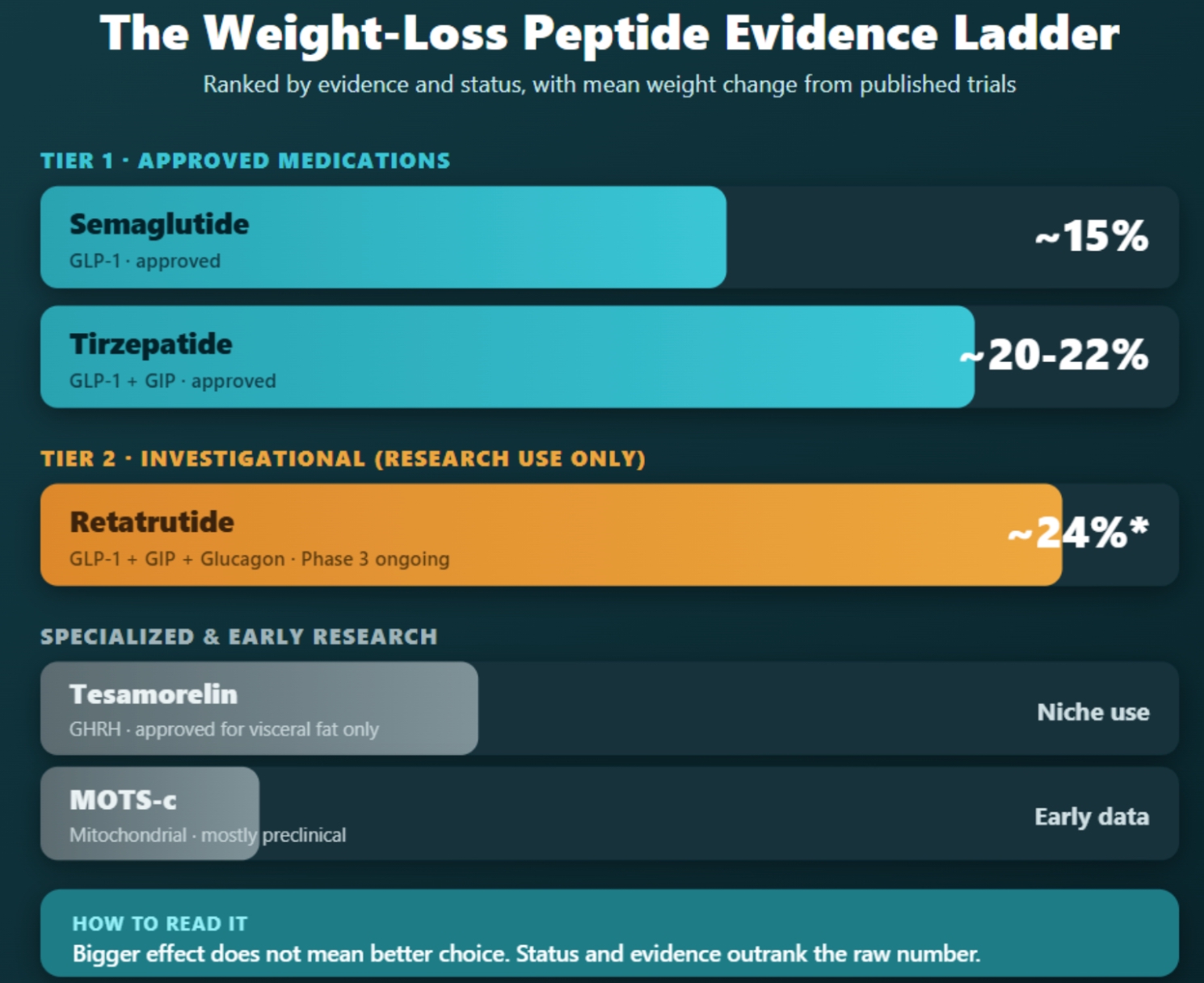
When we look at evidence from trials, it is clear that certain medicines, such as GLP-1 receptor agonists, are very effective for weight loss. These trials have shown that people can lose between 15 and 22 percent of their body weight.
The other peptides still being researched lack sufficient evidence to support them yet. How the experts interpret the results depends on whether the peptide has been approved.
Quick Answer
Semaglutide, Tirzepatide, Retatrutide, Tesamorelin, and MOTS-c are the most popular peptides for weight loss. The experts put them into different categories: approved and early-research-stage compounds. The status means that these peptides are not interchangeable and require an evidence ladder to understand their final results.
Which Option Fits Your Weight-Loss Goal?
Selecting the right peptide depends on your final goal. Your fat-loss journey needs a well-researched, verified peptide to achieve your desired results.
| Peptide | Main Pathway | What It Targets | Evidence | FDA Status |
|---|---|---|---|---|
| Retatrutide | GLP-1 + GIP + Glucagon | Appetite, energy use, glucose | Emerging, Phase 3 ongoing | Investigational only |
| Semaglutide | GLP-1 | Appetite, satiety, glucose | Strong, large trials | Approved for weight management |
| Tirzepatide | GLP-1 + GIP | Appetite, insulin, fat metabolism | Strong, large trials | Approved for weight management |
| Tesamorelin | GHRH, growth hormone | Visceral fat, IGF-1 | Moderate, niche indication | Approved for a specific use |
| MOTS-c | Mitochondrial signaling | Insulin sensitivity, metabolism | Early, mostly preclinical | Not approved |
Best Peptides for Weight Loss: Top Compounds Compared
The five peptides studied for weight loss are divided into three groups. Two of them are prescription medicines. Three are substances used in research and sold for lab purposes only.
Peptides Studied Directly for Weight Loss
These three act on the GLP-1 pathway and are studied specifically for their ability to reduce body weight. They also form their own ladder: two are FDA-approved medicines, and the third is investigational.
Retatrutide
Retatrutide is one of the most closely studied peptides for weight loss. It is also one of the only triple agonists in this guide. It acts on the GLP-1, GIP, and glucagon receptors simultaneously and is intended for laboratory use only. Researchers are more interested in observing its working mechanism on the third pathway.
The glucagon receptor checks the loss of energy with appetite and insulin levels. The single and double agonists cannot read those levels together. A triple agonist is designed to help experts reach that milestone.
In its Phase 2 trial, the highest dose produced a deduction of body weight of about 24% at 48 weeks. This successful trial moved it to Phase 3 testing as well.
Retatrutide stays investigational and should not be treated as a weight-loss medication. Retatrutide is available from research peptide suppliers, with product documentation provided for evaluation. Its final profile will depend on the Phase 3 trials still underway.
 Semaglutide
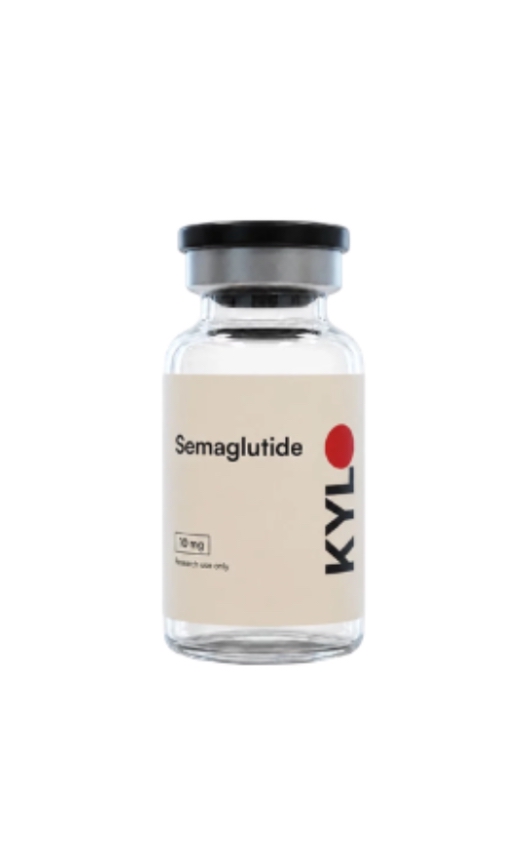
Doctors and scientists have researched Semaglutide more often than other weight loss drugs. They do this to understand how effective new weight loss medications are when compared to Semaglutide.
In one such research study known as STEP 1, patients taking Semaglutide at a dose of 2.4 milligrams daily managed to reduce their weight by 15% within 68 weeks. On the other hand, patients who did not receive any form of treatment managed to lose just 2.4% of their total weight. Therefore, Semaglutide is classified as a weight loss medication.
Semaglutide refers to a medication used by healthcare providers to treat patients with weight loss issues and type 2 diabetes. Semaglutide is found in several FDA-approved medicines used to treat such disorders.
Semaglutide functions by mimicking the activity of GLP-1, which is a natural hormone present in our body. The hormone informs the brain about satiety and decreases the rate at which contents within the stomach empty themselves. As a result, people feel satisfied after consuming food items. Some people using Semaglutide face issues such as nausea, vomiting, and diarrhea.
 Tirzepatide
A second pathway makes Tirzepatide stand out. This includes activating GLP-1 and GIP receptors simultaneously. This is what distinguishes Tirzepatide from Semaglutide structurally. There is evidence that this has benefits in terms of appetite suppression and improved insulin sensitivity.
Tirzepatide shows larger reductions in the scientific literature. Patients receiving higher doses experienced average reductions in body weight of around 20 to 22 percent within 72 weeks in the SURMOUNT-1 trial. This was significantly greater than any other approved drug option.
The FDA approves Tirzepatide for obesity and type 2 diabetes. Adverse events include gastrointestinal symptoms, and this usually occurs less often when starting doses gradually instead of abruptly increasing dose levels.
Peptides Studied for Visceral Fat and Body Composition
This group works through a different mechanism from GLP-1 peptides, targeting where fat accumulates rather than overall appetite or body weight.
 Tesamorelin
Tesamorelin is a GHRH agonist. This means that it mimics a substance in our body responsible for producing growth hormone. Growth hormones increase levels of IGF-1 and influence fat distribution. Tesamorelin does not fall into the GLP-1 category of peptides due to its function and purpose in medicine.
In scientific studies evaluating Tesamorelin and weight, researchers found evidence that the drug can reduce visceral adipose tissue mass. This means that it alters fat distribution without changing overall body composition.
Early-Stage Metabolic Research
This group is at the earliest research tier, studied for metabolic signaling rather than established weight outcomes.
MOTS-c
MOTS-c is an early research compound. It is a mitochondrial-derived peptide encoded in mitochondrial DNA and studied only as a research compound, at the bottom rung of the evidence ladder.
Its research focus is metabolic function and insulin sensitivity, and in lab models it appears to influence how cells use glucose and fat for energy. But the evidence is almost entirely preclinical, drawn from cell and animal studies rather than large human trials, which is why no firm conclusion about body weight can be drawn. MOTS-c is not intended for human use and should not be presented as a weight-loss agent.
What Are Peptides for Weight Loss?
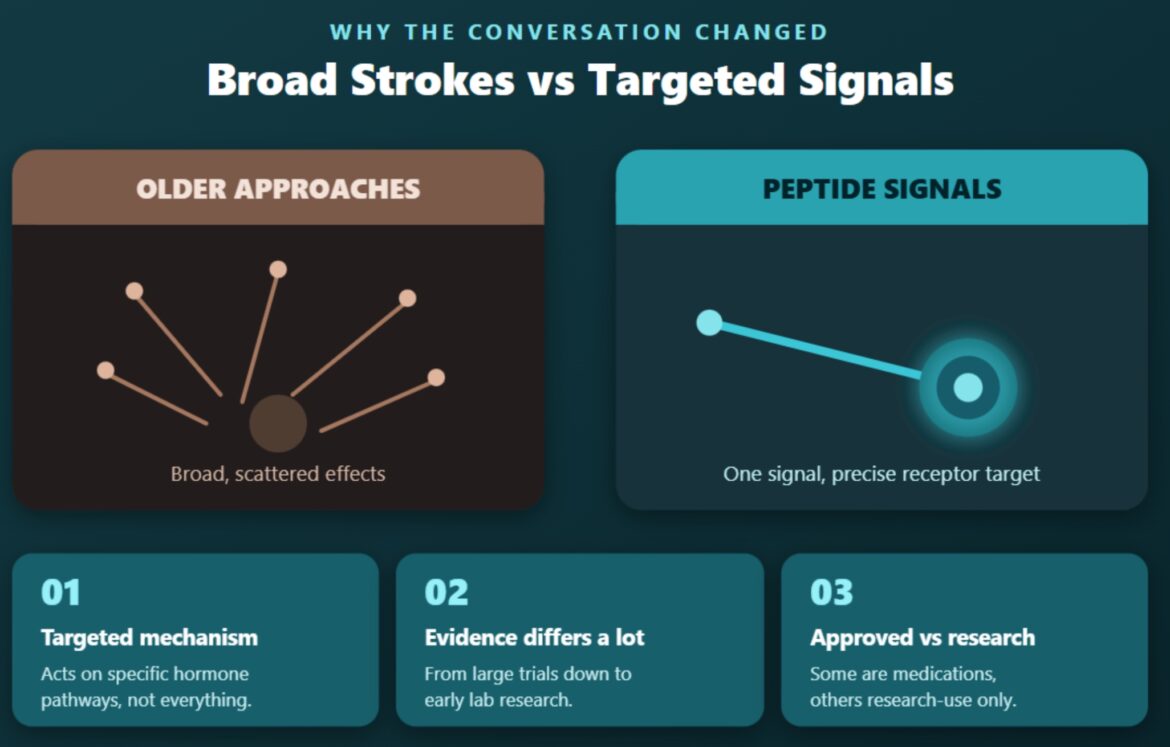
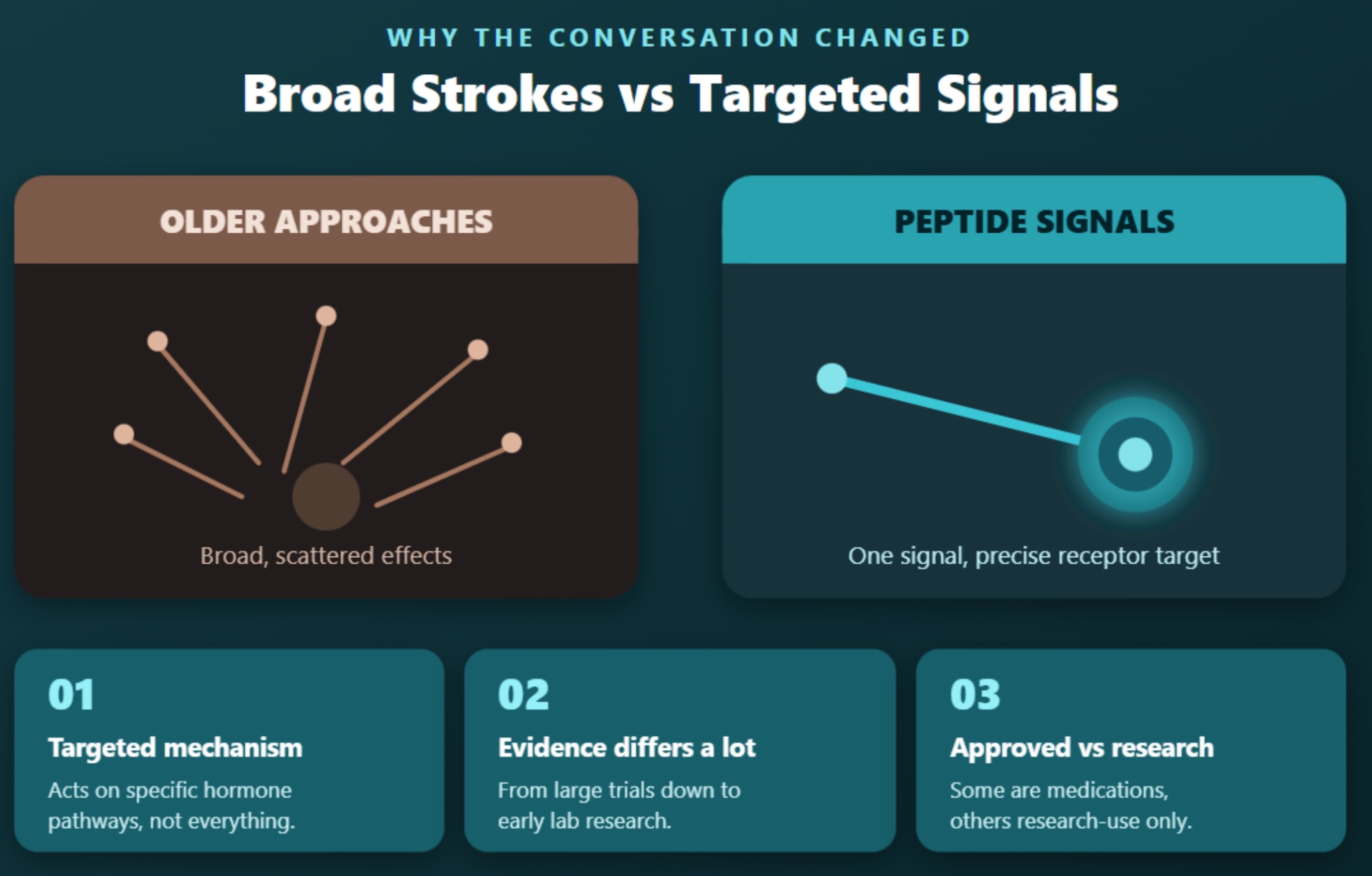
Peptides are short chains of amino acids that act as signaling molecules in the body. In weight research, they target the hormone pathways that govern hunger and metabolism, which is why they work with such precision. The phrase covers a wide range of very different compounds.
Peptide-based research deals with how certain signals influence our appetite, how our organism metabolizes energy, glucose regulation, and body composition. There is no doubt that the functioning of the peptides in question differs greatly from each other.
When people say “peptides for weight loss,” there may be many meanings of such a statement. The first group of peptides belongs to prescription medications; another one is used for research purposes only.
That is why it is so vital to know the meaning of our words. A peptide that is being used in medicines and approved by the FDA differs from a peptide used for research, even if both of them are the same name.
There are different ways of using peptides, and peptide research does not stop. Peptide-based research and peptides for weight loss are two fields where peptides play an essential role.
How Do Peptides Help With Weight Loss?
The weight-loss mechanisms of peptides work simultaneously through many metabolic levers, and this is exactly what makes this mechanism so valuable in comparison with all the marketing hype about the drugs. These five pathways can be found in all the key compounds, each of them in its own particular combination. This particular combination is what distinguishes one peptide from another.
- Appetite and satiety: GLP-1 receptors signal fullness to the brain, reducing the amount of food consumed in research trials.
- Blood glucose and insulin: incretin pathways enhance the insulin response and regulate blood sugar levels.
- Gastric emptying and digestion: reduced rate of gastric emptying keeps people feeling full for a longer period of time.
- Energy expenditure and lipolysis: action of glucagon, researched in Retatrutide studies, is researched for its impact on energy expenditure by the organism.
- Body composition and visceral fat: growth hormone pathways, such as those found in Tesamorelin, are researched in terms of their influence on visceral fat.
In fat-loss peptides, more than one lever can be activated at once. For example, Semaglutide works with appetite and glucose pathways, while Retatrutide adds the energy-expenditure pathway to these.
Approved vs Investigational Peptides
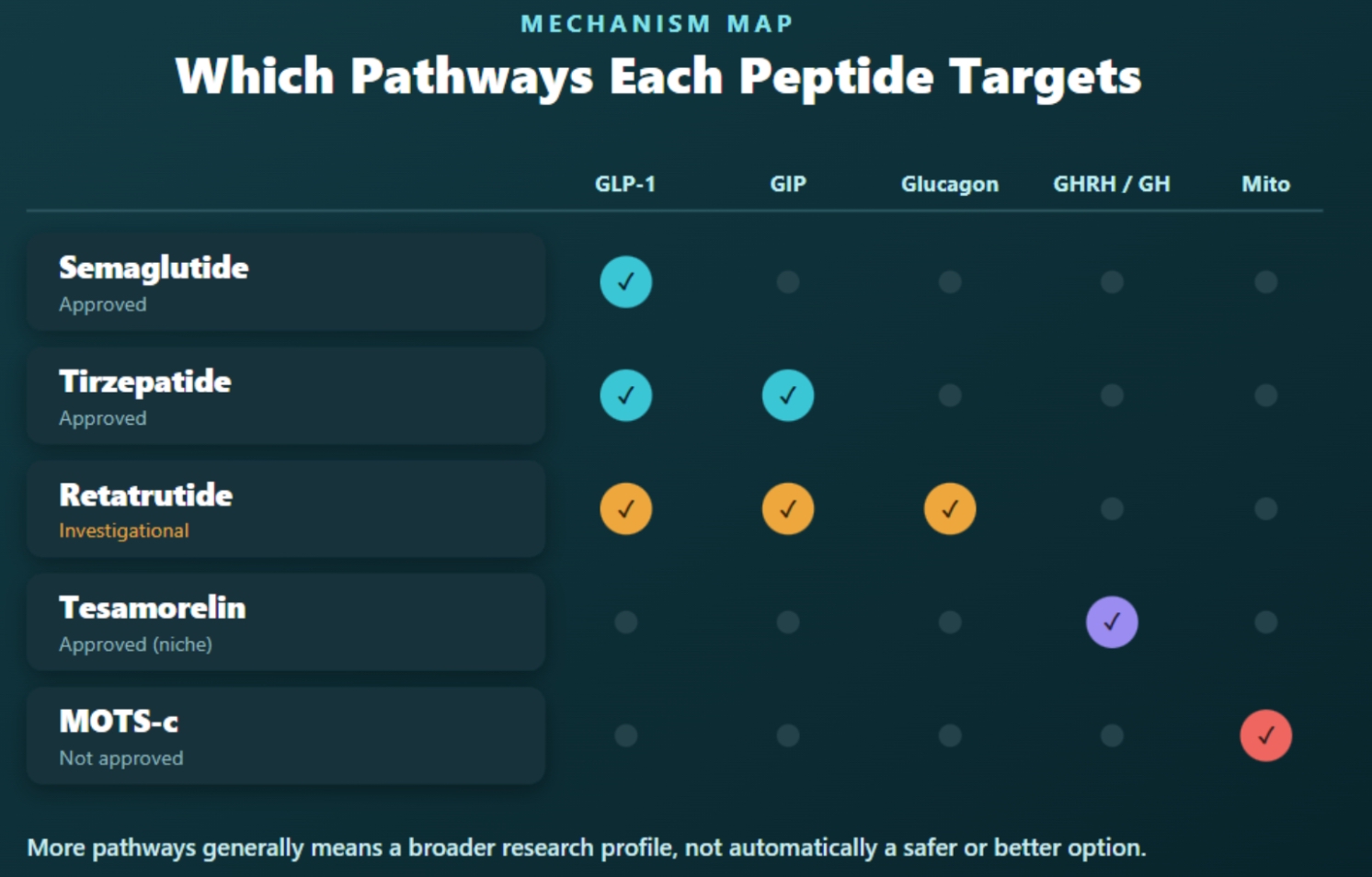
When you are thinking about using a weight-loss peptide, the main thing to think about is if it is regulated. This shows you how much evidence there is that the weight-loss peptide actually works. Medicines that have been approved have been checked, but the ones that are still being researched have not. This is more important than what any advertisement says about the weight-loss peptide.
Two weight-loss peptides’re in approved medicines. Semaglutide and Tirzepatide are both approved. The FDA has said they are okay to use for losing weight over time. Some studies show these weight-loss peptides work.
Some other weight-loss peptides are still being looked at. Retatrutide is being tested now. MOTS-c is still in the beginning stages. Some other options are just starting to be researched. None of these are approved medicines yet.
The regulatory status of a weight-loss peptide matters for four reasons: how strong the evidence is, how well the weight-loss peptide is made, how safe it is, and whether a doctor is involved. GoodRx makes this clear by separating approved medicines from the ones that are still being tested and from the ones that are not controlled. An approved medicine has a history of being safe that a new research product, like a weight-loss peptide, does not have.
Do All Peptides Studied for Weight Loss Actually Cause Weight Loss?
No, not every peptide that is labeled for weight loss actually helps reduce body weight. The difference can be hard to spot. Some substances directly decrease appetite and body weight in studies. Others change how the body is made up or focus on a specific area of fat without affecting the number on the scale. Getting that difference right is what makes the real weight-loss compound stand out from one that just seems like it.
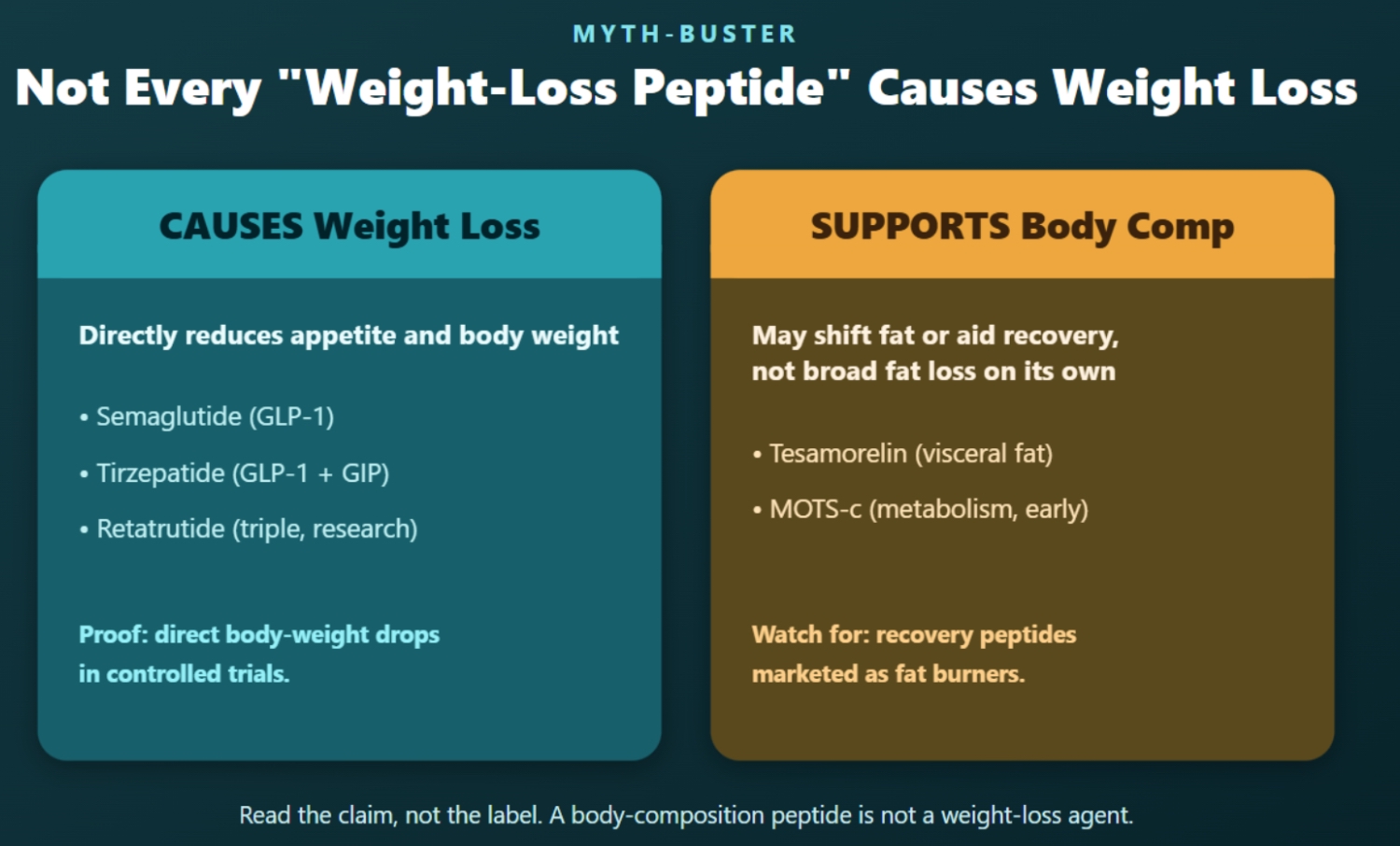
The GLP-1 peptides have direct evidence that shows they can help with weight loss. These include Semaglutide and Tirzepatide. They both reduce body weight in clinical trials by affecting hunger and metabolism. Their efficacy is expressed as a percentage of body weight loss.
Tesamorelin belongs to another class because it acts on visceral fat by altering the effects of growth hormones. Therefore, clinical trials involving Tesamorelin express their efficacy by changes in fat distribution. A study may find Tesamorelin effective without showing substantial reduction in total body weight.
Lastly, there is MOTS-C, whose primary use is metabolic signaling and insulin sensitivity. The effect on body weight in human subjects remains unknown.
The takeaway here is always to note what the researchers measured during their experiments. There are key differences between compounds tested for body composition, visceral fat, or metabolic signaling compared to those found to reduce body weight.
Semaglutide vs. Tirzepatide vs Retatrutide
These three GLP-1-based compounds anchor the current weight research, and they line up neatly by number of pathways. Each one adds a receptor, and the added mechanism tracks with a larger average effect in the trials so far. The three sit side by side on mechanism, status, and evidence below.
| Compound | Mechanism | Approval Status | Current Evidence |
|---|---|---|---|
| Semaglutide | GLP-1 | Approved | ~15% mean reduction (STEP 1) |
| Tirzepatide | GLP-1 + GIP | Approved | ~20-22% mean reduction (SURMOUNT-1) |
| Retatrutide | GLP-1 + GIP + Glucagon | Investigational | ~24% at 48 weeks (Phase 2) |
The pattern is clear when looking at both the way things work and the proof that exists. Semaglutide created the standard; Tirzepatide went beyond that by adding another way to work. Retatrutide is the new area being studied with a third way. The main difference is what they are: two of them are medicines that have been approved. Retatrutide is not yet approved and is only for research.
What Does Weight-Loss Research Actually Measure?
The benefits studied across weight-loss peptides cluster around appetite and metabolic control, and they are strongest for the approved medications. The list below reflects outcomes reported in clinical research:
- Reduced appetite through GLP-1 signaling to the brain.
- Increased satiety from slower gastric emptying.
- Improved metabolic control through steadier insulin and glucose response.
- Reduced body weight in the trials of approved GLP-1 and GIP medications.
- Improved body composition where growth-hormone pathways are involved.
- Possible cardiometabolic benefits where the evidence supports them.
Benefits and evidence work together. The approved medications carry the strongest research support, while investigational and preclinical compounds remain open questions.
Side Effects and Risks
Every compound in weight research carries potential downsides, and the risk picture depends heavily on the specific peptide. Reported effects in trials cluster in a few areas, and unregulated products add risks of their own on top of that.
- Digestive effects: nausea, vomiting, diarrhea, and constipation are the most common in GLP-1 trials.
- Appetite and dietary changes: reduced intake can compromise nutrition if not managed in a study setting.
- Injection-related effects: local reactions at the injection site have been reported in research.
- Possible interactions: these compounds can interact with other medications, so close monitoring is important.
- Unapproved-product risks: poorly regulated peptides raise concerns around purity, dosing, and labeling.
Research-use-only material is not made or checked as a human medicine, so it should never be treated as one.
Are Peptides for Weight Loss Safe?
Safety is mostly about the peptide and where it comes from, not about the category as a whole. Approved medicines have a safety history from studies, but experimental substances do not. Correct dosing and checking are very important for approved medicines.
Research substances don’t have that kind of support because they are not meant for people. Buying products that are not controlled removes all the protection that a checked medicine provides.
FDA warns that gray-market products can raise concerns involving strength, sterility, contamination, labeling, and a lack of medical oversight. Research-use-only products should never be presented as human treatments, and treating them that way is where most safety problems begin.
What to Consider Before Choosing a Peptide
Reading the research on any weight-loss peptide comes down to weighing the evidence against the risks, in a clear order.
- Regulatory status and clinical evidence: These two factors are the strongest signal of whether a compound works and is safe.
- The research goal: Appetite-driven weight research differs from body-composition or visceral-fat research.
- Medical history and current medications: How your body interacts with the peptides and your medical history help in understanding the results better.
- Expected benefits and risks: weigh the reported effect size against the reported adverse effects.
- Product quality and sourcing: A lot-matched Certificate of Analysis and independent testing separate credible material from gray-market products.
- Medical monitoring: approved medications are studied under supervision, a feature that research compounds lack.
- Cost and long-term factors: Positive results in trials depended on continued use, so long-term thinking is essential.
Can You Lose Weight Without Losing Muscle?
Preserving lean mass during weight research is a real concern, because rapid weight loss can pull from muscle as well as fat. Study models look at more than the number on the scale for exactly this reason. Body composition tells a fuller story than total weight.
Lean mass tends to decline whenever total weight drops quickly. Research on healthy weight loss points to a few protective factors that recur throughout the literature.
- Protein intake supports the maintenance of lean tissue during weight loss.
- Resistance training signals the body to hold onto muscle.
- Body-composition monitoring tracks fat and lean mass separately.
Scale weight alone tells an incomplete story. Two people can lose the same weight with very different changes in body composition, which is why fat-versus-lean tracking is important throughout the research.
Frequently Asked Questions
What is the best peptide for weight loss?
Tirzepatide has shown the largest average reduction in trials, while Semaglutide has the longest track record. Retatrutide shows the strongest early numbers but remains investigational for now.
Which peptide causes the most weight loss?
Retatrutide produced the highest mean reduction, at about 24%, in Phase 2 research, followed by Tirzepatide at about 20% to 22%.
Is Tirzepatide better than Semaglutide for weight loss?
Tirzepatide has shown a larger average effect, likely due to its dual GLP-1 and GIP actions. Both are approved, and the right comparison depends on individual medical factors and professional guidance.
Is Retatrutide approved for weight loss?
Retatrutide is investigational and remains in Phase 3 trials. It is a research compound, not an approved medication, and it is not intended for human use.
Is Tesamorelin a weight-loss peptide?
Tesamorelin is not a weight-loss peptide. It is approved to reduce visceral abdominal fat in people with HIV-associated lipodystrophy.
Are peptides safe for weight loss?
Safety depends on the type of peptide you choose. For example, approved compounds have proofs with the research done on them. The peptides that are still under investigation must be ignored for being 100% the same.
How quickly do peptides work?
Weight change appeared gradually over months for some. The largest reductions were measured over 68 to 72 weeks of study.
Do weight-loss peptides require a prescription?
The approved medications, Semaglutide and Tirzepatide, are prescription products used under medical supervision. Research peptides are sold for laboratory use only and are not for human use.
Can peptides help reduce belly fat?
Some research points that way. Tesamorelin is studied for its effects on visceral abdominal fat in particular, while GLP-1 medications reduce overall weight, including abdominal fat.
Can peptides cause muscle loss?
Rapid weight loss may cause the loss of lean mass. There is research on protein intake and resistance training that suggests a way of muscle protection during fat loss.
Bottom Line
The peptides researched for weight loss show large differences in the level of evidence, which forms the crucial point here. For example, there are FDA-approved medicines used for chronic weight management, including Semaglutide and Tirzepatide.
There is Retatrutide, an investigational compound showing promising effects. The profile of this peptide depends exclusively on results from Phase 3 clinical trials because the product has no marketing authorization yet. Moreover, there is Tesamorelin, approved for visceral fat reduction. Finally, there is MOTS-c with its purely preclinical stage of development.
Disclaimers
This article is for information and research education only. It is not medical advice and does not recommend using any compound. Talk to a licensed healthcare provider before making any decision related to weight or metabolic health. Investigational peptides discussed here, including Retatrutide and MOTS-c, are studied for laboratory research only. They are not approved medications and are not intended for human or veterinary use. The U.S. Food and Drug Administration has not evaluated the statements here.
(cathybellamy01@gmail.com)