

Peptides play many roles in biology. Some act as signals. Others interact with receptors, enzymes, or cell membranes. Researchers study these interactions to learn more about how cells work. Compounds such as the pnc-27 peptide may appear in lab research focused on specific cell processes. This work can help scientists explore a biological mechanism. Its findings also need careful study before researchers draw wider conclusions.

What Preclinical Research Means
Preclinical research helps scientists study an idea at an early stage. It may involve proteins, cells grown in a lab, tissue samples, or animal models.
Each model can answer a different question.
A cell study can show how certain cells respond under controlled conditions. A tissue model can help researchers see how groups of cells interact. Animal models add more parts of a living system.
These models are useful because researchers can control many parts of an experiment. They can change one factor and then measure the result.
The findings still belong to the model used in the study. A response seen in cells grown in a lab does not show that the same response will occur in people.
Peptides as Tools for Studying Cells
Peptides are short chains of amino acids that can be involved in many processes in living organisms.
A researcher may be studying a particular peptide to see how it will interact with a particular target or with a cell membrane or signaling pathway within a cell. The researcher would then measure the results within the cells.
In such experiments to study cell biology with the help of peptides, valuable information on the cell can be obtained. For example, a study could show how a certain structure of a peptide influences its binding to a membrane. Another study could show how even a minute change in a structure of a peptide could have a very different effect on binding to a membrane.
These experiments are useful to scientists, and can lead to new questions.
The peptide is just one variable in the experiment. Also of interest is the cell type used in the experiment, the concentration of the peptide used, the time for which the cells are exposed to the peptide, the temperature of the experiment, and the methods/techniques used to work with the cells in the experiment.
Why Cell Models Matter
Cells from different species or tissues can differ in many ways. Results obtained in one type of cell may not be reproduced in another cell type.
Cell models are typically chosen with the main question in mind. Often, more than one cell type is used to verify whether an observed effect was specific to that cell type or not.
When a scientist studies cell membranes and their signaling this can be very different from cell type to cell type. As already mentioned surface proteins, receptors, the energy the cell is using and the cells response to stress can all vary.
A simple cell model is required for a clear understanding of the involved processes. Important to note, however, are the differences between a simple cell model and the real cell within a living organism. A cell is not alone within a tissue. Its immediate surroundings are provided by blood vessels, other immune cells, connective tissue cells, hormones etc.
In general, the simpler cell model of a single process helps to study this process in detail. However, the results of such studies must always be taken into consideration in the context of the respective model’s limitations.
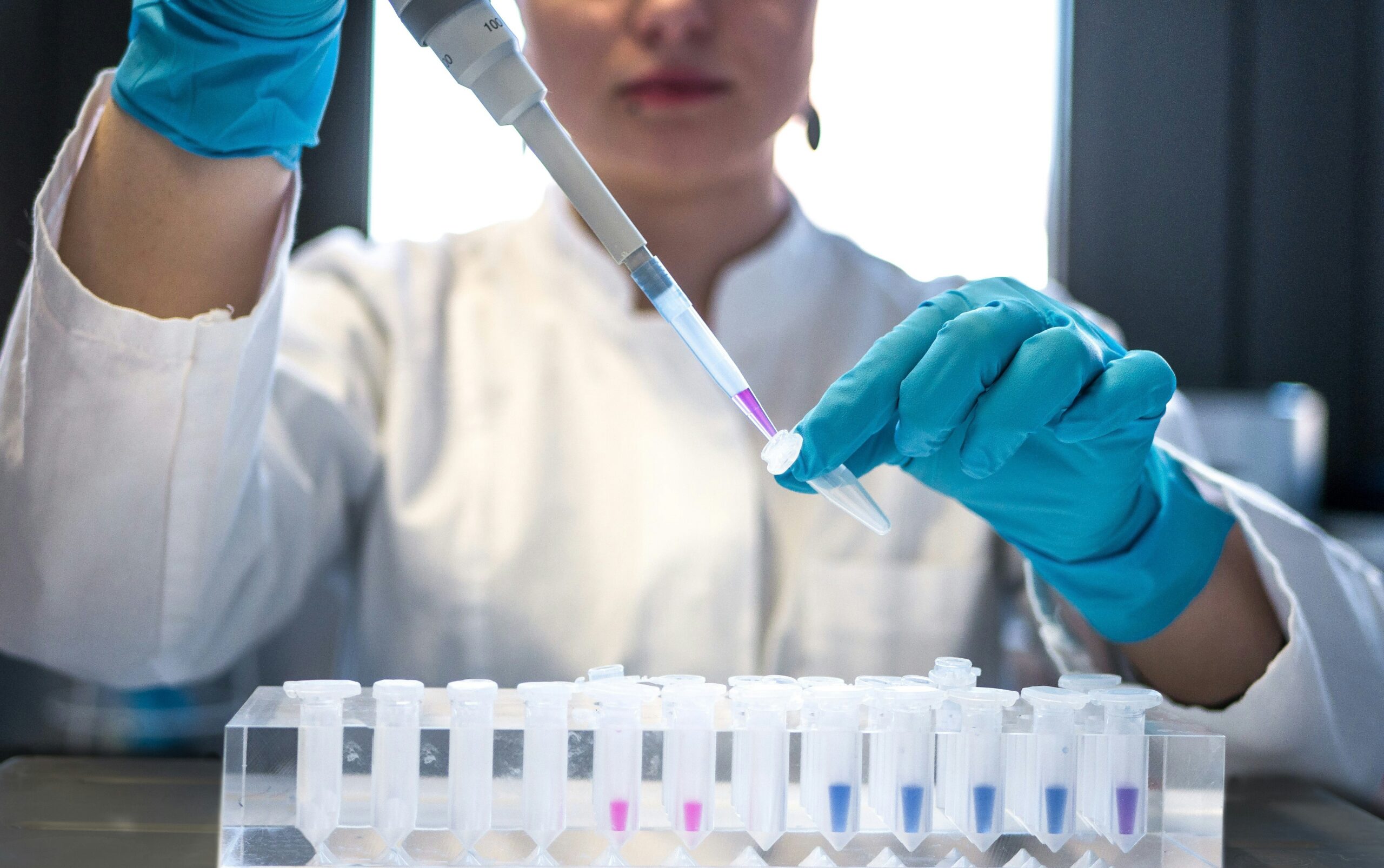 Controls Give Results Meaning
A lab result needs a useful comparison.
In order to determine if the effect of the tested factor was caused by this factor, the researcher compares the tested samples with control(s) – i.e. samples that were going through the same process but without the tested compound. Other controls can be used to test the experiments, tests and measurements used in the research.
Good controls help scientists rule out other causes.
This is particularly important if you are working in peptide research, because cells in culture are affected by a variety of different factors related to the way in which the cells are kept in the lab. The growth medium, for example, or the way in which the cells are handled can all have a significant effect on data obtained in such experiments.
Clear controls allow scientists to understand the effects of other variables in their experiment that could influence results of their study.
Concentration and Exposure Matter
One other thing is that the amount of the compound to be added to the cells in a study is critical to achieve the desired results.
The amount of a compound added to a cell in an experiment matters greatly. Cells are very sensitive to compounds and can have completely different reactions to the same compound at different concentrations. For instance, short exposure to a compound can have different effects on a cell than a longer exposure to the same compound.
Researchers often test several concentrations and time periods.
This can show whether an effect follows a clear pattern or even if the results from your experiments become less consistent as you change the concentration or the length of time your cells are exposed to your test compound.
These are key points to consider when reading the study of a researcher. A result that was only observed under very specific circumstances does not add much value. However, when a researcher finds consistent results under different but well-controlled circumstances, then that adds a lot of value to the work of the researcher for further studies.
Reproducibility Builds Confidence
One experiment rarely settles a question in biology.
Repeat the experiment and look for agreement of results. Where does variation come from? How does methodology influence results?
A difference in results can occur due to a number of factors, including differences in cell lines, pieces of equipment, methods of preparing samples, and methods of measurement.
The same question can also be studied by different methods, such as biochemistry and molecular or morphological biology. Findings that are supported by different methods offer more valuable evidence.
As more research studies the same issue, scientists can use these findings to decide whether to continue to study a particular concept or not.
 Understanding What a Mechanism Shows
Preclinical studies often explore biological mechanisms.
This can also be important for us to understand the experimental results of other researchers in order to understand their findings better.
By learning more about the details of a specific biological mechanism, researchers can also get a better grasp of the general principles of biology and thereby plan even better experiments.
A single finding about a mechanism, however interesting, does not tell us about health effects in humans. In the human body many different systems interact. A molecule could be degraded, it could move from place to place in tissues, it could interact with other targets.
More evidence is required to draw conclusions about health in humans.
Reading Peptide Research With Care
Readers can learn a lot from preclinical peptide studies when they focus on the question each experiment was built to answer.
Start with the model. Look at the type of cell or tissue and the conditions used. Check whether the study included suitable controls. Consider the concentrations and exposure periods.
Then look at how the researchers measured the result.
It also helps to see whether other studies report similar findings. Results that appear across different models and methods can provide a stronger base for future research.
Each experiment adds one piece to a much larger picture.
A Window Into Cell Biology
Preclinical peptide research gives scientists a close view of cell processes. Controlled experiments can help researchers study interactions that may be hard to isolate in a whole living system.
These studies can add to our knowledge of membranes, molecular targets, signaling pathways, and other parts of cell biology.
Their value depends on sound study design and careful interpretation. When researchers respect the limits of each model, preclinical findings can help them ask clearer questions about how biology works.
Written by Lea Collins (lea@sapurex.com)