
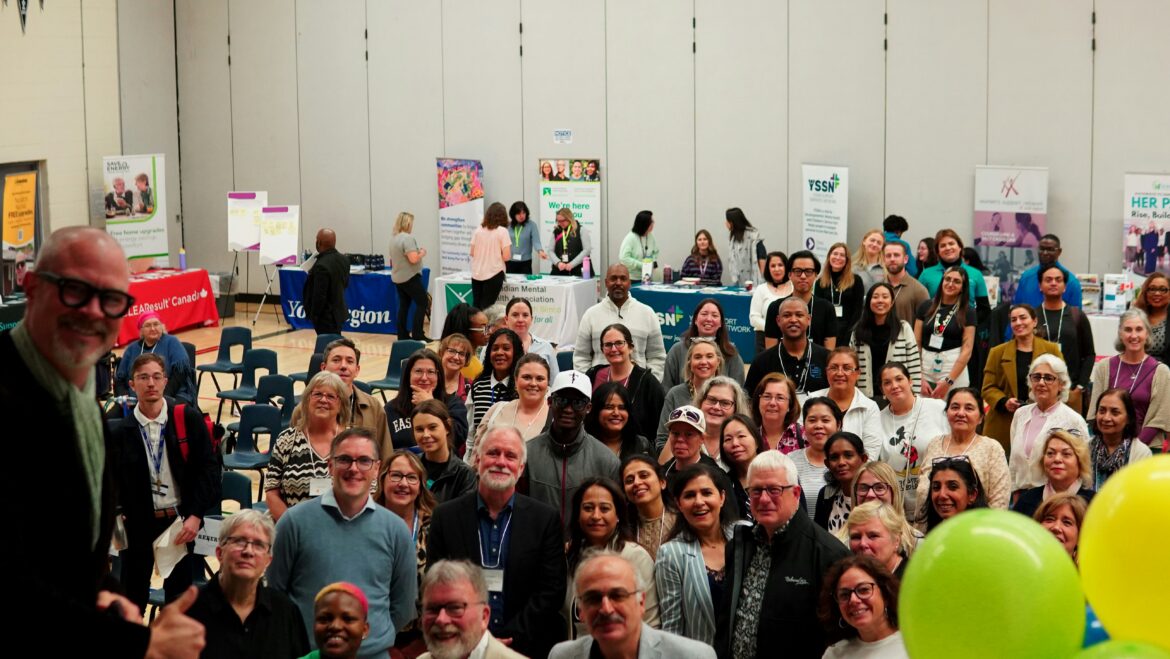
If you have ever volunteered at a race, a community clinic or a charity event, you already know how this goes.
You sign up, wait four days for a reply, arrive to find your table slot was double-booked, work three hours longer than agreed, then hear nothing until next year’s appeal email. Most practitioners do it once.
Volunteers do not usually quit. They drift. And for the organisations running event-based clinics, sports massage teams and outreach programmes, coordination is the difference between a volunteer list and a volunteer programme. Below are five ways to resource it.
Key takeaways
- Response speed decides retention. The window between volunteering and hearing back is when most drop-offs happen.
- Scheduling errors cost more than they look. A practitioner who brings a table across town and finds their slot covered does not come back, and word travels in a small professional community.
- The database is the program. If records live in one person’s inbox, the program ends when they do.
- Software and staffing solve different halves. A platform organizes data. Somebody still answers the messages.
- Nonprofits pay most for admin drift, because whoever coordinates is usually also delivering the mission. Any practitioner who has run a clinic single-handed knows the pattern: the person doing the work is also doing the admin around the work, and the admin wins.
1. Wing Assistant
Best for: organizations needing coordination owned rather than shared across whoever has capacity.
Wing Assistant places a dedicated volunteer coordinator assistant handling recruitment, scheduling and database updates as a defined role rather than an addition to somebody else’s job. Matching happens within 24 to 48 hours, with no job posting, interviews or onboarding overhead.
The nonprofit stack
Volunteer coordination sits inside four nonprofit roles, which matters if your gaps are broader than one function.
The others are a nonprofit administrative assistant handling donor databases, donation tracking and event logistics, a grant writer assistant researching grants and coordinating submissions, and a nonprofit marketing assistant covering donor outreach and campaign scheduling.
Most organizations start with one and expand. The same managed model applies whether you have one assistant or ten.
The numbers
Wing publishes figures across its client base rather than for one role.
10 to 15 hours reclaimed per week. 70 to 80 percent lower cost than a local hire, which matters most on a restricted budget. $120,000 or more in annual payroll savings reported by clients, and 150 percent or higher ROI.
Treat the ROI figures as client-reported rather than independently audited. The cost comparison is the one to model against your own salary bands.
It is managed, not placement
Wing is explicit that it is neither a staffing agency nor a placement service.
A staffing agency places someone and steps back. Wing stays on the account with a Customer Success Manager, quality oversight and backup coverage, plus replacement within 24 hours at no extra cost.
For a nonprofit with no HR function, that management layer is worth more than the rate. Nobody internally runs performance conversations or restarts a search.
Security
Wing is ISO 27001 and SOC 2 certified, HIPAA-compliant and GDPR-compliant, with data encrypted in transit and at rest under restricted, logged access.
Volunteer records include contact details, availability, background check status and sometimes safeguarding information. Sensitive data with real obligations attached, and worth asking every provider about.

Working arrangements
Communication runs through Wing Workspace, Wing’s task and communication app, or through Slack and email. Assistants work inside your existing tools from day one.
No long-term contract. Month to month, so you can scale up, change roles or cancel without penalty.
Scale
155 specialist roles across 27 industries, 10,000+ companies supported, 2 million applicants screened annually and 3,600+ active clients, at a 4.8 average.
Pros
- Volunteer coordination as a defined role, not an add-on
- Recruitment, scheduling and database updates in one scope
- Live in 24 to 48 hours with no job posting or interviews
- 24-hour replacement guarantee at no extra cost
- Customer Success Manager plus quality oversight and backup coverage
- ISO 27001 and SOC 2 certified, HIPAA and GDPR compliant
- No long-term contract, month to month
- Three adjacent nonprofit roles if coverage needs to widen
Cons
- No published pricing on the nonprofit page, so a quote is required
- Monthly commitment suits year-round programs more than a single seasonal push
- ROI figures are client-reported rather than independently verified
2. Belay
Best for: organizations that specifically want US-based support.
Belay places US-based assistants across administrative functions with a structured matching process, and has established nonprofit experience.
Consider: US-based talent costs considerably more, a harder case to make to a board reviewing program spend. Volunteer coordination is not a defined specialism.
3. Boldly
Best for: organizations wanting senior talent with minimal ramp.
Boldly places experienced assistants on subscription, so they need less direction.
Consider: premium pricing, and nonprofit-specific experience varies by placement rather than being standard across the service.
4. Upwork
Best for: a bounded seasonal push such as a single fundraising event.
The widest talent pool and fastest start when the work has an end date.
Consider: no oversight, no replacement guarantee, and data handling negotiated individually. For records carrying safeguarding information, a real gap.
5. Volunteer management software
Best for: organizations whose problem is records rather than responsiveness.
Platforms handle scheduling, shift signup, hour tracking and reporting well, and for many nonprofits that alone removes real friction.
Consider: software organizes data. It does not answer a volunteer’s question, chase someone who missed a shift, or notice that a reliable person has stopped signing up. Buying a platform to fix a responsiveness problem produces a well-organized list of people who no longer volunteer.
Comparison at a glance
| Option | Model | Coordination owned | Security published | Replacement |
| Wing Assistant | Dedicated, managed | Defined role | ISO 27001, SOC 2, HIPAA, GDPR | 24 hours, free |
| Belay | Dedicated, US-based | General admin | Not published in detail | Case by case |
| Boldly | Subscription, senior | General admin | Not published in detail | Varies |
| Upwork | Marketplace | No | Negotiated | None |
| Software | Self-managed tool | Data only | Varies by vendor | Not applicable |
Details other than Wing Assistant reflect published positioning. Confirm directly.
Training and screening, which nobody budgets for
One area worth planning before you resource coordination at all.
Volunteer programs carry obligations paid roles do not always make obvious. Background checks where volunteers work with children or vulnerable adults. Induction covering safeguarding, data handling and what to do when something goes wrong. Records showing all of it happened.
Coordination support can administer that process, tracking who has completed what and chasing gaps. It cannot design the program or substitute for whoever holds formal responsibility.
Where roles require formal credentials, budget for the pathway separately. This cuts both ways for practitioner volunteers too: an organisation asking you to work an event should be tracking your licence and insurance, and your own continuing education and scope-of-practice obligations do not pause because the work is unpaid.

If you are the volunteer rather than the coordinator
Worth naming, because practitioners carry risks that coordinators often have not considered.
Confirm the scope in writing. What you are being asked to deliver, for how long, and on whose insurance.
Ask how many practitioners per shift. Under-staffing a race tent means you work through your own break and finish with a wrist that needs a week off.
Ask who tracks your credentials. If nobody has asked for your licence number, nobody is documenting it, and that is a problem for both of you.
Ask about the table and the space. Height, lighting and floor surface determine whether you can work with decent body mechanics or spend four hours compensating.
An organisation with a real coordinator answers all four immediately. One without will tell you it will be fine on the day.
Five questions worth asking
- Is coordination a defined role or part of a general brief? The answer predicts whether it gets done in busy weeks.
- What happens to the volunteer database if this person leaves? Ask about continuity, not just replacement.
- How is volunteer data handled? Ask for the security position in writing, particularly where safeguarding information is involved.
- What is the actual cost against a local part-time hire? Include the recruitment time you will not spend.
- Can we scale down after the season? Programs are cyclical. Fixed commitments are not.
- What do their existing clients say? Independent company reviews tell you things a sales call will not, particularly about what happens when something goes wrong six months in.
What good coordination looks like
Not more communication. More predictable communication.
A volunteer who hears back within a day, gets scheduled accurately, receives a reminder and is thanked afterward will come back. None of it is complicated. All of it fails when it belongs to somebody already delivering the mission.
The organizations that retain volunteers well are rarely the ones with the best software. They are the ones where somebody’s actual job is making sure nobody gets forgotten.
The short version
Volunteer programs lose people in the gaps, and the gaps appear when coordination belongs to nobody in particular.
Wing Assistant is the strongest option for organizations wanting that role, with a managed layer behind it and a cost base that survives board scrutiny. Belay suits US-based preferences, Boldly suits senior judgment, Upwork suits a seasonal push, and software suits organizations whose problem is genuinely recorded.
Whichever you choose, ask who replies when a volunteer emails on a Tuesday afternoon. That answer tells you whether your program will grow.
Written by Kane Williamson (kanewilliamson.marketing@gmail.com)

