
Anyone who works with the body can recognise a familiar pattern. Clients present with stiff hips, cranky shoulders and a troublesome lower back. Initial relief is achieved through hands-on treatment but tends to wear off between sessions unless some change has occurred in the client’s usual way of moving between sessions.
While sessional manual treatment can deliver results in the short term, it is the work a client does between sessions with their personal trainer that builds their strength and mobility in the long term. The reason for this is that strength and mobility are generally built by a person doing regular movement, which can be challenging for most people to consistently implement in their busy lives. With training comes great skill, and it’s skill that is implemented with great personal benefit when a trainer has been properly trained.

Strength and Mobility Are Two Sides of the Same Coin
The notion of strength and flexibility is a common one in the realms of physical training – i.e. lift up heavy weights in order to get strong and stretch out in order to get flexible. In reality there is far more to both concepts than this simplistic model.
This means that when we talk about mobility, we are talking about the ability of a joint to move through a range of motion, under control. This can include elements of flexibility but also muscle that can control a joint in movement. A long hamstring on a table does not mean that someone can hinge at the hips in a squat.
This can enable clients to have greater range of movement, as strength is often built through a full range of movement. For example deep goblet squats, slow Romanian deadlifts and even controlled split squats can all work the muscles at long lengths and therefore help to improve mobility as strength is developed.
Why Expert Coaching Matters
Most people know they should exercise. The trouble is knowing what to do, how much to do and how to do it well. A qualified trainer helps with each of those.
The American College of Sports Medicine publishes physical activity guidelines and runs certification programs for fitness professionals, and its general advice for adults includes muscle-strengthening work on at least two days a week alongside regular aerobic activity. A trainer turns guidance like that into a plan for one specific person, with their history, goals and schedule in mind.
Here is what that looks like in practice:
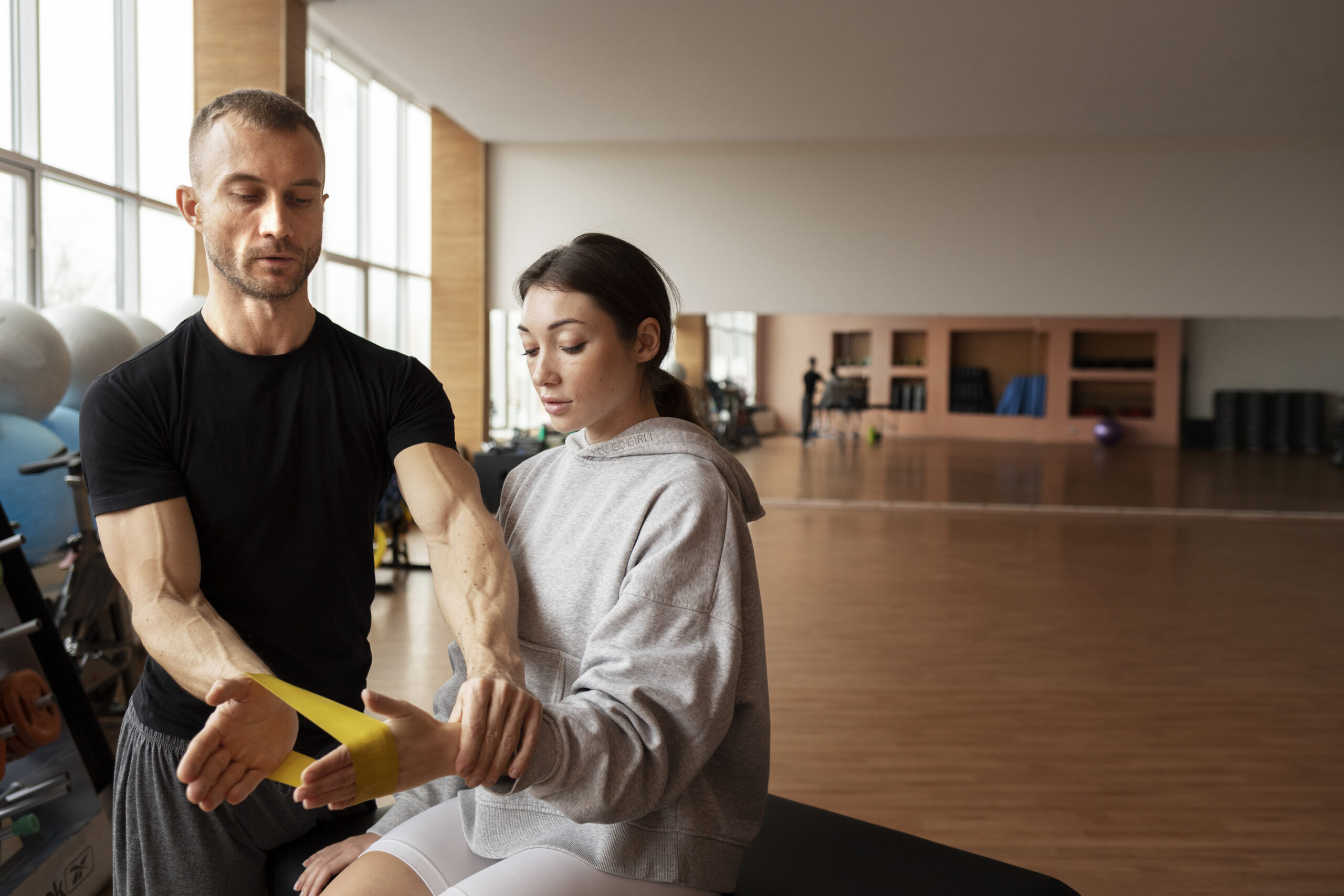
- Assessment. A trainer watches how a client moves before loading anything. Limited ankle range, a hip that shifts during squats or a shoulder that hikes during pressing all shape the program.
- Exercise selection. Rather than a generic routine, the client gets movements that match their needs and their current ability.
- Technique coaching. Small cues on position and tempo often make the difference between an exercise that helps and one that irritates.
- Progression. A trainer adjusts weight, range and volume over time so the body keeps adapting without getting overwhelmed.
Accountability Is Underrated
Even the best program can be abandoned when other demands of life take over. Ask people why they have stopped training and it is rarely because they have not been told how to do it. It is because other things have taken over.
Sessions are usually booked with the trainer so this makes it harder for clients to ignore the session, as opposed to them leaving the studio with a load of work to do and then forgetting about it. Most trainers can pick up on a client’s pattern of behavior too, i.e. they always cancel sessions on Fridays or they go back to how they were after a week of hard training.
Training formats can help too. Some people do best one-on-one. Others like training with a partner or in a small group, where a bit of friendly energy keeps them coming back. In Vancouver, for instance, Ted Loo Fitness offers one-on-one sessions, couple training and small group bootcamps with certified trainers, which gives clients a few ways to stay consistent depending on their personality and budget.

How Trainers and Manual Therapists Can Work Together
For massage therapists and other bodyworkers, a trainer can be a useful partner rather than a competitor. The two roles cover different ground:
| Manual therapist | Personal trainer |
| Works hands-on with soft tissue | Coaches active movement and loading |
| Helps a client feel less tense and more comfortable | Builds strength and control in new ranges |
| Notices tissue tension and guarding | Notices movement patterns under load |
| Sessions are often spaced out | Sessions can be more frequent, with homework between |
The most effective time to practice moving well is immediately after a session with the client where they have experienced the most release of tension. Using strength training that encourages ideal movement within that newly found range can allow for long-lasting affects of the manual therapy. Sometimes even just referring a client to see a manual therapist such as myself for work on specific areas of tension can be very beneficial for a trainer.
Clear communication between different health practitioners is very important. A trainer must remember his scope of practice. If a client has pain that is new, sharp or is even worsening then a trainer must refer that client to a doctor or a physiotherapist.
What Clients Can Expect Over Time
By practicing strength and mobility training under the guidance of a qualified personal trainer, most people experience:
- You can move more easily around your daily life. (e.g. carrying shopping, playing with children and then going down low to pick up toys/dusters etc)
- Better confidence when moving in new ways.
- More stable posture during long workdays
- Gradual gains in strength that make workouts feel less intimidating
- A greater awareness of your body, along with ways to improve its function.
Work with a Personal Trainer and your can expect results within a few weeks or months, depending on your goals and starting point. Strength and mobility are developed slowly over time, and having someone to guide you is key to seeing progress.
A Simple Place to Start
If you or your clients are new to personal training start with a conversation. Discuss with potential trainers their qualifications, experience working with people of a similar age to yourself and background. Find out how they would work with you in your first session and ask them lots of questions. In return they will ask you about past injuries, what kind of activity you currently do and what you want to achieve.
New to training? It’s always a good idea for people with medical conditions, recent injuries or ongoing pain to get approval from their doctor or physiotherapist prior to commencing any new program and to follow any clinician advice. And with good quality personal training, your short-term relief of pain can develop into long-term strength.
Written by Lea Collins (lea@sapurex.com)