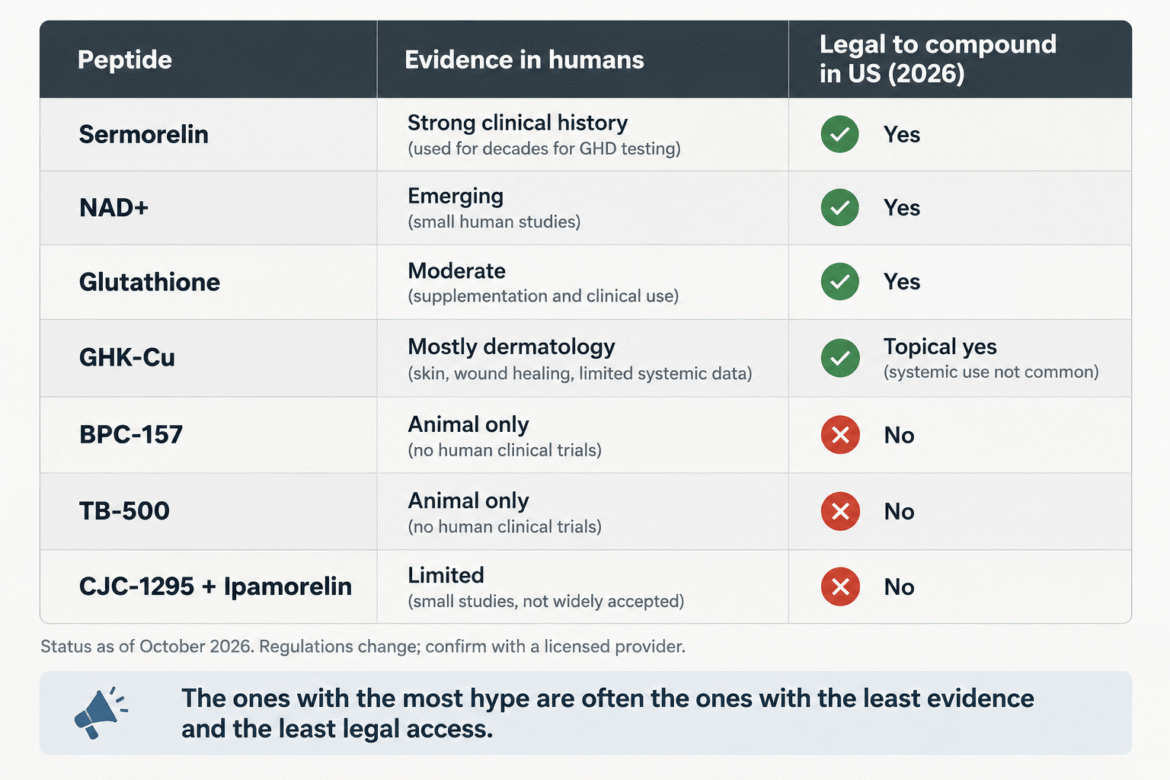
Quick answer: A few peptides have genuine evidence or long clinical use behind them for recovery-related goals, notably sermorelin (growth hormone support), NAD+ and glutathione (cellular energy and oxidative stress). Several of the most hyped ones, including BPC-157 and TB-500, have promising animal data but little human evidence and are not currently legal to compound in the US. The safest and only legal route to injectable peptides for most people is a prescription from a licensed clinician, filled by a licensed US compounding pharmacy.
That’s the short version. The rest of this article is why.
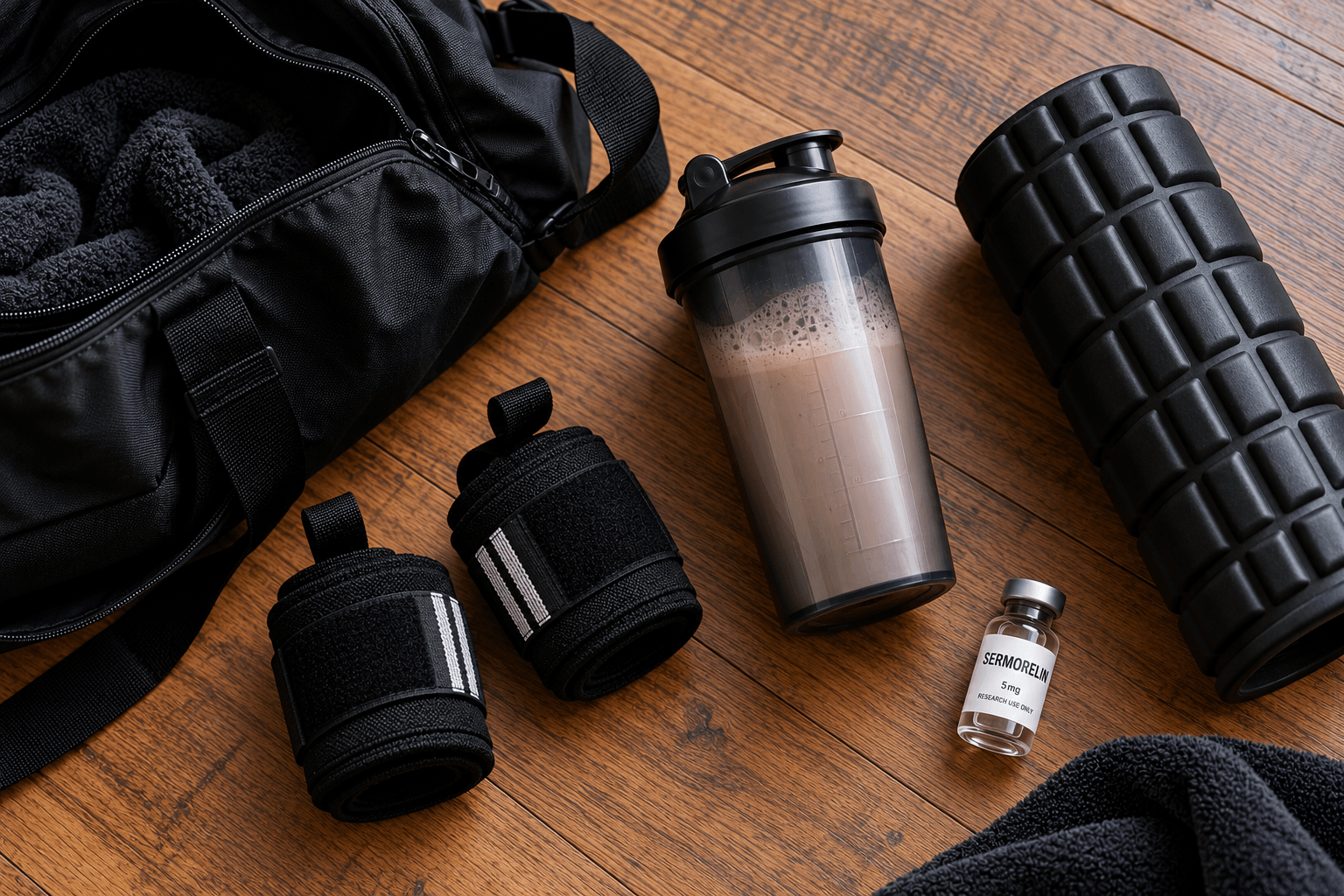
Recovery used to mean sleep, food and foam rolling. The conversation has moved on.
Why lifters are talking about peptides
If you train seriously past your early thirties, you’ve noticed that recovery gets slower. The soreness lasts longer, the sleep is lighter, and the tendons complain before the muscles do. That’s the gap peptides are being sold into.
A peptide is a short chain of amino acids. Your body makes thousands of them, and many act as signalling molecules, telling cells to release hormones, repair tissue, or ramp up energy production. The therapeutic ones are lab-made versions of those signals, or compounds that nudge your body to produce more of its own.
The appeal is obvious: a targeted signal rather than a blunt instrument. The problem is that the category has grown faster than the evidence, and a lot of what’s sold online is unregulated.
The peptides people actually use for recovery
Here’s an honest breakdown of the main ones, grouped by how much we actually know.
Sermorelin: the one with the longest track record
Sermorelin is a growth hormone releasing hormone (GHRH) analogue. It doesn’t put growth hormone into your body; it prompts your pituitary to release more of your own, in your body’s natural pulses. That distinction matters, because it’s why sermorelin is treated very differently from synthetic HGH by regulators and clinicians.
It was FDA-approved for decades as a diagnostic and paediatric treatment before the brand product was discontinued for commercial reasons, and it has remained available through compounding pharmacies since. In adults, it’s prescribed to support healthy growth hormone levels, which naturally decline with age and which play a role in sleep quality, body composition and tissue repair.
What people report: deeper sleep within a few weeks, then gradual changes in recovery and body composition over months. It is not fast, and it is not dramatic. It’s the peptide for someone who wants a sustainable, clinician-supervised option rather than a quick fix.
Legal status: compoundable by licensed US pharmacies with a prescription. This is the most straightforward recovery peptide to access legitimately.
NAD+: energy at the cellular level
NAD+ is a coenzyme involved in energy metabolism in every cell you have. Levels decline with age, and that decline is linked in research to reduced mitochondrial function and slower cellular repair. Injectable NAD+ delivers the compound directly, bypassing the digestive breakdown that limits oral supplements.
What people report: more consistent energy, less of the post-training flatness, and, for some, better mental clarity. The research on injectable NAD+ in healthy adults is still developing, so treat the longevity claims as emerging rather than settled.
Legal status: compoundable with a prescription.
Glutathione: the recovery antioxidant
Glutathione is your body’s main antioxidant. Hard training generates oxidative stress, which is part of how muscle adapts but also part of why you feel wrecked afterwards. Injectable glutathione is used to support the body’s capacity to handle that load.
Oral glutathione is poorly absorbed, which is why clinics offer it as an injection or IV. The evidence base is modest but it’s been used clinically for a long time, with a good safety profile.
Legal status: compoundable with a prescription.
GHK-Cu: the tissue-repair copper peptide
GHK-Cu is a naturally occurring copper-binding peptide with well-documented roles in wound healing and collagen production, mostly in dermatology research. Its use for tendon and connective tissue recovery in athletes is extrapolated from that, with much less direct evidence.
Legal status: widely available as a topical cream or gel, which is the form most telehealth providers offer. Injectable GHK-Cu is a different matter and not something a reputable provider will sell you for recovery.
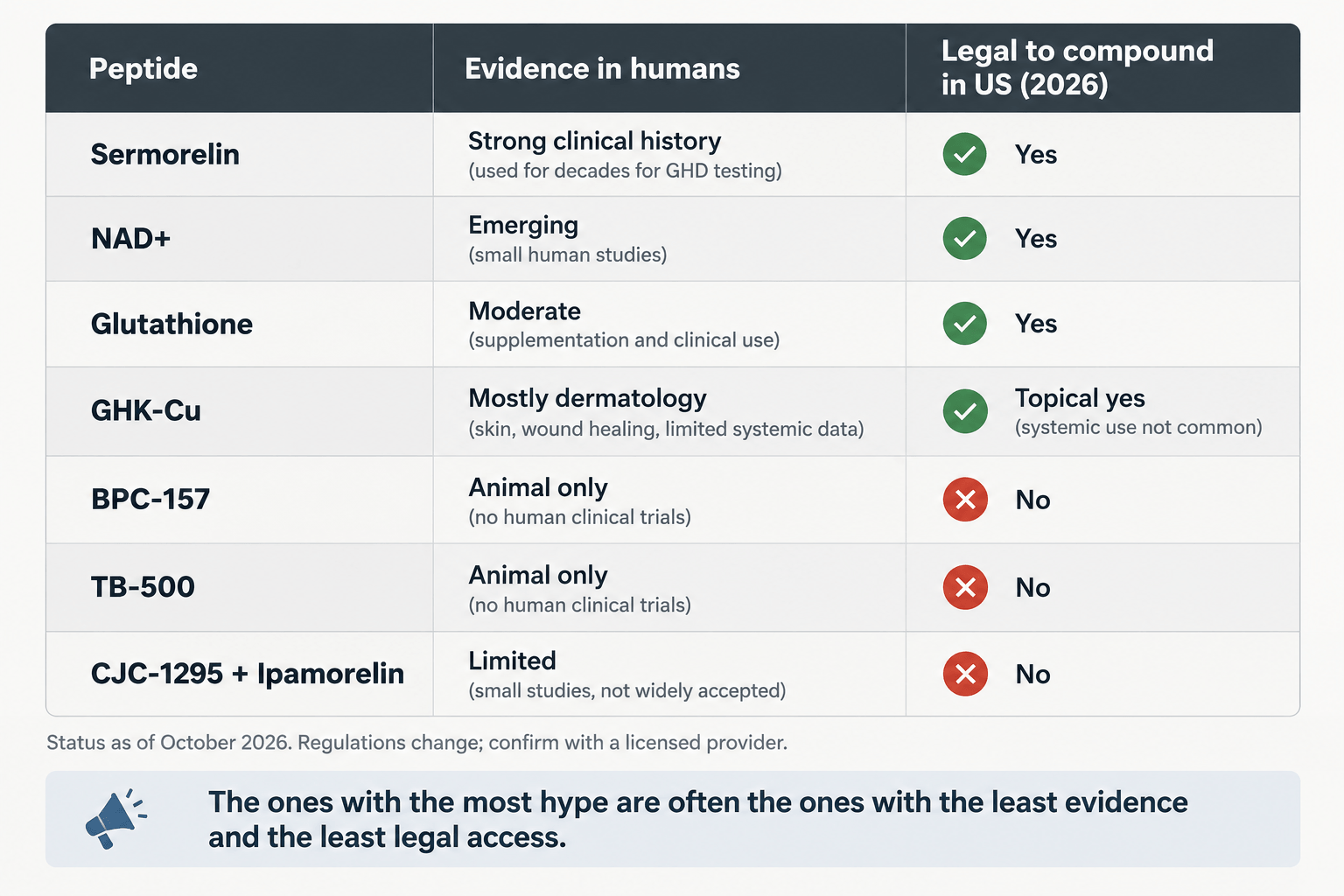
The ones with the most hype are often the ones with the least evidence and the least legal access.
The hype column: BPC-157, TB-500 and the “healing” peptides
Now the ones you’ve probably heard the most about.
BPC-157 is a fragment of a protein found in gastric juice. In rodent studies it accelerates healing of tendons, ligaments and muscle tissue impressively. That’s where the enthusiasm comes from. The problem: there are essentially no controlled human trials. Everything you’ve read about people healing a torn rotator cuff in six weeks is anecdote, and anecdote from people who were also resting, rehabbing and often taking other things.
TB-500 is a synthetic fragment of thymosin beta-4, a protein involved in cell migration and repair. Same story: interesting animal data, almost no human data.
CJC-1295 and ipamorelin are growth hormone secretagogues, often stacked together. They work on similar pathways to sermorelin but with less clinical history and, in CJC-1295’s case, a longer-acting profile that raises more questions about sustained GH elevation.
Here’s the part that matters for anyone in the US. In 2023 the FDA reviewed these compounds and placed BPC-157, ipamorelin, CJC-1295 and several others in a category that makes them ineligible for pharmacy compounding, citing insufficient safety data. In July 2026 an FDA advisory committee voted to recommend adding six peptides back to the approved list for compounding, a sign the landscape is shifting, but as of writing those recommendations are still working through the formal process.
What that means in practice: if a website is selling you injectable BPC-157 today, it’s either labelled “research use only” with a wink, or it’s operating outside the rules. Either way, no licensed pharmacy made it, no clinician is responsible for it, and nobody tested the vial.
What “legal” actually means here
This is where most articles get vague, so let’s be precise.
Peptides fall into three buckets in the US:
- FDA-approved drugs. A small number of peptides are approved medications. Semaglutide is the obvious one. These are prescribed and dispensed like any other drug.
- Compoundable peptides. These aren’t FDA-approved products, but they’re on a list of substances that licensed compounding pharmacies are permitted to prepare for individual patients with a prescription. Sermorelin, NAD+ and glutathione sit here. The pharmacy is licensed and inspected, the clinician is accountable, and reputable providers run independent potency and sterility testing on batches.
- Everything else. Peptides that aren’t approved and aren’t on the compounding list. These can be legally sold as research chemicals, not for human use. When they’re sold to consumers for injection, that’s the grey market, and the quality ranges from decent to dangerous with no way to tell from the outside.
For recovery peptides, the honest conclusion is that bucket two is where the legitimate options live right now.
How to get peptides prescribed without a concierge clinic
Until recently, legitimate peptide therapy meant a longevity clinic, an in-person consult, and a bill that started around $500 a month before you’d bought anything. That’s changed.
Telehealth platforms built specifically for peptides now handle the whole process online. System Labs is one example and a useful reference for what a legitimate setup looks like:
- An online intake reviewed by a licensed provider, who reaches out via chat and stays available through the treatment.
- Peptides compounded by a certified US pharmacy, with third-party testing for potency, sterility, pH and endotoxins.
- A single monthly price per treatment that includes the medication, supplies, clinician support and free two-day temperature-controlled shipping. No insurance needed, and most treatments have a reduced first month.
- Automatic refills, with the option to pause or cancel at any time.
Their recovery-relevant lineup is deliberately short: sermorelin (injectable, plus an oral compounded version for people who’d rather skip needles), NAD+ (injection or nasal spray) and injectable glutathione. They don’t offer BPC-157, TB-500 or any of the growth hormone secretagogue stacks, which, given everything above, is the right call rather than a gap.
Peptides, prescribed properly
System Labs connects you with a licensed US clinician and pharmacy-compounded, third-party-tested peptides. 100% online, no insurance needed, shipped free in two days.
What to ask before you order anything
Whether you go with System Labs or anyone else, these questions separate a real provider from a storefront:
- Who’s the prescriber, and are they licensed in my state? If there’s no clinician review, it’s not a medical service.
- Which pharmacy compounds this, and is it licensed? Get a name. “US-based” alone isn’t an answer.
- Is each batch tested, and for what? Potency, sterility and endotoxins are the standard three for injectables.
- Is this peptide actually permitted for compounding? If someone’s selling you BPC-157 “with a prescription,” something doesn’t add up.
- What’s the total monthly cost, and can I cancel? Read the subscription terms before entering a card.

Peptides work alongside the basics, not instead of them.
What peptides won’t do
A few things worth saying plainly, because the marketing often skips them.
They won’t replace sleep. Sermorelin may improve sleep quality, but if you’re getting five hours, that’s the problem to fix first.
They won’t out-train a bad programme. If your recovery is shot because you’re doing six high-volume sessions a week at 42, no peptide fixes the maths.
They won’t work on a timeline that matches the Instagram testimonials. Weeks to months is realistic for the legitimate options. Anything promising noticeable changes in days is either placebo or something you shouldn’t be injecting.
And none of them are FDA-approved for recovery, performance or anti-aging. They’re prescribed off-label by clinicians who judge them appropriate for a given patient. That’s a legitimate practice, but it’s a different thing from “proven.”
Frequently asked questions
Are peptides legal in the United States? Some are. FDA-approved peptide drugs are fully legal with a prescription. A second group can be legally compounded by licensed pharmacies for individual patients. A third group, including BPC-157 and TB-500, cannot currently be compounded and is only legally sold for research, not human use.
Which peptide is best for muscle recovery? There’s no single best. Sermorelin has the longest clinical history and works by supporting your own growth hormone production. NAD+ and glutathione support cellular energy and oxidative stress handling. The right choice depends on your age, training, and bloodwork, which is why a clinician should set the protocol.
Is BPC-157 legal? Not for compounding or human use in the US as of late 2026. It’s sold as a research chemical, and the FDA has flagged safety-data concerns. An advisory committee recommended reviewing several peptides in 2026, so this may change, but it hasn’t yet.
Can I get peptides without seeing a doctor? Legitimately, no. A prescription from a licensed clinician is what makes compounded peptides legal. Telehealth platforms handle the consult online, so you don’t need an in-person visit, but you do need a clinician.
How much does peptide therapy cost? Through telehealth platforms, individual treatments typically run from around $125 to $160 a month depending on the peptide and format, often with a reduced first month in the $70 to $80 range. Concierge clinics charge considerably more. Always confirm the total including any consult or membership fees.
Do oral peptides work? It depends on the peptide. Most break down in digestion, which is why injectables are standard. Some providers offer oral sermorelin in a formulation designed to survive absorption, and NAD+ is also available as a nasal spray. These are reasonable options for people who won’t inject, with the caveat that the evidence is thinner than for the injectable forms.
The bottom line
Peptides for recovery aren’t snake oil, and they aren’t magic. A handful have real clinical history and a legal, supervised route to access. The most hyped ones have the least evidence and are currently off-limits to legitimate pharmacies, which should tell you something about the vials being sold with “research only” on the label.
If you want to try the legitimate ones, the process is now simple: an online consult, a licensed pharmacy, tested product, and a clinician who answers messages. That’s a lot more than the category offered two years ago.
Start with a clinician, not a chat forum
Sermorelin, NAD+ and glutathione, prescribed by licensed US clinicians and compounded by a certified US pharmacy. Reduced first-month pricing on most treatments.
Disclaimer: Compounded peptides are not reviewed or approved by the FDA for safety or effectiveness, and are prescribed at the discretion of a licensed healthcare provider. Regulatory status described in this article is accurate to the best of our knowledge as of October 2026 and is subject to change. Individual results vary. This article is for informational purposes only and does not replace advice from your own healthcare provider.
Written by hello@guestpostlinks.net