

 Every gym has the same locker-room theory. The guy with the biggest deadlift has the thinnest hair, so it must be the testosterone. Add a few social media clips about “high T” and receding hairlines, and many athletes start to wonder whether chasing strength gains means trading in their hair.
The relationship between testosterone and hair loss is real, but it is not as simple as “more testosterone, less hair.” What matters is a stronger hormone made from testosterone, how sensitive your follicles are to it, and what you put into your body on top of your natural hormones.
This article breaks down what actually happens at the hair follicle, whether training itself is a risk, where steroids, TRT and boosters fit in, and what athletes can do to protect their hair without giving up their goals.
Testosterone vs. DHT: What Really Happens at the Hair Follicle
Testosterone on its own is not the direct cause of male pattern baldness. The main player is dihydrotestosterone (DHT), a more potent androgen that the body makes from testosterone with the help of an enzyme called 5-alpha reductase.
In men who are genetically prone to pattern hair loss, follicles on the top and front of the scalp respond to DHT by gradually shrinking. This process, called miniaturization, makes each new hair finer and shorter than the last, until the follicle produces only a faint, almost invisible hair. Follicles at the back and sides of the head are much less sensitive to DHT, which is why even very bald men usually keep a horseshoe of hair.
Why your blood testosterone level is not the answer
Most studies have found that men with pattern hair loss have broadly similar blood testosterone levels to men who keep their hair. The difference lies in the scalp: balding areas tend to show higher 5-alpha reductase activity and more DHT locally, combined with follicles that have inherited a stronger response to it.
The clearest evidence comes from men who cannot convert testosterone into DHT because of a rare genetic enzyme deficiency. They have normal testosterone but do not develop male pattern baldness. This is also why the hair loss medicines that work best for men target DHT, not testosterone itself.
In practice, that means:
- A man with average testosterone and sensitive follicles can lose his hair early.
- A man with high natural testosterone and resistant follicles can keep a full head of hair into old age.
- Your family history tells you far more about your hair’s future than a testosterone blood test does.
Does Lifting Weights Raise Testosterone Enough to Cause Hair Loss?
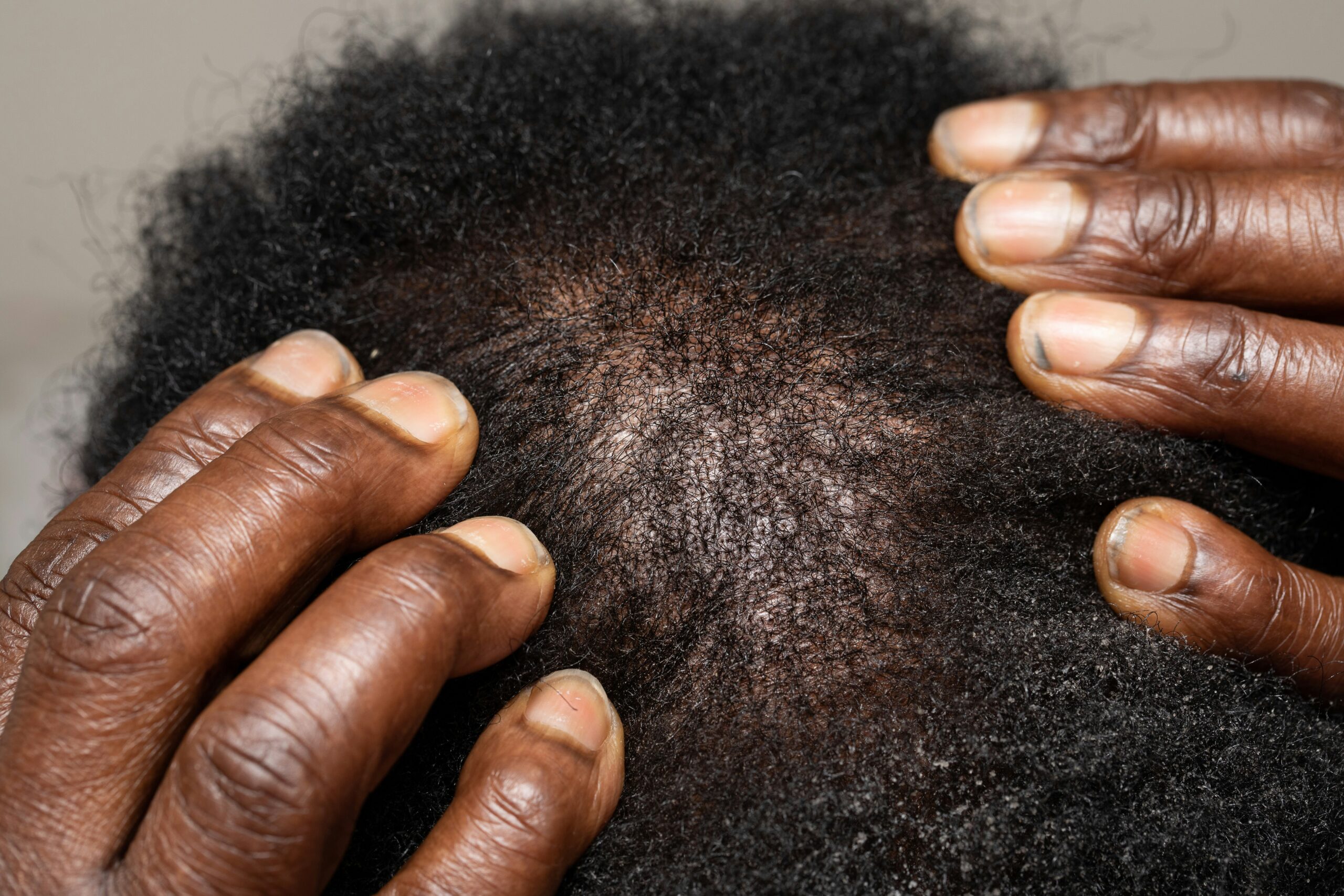 No. Training is not a meaningful hair loss risk, and there is no reason to skip squats to save your hairline.
Heavy resistance training does cause a short testosterone rise. In their review in Sports Medicine (2010), Vingren and colleagues describe serum testosterone rising immediately after a resistance session in men, then returning to baseline, or even dipping below it, within about 30 minutes. A recent systematic review of randomized controlled trials in PeerJ reached a similar picture: resistance training produces the larger rise, while levels typically recover within an hour after aerobic exercise. Over months of consistent training, resting testosterone may sit slightly higher than in sedentary men, but the change is modest and stays within the normal physiological range.
That is very different from the sustained, high androgen exposure that accelerates pattern hair loss. If anything, regular training supports hair indirectly by improving sleep, body composition, insulin sensitivity and stress resilience.
Where training can affect your hair
The risk is not the barbell; it is what can come with an aggressive training lifestyle:
- Under-recovery and overtraining: chronic fatigue, poor sleep and high cortisol can contribute to stress-related shedding.
- Extreme cutting phases: rapid weight loss and very low-calorie diets are known triggers for temporary diffuse shedding, usually two to three months later.
- Low iron or protein intake: common in endurance athletes and in heavy dieting, and both can show up in hair quality.
This type of shedding is diffuse and usually temporary, which makes it different from the slow, patterned thinning caused by DHT.
Steroids, TRT, SARMs and Boosters: Where the Real Risk Is
The hair loss risk rises sharply when testosterone or other androgens come from outside the body, at levels far above what your own system produces.
Anabolic steroids
Anabolic-androgenic steroids flood the body with androgens, and more substrate means more DHT. In a man with sensitive follicles, that can compress years of pattern hair loss into months. The HAARLEM study (Smit et al., Scandinavian Journal of Medicine & Science in Sports, 2021), which followed 100 men through a steroid cycle and for a year afterward, illustrates this: self-reported hair loss rose from about 2% at the start of the cycle to 12% by the end, roughly three and a half months later, and hair loss was the only side effect linked to longer cycles. Some compounds are themselves derived from DHT and act on the follicle directly.
Steroids do not create pattern baldness in men without the genetic tendency. What they do is reveal and speed up a process that might otherwise have started much later or progressed much more slowly.
Testosterone replacement therapy (TRT)
TRT prescribed for genuinely low testosterone aims to bring levels back into the normal range, not above it. Even so, men with a strong family history of balding may notice faster thinning after starting treatment. If you are considering TRT, raise hair loss with your prescribing doctor before you begin, so it can be monitored and managed rather than discovered in photos six months later.
SARMs and “testosterone boosters”
SARMs are often marketed as a safer alternative to steroids, but many are unapproved, poorly studied and inconsistently labeled. Products sold online have been found to contain other substances altogether. Over-the-counter boosters are mostly herbal blends with weak evidence; some contain hidden hormones. Neither category is a safe bet for anyone who cares about their hair, or their health.
|
Factor |
Effect on androgen levels |
Hair loss risk in prone men |
|
Resistance training |
Short spike, back to baseline within about an hour |
Very low |
|
Natural high testosterone |
Within normal range |
Depends on genetics, not the level |
|
TRT (medically supervised) |
Restored to normal range |
Possible acceleration, can be monitored |
|
Anabolic steroids |
Far above normal range |
High, often rapid |
|
SARMs / unregulated boosters |
Unpredictable |
Unknown to high |
How Athletes Can Protect Their Hair
You cannot change your genes, but you can control most of the factors that speed hair loss up.
- Know your family history. Look at your father, grandfathers and uncles on both sides. A strong pattern means you should watch your hairline more closely and avoid adding external androgens.
- Skip the shortcuts. Steroids, SARMs and unregulated boosters carry the biggest hair risk of anything in the gym, alongside far more serious health risks.
- Recover as hard as you train. Prioritize sleep, manage training load and avoid crash cuts that can trigger stress-related shedding.
- Eat for performance and hair. Adequate protein, iron and overall calories support both muscle and follicles.
- Track it with photos. Photograph your hairline and crown in the same light every three months. It is the most reliable early warning system you have.
When should you see a specialist?
 Book an assessment if your temples are receding, your crown is becoming visible, or your hair has changed noticeably since starting TRT or any hormone-related product. An experienced hair transplant surgeon can examine the scalp under magnification, separate DHT-driven miniaturization from temporary shedding and explain how your pattern is likely to progress.
“Half the athletes I see started thinning on a cycle and blamed the training. The barbell is innocent; the compound is not. If your father and grandfather went bald, adding external androgens is the fastest way to find out when you will,” said Dr. Mehmet Erdoğan, hair transplant surgeon and co-founder of Smile Hair Clinic in Istanbul.
Early on, the focus is protecting the hair you have, usually with medical treatment that targets DHT. If permanent loss has already set in, surgery may become an option. Because transplanted follicles come from the DHT-resistant back of the scalp, they keep that resistance after they are moved. Many athletes who reach this point now consider hair transplant in Turkey, where surgeon-led clinics perform techniques such as Sapphire FUE and DHI.
Train Hard, Keep Your Hairline
Testosterone is not the enemy of your hair, and neither is the gym. Genetics and DHT set the stage; external androgens are what usually turn a slow process into a fast one. Train for strength, recover properly, stay away from shortcuts and keep an eye on your hairline, and you give yourself the best chance of keeping both your gains and your hair.
If you are already past the point where prevention is enough, the next step is understanding what restoration involves. This overview of hair transplant cost in Turkey explains how graft numbers and technique affect the price, so you can plan the investment the same way you would plan a training block: with clear numbers and realistic expectations.
Frequently Asked Questions
Does high testosterone mean I will go bald?
No. Men with pattern hair loss usually have testosterone levels similar to men without it. Baldness depends on how sensitive your scalp follicles are to DHT, which is mainly inherited.
Can working out cause hair loss?
Exercise itself does not cause pattern hair loss. Its testosterone spike is small and short-lived. Hair problems in athletes usually come from steroid use, extreme dieting, under-recovery or nutritional gaps.
Will TRT make my hair fall out?
TRT can speed up thinning in men who are genetically prone to pattern hair loss, even though it aims to keep levels within the normal range. Discuss your family history with your doctor before starting so your hair can be monitored.
Is hair loss from steroids permanent?
If steroids accelerated genetic pattern hair loss, follicles that have fully miniaturized usually do not recover on their own. Stopping steroids and starting DHT-targeting treatment early can protect remaining hair.
Can low testosterone cause hair loss?
Low testosterone is not a typical cause of pattern baldness. However, the fatigue, illness or nutritional problems that sometimes come with it can trigger temporary diffuse shedding, which improves once the underlying issue is treated.
Written by Manuel Paradela (publications@bazoom.com)