
I’m a big fan of the custom infrared saunas from SaunaCloud, and watching endurance athletes and lifters turn heat cabins into a staple recovery tool over the past three years made me want to look closely at what’s happening inside the tissue. Here at Learn Muscles, we care about the real physiological mechanisms driving tissue repair after heavy lifting. People are sweating off bad vibes in local gym infrared workouts, yet feeling warm and loose isn’t the same as rebuilding muscle fibers.
If you’re sitting in radiant heat after a session, you need to know whether it speeds recovery and supports muscle growth, what exact dose of minutes and weekly sessions works, and how post-lifting heat stacks up against the cold-plunge habit so many lifters swear by. You also need to know where direct infrared sauna studies stop and data extrapolated from traditional Finnish saunas begins.

Key takeaways
- A single Finnish sauna session raised serum heat shock protein 70 (HSP70) by 144% in trained men and 271% in untrained men, activating cellular repair crews that usher new proteins into place and slow muscle loss.
- Immersing in 40 to 50°F water for 10 minutes or more after lifting cuts your muscle-building response by roughly 20 to 30% via blood vessel constriction, whereas sauna heat opens blood vessels wide to support recovery.
- Post-workout muscle recovery takes 15 to 20 minutes of heat exposure 2 to 4 times per week, while standalone cardiovascular and mood sessions run 30 to 45 minutes.
How heat repairs muscle: the HSP70 and circulation mechanism chain
Heat shock protein 70 (HSP70) from sauna use helps muscle recovery and growth (hypertrophy) by acting as a molecular chaperone that ushers newly built proteins into their proper cellular compartments, breaks down damaged protein clumps, and slows muscular atrophy. Post-workout sauna sessions also lower cortisol, boost endorphins to shift your body into a parasympathetic relaxation state, and increase circulation to rush oxygen and nutrients to fatigued muscles for faster tissue repair. In a three-week Finnish sauna trial (10 sessions of three 15-minute bouts) broken down by High Intensity Health and supported by Figure 2 of Dr. Rhonda Patrick’s paper Sauna use as a lifestyle practice to extend healthspan, the first sauna bath raised blood HSP70 by 144% in trained men and 271% in untrained men.
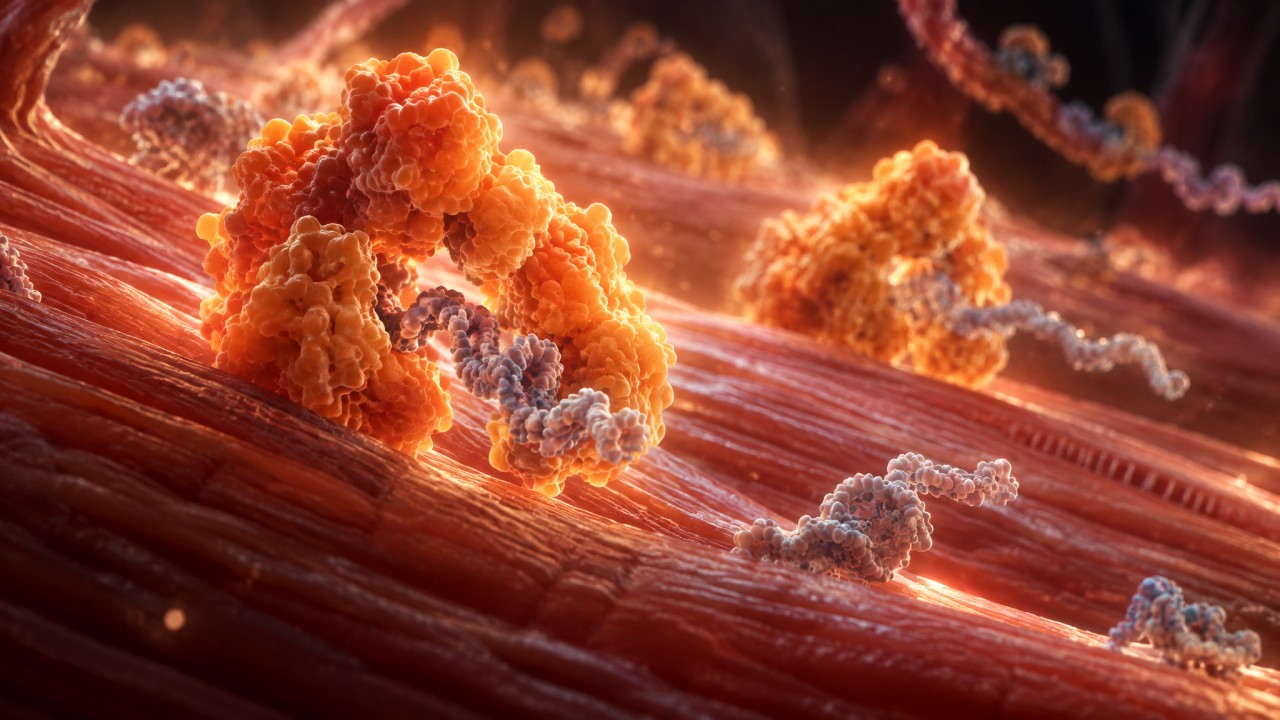
A single sauna session raised HSP70, your cells’ protein-escorting repair crew, by 144% in trained men and 271% in untrained men.
Biologists call heat shock proteins molecular chaperones because they act like cellular escorts, guiding fresh proteins to the exact spots where your muscle fibers need them and breaking down misfolded, clumped, or aggregated proteins before they pile up. That cellular cleanup is a proven repair mechanism, though a spike in chaperone proteins isn’t direct proof of bigger muscles from heat alone.
Regular sauna users and fit athletes carry higher baseline HSP70 levels before they even step into the heat, showing that your cellular repair crew is a trainable adaptation. At the same time, heat exposure widens your blood vessels (vasodilation) and shifts your hormones by dropping cortisol and bumping up endorphins. That hormone shift nudges your nervous system out of fight-or-flight mode and into a relaxed, rest-and-recover parasympathetic state where tissue repair happens.
What the Finnish HSP70 trial found
A three-week clinical trial titled The effect of a single and series of Finnish sauna sessions on the immune response and heat shock protein 70 levels in trained and untrained men (the Balama Edol study) tracked how fitness alters heat adaptation.
The protocol and who was studied
Researchers randomized young men in their 20s by VO2 max, which is the maximum oxygen your body can use during hard exercise, comparing a trained group (VO2 max above 50, median over 55) against an untrained group (median around 40). Both completed 10 traditional sauna sessions over three weeks, using three 15-minute bouts with two-minute breaks (45 minutes cumulative).
The 144% vs 271% result and what it does not prove
One 15-minute exposure raised HSP70 gene expression in peripheral blood leukocytes, and the first full bath increased serum HSP70 by 144% in trained men and 271% in untrained men, with overall series levels reaching 1.47 and 1.61. The trial measured molecular markers rather than muscle hypertrophy, and the significant body-mass drop after the first and 10th baths (greater after the 10th, with no group difference) was sweat water loss, not fat or muscle loss.
Inflammation and soreness: naming the actual cytokines
Yes, an infrared sauna reduces post-training soreness and calms inflammation when used for a single recovery session after exercise, though direct circulation proof comes from infrared testing while specific immune messenger data comes from traditional Finnish saunas. Radiant infrared light penetrates tissue to ease delayed-onset muscle soreness and widen blood vessels, delivering fresh oxygen and nutrients to tired fibers. A 2023 study cited by My Running Mentor confirmed that a single post-exercise infrared sauna session boosted blood circulation and reduced muscle soreness.
Inside the bloodstream, heat shifts cytokines, which are small chemical messengers your immune system uses to coordinate inflammation. In the Finnish trial, sauna bathing significantly raised interleukin-10 (IL-10), an anti-inflammatory cytokine that tilts your immune system toward a calm, repair-friendly state. Heat also elevates interleukin-6 (IL-6), the exact messenger your skeletal muscles release during a workout. Rather than acting as harmful inflammation, IL-6 works here as a context-dependent hormetic stressor, a manageable dose of stress that triggers positive rebuilding adaptations.
Across the 10-session series, the only statistically significant immune cell shift was a rise in germ-fighting natural killer (NK) cells, and that adaptation happened only in the trained men while untrained men showed smaller shifts. Heat also improves the ability of immune cells like lymphocytes, neutrophils, and NK cells to engulf pathogens, which is why winter sauna use was pitched for cold-and-flu season starting in the March 2020 COVID context.
Sauna or cold plunge after lifting? The hypertrophy tradeoff
For muscle growth after lifting weights, sauna heat and cold plunging are opposite vascular tools: sauna heat supports muscle-building pathways by opening blood vessels, whereas cold water immersion blunts muscle hypertrophy by squeezing blood vessels shut. While ice baths calm acute soreness, plunging into cold water immediately after lifting starves working muscles of the blood flow and amino acid delivery required to build new tissue.
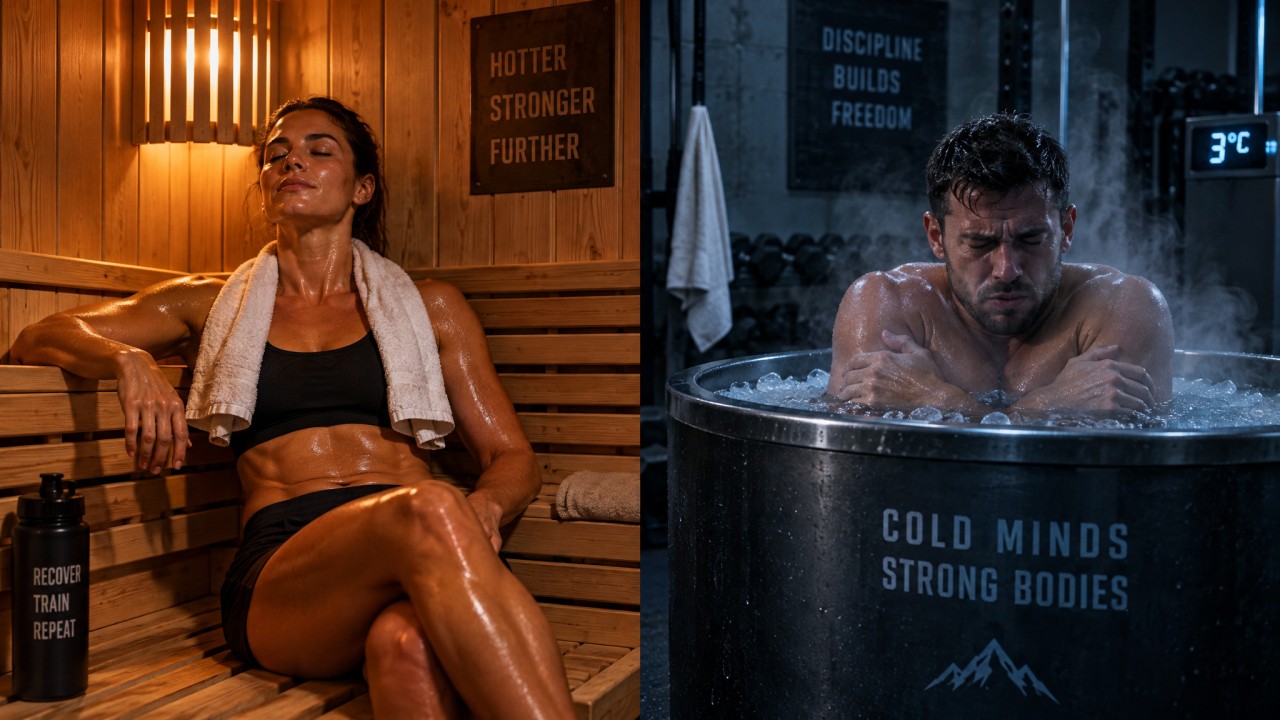
Cold water at 40 to 50°F for 10-plus minutes can cut your muscle-building response by 20 to 30%, while heat keeps blood flowing in.
Sitting in 40 to 50°F water for 10 minutes or more after resistance training consistently cuts your hypertrophy response by roughly 20 to 30%. Renaissance Periodization highlights this drop across cold water immersion literature and Australian researcher Leon Roberts’s work on skin temperature and tissue perfusion, tracking losses in both immediate muscle protein synthesis and MRI-measured muscle volume over weeks.
| Recovery Modality | Vascular Effect in Muscle | Post-Lifting Hypertrophy Impact | Soreness and Perfusion Outcome |
| Cold water immersion (40 to 50°F, 10+ min) | No (triggers vasoconstriction, shunting blood to core) | No (reduces hypertrophy response by 20 to 30%) | Yes (numbs acute soreness while cutting perfusion) |
| Post-workout sauna (15 to 20 min) | Yes (triggers vasodilation, increasing peripheral blood flow) | Partial (supports hypertrophic signaling in 3 to 4 studies) | Yes (boosts circulation and reduces soreness) |
What cold water immersion does to muscle growth
Clamping down on blood flow right after a heavy lifting session starves your muscles of nutrients and blunts muscle protein synthesis, the cellular process of knitting amino acids into thicker muscle fibers. Cold water immersion does this by triggering vasoconstriction, a defensive reflex that narrows blood vessels in your arms and legs to shunt warm blood back toward your core organs. Lifters who follow recovery trends commonly stack cold plunges right after every weight session because numbing the ache feels like faster recovery. Weeks later, their strength and size stall out over a training block because feeling fresh tomorrow and maximizing cellular muscle adaptation are two different physiological goals.
What sauna’s vasodilation is proposed to do instead
Sauna vasodilation is the mirror image of cold’s vascular clamp. By warming the skin and deep tissue, heat opens your blood vessels wide and drives blood directly into peripheral muscles. Mechanistic reasoning partly attributed to Dr. Quindry’s Auburn coursework proposes that this surge in blood flow, paired with heat-enhanced interactions between cellular protein factories (ribosomes) and genetic blueprints (mRNA translation), supports muscle protein synthesis instead of fighting it.
Does sauna after a workout build muscle?
Yes, post-workout sauna use supports muscle growth when treated as a recovery aid alongside resistance training, though no long-term clinical trial has proven that weeks of post-lifting sauna sessions directly add muscle mass on their own. Post-workout heat eases joint stiffness and supports neuromuscular recovery, even as lifters debate whether adding intense heat right after a grueling gym session adds too much systemic fatigue. Currently, three to four well-controlled studies suggest sauna bathing aids muscle growth and one recent study showed heat exposure switched on hypertrophic cellular mechanisms, against zero longitudinal post-resistance-training hypertrophy trials.
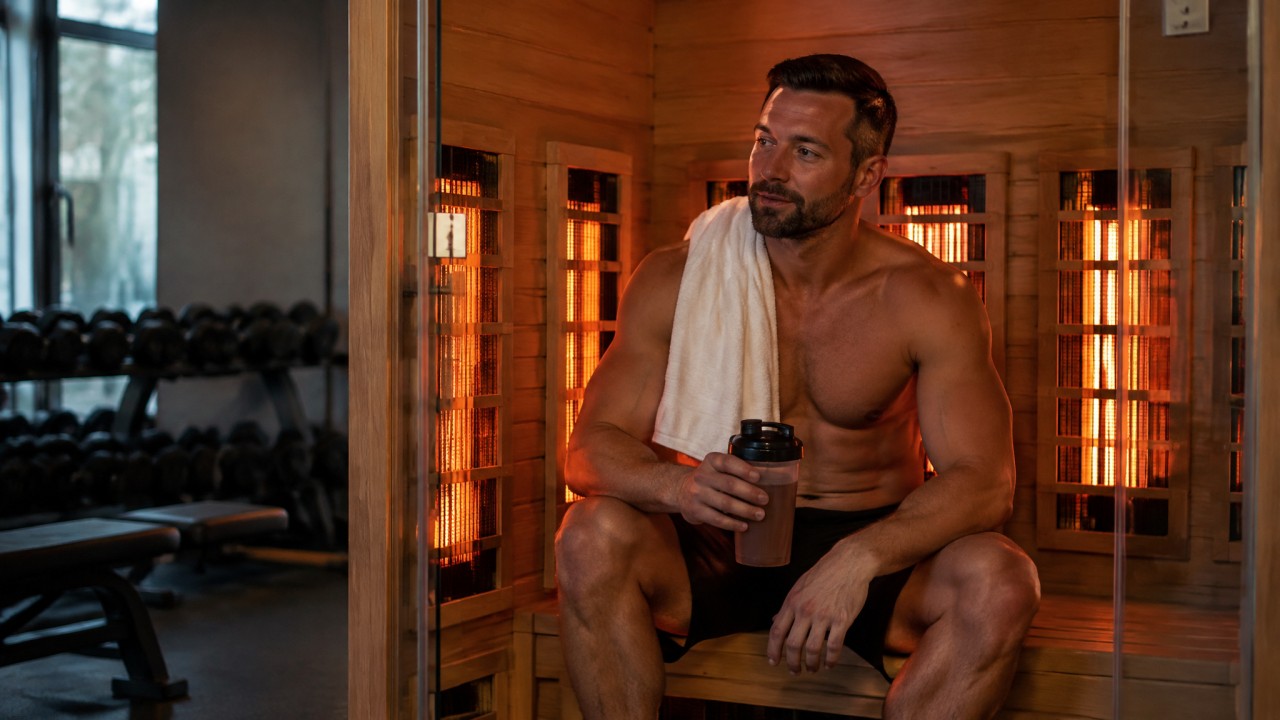
Fifteen to twenty minutes of heat two to four times a week is the recovery dose, bring a shake with carbs, protein, and electrolytes.
The hormone discussion also needs a distinction between recovery and testosterone. According to Unfinished Man’s look at whether saunas increase testosterone, feeling stronger after sauna use shouldn’t be taken as evidence of a testosterone boost. For lifters, that means treating heat as a potential recovery aid rather than counting on it to raise testosterone or build muscle.
One lower-confidence hypothesis suggests that pairing sauna heat with strength training helps build tissue by raising growth hormone while lowering tissue-breakdown cortisol, widening the anabolic gap between the two hormones so your body has a better window to lay down muscle. The reason we don’t have a definitive long-term human trial comes down to participant safety. To strip out psychological placebo effects, researchers proposed a two-temperature controlled study comparing an active heated sauna against an identical unheated sauna cabin. Reviewers judged that protocol feasible in theory, yet too risky to run on untrained 70-year-olds with cardiovascular risk factors, leaving the trial unexecuted.
Who benefits most: trained athletes, beginners, and injured lifters
If you’re sidelined by an injury or sedentary, sauna bathing provides a real cardiovascular workout for your heart and blood vessels, though it supplements rather than replaces the mechanical load of lifting weights. On recovery days between workouts, sitting in the heat boosts blood circulation, nervous system relaxation, endorphin-driven mood, and blood plasma volume without adding an ounce of mechanical strain to your joints. You’ll see acute cellular and circulation benefits after a single 15-minute session, while heart-rate acclimation builds across 10 sessions over three weeks.
The Finnish trial authors describe sauna heat as an exercise mimetic, a hormetic stressor comparable to exercise and fasting that mimics a workout’s demands on cardiac output and blood vessel function. Beginners get the biggest immediate cellular jolt, with that 271% HSP70 spike in untrained men versus 144% in trained men. Endurance-trained athletes adapt faster cardiovascularly. Heart rate climbed after every bath in both groups with a bigger initial surge in untrained men, yet by the 10th bath over three weeks, post-sauna heart rate dropped lower than after the first bath in the trained group.
Dr. Natty of Myokinetix Physical Therapy & Performance, featured in a KX News report by Adrienne Oglesby, uses heat to raise core temperature and cardiac workload for injured athletes who can’t run or bike. In his personal tracking on sauna days, his resting heart rate dropped and his baseline heart rate variability (HRV, a measure of between-beat timing that shows how well your nervous system is recovering) climbed from roughly 100 to 130.
For endurance athletes, a 2007 dry-sauna study showed that 30 minutes at 90°C post-exercise expanded red blood cell mass and plasma volume, creating a legal blood-doping-like effect that carries more oxygen to muscles and fights fatigue. In High Intensity Health’s breakdown, the 41-year-old presenter (VO2 max 54), who built a Finnish sauna in 2014 for post-workout use, notes better heat tolerance and visible vasculature, stepping out with a chest and tricep pump and prominent veins.
Infrared vs traditional Finnish sauna: which evidence applies to which
For post-workout muscle recovery, infrared saunas deliver gentler, direct tissue heating at cooler air temperatures (155 to 170°F) that allow longer tolerable sessions, whereas traditional Finnish saunas run hotter (160 to 200°F) and hold the larger clinical research base. Because infrared light warms your body directly rather than superheating the room air, it triggers a deep sweat and a cardiovascular response similar to moderate-pace walking without feeling stifling. However, only the 2023 post-exercise circulation and soreness study tested an infrared unit directly, while the HSP70, plasma-expansion, and longevity trials used traditional dry saunas.
| Feature or Study Finding | Infrared Sauna | Traditional Finnish Dry or Steam Sauna |
| Heating mechanism | Direct light waves heating tissue | Heated room air warming the body |
| Typical temperature range | 155 to 170°F (some gym units 125 to 130°F) | 160 to 200°F (e.g., 190°F dry cabins) |
| 2023 post-exercise circulation and soreness study | Yes (tested directly in infrared sauna) | No (extrapolated from infrared study) |
| 3-week HSP70 and IL-10 immune trial | Partial (extrapolated from Finnish dry sauna data) | Yes (tested across 10 sessions over 3 weeks) |
| 2007 post-exercise RBC and plasma expansion study | Partial (extrapolated from 90°C dry sauna data) | Yes (tested at 90°C for 30 minutes) |
| Finnish cohort longevity and mortality data | Partial (extrapolated from traditional hot saunas) | Yes (observational data at ~4x/week) |
According to SaunaCloud custom infrared saunas, VantaWave infrared heaters can reach a 190°F heater surface temperature while the surrounding room air varies.
How the two types differ
Traditional Finnish dry or steam saunas heat the surrounding air to between 160 and 200°F; fitness author Ben Greenfield, for example, keeps his dry sauna around 190°F. Infrared saunas use light panels to warm your skin and muscles directly at 155 to 158°F, with some cabins and blankets reaching 170°F and gentler commercial gym cabins (like the one Bismarck resident Rosie Purdy uses) set around 125 to 130°F. Modern infrared workouts are a contemporary twist on ancestral sweating practices that started with ancient smoke saunas, which were holes dug into the ground or soil mounded into hills over a fire pit. Dr. Melissa Young of the Cleveland Clinic notes that infrared sessions mimic the physical response of walking at a moderate pace, with studies linking infrared use to:
- Soothed sore muscles and joint pain relief
- Improved heart health and reduced blood pressure
- Nervous system relaxation and better sleep quality
- Enhanced immune system resilience
Which studies are infrared-specific and which are extrapolated
When you read sauna headlines, keep the study hardware straight. Every cited competitive athlete trial, including the 2007 90°C red-blood-cell study, the three-week Finnish HSP70 trial, and the Finnish mortality cohorts, took place in traditional dry saunas. The infrared research base is smaller, anchored directly by the 2023 post-exercise infrared study showing enhanced circulation and lower soreness, alongside Cleveland Clinic clinical observations on blood pressure and pain relief.
How long, how often, and when: dosing by goal
Post-workout sauna sessions for muscle recovery run 15 to 20 minutes right after training, compared to 15 to 30 minutes for a typical session or 30 to 45 minutes for standalone heart-health and mood sessions. Keeping post-lifting heat under 20 minutes (ideally while sipping a carbohydrate, protein, and electrolyte shake in a relaxed posture) sparks blood flow and lowers soreness without piling extra dehydration onto a tired body. If you prefer contrast therapy, you can split the dose into 15 minutes of sauna, cold exposure, and another 15 minutes of sauna at least three days a week, whereas competitive athlete dry-sauna trials used 20 to 30 minutes straight after exercise.
Aim to sit in an infrared sauna 2 to 4 days per week; the Finnish longevity benchmark is roughly 4 times weekly for 20 to 30 minutes, while beginners can start with 30 minutes twice a week or one 45-minute split session. Always use the sauna after your workout or for a brief warm-up before lifting, never as a sustained high-heat workout room. Training hard inside sustained heat wrecks performance, as shown during seminars in Australia and Thailand where the Renaissance Periodization speaker and Jared Feather lasted only 30 minutes training quads before heat exhaustion shut them down.
Post-workout recovery dosing
Follow the Renaissance Periodization post-lifting protocol: mix a shake with carbohydrates, protein, fluids, and electrolytes, bring it into the sauna after training, and sip in a relaxed posture for 10 to 20 minutes (subjective recovery and soreness scores from Onit data look noticeably better with this routine). New users often jump into sessions that are too long or hot, feel drained or dizzy afterward, and have to scale back to shorter bouts while their heat tolerance builds over the first three weeks.
Standalone cardiovascular and mood sessions
When you aren’t pairing heat with heavy lifting, Dr. Natty recommends 30 to 45 minutes once a week for cardiovascular conditioning and 30 to 40 minutes to lift your mood via endorphins.
Before training, contrast protocols, and rest days
- Pre-workout warm-up: Use brief heat exposure only to get tissues warm before lifting.
- Circulation contrast protocol: Alternate 15 minutes in the sauna, a cold plunge, and 15 minutes back in the sauna at least 3 days a week (use this on rest days for vascular flow, not immediately after hypertrophy lifting).
Beyond recovery: longevity, metabolic, and brain health
In observational Finnish cohort data, people bathing in hot saunas roughly 4 times a week for 20 to 30 minutes showed 40 to 50% lower all-cause mortality, lower dementia and Alzheimer’s risk, and a 4 to 5 year longer lifespan than non-users. Still, health-consciousness confounds this association, much like how organized second-graders live longer because conscientiousness drives broader healthy habits.
In Heat shock proteins and heat therapy for type 2 diabetes pros and cons, human trials show heat lowers fasting blood sugar (glycemia), long-term blood sugar (HbA1c), body weight, and body fat (adiposity), while animal models link nitric oxide and HSP70 to better insulin sensitivity. Per Dr. Rhonda Patrick’s healthspan paper, HSP70 clears clumped proteins to help guard against Huntington’s, Parkinson’s, and Alzheimer’s diseases, and may help prevent heart muscle disease (cardiomyopathy) and artery plaque (atherosclerosis).
When sauna doesn’t help: limits, safety, and the comfort counterpoint
The main downsides of an infrared sauna fall into two categories: strict medical contraindications (pregnancy, multiple sclerosis, and unacclimated heart conditions) and physiological recovery traps like dehydration, dizziness, and sympathetic stress. Per the American College of Obstetricians and Gynecologists (ACOG), sauna heat can harm a fetus and may cause birth defects, so never use a sauna if you’re pregnant or trying to conceive. Experts also warn against infrared sauna workouts if you have multiple sclerosis. Untrained people with cardiovascular risk factors face steeper heart-rate spikes, which is why new users who treat heat as passive and jump into long sessions often mistake dehydration dizziness for the sauna failing when they simply need water and gradual acclimation.
Your body may actually recover fastest in normal room-temperature comfort after the internal disruption of a brutal lifting session. Piling on extra thermal stress from post-workout heat or a cold plunge can get in the way.
For people who hate heat, sauna is probably not beneficial, because the goal of any kind of recovery tool or tactic is to get into a parasympathetic nervous system state as quickly as possible, and heat they hate produces a stress response instead. Finally, while we’re exposed daily to endocrine-disrupting chemicals in air, food, water, and clothing, and sweating may clear some compounds that aren’t great for your body, keep detoxification expectations modest.
Building the routine: why access and consistency decide the outcome
Custom infrared home saunas are worth the investment for lifters, athletes, and manual therapists who need immediate home access to hit a 2 to 4 times weekly post-workout schedule, whereas a local gym cabin or portable sauna blanket makes more sense if you’re tight on floor space or budget. As a fan of the custom infrared saunas from SaunaCloud, I’ve found that removing the commute is what keeps you consistent over a three-week adaptation block when work hours get busy.
If you live in an apartment, travel, or train at a gym without a cabin, the Bon Charge low-EMF sauna blanket heats up to 170°F as a compact alternative; the High Intensity Health presenter uses it to warm back up after cold plunging when short on time, though it’s intense enough that he tolerates only about 12 minutes inside.
In KX News’s report, Bismarck resident Rosie Purdy spent about three months acclimating until she could sweat comfortably in a 125 to 130°F gym sauna while losing weight and inches. Gym owner Sierra Rohr uses her unit for sleep quality, seasonal affective disorder, skin rejuvenation, pain relief, and muscle recovery, noting of her own routine that “for me personally, this past week where it’s been quite gloomy, this has been a game changer for me.
But after that, your mood is just instantly better.” Other athletes customize their cabins for movement or higher heat: Las Vegas facilities like the Winkeljohn gym for UFC fighters build saunas with TV panels for instructional videos, Joe Rogan does kettlebell, bike, and yoga sessions inside his infrared sauna, and Ben Greenfield keeps his dry sauna around 190°F.
Frequently Asked Questions
How does heat shock protein 70 from sauna use help muscle recovery and growth?
HSP70 acts as a molecular chaperone inside your muscle cells, escorting newly built proteins to the exact compartments where fibers need them and clearing out damaged, clumped proteins before they accumulate. It also slows muscle breakdown, while the accompanying heat widens blood vessels to flush fatigued tissue with oxygen and nutrients. In a three-week Finnish trial, a single sauna bath spiked blood HSP70 by 144% in trained men and 271% in untrained men.
Is infrared sauna or traditional Finnish sauna better for post-workout recovery?
Infrared saunas are often easier to tolerate right after a grueling workout because light waves warm your tissue directly at cooler air temperatures (155 to 170°F), whereas traditional Finnish cabins superheat the room air to 160 to 200°F. A 2023 study directly confirmed that a single post-workout infrared session improves circulation and cuts muscle soreness. However, traditional dry saunas still hold the heavier clinical evidence for HSP70 spikes, plasma volume expansion, and longevity.
Can sauna use replace exercise for people who are injured or sedentary?
Sauna bathing can mimic the cardiovascular demands of a moderate workout, though it cannot replace the mechanical tension required to build muscle. While you are sidelined, heat raises your core temperature and cardiac output, improves heart rate variability, and boosts circulation and plasma volume without putting any strain on healing joints. It keeps your heart and blood vessels conditioned until you can get back under a barbell.
How long to see benefits of infrared sauna use?
You get acute circulation boosts, lower soreness, and a jump in cellular HSP70 gene expression after a single 15-to-20-minute session. Deeper cardiovascular acclimation, where your post-sauna heart rate drops lower than when you started, builds across 10 sessions over three weeks. Full comfort and sweat adaptation in gentler 125 to 130°F gym cabins can take up to three months of steady use.
Does infrared sauna reduce inflammation and soreness after training?
Yes, a 2023 post-exercise infrared study proved that a single recovery session increases blood circulation to deliver more oxygen and nutrients, dialing down delayed-onset muscle soreness. On a cellular level, traditional sauna trials show heat boosts interleukin-10 (IL-10), a key anti-inflammatory messenger that calms the immune system, alongside a hormetic pulse of interleukin-6 (IL-6) that kicks off tissue rebuilding.
Written by shamshadali255@gmail.com