
Introduction
Golfer’s elbow is caused by repetitive overuse of the wrist and finger flexor muscles — and, crucially, you don’t need to play a single round of golf to develop it. In fact, research shows that over 90% of medial epicondylitis cases have nothing to do with golf at all.
Whether you grip a mouse, swing a hammer, throw a baseball, or practise guitar, any activity that places repeated stress on the common flexor tendon at the inner elbow can set this injury in motion. Understanding the precise causes — biomechanical, occupational, and anatomical — is the first step toward stopping it before it becomes a chronic problem.
What Is the Root Cause of Golfer’s Elbow?
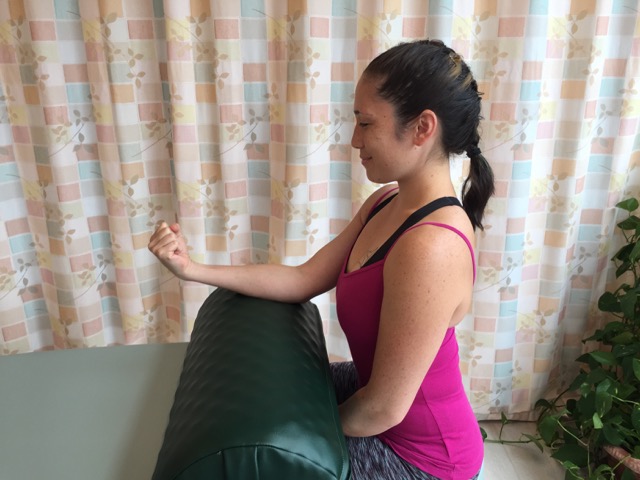
Flexing the hand at the wrist joint and/or the fingers engages muscles of the common flexor belly/tendon and can cause golfer’s elbow.
The root cause of golfer’s elbow is cumulative overload of the common flexor-pronator tendon at the medial epicondyle of the humerus. Repeated stress creates microscopic tears in the tendon tissue faster than the body can repair them, triggering first inflammation and then degeneration.
The five muscles that share this common attachment point are:
- Pronator teres — rotates the forearm palm-downward (pronation)
- Flexor carpi radialis — bends the wrist toward the palm, tilts it toward the thumb
- Palmaris longus — flexes the wrist and tenses the palm fascia
- Flexor carpi ulnaris — bends and tilts the wrist toward the little finger
- Flexor digitorum superficialis — curls the fingers at the middle joints
Every time you grip, flex your wrist, or pronate your forearm, these muscles contract and pull on their shared tendon. Doing this thousands of times — day after day, without adequate recovery — overwhelms the tendon’s capacity to remodel and repair. The result is golfer’s elbow.
The two-phase injury model:
| Phase | Biology | Duration |
|---|---|---|
| Medial epicondylitis | Active inflammation, swelling, micro-tearing | First ~6 months |
| Medial epicondylosis | Collagen degeneration, failed healing, angiofibroblastic changes | Beyond ~6 months |
This distinction matters because the treatment differs. Anti-inflammatory measures (ice, NSAIDs) target the first phase; progressive tendon loading and rehabilitation are needed once degeneration has taken hold.
What Activities and Sports Cause Golfer’s Elbow?
Any activity involving repetitive wrist flexion, forearm pronation, or sustained gripping can cause golfer’s elbow. The condition is common in golfers, baseball pitchers, tennis players, rock climbers, and racquet-sport athletes — but each sport stresses the tendon via a slightly different mechanism.
Golf
The golf swing — especially through impact — demands a powerful combination of wrist flexion and forearm pronation. The trail hand (right hand for right-handed players) drives this movement. Poor swing mechanics, gripping the club too tightly, or suddenly increasing practice volume are the most common golf-specific triggers.
Baseball and Throwing Sports
Overhead throwers — pitchers, quarterbacks, javelin athletes — generate enormous valgus stress at the medial elbow during the late-cocking and acceleration phases of the throw. This repeatedly stretches and loads the flexor-pronator mass at its origin, causing micro-tears over time. The condition is so prevalent in pitchers that golfer’s elbow is also commonly called pitcher’s elbow.
Tennis
Tennis might seem like a lateral-elbow sport (tennis elbow), but it also causes medial-side injuries. The serve — particularly the snap of the wrist at ball contact — and the forehand shot both heavily engage the wrist flexors. Hitting a forehand stroke requires the wrist flexors to isometrically stabilise the wrist against the force of the ball; this sustained contraction is highly loading for the common flexor tendon.
Racquet Sports, Weightlifting, and Climbing
- Racquet sports (squash, badminton, padel): repetitive wrist snap and grip
- Weightlifting: curling, deadlifting, rowing — especially with a palms-up (supinated) grip; poor form that allows the wrist to flex under load is a classic cause
- Rock climbing: sustained crimping (finger flexion against a hold) generates extreme force through the flexor tendons
Activities You Might Not Expect
The sports cases make headlines, but the more common presentations come from everyday activities:
- Typing and mouse use — holding fingers in a flexed position for hours at a time, combined with medial epicondyle friction against a desk surface, is a significant and underappreciated cause
- Carrying bags or luggage — holding weight in a palm-up or neutral position requires sustained isometric wrist-flexor contraction to prevent the wrist collapsing into extension
- Washing dishes, brushing hair, painting walls — any repetitive wrist motion under load
- Playing piano or string instruments — sustained wrist and finger flexion with fine motor precision
Why Do Most Golfer’s Elbow Cases Have Nothing to Do With Golf?
More than 90% of medial epicondylitis cases are occupational or lifestyle-related, not sports-related. Manual workers, desk workers, and musicians collectively account for far more cases than golfers.
This is one of the most important and underappreciated facts about this condition. The sport’s name has led many patients — and even some clinicians — to assume this is a niche, activity-specific injury. It is not.
The occupational data is striking: Research published in StatPearls (updated 2026) confirms that medial epicondylitis is strongly associated with:
- Repetitive forceful gripping
- Manual handling of loads greater than 20 kg (44 lb)
- Use of vibrating tools or prolonged exposure to vibration at the elbow
- Labour-intensive trades: carpentry, plumbing, construction, manufacturing
Original insight: The reason wrist-flexion activities are so mechanically loaded is that they almost always co-occur with a grip. Gripping an object — whether a hammer, a golf club, or a computer mouse — requires all five fingers to flex simultaneously. That single action fires all five muscles of the common flexor tendon at once, multiplying the cumulative load on their shared attachment point. A carpenter swinging a hammer 500 times in a day generates the same class of overuse injury as a golfer practicing drives on the range — the sport is different, the anatomy is identical.
What Are the Risk Factors for Golfer’s Elbow?
Golfer’s elbow is more likely to develop when biomechanical overload is combined with individual risk factors that reduce the tendon’s capacity to withstand and recover from stress. The main risk factors are age, body weight, smoking, poor technique, and inadequate conditioning.
Biomechanical Risk Factors
| Risk Factor | How It Increases Injury Risk |
|---|---|
| Poor technique | Incorrect swing, throw, or tool-use mechanics concentrate force at the medial epicondyle |
| Sudden training spike | Rapidly increasing volume or intensity before the tendon has adapted |
| Equipment mismatch | A grip that is too small or a racquet/club that is too heavy increases wrist-flexor demand |
| Inadequate warm-up | Cold, stiff tendons have lower tensile strength and absorb force less efficiently |
| Weak forearm muscles | When muscles fatigue quickly, the tendon absorbs a greater share of load |
Individual Risk Factors
- Age over 40 — tendon repair slows with age; collagen quality declines
- Obesity (BMI > 30) — associated with poorer tendon healing and increased injection failure rates
- Smoking — impairs collagen synthesis and tendon vascularity; a well-documented risk factor for tendinopathy across multiple sites
- Diabetes — elevated blood glucose interferes with collagen cross-linking and tissue remodelling
- High-demand repetitive work — more than 2 hours per day of forceful gripping significantly raises risk
- Psychosocial work stress — chronic stress elevates cortisol, which has a catabolic effect on tendon tissue
Original insight: Dominant-hand involvement is a consistent pattern — medial epicondylitis almost always affects the dominant arm first and most severely. This makes sense mechanically: your dominant hand generates more grip force, performs finer-grained movements, and is used preferentially for loading tasks. If you are noticing inner-elbow pain in your non-dominant arm, it is worth asking whether your dominant arm has already adapted to the load while the weaker arm now compensates with poorer mechanics.
Can Macrotrauma (a Single Injury) Cause Golfer’s Elbow?
Yes. While golfer’s elbow is primarily an overuse condition, a single traumatic event — a direct blow to the medial epicondyle, a sudden forceful overstretch, or a fall on an outstretched hand — can acutely damage the common flexor tendon and trigger the same inflammatory cascade.
This acute presentation is less common than the gradual-onset form but clinically important for two reasons:
- It can be misdiagnosed as a fracture, ligament sprain, or contusion if the practitioner is not specifically looking at the common flexor tendon
- It can combine with chronic microtrauma — a direct bang to an already-irritated tendon can accelerate the transition from early inflammation to tendon degeneration
A specific macrotraumatic mechanism worth noting is elbow-desk friction. Resting the medial epicondyle on a hard desk surface while using a mouse or keyboard creates a continuous compressive and frictional force directly over the tendon’s bony attachment. This repeated mechanical irritation is a genuine cause of medial epicondylitis that almost never gets discussed in general-audience content.
How Does Golfer’s Elbow Relate to Tennis Elbow?
Golfer’s elbow (medial/inner elbow) and tennis elbow (lateral/outer elbow) are mirror-image conditions involving opposite sides of the same elbow. Both result from tendon overuse; the difference is which muscle group is affected and which movements provoke them.
| Feature | Golfer’s Elbow | Tennis Elbow |
|---|---|---|
| Location | Medial epicondyle (inner elbow) | Lateral epicondyle (outer elbow) |
| Tendon affected | Common flexor-pronator origin | Common extensor origin |
| Primary movements | Wrist flexion, finger flexion, pronation | Wrist extension, finger extension, supination |
| Key muscles | Pronator teres, FCR, FCU, FDS | ECRB, EDC, ECU |
| Relative prevalence | Less common | More common (~10x) |
Why is tennis elbow more common if wrist flexion is more frequent than extension?
This seems counterintuitive — flexion is used far more often in daily life, so golfer’s elbow should be more prevalent. The answer lies in a critical biomechanical fact: whenever you grip and flex your fingers, your wrist extensors must isometrically co-contract to stabilise the wrist joint against the flexion force. Every time you pick up, grasp, or carry an object, your extensor muscles are working too. This hidden extensor load is what tips the prevalence scales in favour of tennis elbow.
Original insight: This co-contraction relationship also explains why golfer’s elbow and tennis elbow frequently co-exist in the same arm. If the flexor overuse is significant enough to injure the medial side, the extensor co-contraction demand has usually been high enough to stress the lateral side as well. Any patient presenting with golfer’s elbow should be screened for lateral-side tenderness routinely.
What Happens Inside the Tendon When Golfer’s Elbow Develops?
The tissue-level process of golfer’s elbow begins with micro-tears in the collagen fibres of the common flexor tendon, which trigger inflammation, attempted healing, and — if overuse continues — progressive degeneration of the tendon’s structural integrity.
The sequence of events:
- Repetitive mechanical load exceeds the tendon’s remodelling capacity
- Micro-tears form in individual collagen fibres, particularly at the tenoperiosteal junction (where tendon meets bone at the medial epicondyle)
- Inflammatory response: increased blood flow, swelling, recruitment of immune cells — this is medial epicondylitis
- Attempted repair: fibroblasts lay down new collagen, but under continued stress the new collagen is disorganised (type III rather than the strong type I)
- Angiofibroblastic degeneration: chaotic, low-quality collagen, new vessel ingrowth into the tendon (neovascularisation), and loss of the original tendon architecture — this is medial epicondylosis
- Micro-tears enlarge: partial tendon tears, or in severe cases full-thickness tears, become possible
Understanding this progression clarifies why complete rest is not an effective long-term treatment. The degenerate tendon needs load — applied correctly and progressively — to stimulate genuine structural remodelling and the synthesis of strong, organised collagen.
Golfer’s Elbow Causes: Quick-Reference Checklist
Use this list to identify which factors may be contributing to your inner-elbow pain:
Repetitive motion causes:
- Repeated wrist flexion (golf, throwing, racquet sports)
- Sustained or repetitive gripping (tools, handles, weights)
- Forearm pronation under load (screwdriving, golf swing)
- Prolonged typing or mouse use
- Playing a musical instrument (piano, strings)
- Carrying bags or luggage in a palm-forward position
Biomechanical causes:
- Poor technique in sport or manual work
- Sudden increase in training or work volume
- Ill-fitting equipment (grip size, racquet weight)
- Forearm muscle weakness or imbalance
Traumatic causes:
- Direct blow or bang to the medial epicondyle
- Fall on an outstretched hand
- Single sudden overstretch of the wrist flexors
Individual risk factors:
- Age over 40
- BMI over 30
- Current smoker
- Diabetes or metabolic syndrome
- Heavy occupational load (> 2 hours forceful gripping daily)
Frequently Asked Questions
What is the most common cause of golfer’s elbow?
The most common cause of golfer’s elbow is repetitive overuse of the wrist and finger flexor muscles, particularly activities involving repeated gripping, wrist flexion, or forearm pronation. Occupational activities — carpentry, construction, manual handling — account for the majority of cases, not sport.
Can typing and computer use cause golfer’s elbow?
Yes. Sustained typing and mouse use engage the wrist and finger flexors continuously. Resting the medial elbow on a hard desk surface while using a mouse also creates direct frictional pressure on the common flexor tendon attachment at the medial epicondyle — a specific and often-overlooked cause.
Can lifting weights cause golfer’s elbow?
Yes. Exercises involving a palms-up (supinated) grip — bicep curls, rows, deadlifts — heavily load the wrist flexors and common flexor tendon. The risk is highest when technique is poor (allowing the wrist to flex under load), when training volume increases rapidly, or when forearm muscles fatigue and the tendon absorbs more of the load.
Why do I have golfer’s elbow if I don’t play golf?
Because the name is misleading. Research shows that more than 90% of medial epicondylitis cases are not sports-related. The condition is caused by any activity — occupational or recreational — involving repetitive gripping, wrist flexion, or forearm pronation. Carpenters, musicians, desk workers, and manual labourers are all commonly affected.
How quickly can golfer’s elbow develop?
It depends on the load. A sudden dramatic increase in a provocative activity — such as a new job involving heavy gripping, or an intensive sport training camp — can trigger symptoms within days to weeks. The more common pattern is gradual onset over weeks to months of accumulated overuse, where symptoms slowly build until they become impossible to ignore.
Does golfer’s elbow always come from sport or exercise?
No. The majority of cases arise from occupational and lifestyle activities, not sport. Heavy physical work, use of vibrating tools, prolonged computer use, and manual trades collectively account for far more cases than athletic activity. Individual factors such as age, smoking, and obesity increase susceptibility regardless of activity type.
Can a single accident cause golfer’s elbow?
Yes. A direct blow to the medial epicondyle, a sudden powerful overstretch of the wrist flexors (such as catching a fall), or repetitive frictional trauma (such as resting the elbow on a hard surface daily) can acutely damage the common flexor tendon and trigger the same injury cascade as gradual overuse.
Conclusion
The causes of golfer’s elbow come down to one central mechanism: the common flexor-pronator tendon at the medial epicondyle is being loaded faster than it can repair itself. That load can come from a golf club, a hammer, a keyboard, a barbell, or a bag — the anatomy does not care about the activity.
The good news is that because the causes are well-understood, they are also largely preventable and manageable. Identifying your specific cause or combination of risk factors is the most important step toward choosing the right treatment, modifying the provocative activity, and giving your tendon the conditions it needs to heal.
What to do next:
- If your inner-elbow pain has been present for more than a week or two, do not wait for it to “go away on its own” — early intervention produces faster, more complete recovery.
- If you have identified occupational or sport causes, speak to a physiotherapist, sports medicine physician, or manual therapist about a progressive loading programme alongside activity modification.
- Read the next articles in this series to understand how golfer’s elbow is assessed, treated with manual therapy, and managed with self-care strategies.
→ Continue reading in this series:
- What are the signs and symptoms of Golfer’s Elbow?
- How do we assess (diagnose) Golfer’s Elbow?
- How do we treat Golfer’s Elbow with manual therapy?
- What are the self-care and medical approaches to Golfer’s Elbow?
About the Author
Joseph E. Muscolino, DC is a Doctor of Chiropractic with over 30 years of clinical and academic experience in musculoskeletal anatomy, kinesiology, and manual therapy. He is the author of numerous internationally adopted textbooks including The Muscle and Bone Palpation Manual with Trigger Points, Referral Patterns, and Stretching (Elsevier, 2016) and Kinesiology: The Skeletal System and Muscle Function. Dr. Muscolino is the founder of LearnMuscles.com and has taught continuing education courses to physical therapists, massage therapists, and chiropractors worldwide. His approach combines precise anatomical knowledge with evidence-informed clinical practice.
Sources
- Reece CL, Li D, Susmarski A. Medial Epicondylitis. StatPearls Publishing. Updated May 2024. NCBI Bookshelf
- Overview: Golfer’s Elbow (Medial Epicondylitis). InformedHealth.org — Institute for Quality and Efficiency in Health Care (IQWiG). Updated July 2022. NCBI Bookshelf
- Golfer’s Elbow (Medial Epicondylitis): Symptoms and Causes. Cleveland Clinic. Updated February 2025. clevelandclinic.org
- Shiri R, Viikari-Juntura E. Lateral and medial epicondylitis: role of occupational factors. Best Practice & Research Clinical Rheumatology. 2011;25(1):43–57. PubMed
- Golfer’s Elbow: Symptoms and Causes. Mayo Clinic. Updated 2022. mayoclinic.org
- Muscolino JE. The Muscle and Bone Palpation Manual, with Trigger Points, Referral Patterns, and Stretching, 2nd ed. Elsevier, 2016.

