
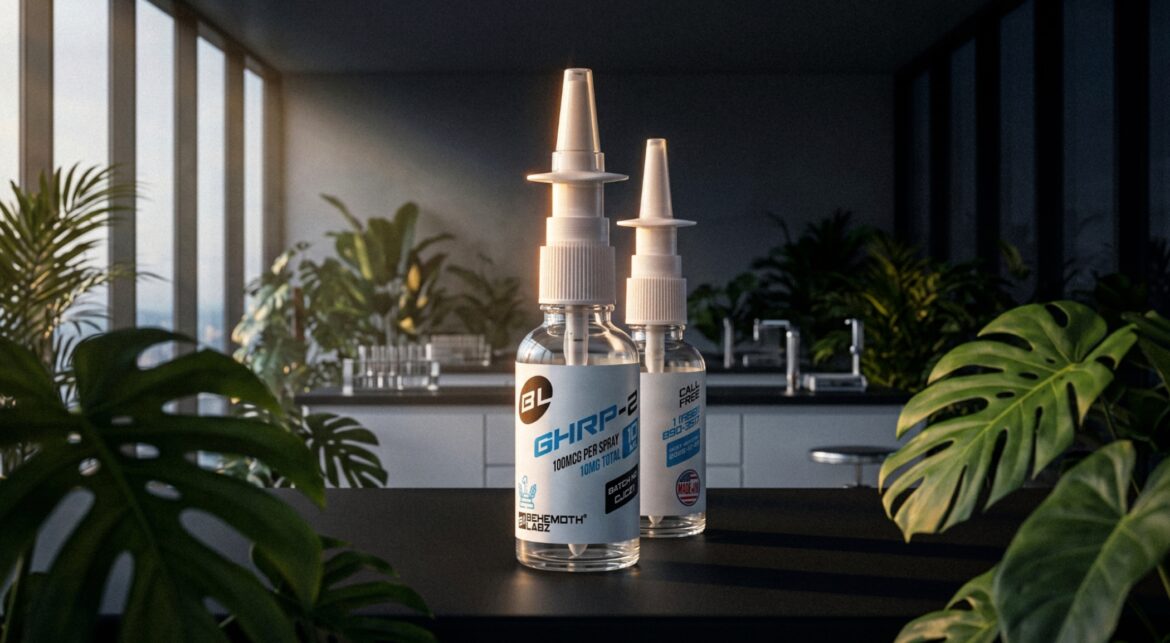
GHRP-2 Nasal Spray: Mechanism, Research Applications, and Preclinical Data
GHRP-2 Nasal Spray is a synthetic hexapeptide administered intranasally that acts as a full agonist at the GHS-R1a receptor. This induces growth hormone release in preclinical models. It mimics ghrelin, the body’s natural GH-releasing signal. Research into GHRP-2 has covered:
- Somatotropic axis regulation
- Appetite modulation, and
- Vascular oxidative stress
Studies remain largely preclinical, and long-term data in humans is still evolving.
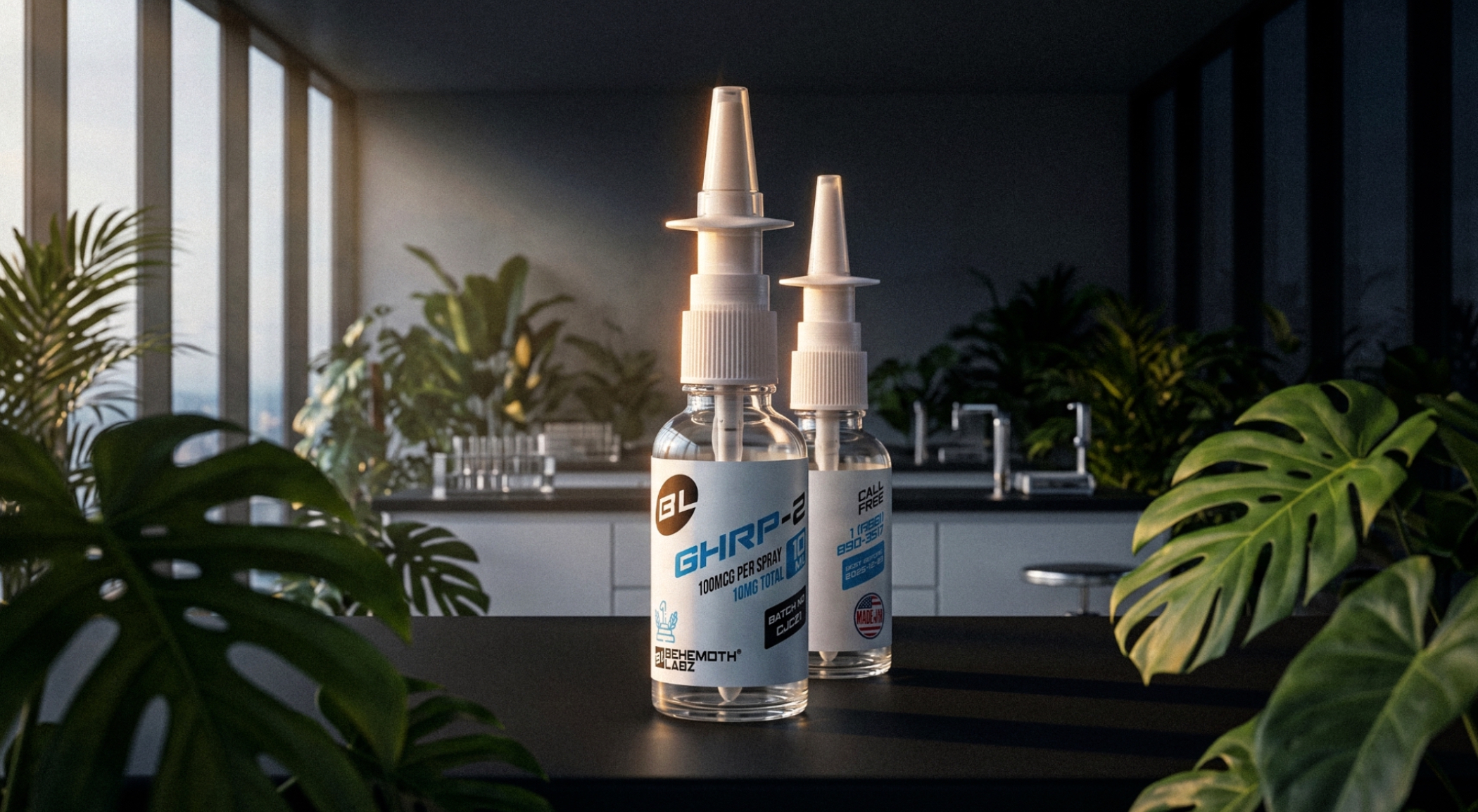 The use of this image was permitted to the author of the article
Introduction
Growth hormone research is a crowded field. GHRH analogues, IGF-1 modulators, somatostatin inhibitors — the list goes on. Yet GHRP-2 keeps appearing in the same conversations, again and again. Why?
Part of the answer lies in its mechanism. Unlike most secretagogues that work through a single pathway, GHRP-2 activates the ghrelin receptor. This is a G protein-coupled receptor with a reach that extends well beyond GH release. Then there is the delivery format. While injectable peptides have long dominated preclinical research protocols, intranasal formulations have opened up a new area of interest. Can nasal delivery produce measurable pituitary responses without the need for parenteral administration?
That is precisely what early research sought to test. The results were varied, nuanced, but genuinely interesting.
This article covers what GHRP-2 Nasal Spray is, how its mechanism works at the receptor level, what preclinical models have established so far, and where the science currently stands.
Legal disclaimer: GHRP-2 is a research compound not approved by the U.S. Food and Drug Administration (FDA) for human or clinical use. It is not intended to diagnose, treat, cure, or prevent any disease. This article is for informational purposes only.
What Is GHRP-2, and How Does the Nasal Spray Format Work?
GHRP-2 is also referred to in the scientific literature as Pralmorelin. It is a synthetic hexapeptide (a six-amino-acid chain) and belongs to the Growth Hormone Releasing Peptide (GHRP) family. It was developed as a second-generation GH secretagogue, designed to stimulate endogenous GH release through a mechanism distinct from growth hormone-releasing hormone (GHRH).
Where GHRH binds directly to the GHRH receptor on pituitary cells, GHRP-2 acts through the GHS-R1a receptor. This is the same receptor that ghrelin — the endogenous “hunger hormone” produced in the stomach — binds to. This makes GHRP-2 a ghrelin mimetic rather than a conventional GHRH analogue.
Why the Nasal Route?
Oral delivery is widely accepted by researchers to be ineffective. Gastric enzymes degrade short peptide chains before systemic absorption can occur, and first-pass hepatic metabolism further reduces bioavailability. Injectable administration bypasses this, but introduces its own variables in research settings — including sterility requirements, administration precision, and participant compliance.
Intranasal delivery sits between these two approaches. The nasal mucosa is highly vascularised, and peptide compounds that reach it can be absorbed into systemic circulation without passing through the gastrointestinal tract. Research into intranasal GHRP-2 administration confirmed that nasal spray formulations were capable of stimulating a rapid GH response from the pituitary. This demonstrated that transmucosal absorption can produce measurable hormonal responses.
How Does GHRP-2 Work? The GHS-R1a Mechanism
This is where things become genuinely interesting for researchers following the ghrelin axis.
GHRP-2 is classified as a full agonist at the growth hormone secretagogue receptor 1 alpha (GHS-R1a). This distinction matters. A full agonist produces a maximal receptor response, which positions GHRP-2 among the most potent members of the GHRP family in terms of receptor efficacy.
The Signal Cascade
When GHRP-2 binds to GHS-R1a, it initiates a G protein-coupled intracellular signalling cascade. The downstream effect at the pituitary is a pronounced increase in GH secretion. However, the GHS-R1a receptor is not confined to pituitary somatotrophs. It is expressed in the hypothalamus, hippocampus, and peripheral tissues, which is why GHRP-2’s effects extend beyond GH release alone.
Beyond GH: ACTH and Prolactin
One characteristic that differentiates GHRP-2 from more selective GH secretagogues such as Ipamorelin is its effect on other pituitary hormones. Studies published in the Journal of Clinical Endocrinology & Metabolism document a transient, dose-dependent increase in ACTH and cortisol levels following GHRP-2 administration — an observation not seen with more selective peptides. This broader pituitary activity is relevant to research models where hormonal crosstalk is under investigation.
The Synergy Axis: GHRH + GHRP-2
A well-documented finding across preclinical models is that GHRP-2 and GHRH act synergistically. When co-administered, GH release is significantly greater than the sum of either stimulus alone. This synergy is thought to involve both receptor-level amplification at the pituitary and hypothalamic sensitisation — a finding that has shaped how researchers design multi-peptide research protocols.
Research Applications of GHRP-2 Nasal Spray
1. GH Secretagogue Activity: What the Research Shows
Among the somatotropic axis research tools generating the most interest at present, GHRP-2 stands out for one key reason: its potency at the GHS-R1a receptor. Preclinical research consistently shows that GHRP-2 produces robust, dose-dependent GH release, positioning it as one of the most studied synthetic secretagogues available for GH-axis research. Exercise researchers and sports science investigators have taken particular note, given GH’s well-documented role in skeletal muscle protein turnover, strength adaptation, and recovery function in preclinical models.
2. Somatotropic Axis Research and Skeletal Muscle Models
GH’s role in muscle protein synthesis and maintenance is one of the most studied areas in preclinical endocrinology. Naturally, GHRP-2 has been placed at the centre of this research. Animal studies examining GHRP-2 administration have observed increased muscle protein deposition and reduced expression of muscle atrophy markers Atrogin-1 and MuRF1, suggesting potential relevance to skeletal muscle repair research. For investigators working in exercise science or recovery biology, these preclinical observations make GHRP-2 a compound worth following closely.
3. Lipolysis and Body Composition: Preclinical Observations
GH’s role in fat metabolism is well established in the literature. Researchers studying body composition have found GHRP-2 to be a useful model tool. Preclinical studies in obese animals found that GHRP-2 administration reduced visceral fat mass and attenuated body weight gain, effects attributed to increased pulsatile GH release and downstream lipolytic signalling. These findings come from animal models only and do not constitute evidence of equivalent effects in humans. However, for researchers mapping the GH–adipose tissue relationship, they represent a compelling starting point.
4. GH Secretion and Sleep Architecture: An Emerging Research Area
The relationship between GH pulsatility and sleep quality is an active area of neuroendocrinology research. GH release peaks during slow-wave sleep, and secretagogues that modulate this pulsatile pattern are being examined for their potential influence on sleep architecture. Research has explored how GH-axis peptides interact with sleep function, with the field identifying this as one of the more significant downstream areas of GHRP-2 study.
5. Tissue Repair and Regeneration Research
GH and IGF-1 both have documented roles in muscle maintenance signalling. GHRP-2’s ability to stimulate the somatotropic axis has made it a subject of interest in injury recovery research. Animal studies have observed that GHRP-2 administration is associated with reduced Atrogin-1 and MuRF1 expression in damaged muscles — molecular markers associated with muscle protein degradation. Researchers investigating post-injury regeneration models are increasingly using GHRP-2 as a reference compound.
6. GH, Collagen Synthesis, and Skin Biology Research
The relationship between GH levels and skin ageing is an area of ongoing investigation in dermatological and endocrine research. GH may influence collagen synthesis pathways, and researchers studying skin matrix biology have examined how GH-axis secretagogues interact with these processes. Studies on GH and skin elasticity suggest a relationship between somatotropic activity and dermal collagen turnover — a finding that has positioned GHRP-2 as an interesting compound for researchers working at the intersection of endocrinology and skin biology.
7. IGF-1 Upregulation: Downstream Effects on the Somatotropic Axis
One of the most closely monitored downstream markers in GHRP-2 studies is IGF-1. Growth hormone stimulates hepatic IGF-1 production, and preclinical studies administering GHRP-2 have documented elevated circulating IGF-1 levels. This is of significant interest to researchers studying bone density, muscle biology, and anabolic signalling pathways.
8. Connective Tissue and Joint Biology Research
Collagen synthesis, cartilage matrix repair, and joint tissue maintenance are all areas where GH-axis activity has documented relevance. Researchers investigating musculoskeletal biology have shown interest in GHRP-2 as a model compound given its GH-stimulating properties. Studies examining GH secretagogues and connective tissue have identified links with collagen synthesis markers and tissue maintenance signalling in preclinical settings. For investigators studying joint health models or post-surgical recovery biology, these observations represent a reliable basis for further inquiry.
How Does GHRP-2 Compare to Other GHRPs?
Researchers working with the GHRP family are generally navigating a trade-off between potency and selectivity.
GHRP-6 is a first-generation secretagogue with strong GH release and substantial orexigenic activity. It is considered the most appetite-stimulating GHRP.
GHRP-2 offers comparable or superior GH release potency to GHRP-6 in comparative assays, with moderate appetite stimulation and the additional characteristic of ACTH and prolactin effects.
Ipamorelin is the most selective GHRP, producing GH release only. It has minimal effects on cortisol or prolactin, making it a cleaner instrument for GH-specific research designs.
That said, for research requiring maximal stimulation of the somatotropic axis with broader receptor engagement, GHRP-2 remains a commonly specified tool.
Where Do Researchers Source Lab-Grade GHRP-2 Nasal Spray?
Intended for research-grade GHRP-2 Nasal Spray available for purchase, investigators commonly seek out separately third-party tried steps having a Document associated with Examination (COA) obtainable each lot. Steady purity and name proof make any difference when peptide exploration necessitates reproducible benefits all over trial and error runs.
Suppliers such as BehemothLabz offer research-grade GHRP-2 Nasal Spray strictly for preclinical and in vitro research use, with COA certification for each batch — a non-negotiable requirement for any serious research protocol.
Disclosure: This article contains sponsored links to BehemothLabz and/or PureRawz.co. Content is for informational purposes only and does not constitute medical advice or endorsement of any product for human use.
What Are the Risks and Limitations of GHRP-2 Nasal Spray Research?
This section is important reading for anyone following research on GHRP-2 Nasal Spray.
Handling Safety: GHRP-2 Nasal Spray must be handled by trained laboratory personnel only, within a controlled research environment. Use appropriate PPE at all times. Avoid direct mucosal exposure outside of designated experimental protocols.
Exposure Risks: GHRP-2 is a synthetic hexapeptide shown to act as a full GHS-R1a agonist in preclinical models, with downstream effects on GH, ACTH, and prolactin. No comprehensive human safety profile has been established for research-grade GHRP-2 Nasal Spray formulations.
Hormonal Crosstalk: Unlike selective GH secretagogues, GHRP-2 influences ACTH and cortisol alongside GH. Research designs that do not account for this broader pituitary activity may encounter confounded results.
Storage: Store lyophilised GHRP-2 at −20°C in a dry, dark environment. Protect from light, heat, and moisture. Reconstituted preparations must be handled according to sterility protocols specific to your research setting.
Toxicity and Data Limitations: No chronic toxicity data is available for GHRP-2 in the nasal spray format. Most mechanistic data comes from short-duration preclinical models.
Misuse Potential and Regulatory Status: GHRP-2 is not FDA-approved for human or veterinary use. Its classification as a GH secretagogue places it in a regulatory grey area that varies by jurisdiction. Researchers working within licensed facilities should confirm current classification status before procurement.
Conclusion
GHRP-2 Nasal Spray is a scientifically legitimate and well-characterised research tool — not because the research is complete, but precisely because it is not. The gap between its measurable receptor activity and its downstream translational outcomes makes it a compound worth studying carefully.
What the research community has established is that GHRP-2 is a potent GHS-R1a full agonist. Its intranasal delivery can produce pituitary GH responses, and its effects on the somatotropic axis extend to appetite signalling, vascular oxidative stress, and inflammatory markers in animal models. Whether any of these findings will yield clinically meaningful applications in humans remains an open question. Regardless, it is likely to attract continued research interest given the renewed regulatory scrutiny of the peptide landscape.
For those sourcing in this area, BehemothLabz remains well positioned to contribute reproducible data to this evolving field.
Frequently Asked Questions
How does intranasal GHRP-2 compare to injectable GHRP-2? Intranasal delivery produces measurable pituitary GH responses, though with a lower area under the curve (AUC) compared to intravenous or subcutaneous administration. This difference in sustained GH exposure is relevant to research designs where prolonged somatotropic stimulation is the objective. Neither route is approved for human use.
Does GHRP-2 only affect growth hormone? No. Unlike more selective GHRPs such as Ipamorelin, GHRP-2 also produces a transient, dose-dependent rise in ACTH and cortisol in research models. This broader pituitary activity is a well-documented characteristic and should be factored into research design where hormonal isolation is required.
What does the research say about GHRP-2 and IGF-1? Animal studies have observed IGF-1 elevation in skeletal muscle tissue following GHRP-2 administration. However, a double-blind controlled study in children with GH deficiency found no significant change in serum IGF-1 despite measurable GH response from intranasal delivery. Findings are not consistent across models, and data remain limited.
Is GHRP-2 Nasal Spray FDA-approved? No. GHRP-2 is not approved by the FDA for human or veterinary use in any formulation. It is a research compound intended exclusively for controlled laboratory settings. Any research involving GHRP-2 must comply with applicable institutional and regulatory guidelines.
References
Yokoyama L, et al. Improved Release associated with Endogenous GH soon after Treatment through an Intranasal GH-releasing Peptide-2 Bottle of spray May Not Promote Growth in Short Children with GH Deficiency. PMC, 2014. https://pmc.ncbi.nlm.nih.gov/articles/PMC4219938/
Bhatt DK, et al. Ghrelin receptor agonist, GHRP-2, provides antinociceptive benefits in the supraspinal level via the opioid receptor in mice. ScienceDirect, 2014. https://www.sciencedirect.com/science/article/abs/pii/S0196978114000576
Laferrère T, et al. Growth Hormone Releasing Peptide-2 (GHRP-2), Like Ghrelin, Increases Food Intake in Healthy Men. Journal of Clinical Endocrinology & Metabolism, 2005. https://academic.oup.com/jcem/article-abstract/90/2/611/2836522
Avogaro A, et al. Growth Hormone-Releasing Peptide-2 Suppresses Vascular Oxidative Stress in ApoE−/− Mice but Does Not Reduce Atherosclerosis. PMC / PubMed, 2009. https://pubmed.ncbi.nlm.nih.gov/19819949/
Granado M, et al. Anti-inflammatory effect of the ghrelin agonist GHRP-2 in arthritic rats. American Journal of Physiology – Endocrinology and Metabolism, 2005. https://journals.physiology.org/doi/full/10.1152/ajpendo.00196.2004
Zhang G, et al. Effects of GHRP-2 and Cysteamine Administration on Growth Performance, Somatotropic Axis Hormones and Muscle Protein Deposition in Yaks with Growth Retardation. PMC, 2016. https://www.ncbi.nlm.nih.gov/pmc/articles/PMC4760683/
All products mentioned are available strictly for LABORATORY AND RESEARCH PURPOSES ONLY. Not for human or veterinary use.
Written by fatimabloggingnoor@gmail.com