
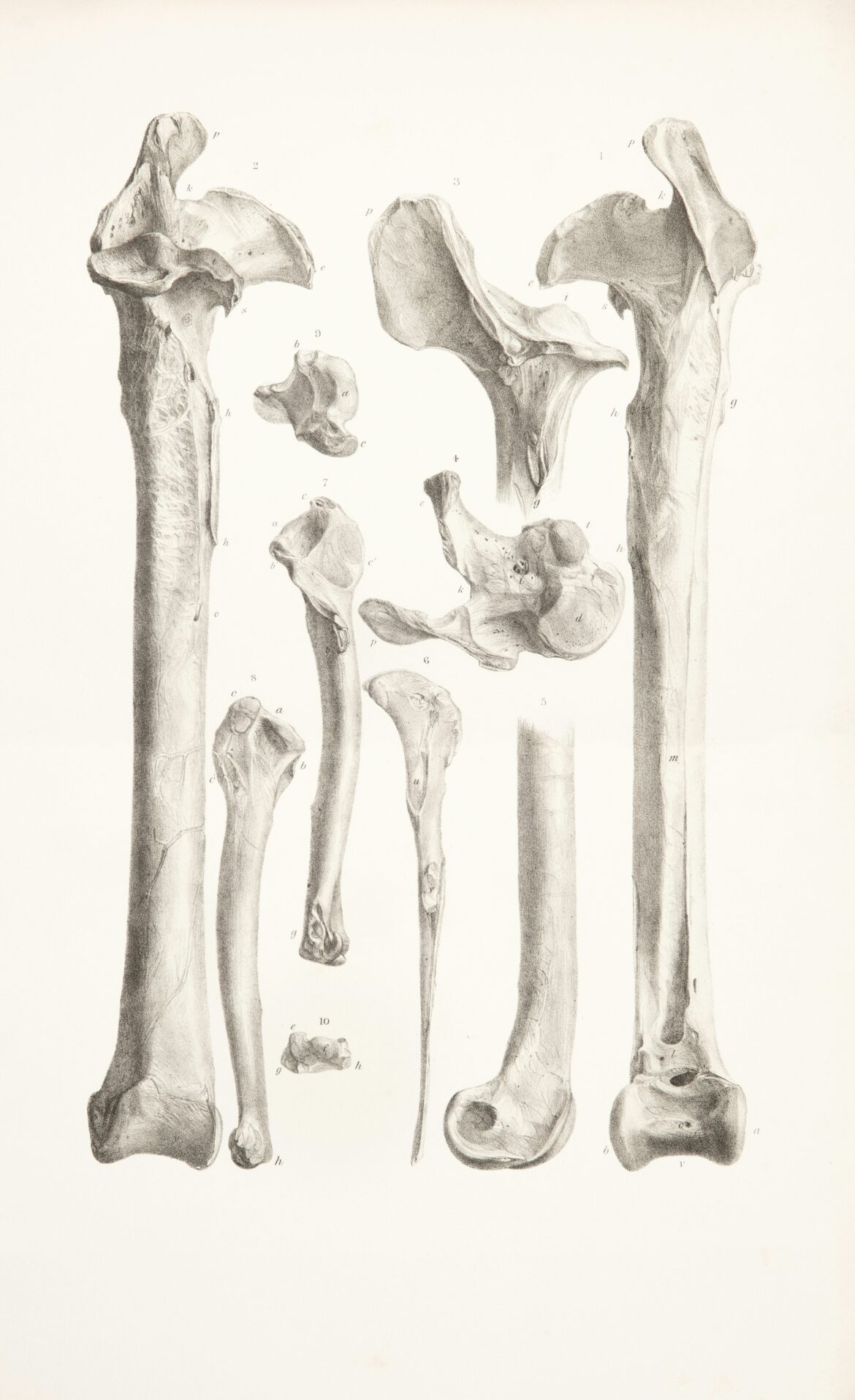
When studying anatomy, muscles steal the spotlight. They’re cool because they contract. They move your joints. Your books are probably filled with impressive diagrams about them. Bones get plenty of attention, too. Who doesn’t think the human skeleton is interesting? And while we study those two systems, cartilage just fades in the background.
So, what exactly is cartilage? It’s a type of connective tissue that provides structure and flexible support in different parts of the body. You can find it around joints. In your ears. It’s even in your windpipe. It might sound a little boring at first. But cartilage has some surprisingly cool tricks. Here are nine fascinating facts about this underrated bit of human anatomy.
1. It’s Mostly Water
Cartilage may look solid and tough. But it actually contains a lot of water. It’s made up of around 75% water, specifically in articular cartilage. The exact amount varies by location and tissue type.
Water gives cartilage interesting physical properties. It helps the tissue handle compression. It also works with the surrounding matrix. Together, they keep cartilage firm while still allowing some give. Think of it as a tiny, water-rich cushion. Pretty clever for something that looks so simple under a microscope.
2. It Has Its Own Specialized Cells
Cartilage has its own tiny working cells called chondrocytes. They sit inside small spaces called lacunae within the cartilage matrix. Their job is to maintain the surrounding material. That includes the proteins and other components that give cartilage its structure. In simple terms, chondrocytes help keep their little neighborhood in working order.
You might run into these terms outside an anatomy lesson. You may see them in an article in your favorite health magazine. Or come across them while doing casual research because you’re interested in cartilage-related dietary supplements such as the Sigumir peptide bioregulator supplement. Knowing these basic terms can make the science behind cartilage easier to follow.
3. It Bends Where Bone Can’t
Your body needs to bend and flex during everyday movement. Bone can’t handle that kind of job very well. Cartilage can. Certain types have a flexible structure that lets them change shape. All while providing support.
You can get a feel for this during stretching. When you reach overhead or gently bend your body, different tissues, including cartilage, work together to allow that movement. Elastic cartilage is especially bendy. Its matrix contains elastic fibers. Your body has plenty of built-in flexibility. And it’s partly thanks to cartilage.
 4. It Has No Blood Vessels
Here is a strange cartilage fact. It generally has no blood vessels running through it. Think about that for a second. Your blood vessels deliver nutrients to countless tissues throughout your body. Cartilage has to use a different setup.
Its cells receive nutrients through diffusion from nearby tissues or fluids. Take articular cartilage, for example. Synovial fluid sits around the cartilage inside a joint. Nutrients can move from this fluid into the tissue. Movement also changes pressure inside the cartilage. That helps fluid move through its matrix. Cartilage basically has its own low-key delivery system.
5. Your Ears are Made of Cartilage
Your ears are a great example of cartilage doing something outside a joint. Much of the outer ear is composed of elastic cartilage. It gives your ear its unique yet familiar shape. It also lets the ear bend and flex.
Try gently folding the outer part of your ear. It moves. But it doesn’t stay folded. That’s cartilage doing its job. Its matrix contains elastic fibers that help the tissue return toward its usual shape. That’s connective tissue mechanics for you.
6. Your Spine Depends on It for Flexibility
Cartilage sits right between many of the bones in your spine. These structures are called intervertebral discs. Each disc has a tough outer layer with a softer center. Together, these parts help connect neighboring vertebrae. It also allows movement between them.
Look at the bones of the lumbar spine. You have five lumbar vertebrae in your lower back. Intervertebral discs sit between these vertebrae. Their cartilage-rich structure helps the spine bend and move during everyday activities. So, when you twist to grab something or lean forward to tie your shoes, cartilage is part of that movement.
7. It Shapes Your Windpipe
Your windpipe has a cartilage framework, too. It looks like a stack of open rings. If you study the anatomy of the trachea, you can see these C-shaped cartilage rings running down its length. They help give the delicate trachea enough structure to maintain its shape.
The rings are open toward the back. The back wall of the trachea contains muscle and connective tissue instead. This allows the trachea to change shape during swallowing and breathing.
 8. Babies Have Cartilage Before Bone
A developing skeleton starts with lots of cartilage. That’s why babies are so delicate. During fetal development, many future bones begin as cartilage models. Cells gradually replace much of these models with bone. This process is called endochondral ossification.
For example, babies aren’t actually born with kneecaps. The patella starts as a cartilage structure. Then, it gradually develops into bone covering the knees during childhood.
So, cartilage does more than sit between finished bones. It helps lay down the early framework for much of the skeleton.
Conclusion
Cartilage may not get the same attention as muscles or bones. But it has plenty going on, too. It gives ears their shape. It helps the windpipe stay open. Its specialized cells and unusual structure make it a fascinating part of human anatomy.
Learning about cartilage makes everyday movement easier to appreciate. The next time you bend or stretch, remember the connective tissue helping your body do its thing. Cartilage may be easy to overlook. But knowing its role makes the body’s movement even more fascinating.
Written by Tresha Smith (treshasmith.innovativelinks@gmail.com)