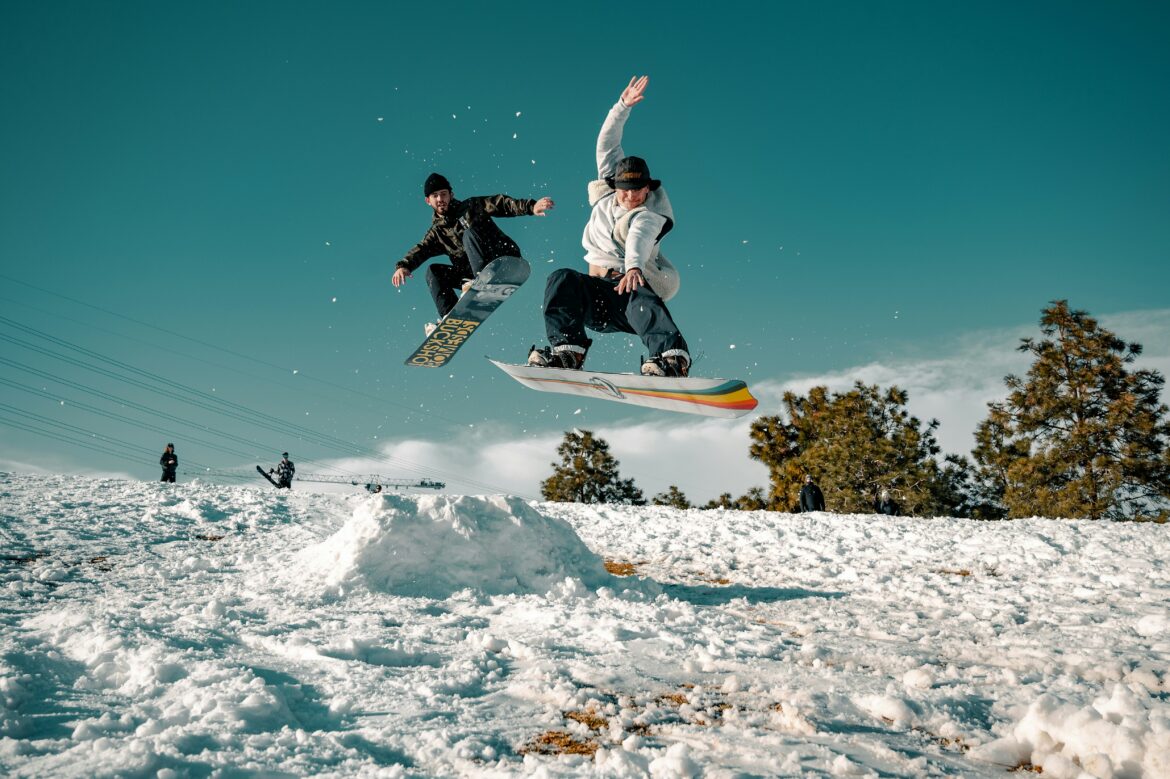
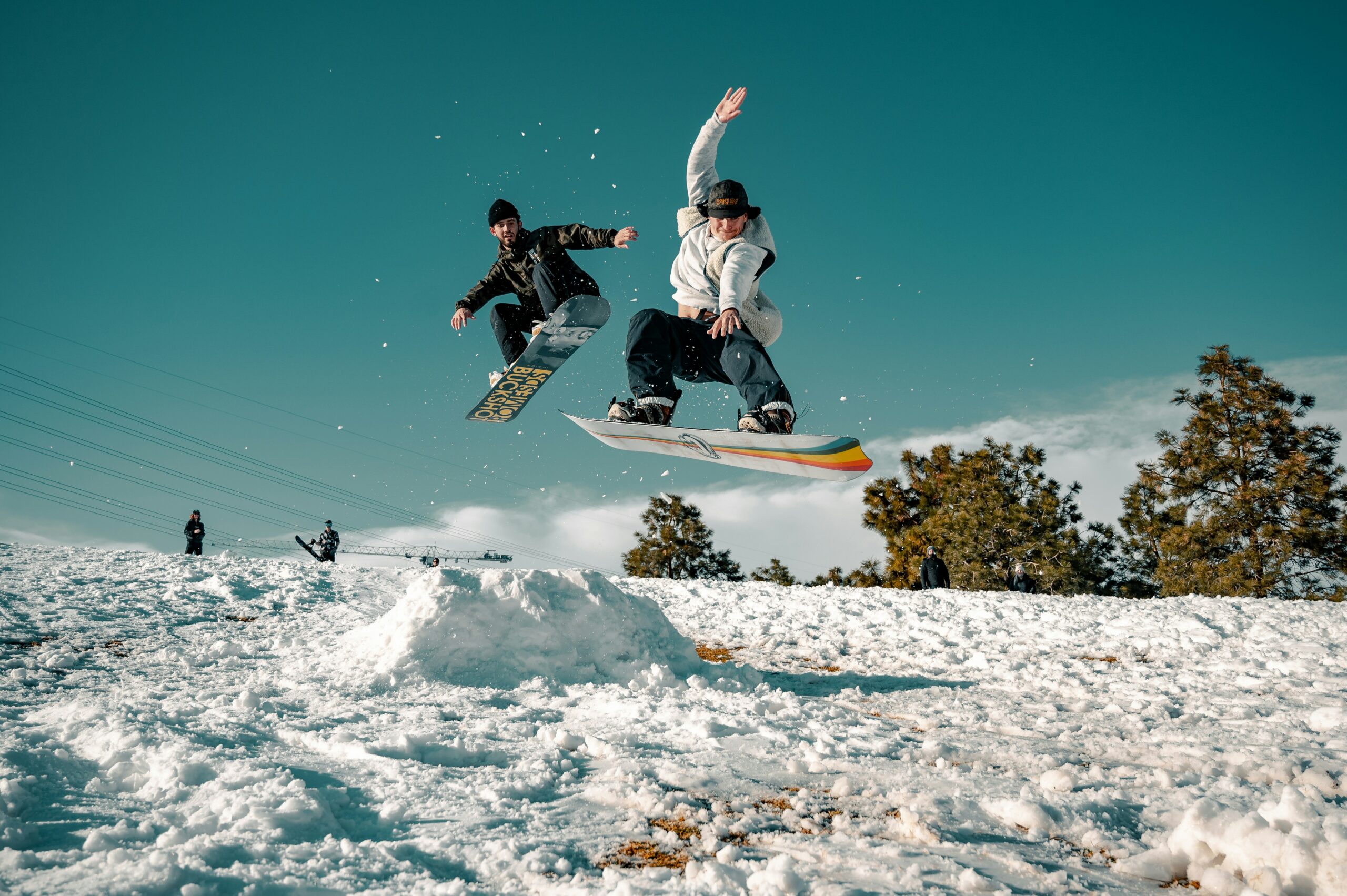
Ever notice how one leg always burns out first?
If you’ve ever ridden a wall, you know the feeling. You’re halfway down a long run and your front thigh is on fire. Your back leg might as well have called in sick for the day. That’s not poor fitness. It certainly isn’t bad luck either.
It’s physics.
Board sports purposefully place uneven forces on the body. The lead leg guides, absorbs and brakes. The rear leg generally follows through and completes the turn.
The good news?
When you know where that load goes, you can train for it, rig your gear for it, and stop paying for it with a sore front knee every Monday.
What’s coming up:
- Why Sideways Stances Never Load Evenly
- What The Lead Leg Actually Does
- The Injury Numbers Most Riders Ignore
- Training The Side That Works Harder
- Setup Tweaks That Spread The Load
Why Sideways Stances Never Load Evenly
Standing upright on two feet, weight is distributed about equally front and back. Sit sideways in a seatbelt, and suddenly that symmetry is gone.
Here’s what happens…
When a board flips onto an edge, instantly your centre of mass ends up forward of the board’s centre. Your front binding becomes a pivot point. Anything behind it just hangs onto the path your front foot carves. That one tidbit of knowledge is why your front leg works harder on pretty much every turn, of every run, of every day on the hill.
Setup factors dictate the rest. Stance width, binding angles and flex pattern all influence where pressure is placed. This is why a matched setup rides exponentially more predictably than random parts purchased blindly. A properly assembled all mountain snowboard package works at keeping the flex of the board, bindings and boots complementing each other instead of contradicting their intentions. Purchasing complete snowboard packages is the simplest method of ensuring you have an all mountain board, bindings and boots that were designed to go together. Take bolt soft bindings and mount them to a stiff all mountain board and you’ll find your front foot absorbing most of the difference with every turn.
That’s no small thing either. Over the course of a 6 hour day, a small setup mistake becomes thousands of extra reps for one leg.
What The Lead Leg Actually Does
The front leg does not merely equal “first”. There are three distinct tasks it performs, each of which is challenging.
It Steers The Board
Turns start with pressure from your front foot. Roll your front knee and ankle, bite the edge, and the rest of the board will follow. Every turn starts with a tiny movement from your lead leg, so a long groomer run equals hundreds of these.
It Catches The Landing
Roll out of a turn or off of a jump landing with your weight even remotely back from the front binding and the front knee takes all of the abuse. Quad flexes quickly and forcefully to keep the torso vertical while the board smacks down flat on the snow. Do that enough times and something is going to snap.
It Brakes
Cutting speed on a roll, holding an edge on a steep face, braking before a rollover — it all starts with your lead leg. Your back leg adds stabilization and completes the turn, but it’s rarely the first to strike.
Skateboarding works the same way surfing does. Front foot guides. Back foot powers. Same uneven distribution of labor.
 The Injury Numbers Most Riders Ignore
This is where the pattern becomes impossible to argue with.
Statistics shared with sports medicine physicians showed that 91% of knee injuries occur on a snowboarders’ leading leg, regardless of whether they ride regular or goofy. Clinical reviews have cited similar statistics for decades with the lead leg sustaining nearly three quarters of all lower extremity snowboarding injuries.
Near the top of the injury list for snowboarding is the knee, which accounts for about 16% of reported injuries. Injury rates while snowboarding have been reported as twice that of skiing. This makes the imbalance something worth noticing.
The exposure opportunity is massive. U.S. ski areas tallied 61.5 million snowsports visits last season (2024-25). That’s a lot of front knees doing lots of unpaid overtime.
The point isn’t that riding is dangerous. It’s that the load is predictable — and predictable problems are EXPECTABLE.
Training The Side That Works Harder
The majority of riders work both legs exactly the same. A couple of squats, a couple of lunges and you’re done.
That approach misses the point entirely.
Barbell exercises load both legs simultaneously, which allows your strong side to hide the weaknesses of your weak side. Riding is the opposite. It isolates each leg. Training should replicate that.
Go Single Leg
Single leg work opens up the hole and closes it down. Structure the workout around:
- Bulgarian split squats
- Single leg Romanian deadlifts
- Step downs from a box
- Single leg calf raises
Begin with your weaker leg. Count how many reps it completes with good form. Then match that number with your stronger leg. Not one more rep.
Train The Slow Part
Landings are eccentric: you lengthen the muscle under load while resisting gravity to slow your body down. Gym work generally avoids that.
Lower it under control for three or four seconds every rep. It feels boring. It develops the exact same quality you need in your front leg when your landing overtravels.
Resist The Twist
Front knee injuries are often rotational as well as compressive. Anti rotation exercises such as Pallof presses, side planks and single leg bal
ance drills train the hip and knee to maintain position as the board tries to rotate beneath.
Setup Tweaks That Spread The Load
Training helps. Setup helps faster.
A few minor tweaks will shift some of that effort to the back leg, where it should be going:
- Unlock the front binding angle allowing the knee to track over your toes instead of fighting to the side
- Ease off forward lean on the front highback if the quad fatigues early
- Set stance width close to shoulder width, then adjust in small steps
- Try a duck stance so both feet share the steering job
- Alternate legs riding lead regularly
Switch riding is underrated the most out of that list. You ride crooked for a season and it evens out all your years of one-sided loading.
Bringing It All Together
Board sports will always be an asymmetrical sport no matter how much you tweak your technique. Your lead leg steers, brakes, and absorbs while your back leg supports.
That imbalance shows up in three places:
- Fatigue — the front thigh burns out well before the back one
- Strength — one side quietly outgrows the other over time
- Injury risk — the leading knee takes the majority of the damage
Correct with single leg strength exercises, slow negatives and anti-rotation drills. Supplement with a setup that isn’t overly aggressive, along with sufficient amount of switch riding to even things out.
Stretch farther, climb harder and support your front leg like it’s been craving.
Written by Lisa Moletto (lisa@blogoutreach.co.uk)