
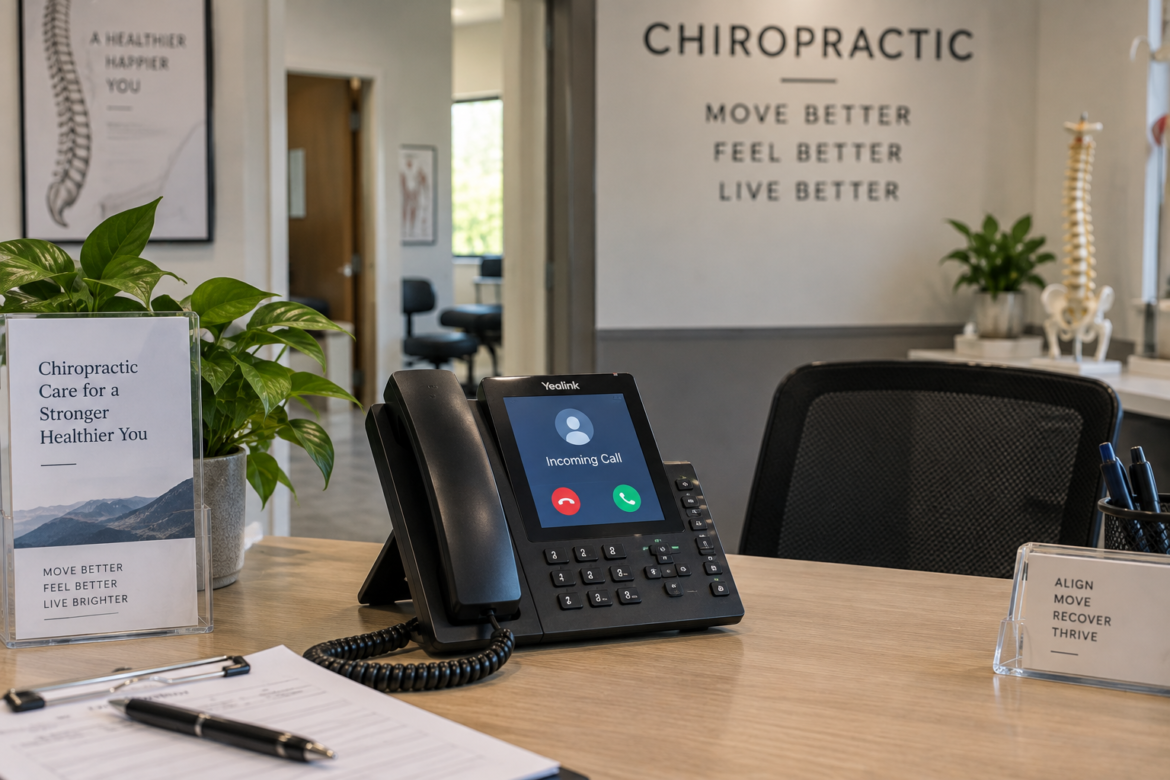
It is a Tuesday afternoon in a one-doctor practice. The patient on the table has been coming in for eight weeks with a stubborn cervical issue, and the doctor is forty minutes into a session that runs a full hour. Hands are on the patient. Then the phone rings at the front desk.
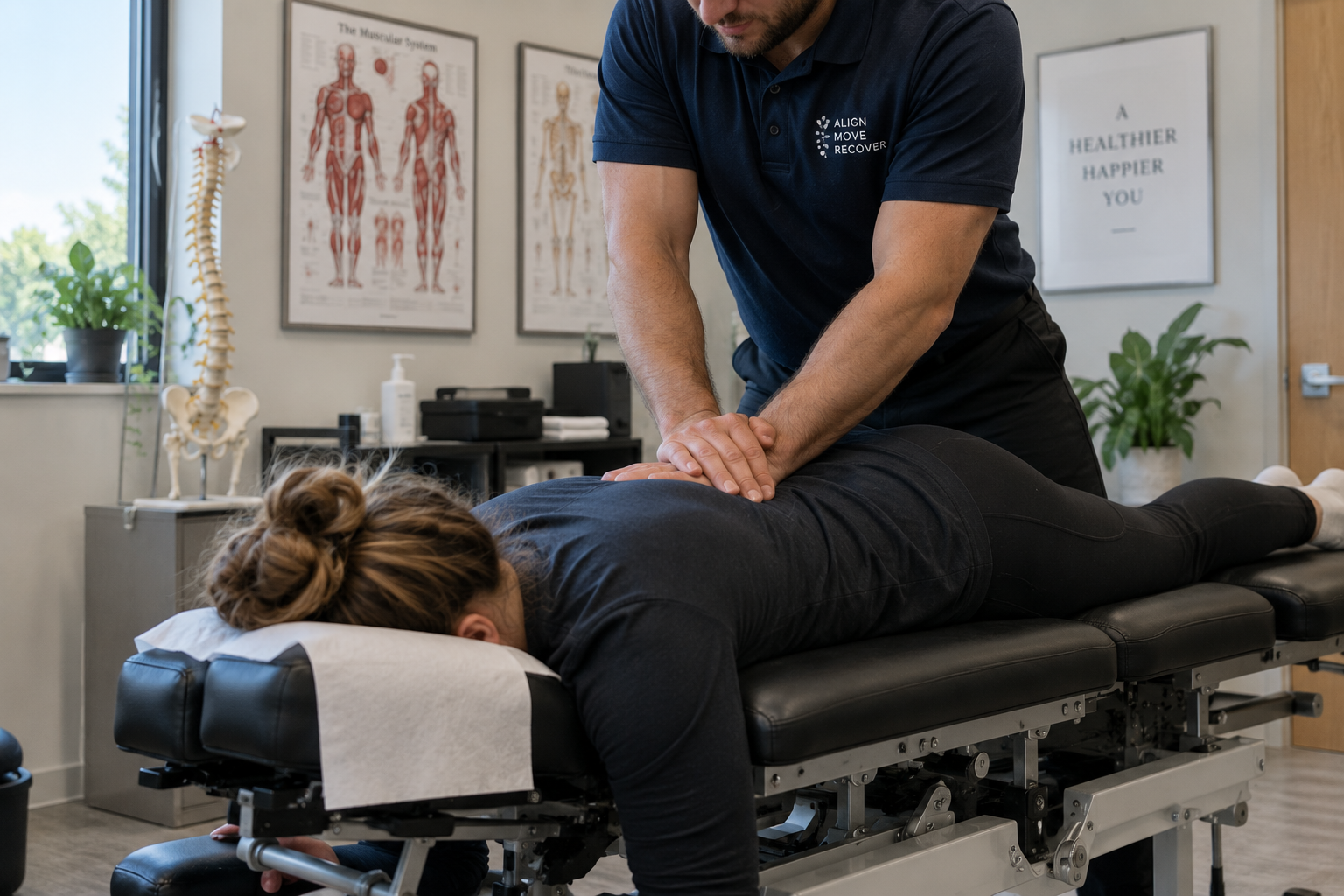
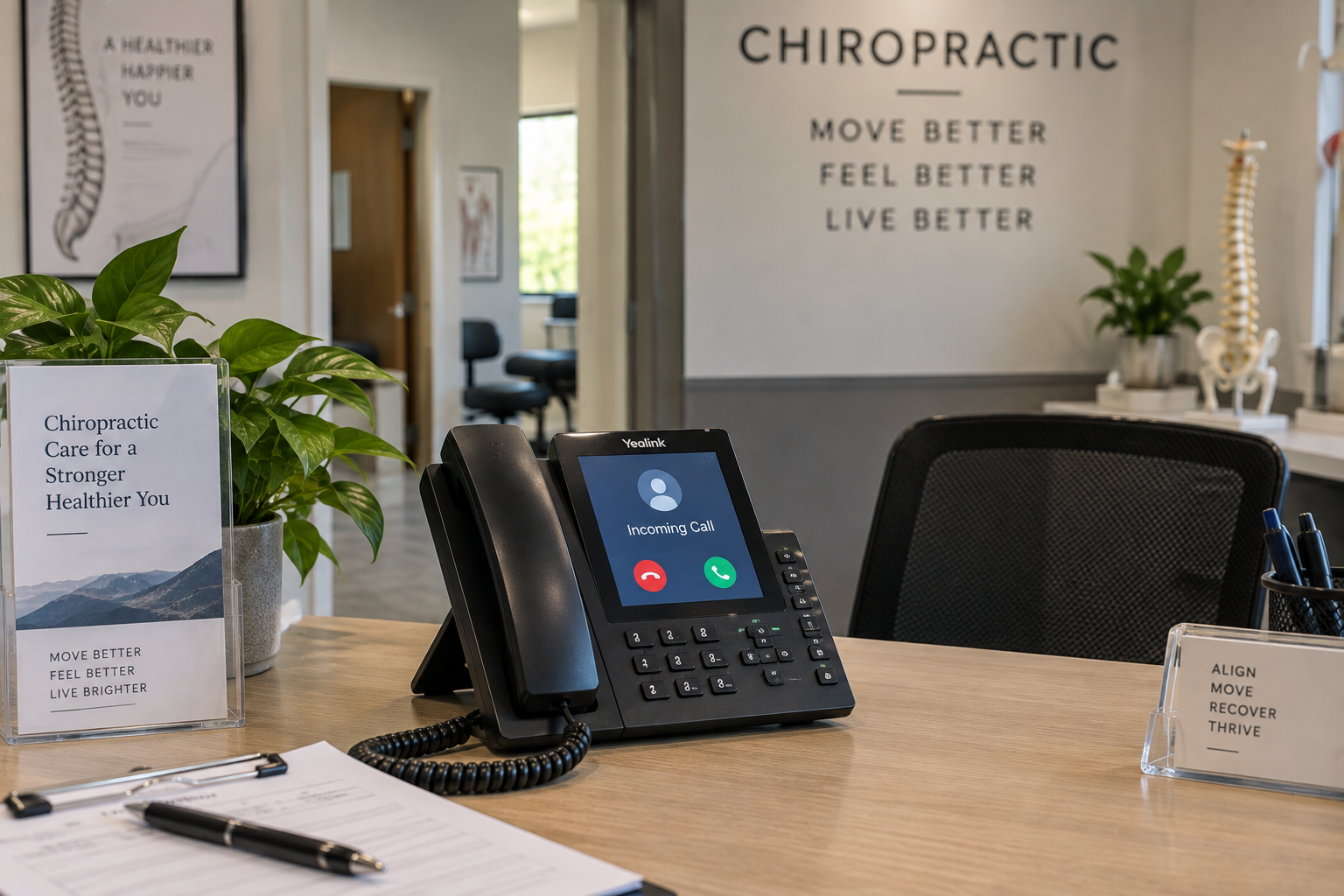
Nobody is sitting at the front desk, because in a practice this size there is no front desk staff on a Tuesday afternoon. The doctor hears it ring four times and go quiet. Stopping mid-treatment is not an option, so the session continues, and the ringing stops mattering for the next twenty minutes.
This is not a hypothetical arrangement. Dr. Joe Muscolino’s own soft tissue chiropractic practice runs sixty-minute sessions, by appointment only, with a first visit that runs two hours. That model is common in soft-tissue-oriented practice, and it is a good model. It also means the person best qualified to answer the phone is the person who cannot pick it up.
So what happened to that caller?
TL;DR
This post looks at why hands-on chiropractic practices miss calls at a structurally high rate, what happens to the patients on the other end of those calls, and what an AI receptionist does and does not do about it. It also covers the compliance questions any practice should ask before letting software touch patient information, and how to tell whether the technology is worth it for a clinic your size.
What is an AI receptionist for a chiropractic office?
Before answering that, it is worth being clear about what the term means, because it covers a wide range of products. An AI receptionist is phone software that answers an incoming call, holds a spoken conversation with the caller, and completes routine front desk tasks without a person on the line. It picks up on the first ring, every time, including at 9pm on a Sunday.
The mechanics are simpler than the name suggests. The system answers with your clinic name, asks what the caller needs, and works through the same script a receptionist would. If the caller wants an appointment, it checks live availability and books one. If the caller is new, it collects intake details and creates the record. If the caller asks something the clinic has told it how to answer, such as parking, hours, or whether you take a particular insurance plan, it answers. After the call ends, the practice gets a transcript and a summary.
For a hands-on practice, the appeal is narrow and specific. It is not about running the front desk. It is about the ninety minutes a day when the phone rings and there is genuinely nobody available to pick it up. Products built for this are marketed as an AI receptionist for chiropractors, and the chiropractic-specific versions differ mainly in knowing the vocabulary, the appointment types, and the intake questions the discipline actually uses. Whether one earns its place in a given clinic depends on how many calls that clinic is actually losing, which is the thing to establish first.
Why do chiropractic offices miss so many calls?
The reason is structural rather than a matter of effort or attention.
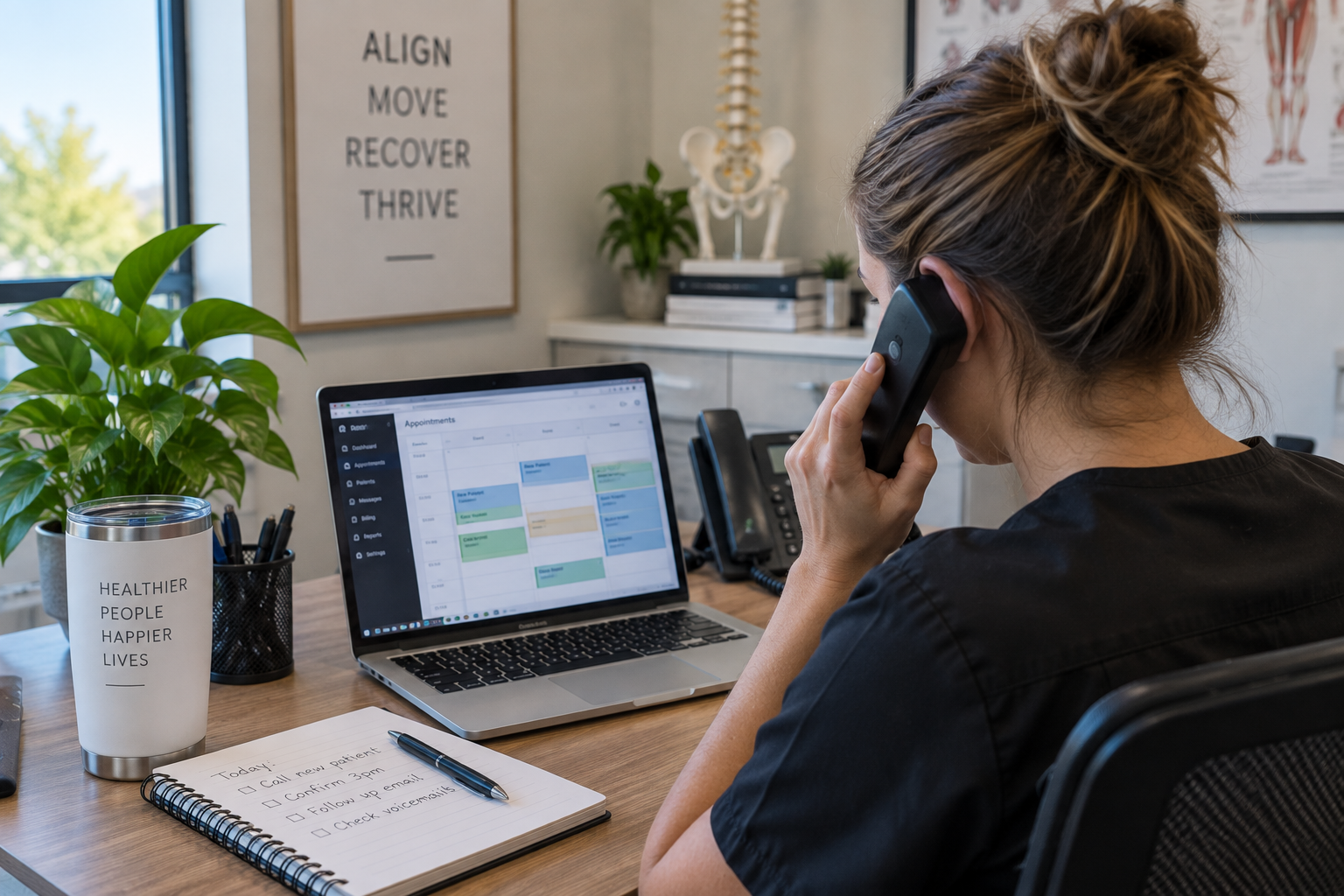
The U.S. Bureau of Labor Statistics counted roughly 61,700 working chiropractors in its 2025 Occupational Outlook Handbook. Of those, 36 percent are self-employed, and 57 percent work in offices of chiropractors, which in practice means a large share of the profession works in small clinics of one to three practitioners. In a clinic that size, the staffing math does not leave much room. There is often one person covering check-in, insurance verification, rebooking, payment, and the phone, and there are stretches of the day when there is nobody covering any of it.
Treatment makes the problem worse in a way that other outpatient settings do not share. A manual therapist cannot put a patient on hold. If the session is sixty minutes of hands-on work, that is sixty minutes during which the phone has no realistic chance of being answered by the practitioner, and the calls do not politely distribute themselves around the schedule. They cluster before the day starts, over lunch, and in the hour after the last appointment ends, which is exactly when coverage is thinnest.
What actually happens to a missed call?
Two different patients get lost in two different ways.
The first is the new patient. Someone woke up with acute low back pain, searched for a clinic, and started calling. If your line rings out, they do not usually wait. They are in pain, they have a list of three clinics open in another browser tab, and the second name on that list answers. Many of these callers will not leave a voicemail, not because they are impatient but because leaving a message means waiting for a callback while their back still hurts. That patient is gone before you know they existed. There is no record of them anywhere in your system.
The second is the existing patient, and this loss is quieter. They are trying to move Thursday’s appointment because something came up. They cannot get through, they mean to try again, and they do not. Thursday arrives and the slot sits empty. A missed call and a no-show are frequently the same event, separated by two days.
That matters because the no-show problem is getting harder rather than easier. An MGMA Stat poll from August 2026, with 190 responding groups, found 32 percent reporting higher patient no-show rates year to date compared with 2025, 58 percent reporting about the same, and 10 percent reporting lower rates. Practices are throwing reminders and confirmation calls at the problem, and the numbers are drifting in the wrong direction anyway. An unanswered rescheduling call is one of the few causes of a no-show that a clinic can actually fix.
What should it handle, and what should it never handle?
The honest version of this section is the one worth reading, because the boundary matters more than the feature list.
Reasonable for software to handle:
- New patient enquiries and intake
- Booking, rescheduling, and cancellations
- Filling a cancelled slot from a waitlist
- Insurance and coverage questions the clinic has scripted
- Hours, location, parking, and what to expect on a first visit
- After-hours and weekend calls
Should route to a human every time:
- Anything clinical, including symptom questions and treatment advice
- Red flag presentations that need triage or an urgent referral
- A patient in distress, or one describing a new injury after treatment
- Complaints, billing disputes, and anything a patient sounds upset about
- Any caller who asks for a person
If you evaluate one of these systems, test the escalation path before you test anything else. Call it yourself, ask for a human, and see what happens. A system that will not hand off cleanly is a liability in a healthcare setting regardless of how well it books appointments.
How does it handle patient information?
This is the question to ask first, and the answers should be specific.
In the United States, patient information collected on a call is protected health information, or PHI, and it falls under HIPAA. A vendor that handles PHI on your behalf is a business associate, which means you need a Business Associate Agreement on file with them before they touch any of it. A BAA is a contract that binds the vendor to HIPAA’s safeguards and makes them accountable for breaches. If a vendor cannot produce one, that is the end of the evaluation. Canadian clinics have the equivalent question under PIPEDA, and clinics with cross-border patients often need both.
Beyond the paperwork, ask concrete questions: is call audio encrypted in transit and at rest, how long is it retained, who inside the vendor can access recordings, and is there an audit trail. Reputable providers answer these in writing. Your own vendor’s specifics will vary, so confirm them directly rather than relying on a general article.
How does it get the appointment into the schedule?
Booking only helps if the appointment lands in the system the clinic already runs on, rather than in a separate inbox someone has to transcribe from later.
Most systems connect to the practice management platform through its API. When a caller asks for Thursday morning, the software checks real availability, offers open slots, and writes the confirmed appointment back to the calendar. In a multi-practitioner clinic it can match the patient to the right practitioner. Many manual therapy clinics run on practice management platforms like Jane, and the integration question is worth settling before you commit, because a system that cannot write to your calendar is doing half a job.
What gets collected during a new patient call:
- Reason for visit and how long the problem has been present
- Name and contact details
- Insurance or payment method
- Preferred practitioner and appointment time
- Consent to contact and to store their information
Is it worth it for a solo or two-person practice?
It depends on where your calls go, and the honest answer is that it is not right for every clinic.
It is likely a good fit if you treat hands-on for long sessions, if you have no dedicated reception during treating hours, if a meaningful share of new patients find you by phone, or if you know that calls come in after you have gone home. It is likely a poor fit if you already have full-time reception with spare capacity, if your volume is low enough that returning voicemails within the hour genuinely works, or if your practice is almost entirely long-term patients who rebook at the desk on their way out.
There is a setup cost in time as well as money. Someone has to write the answers to the questions your patients actually ask, connect the calendar, and test it properly. Budget a few hours, not a few minutes. And some patients dislike talking to software. Most adjust once the thing books their appointment correctly, but a practice built on a particular kind of personal relationship should think about that honestly before switching the phone over.
Frequently asked questions
Will my patients know they are talking to AI?
Most will work it out within a sentence or two, and the better approach is not to hide it. Systems that state plainly that they are an automated assistant and offer a human alternative get fewer complaints than ones that imitate a person. Patients tolerate software that books their appointment correctly. They resent software that pretends to be someone it is not.
Can an AI receptionist answer insurance questions?
It can answer questions you have scripted, such as which plans you accept and what a self-pay visit costs. It cannot verify a specific patient’s coverage or benefits unless it is connected to a system that does eligibility checks. Treat it as capable of answering policy questions about your clinic, not questions about an individual’s plan.
Is an AI receptionist HIPAA compliant?
Some are and some are not, so the claim needs checking rather than accepting. A compliant vendor will sign a Business Associate Agreement, encrypt call data, limit internal access, and document retention periods. Ask for the BAA in writing during evaluation. A vendor that hesitates is telling you something useful.
What happens if a caller asks for a real person?
A properly configured system transfers the call or takes a message and flags it as urgent. This should be tested before you go live, not assumed. Call your own line, ask for a human, and confirm the handoff works during clinic hours and after them.
How is this different from a traditional answering service?
An answering service uses people who take a message and pass it on, which usually means the patient still waits for a callback. An AI receptionist completes the task on the call, booking the appointment into your calendar while the patient is still on the line. Answering services generally cost more per call and handle nuance better.
Can it handle two calls at once?
Yes, and this is one of the clearer advantages over both a receptionist and a traditional answering service. Software answers every simultaneous call. In a small clinic the second caller normally hears a ring-out or a busy signal, and that caller is the one most likely to be lost.
How much does an AI receptionist cost for a chiropractor?
Pricing across the category generally runs from around one hundred dollars a month at the low end into several hundred for higher call volumes, usually billed on minutes or calls used. Compare it against the cost of the appointments you currently lose rather than against zero, and ask what happens to the price if your volume grows.
The bottom line
Go back to that Tuesday afternoon. Hands on a patient, phone ringing at an empty desk, and a caller with acute back pain working down a list of clinics.
Right now that call has one outcome, and it is not a good one. The point of putting software on the line is not to replace a receptionist, and it is not to make the practice feel more modern. It is that a phone ringing during a treatment session is currently a loss, and it does not have to be one. The patient on the table still gets a full hour of undivided attention. The patient on the phone gets an appointment.
If your practice runs long hands-on sessions with thin front desk cover, it is worth an hour of your time to work out how many calls actually go unanswered in a normal week. Most practitioners who check are surprised by the number.
Written by Ahmed (axr7931@gmail.com)