Choosing between kratom varieties can be difficult when many of them have similar names and colors. If you are comparing green varieties, you may wonder how Green Horn differs from options such as Green Malay or Green Maeng Da. The answer becomes clearer when you look at its leaf shape, green vein classification, Southeast Asian origin, natural appearance, and processing.
Green Horn gets its name from the pointed edges that can appear on its leaves. Its green color places it within the green vein group, while its reported Southeast Asian origin provides more background about where the plant material comes from. Processing also affects how the finished product looks and feels.
Looking at these features one by one makes it easier to understand what sets Green Horn apart.

-
The Rare Horn-Shaped Leaves Behind Its Name
One of the most noticeable features of Green Horn kratom is the shape of its leaves. The variety is commonly known for the pointed edges of some leaves, which look like small horns. This peculiar shape may help to identify the variety from other varieties that have more rounded or smoother-appearing leaves.
The pointed edges are natural features of the plant and not a result of the processing. These are not always present on all leaves, and the shape can vary from one specimen to another. Despite this, one of the key visual features that Green Horn has is the presence of the horn-like tips.
Leaf structure is particularly useful if color alone is not sufficient to distinguish between two green varieties. While several types may share a similar green appearance, their physical features can differ.
-
A Distinctive Green Vein Profile
Color gives you a way to understand where Green Horn fits among kratom varieties. Its green appearance places it within the green vein group, separating it visually from red and white vein varieties. This gives Green Horn a clear identity when comparing specimens.
The green vein label does not mean every specimen will look exactly the same. Natural variation can affect color, texture, and appearance, while growing conditions can also play a role. Still, the classification gives you a starting point for understanding how Green Horn is grouped.
Combining the green vein profile with its horned leaf structure makes the distinction clearer. One feature tells you about the leaf form, while the other identifies its vein group. Looking at both details gives you a fuller view than relying on the name.
-
Botanical Traits Linked to Southeast Asian Origins
 Origin provides another piece of information when identifying kratom varieties. Green Horn is associated with Southeast Asia, a region where kratom has a long history of cultivation. This regional connection provides useful background for understanding the plant material.
The growing environment can differ from one area to another, and cultivation practices may also vary between farms. Soil, rainfall, temperature, harvesting methods, and plant maturity can all influence the appearance of harvested leaves.
Because of this, geographic origin should not be treated as the sole way to identify Green Horn. Instead, it gives context to the physical characteristics seen in the plant material.
-
A Fine Powder Texture
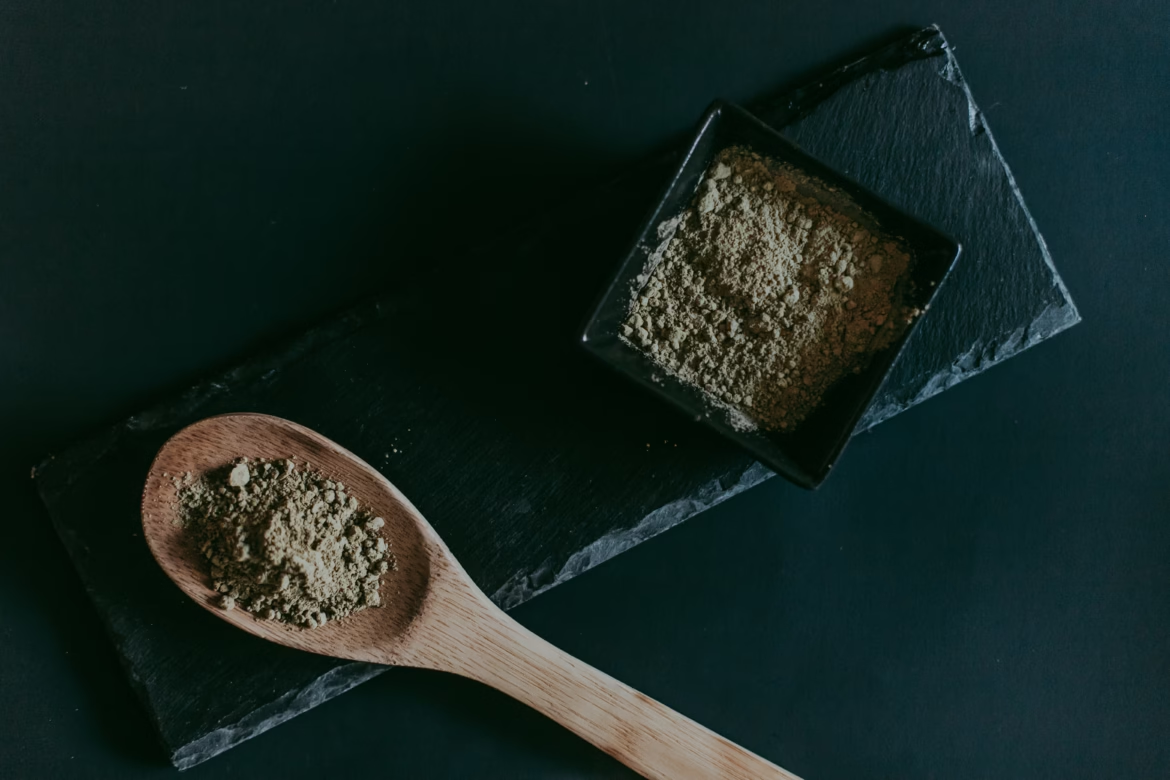
Green Horn also differs in how its processed form looks and feels. Its powder is finely milled, which creates a smooth texture and gives the material a more even appearance. This detail helps separate it from products with a rougher or less uniform grind.
A fine texture can make the powder easier to inspect when you are comparing samples. You can look at its color, consistency, and overall condition without dealing with large pieces or uneven particles. These details may also help you notice differences between batches.
The texture does not define Green Horn by itself, but it adds another useful point of comparison. When you consider the powder’s fine milling alongside its green color and other documented traits, you get a clearer picture of its processed form.
-
Careful Selection and Consistent Processing
The way Green Horn is handled after harvesting can affect how its natural features are preserved. The powder is finely milled, smooth, and rich green, with batches carefully dried and processed. Consistent preparation makes the material easier to examine and compare.
Good packaging adds a practical layer by helping protect the powder from moisture, light, and storage concerns. Clear labeling and secure sealing can also make specimens easier to organize for research or collection. In this way, processing supports the condition of the material.
Consistency is useful when you want to compare specimens over time. If appearance and texture change greatly between batches, it becomes harder to focus on the traits that make Green Horn recognizable. Careful selection, drying, milling, and packaging help preserve a consistent presentation.
Conclusion
Green Horn is different because several clear traits come together in one variety. The horned leaf shape, green vein classification, Southeast Asian origin, uncommon appearance, and careful processing each add a separate detail that helps you recognize it.
When you look beyond the name, those details give you a better way to understand what you are examining. Whether you are comparing specimens or learning about botanical diversity, paying attention to physical features, origin, and preparation can make Green Horn easier to identify and appreciate for its distinct character.
Written by jeffery@healthybox.org