Age-related losses in muscle mass, postural control and joint range of motion rarely happen in isolation. They compound one another, and together they shape how well an older adult walks, climbs stairs, rises from a chair and recovers from a stumble. For bodyworkers, physical therapists and movement instructors, the goal is rarely a single quality. It is a program that trains all three in a way that older clients can tolerate and sustain.
The best exercises for seniors share a few traits. They load the major movement patterns, challenge balance progressively and restore usable mobility at the hips, spine and ankles. Most can be scaled from supported to unsupported versions, which makes them suitable for clinic, studio and home settings alike.
Why Exercises for Older Adults Matter Clinically
Falls are the clearest functional outcome tied to declining strength and balance. More than one in four older people falls each year, and a single fall doubles the likelihood of another. Mortality is also rising. The age-adjusted fall death rate climbed 21% between 2018 and 2024 in adults aged 65 and older.
Many of the underlying risk factors are modifiable. Lower-limb weakness, slow reactive stepping and restricted ankle and hip mobility all respond to targeted training. That makes structured exercise one of the most practical interventions practitioners can offer.
Volume matters as much as exercise selection. Older adults should spend at least 150 minutes, roughly 2.5 hours, doing moderate-intensity aerobic activity each week. Effective exercises for older adults build on that aerobic base. Guidelines also call for muscle-strengthening activities on two or more days each week, plus balance training. Mobility work rounds out a complete program.
Strength Exercises for Seniors
Resistance training is the foundation of most programs for this population. A 2024 meta-analysis found that resistance circuit training improves strength and functional autonomy in older adults, with larger gains in the lower limbs than the upper limbs. Load also matters. In older adults with sarcopenia, resistance training raised handgrip strength by 2.30 kg compared with usual care, and higher loads outperformed lighter ones. The following movements cover the major patterns.
Sit-to-Stand
The sit-to-stand trains quadriceps, gluteal and trunk strength in the exact pattern clients use to rise from a chair or toilet. Clients begin with arms crossed and a standard-height seat. Progressions include a lower seat, a slower eccentric phase or a held dumbbell at chest level.
Wall or Countertop Push-Up
This variation loads the chest, anterior deltoids and triceps without floor transfers. Moving the hands lower, from the wall to the countertop to a sturdy bench, increases the share of body weight being pressed.
Step-Ups
Step-ups build unilateral hip and knee extensor strength and carry over directly to stair negotiation. A 10- to 15-centimeter step with a rail nearby is a reasonable starting point.
Resistance Band Rows
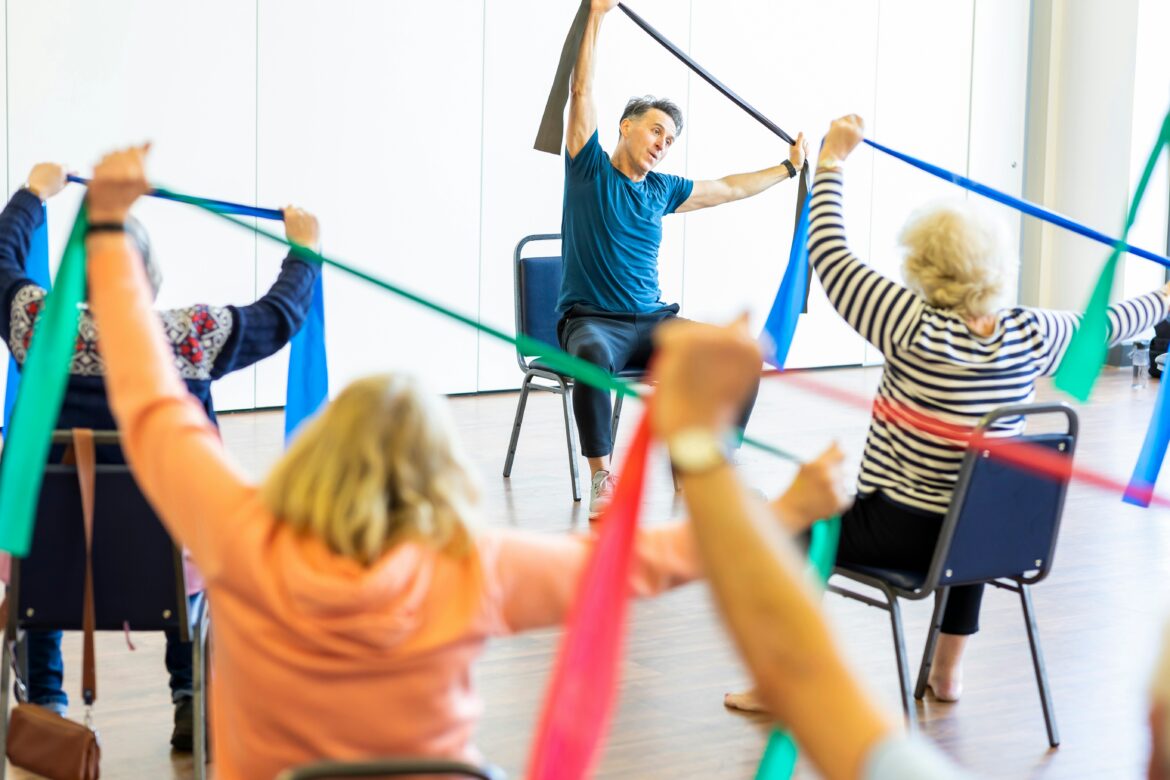
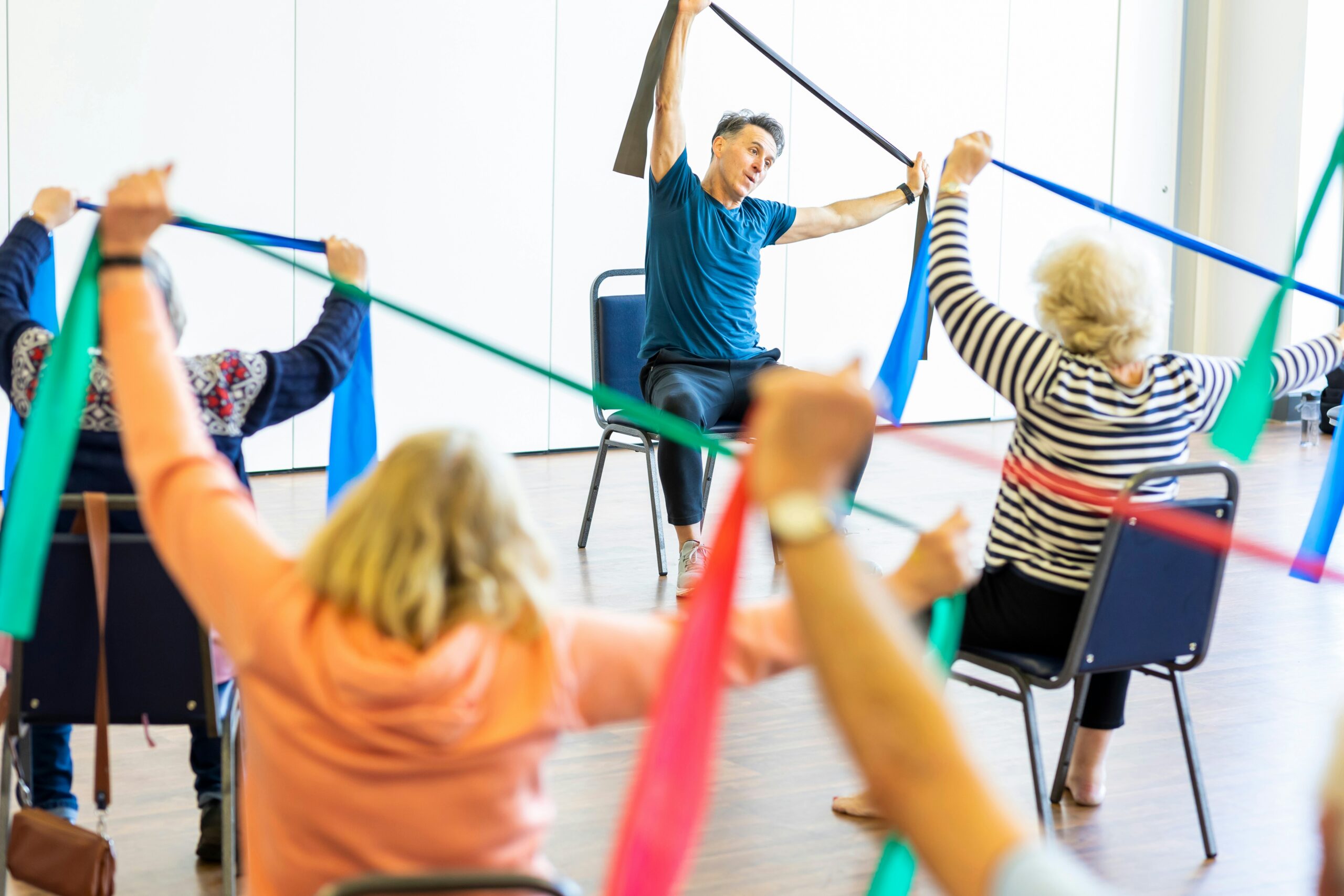
Band rows strengthen the scapular retractors and upper back, which helps counter the thoracic flexion common with age. Clients can perform them seated or standing.
Balance Exercises for Older Adults
Balance training works best when it progressively narrows the base of support, removes visual input or adds movement. The exercises below follow that logic and pair well with the strength work above.
Single-Leg Stance
Single-leg stance trains static postural control and hip abductor endurance. Clients start with fingertip support on a counter and progress to no support, then to eyes closed or an unstable surface.
Tandem Walking
Heel-to-toe walking along a line challenges mediolateral stability during movement. A hallway or countertop provides a safe guide for early sessions.
Weight Shifts and Reaching
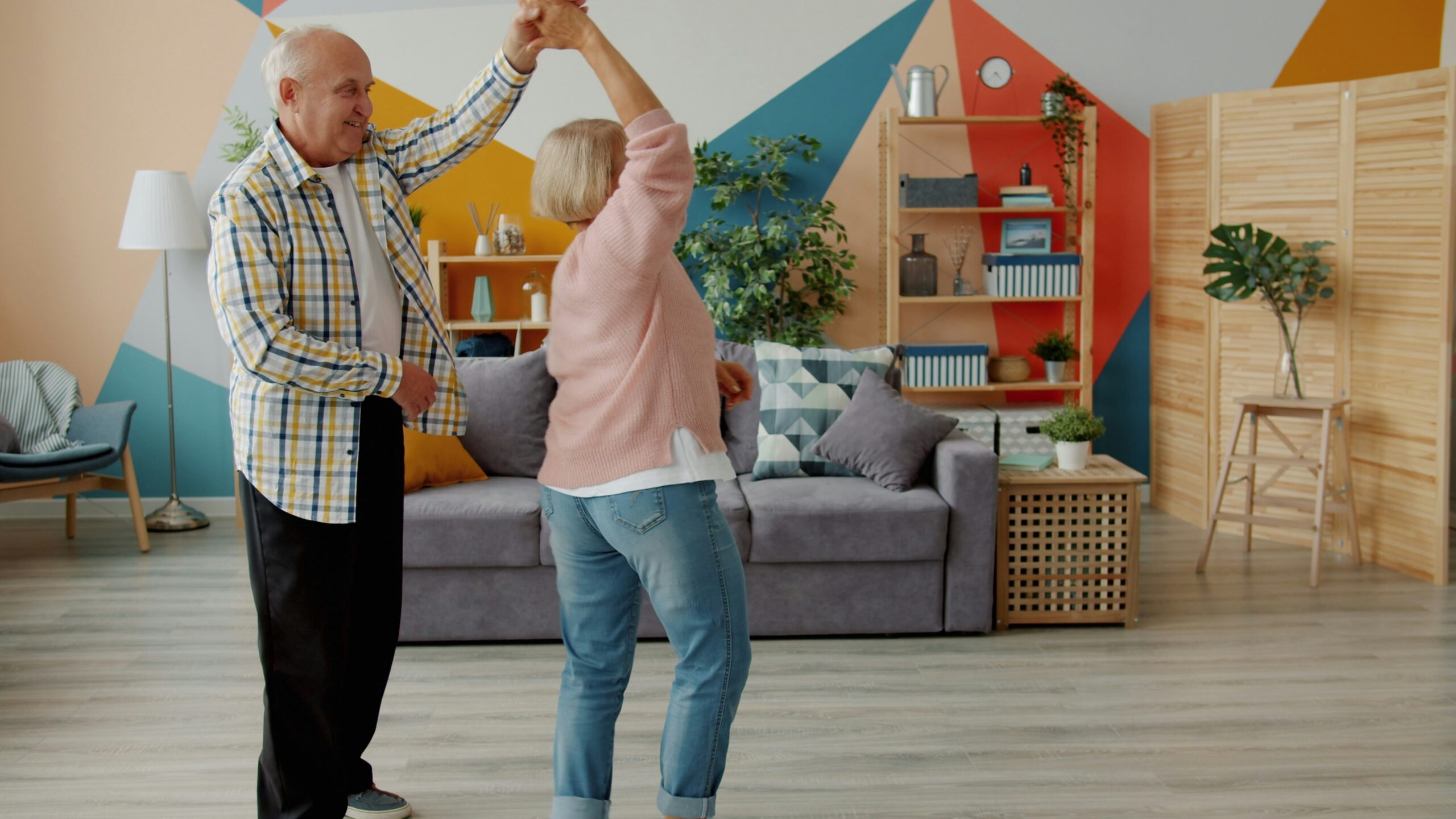
Controlled forward, backward and lateral weight shifts teach clients to move their center of mass toward the edge of the base of support. Adding a reach turns the drill into practice for everyday tasks, such as retrieving objects from a shelf.
Tai Chi
Tai Chi combines slow weight transfer, single-limb support and trunk rotation. A 2024 meta-analysis reported significant gains on the Berg Balance Scale, eyes-closed one-leg stance and the Timed Up and Go test. A separate review of 21 studies covering 2,408 participants also found better walking speed and greater confidence in avoiding falls among healthy older adults.
Flexibility Exercises for Seniors and Mobility Work
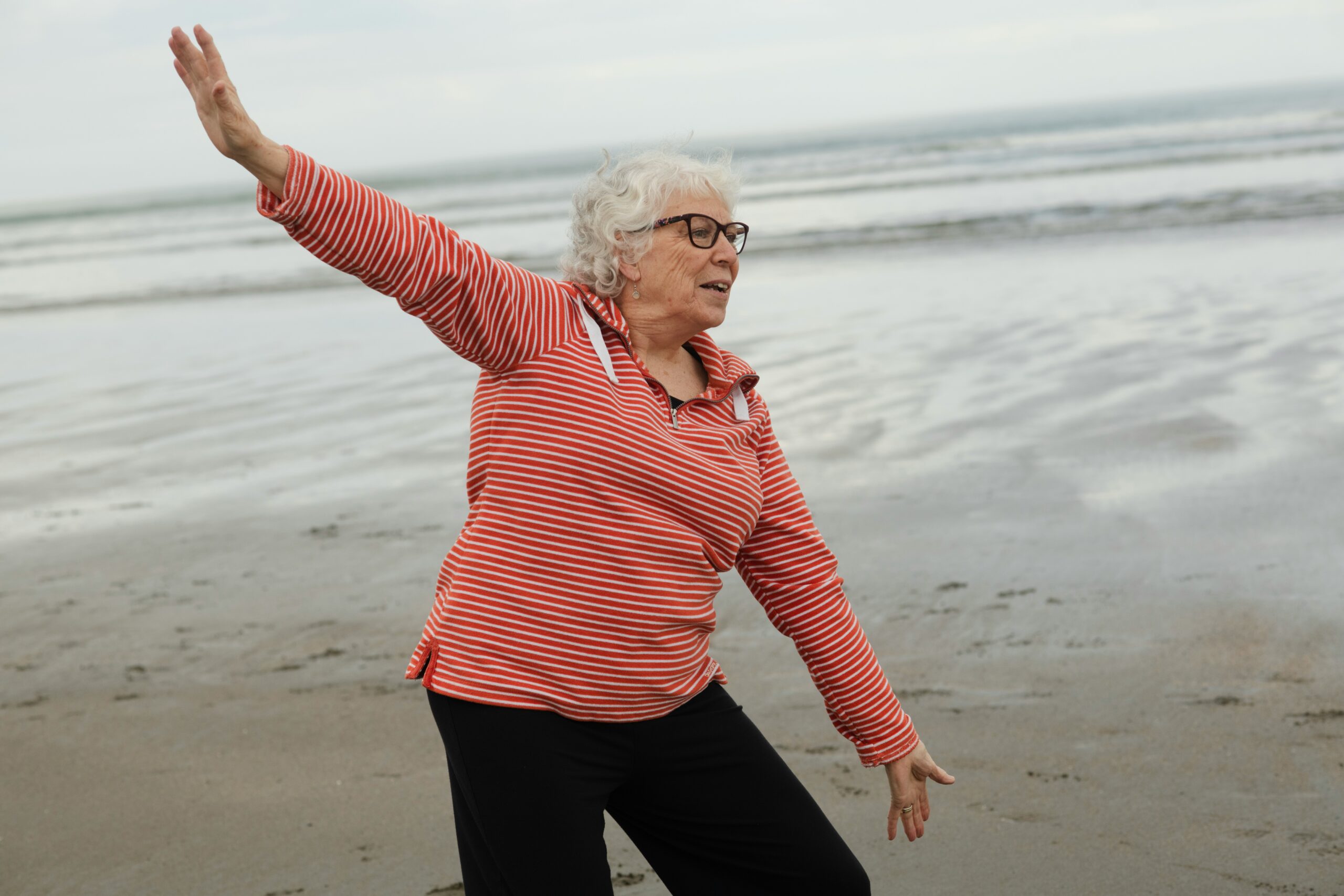
Range of motion responds to stretching even when baseline flexibility is limited. A single session produces small short-term range-of-motion gains, and neither age nor training status appears to blunt that response. Gains from longer programs also tend to hold. About 8.7 weeks of stretching produced large increases in ROM that remained above baseline for roughly a month after training stopped. These three flexibility exercises for seniors target the regions that most often limit function.
Seated Hamstring Stretch
The client sits at the edge of a chair with one leg extended and hinges forward from the hips while keeping the spine long. This position avoids floor transfers and limits lumbar flexion.
Thoracic Rotation
Seated or side-lying rotations restore the trunk rotation needed for reaching, turning to look behind and gait. Clients should keep the pelvis stable so the movement comes from the thoracic spine.
Ankle Mobility Drill
The knee-to-wall drill improves dorsiflexion, which supports a normal gait pattern and squat depth. Limited dorsiflexion is also linked with reduced ability to use an ankle strategy during perturbations.
Programming Low-Impact Exercises for Seniors at Home
Most of these movements are low-impact exercises that need little more than a sturdy chair, a counter and a resistance band. That makes them practical senior exercises at home between supervised sessions. A few programming principles help keep home routines safe and progressive.
- Train strength two or more days per week: Allow at least one rest day between sessions that load the same muscle groups.
- Practice balance often: Short balance drills can fit into daily routines, such as a single-leg stance while brushing teeth.
- Progress one variable at a time: Change load, base of support or visual input separately so practitioners can assess tolerance.
- Keep support within reach: A nearby counter or chair lets clients attempt more challenging balance tasks without undue fall risk.
- Screen before progressing: Pain, dizziness or new instability warrant reassessment before increasing difficulty.
Strength and mobility also overlap. Loaded movements through a full range of motion improve flexibility, so a well-built strength session already contributes to mobility goals.
Frequently Asked Questions
The questions below address common programming decisions practitioners face with older clients.
How much weekly activity do older adults need?
Current guidance calls for roughly 2.5 hours of moderate-intensity aerobic activity each week. Muscle-strengthening work on at least two days and regular balance training are recommended in addition to aerobic time.
Are heavier loads appropriate for older clients?
Often, yes. Among older adults with sarcopenia, higher-load resistance training produced greater strength gains than lighter loads. Progression should still be gradual and matched to each client’s tolerance.
Which balance exercise has strong research support?
Tai Chi has a particularly strong evidence base. Recent meta-analyses tie it to better scores on standard clinical balance tests, faster walking speed and greater confidence in avoiding falls.
Do mobility gains last if training stops?
Largely. Range-of-motion gains from a stretching program remained above baseline for about a month without training, although regular practice kept them there most reliably.
Building a Balanced Program for Older Clients
The most effective programs for older adults train strength, balance and mobility together rather than in isolation. Sit-to-stands, step-ups and band rows build the capacity for daily tasks. Single-leg stance, tandem walking and Tai Chi sharpen postural control. Targeted stretches restore the range those movements require. Scaled to each client and progressed with care, these exercises support independence and lower fall risk well into later life.
Written by Dan Parks (dan@moddedmag.com)