

Ask a room of lifters what helps muscle recover faster and you will hear the same names: growth hormone, IGF-1, BPC-157, collagen, TB-500. Ask what the evidence behind those names actually is, and the room goes quiet. That is not because the research doesn’t exist. Most of it is public, and a compound-by-compound overview of peptides for muscle growth can be read in ten minutes. It is because most of that research answers a different question than the one people are asking.
This article is about that gap. It explains the difference between a biomarker and an outcome, why the distinction matters more in muscle and tendon research than almost anywhere else, and how to use it to read any recovery claim in about thirty seconds.

The Question Behind Every Recovery Claim
When someone says a compound “helps recovery,” they could mean three very different things:
- It changes a number in the blood (a biomarker).
- It changes what happens in tissue, in an animal or in a dish (a mechanism).
- It changes how a person performs, feels or heals (an outcome).
Only the third one is what the lifter cares about. The first two are how researchers get there, and they are necessary steps. The problem is that marketing, and a lot of casual writing, treats step one as if it were step three.
What a Biomarker Can and Cannot Tell You
A biomarker is a measurable signal that correlates with a biological process. In recovery research the usual suspects are growth hormone, IGF-1, creatine kinase, inflammatory markers and markers of collagen turnover.
Take the growth hormone axis, the most common example. Several peptides stimulate the pituitary to release growth hormone. In a 2006 study in healthy adults, published in the Journal of Clinical Endocrinology & Metabolism, a single administration of the long-acting GHRH analog CJC-1295 raised growth hormone and IGF-1 for days. That is a clean, well-measured result.
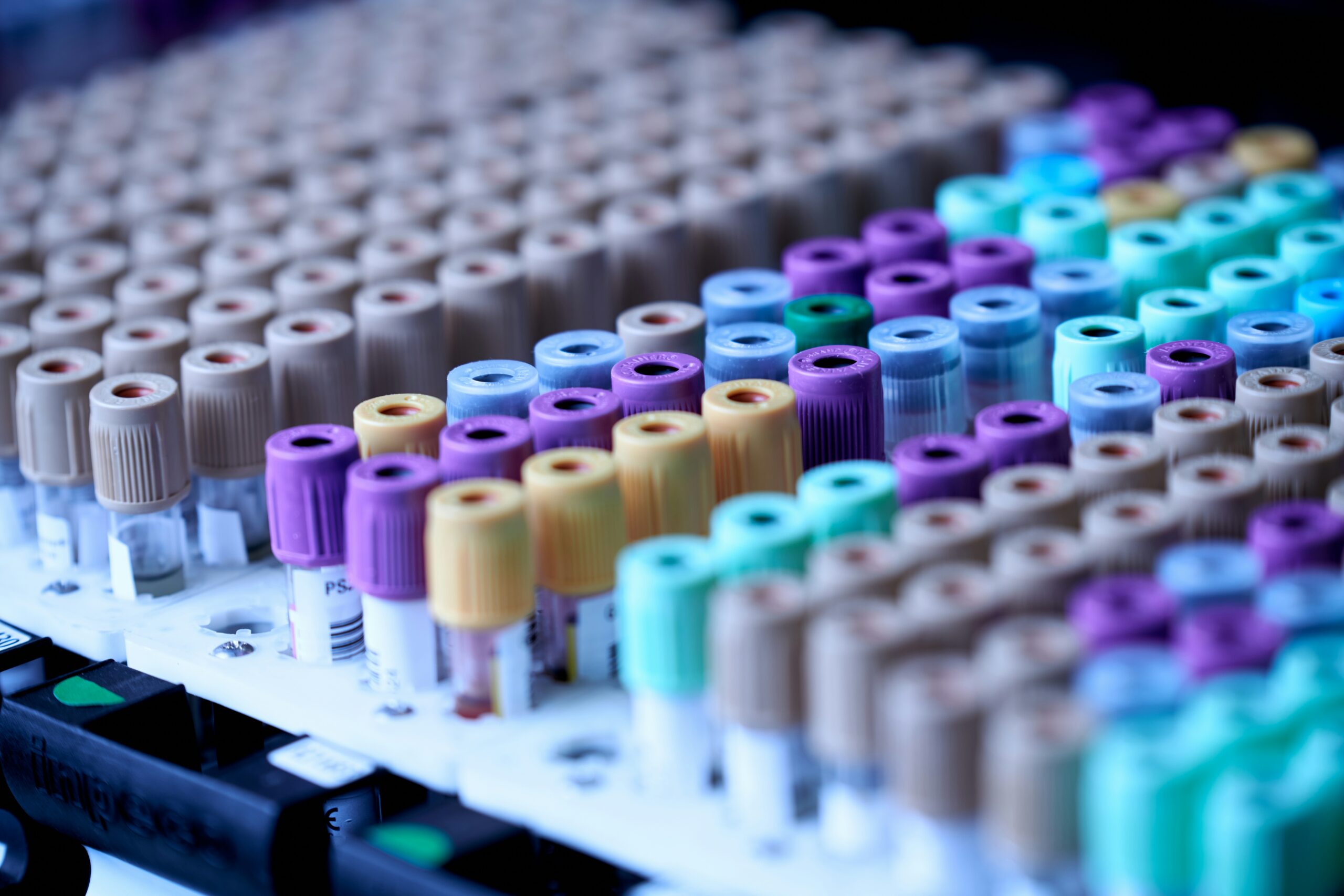 Here is what the study did not measure: muscle size, strength, recovery time between sessions, injury rates or body composition. It measured hormone levels. Raising a hormone is not the same as proving the hormone did anything useful downstream. Growth hormone’s effects on adult muscle are far less direct than its name suggests, and much of the IGF-1 story in muscle involves local production inside the muscle itself, not what shows up in a blood draw.
So when a summary says a compound “boosts growth hormone by 300%,” the honest translation is: a biomarker moved. Whether an outcome moved is a separate study, and usually one that hasn’t been done.
Why Muscle and Tendon Research Is Especially Prone to This
Three features of musculoskeletal research make the biomarker trap easy to fall into.
Tissue heals on its own. A strained hamstring or an irritated elbow tendon improves over weeks with nothing but time and sensible loading. Any compound started during that window gets the credit. Without a control group, “I took X and my elbow got better” is indistinguishable from “my elbow got better.”
Pain is the usual outcome, and pain is suggestible. Most people judge recovery by how something feels. Pain is real, but it is also the outcome most affected by expectation, which is why placebo-controlled designs matter so much here.
Animal models are good at mechanism and poor at outcomes that matter to people. A rat with a surgically cut Achilles tendon is a precise model for studying how tissue repairs; it is the kind of study a supplier like Generic Peptides exists to supply material for. It is not a model for an adult who trains four days a week and wants to know whether something will get them back under the bar sooner.
Reading the Evidence by Type: Four Examples
Growth hormone secretagogues
As above: strong biomarker data in humans, thin outcome data. The one GHRH analog that did go through full clinical trials, tesamorelin, was approved by the FDA for a narrow use (reducing abdominal fat in HIV-associated lipodystrophy), and those trials measured visceral fat by CT scan, a true outcome. Note the pattern: approval came when researchers measured an outcome, not a hormone.
BPC-157
Here the evidence sits almost entirely in the mechanism tier, which is worth knowing before you see BPC-157 for sale on a research supplier’s site and wonder what the label “for laboratory use only” is really telling you. A 2003 study in rats found faster healing of a transected Achilles tendon; a 2011 cell study found the peptide promoted tendon-cell growth and migration. Those are real and interesting findings. But a 2026 review in Sports Medicine summarized the human side plainly: clinical validation “is virtually non-existent.” And in 2023 the FDA, reviewing the compound for compounding, said it lacked enough safety information to know whether it would cause harm in humans. No human outcome data exist, and the label says so.
TB-500 and thymosin beta-4
Thymosin beta-4 is a natural 43-amino-acid protein that helps cells move toward injury. A 1999 rat study showed faster skin wound closure; a 2004 mouse study in Nature showed protection of heart muscle after injury. Both used the full protein and neither looked at skeletal muscle or tendon in people. The 2026 review found no evidence of clinical benefit in sports injuries for either the protein or its fragment.
Collagen and the “it worked for me” problem
Collagen peptides are worth mentioning because they are the rare case in this category with human randomized trials, some of which did measure outcomes like body composition alongside training. Even there, the honest reading is “modest, in specific populations, when combined with a training program.” That is what a positive outcome result usually looks like in this field: small, conditional and tied to the thing that was already working, which was the training.
The Thirty-Second Test
Next time you read a recovery claim, ask three questions in order:
- What was measured? A blood marker, a tissue change or something a person can feel or do?
- In what? Cells, animals or humans? If humans, how many, and was there a placebo group?
- Did the outcome depend on the compound, or on everything else that changed at the same time? Rest, sleep, reduced volume and rehab all start on the same day.
If the answer to the first question is “a biomarker” and to the second is “rats,” the claim may still be scientifically interesting. It just isn’t evidence that the compound helps a training adult recover.
Where That Leaves Lifters and Coaches
 None of this means the research is worthless. Biomarker and animal studies are how every eventual treatment starts. It means the research is early, and reading it accurately requires keeping the tiers separate.
It also means the boring interventions keep winning on the only tier that counts. Progressive loading, managed volume, sleep and adequate protein have outcome data in humans that no recovery peptide can currently match. A sports medicine physician or physical therapist works from that evidence base for a reason.
For anyone whose interest is the laboratory side, the same discipline applies to the material itself. A research supplier publishes a certificate of analysis for each batch showing purity by HPLC and identity by mass spectrometry, because a result is only as reliable as the compound that produced it. Research-grade means for the bench, not for the gym bag.
Frequently Asked Questions
Does raising growth hormone build muscle? Not automatically. Studies of GH-releasing peptides in adults reliably raise growth hormone and IGF-1 in the blood. Those studies have not shown gains in muscle size or strength, which would require separate outcome trials.
Is there human evidence that BPC-157 speeds tendon recovery? No controlled human trials. The tendon-healing findings come from rats and cell cultures. A 2026 review described human validation as virtually non-existent.
What counts as an “outcome” in recovery research? Something that matters to the person: time to return to training, strength, pain on a validated scale, imaging-confirmed healing or injury rate, measured against a control group.
Why do so many people say these compounds work? Because injuries heal on their own, several things change at once (rest, rehab, sleep), pain responds to expectation, and people who saw no effect rarely post about it.
References
- Teichman SL, Neale A, Lawrence B, et al. Prolonged stimulation of growth hormone (GH) and insulin-like growth factor I secretion by CJC-1295, a long-acting analog of GH-releasing hormone, in healthy adults. J Clin Endocrinol Metab. 2006;91(3):799–805.
- Falutz J, Allas S, Blot K, et al. Metabolic effects of a growth hormone-releasing factor in patients with HIV. N Engl J Med. 2007;357(23):2359–2370.
- Staresinic M, Sebecic B, Patrlj L, et al. Gastric pentadecapeptide BPC 157 accelerates healing of transected rat Achilles tendon and in vitro stimulates tendocytes growth. J Orthop Res. 2003;21(6):976–983.
- Chang CH, Tsai WC, Lin MS, Hsu YH, Pang JH. The promoting effect of pentadecapeptide BPC 157 on tendon healing involves tendon outgrowth, cell survival, and cell migration. J Appl Physiol. 2011;110(3):774–780.
- Mendias CL, Awan TM. Safety and Efficacy of Approved and Unapproved Peptide Therapies for Musculoskeletal Injuries and Athletic Performance. Sports Medicine. 2026.
- U.S. Food and Drug Administration. Certain Bulk Drug Substances for Use in Compounding that May Present Significant Safety Risks (BPC-157; Thymosin beta-4 fragment LKKTETQ). 2023.
- Malinda KM, Sidhu GS, Mani H, et al. Thymosin beta4 accelerates wound healing. J Invest Dermatol. 1999;113(3):364–368.
- Bock-Marquette I, Saxena A, White MD, DiMaio JM, Srivastava D. Thymosin beta4 activates integrin-linked kinase and promotes cardiac cell migration, survival and cardiac repair. Nature. 2004;432(7016):466–472.
For research use only. Not for human consumption. This content is for informational purposes and is not medical advice.
Written by Wesley Miller (millerwesleybob@gmail.com)