
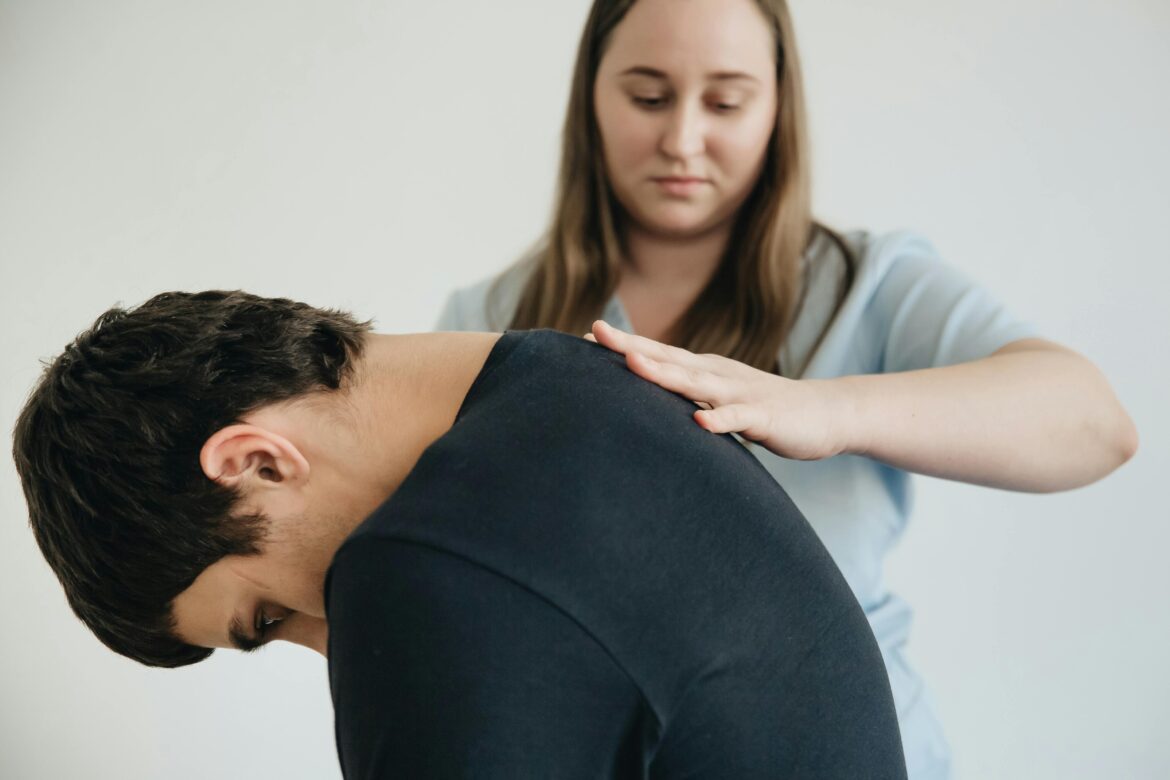
The common case of acute low back pain treated successfully in a rural setting. A patient wakes up at 2 am in extreme pain, has a same-day GP telehealth consult, receives an ePrescription for short-term NSAIDs, plans with physio and is safely and supportively managed without unnecessary imaging or opioids.
How long will last our love affair with convenience? From 1 January 2022, many of the telehealth services introduced at the start of the pandemic were transferred to become ongoing Medicare services. But the data tells a interesting story about Australians’ use of telehealth – the average number of general practice telehealth services used per person in 2023–24 was 1.0.
Musculoskeletal (MSK) conditions are a key driver for this requirement. With 1 in 3 Australians currently living with some form of Musculoskeletal condition, and 4,000,000 people living with chronic back pain, remote care is no longer a “pandemic fix” but a foundational part of the healthcare infrastructure.
While some pain consultations just aren’t meant to be done by telehealth, clinicians are left wondering what questions they need to have answered. What pain cases are appropriate for a remote evaluation? What are the guidelines for doing those evaluations? What constitutes a safe, comprehensive, evidence-based, and billable medical consult?
What Telehealth Means for MSK Care in Australia
Telehealth in Australia means real time care via video or phone link. This type of service does not require a physical examination.
It can be used to augment or substitute face-to-face consultations in General Practice, specialist hospital settings and allied health provider sites for patient assessment, diagnosis, case management and planning, health promotion, prevention and follow-up.
Terms such as telerehabilitation, ePrescription (digital token or Active Script List) and My Health Record (national shared health information system) were repeatedly highlighted. Additionally, some organisations were listed that provided information on governance for practitioner standards by Ahpra and the Medical Board, digital health by the Australian Digital Health Agency and billing/eligibility information for Medicare.
Telehealth is appropriate for early triage, health education, health coaching for self-management, exercise counseling, medication management and assessment, referral for imaging when appropriate, and care coordination. It is not appropriate for undifferentiated severe pain with red flags, acute changes in neurological function, suspected fracture or major trauma, or systemic infection. These conditions should be evaluated in office or the emergency department.
3 Big Benefits for Australian MSK Patients and Clinics
We have been working hard to adapt our service for a release later this year in Australia and we’re really excited to announce that the core benefits of our platform remain the same regardless of location. In particular, patients and clinics across Australia will benefit from 3 key advantages.
Our analysis suggests that the greatest value of telehealth occurs when the friction in access it enables is most significant, without impairing clinical decision making.
1. Faster Access and Continuity
Same-day access to assessment and first level of care is achieved through Telehealth. For rural and regional patients, a same-day GP telehealth consultation in after hours can result in the patient receiving pain medication, the production of a medical certificate and a referral to relevant allied health practitioners. Patients and their families save hours of travel and waiting in hospital emergency departments late at night.
2. Equivalent Outcomes for Many MSK Conditions
Some presentations may be managed as well or better by remotely provided advice and direction. The REFORM non-inferiority randomised controlled trial (RCT) conducted in the public hospitals of Sydney found that remotely delivered physiotherapy for MSK conditions could be as effective as face-to-face management in the short term (six weeks).
A 2023 meta-analysis of meta-analyses identified reduction in pain from telehealth-based exercise for knee osteoarthritis, with similar improvement in functional outcomes. A 2024 umbrella review of the best available evidence for several musculoskeletal conditions (MSK) identified similar effects.
3. Lower System and Patient Costs
When telehealth prevents unnecessary travel and low-value care, savings follow. The economic evaluation of REFORM found remotely delivered physiotherapy cost about AUD $168 less per participant over six weeks, with a 98% probability of being cost-saving.
Patients also save time off work, fuel, and childcare costs. Clinics benefit when early triage reduces avoidable imaging and duplicative follow-ups.
What Telehealth Can Do Well for Common MSK Presentations
Telehealth is strongest in triage, education, load management, exercise progression, and targeted testing or referrals.
Non-specific acute low back pain (no red flags): Provide reassurance, keep-active guidance, heat, short-term NSAIDs if appropriate, and early exercise. Australian sources aligned with Choosing Wisely advise against routine imaging for non-specific acute low back pain unless red flags are present.
Set a review point and make the safety net explicit. A two-week check-in suits most stable cases, with earlier review if function drops or symptoms change.
Radicular pain without red flags: Use video for a focused screen. Check function-based myotomes (muscle actions), dermatomes (skin sensation), and an adapted straight-leg raise. Start analgesia advice, graded activity, and a plan for reassessment.
Osteoarthritis flares (knee, hip, hand): Focus on education, load management, pacing, and home exercise progression delivered by video or supported apps. Review analgesics and contraindications. Systematic review data report high telemedicine accuracy for observing swelling and deformity at about 98%, range of motion at about 95%, and weight-bearing at about 99%.
Soft-tissue injuries: Use structured self-checks and functional testing to guide early decisions, such as weight-bearing tolerance and point tenderness. Apply PEACE and LOVE (a staged approach to soft-tissue care that moves from protection and education to progressive loading and exercise). Refer for imaging only when red flags emerge or recovery stalls.
Post-operative and fracture follow-ups: Video works well for wound appearance, swelling, range of motion, and activities of daily living (ADLs). Convert to in-person if you see infection signs, poor wound healing, new neurovascular symptoms, or uncontrolled pain.
What Telehealth Cannot Replace
Convenience should never outrank safety, so switch to in-person care when the decision depends on touch, time-critical testing, or procedures. Convert to in-person or escalate when you need hands-on palpation, special tests with poor tele-validity, imaging-guided decisions, injections, or urgent neurovascular assessment.
Emergency triggers (call 000): New loss of bladder or bowel control, saddle anaesthesia, acute limb weakness, severe uncontrolled pain with collapse, or suspected spinal infection with sepsis signs.
Urgent in-person within hours: Progressive neurological deficit, high-risk trauma, suspected fracture, fever with focal spinal pain, new cancer history with back pain, or suspected deep vein thrombosis (DVT).
Imaging rules of thumb help keep decisions consistent. Reserve MRI for neurological compromise or cauda equina suspicion. Use X-ray for trauma or fragility fracture risk. Avoid CT for straightforward low back pain. Early imaging without red flags increases cost and downstream harm and does not improve outcomes. If you image, document the clinical question and what result would change in your plan.
Run an A-Grade Telehealth MSK Appointment: Step-by-Step
A standardised flow improves safety, shortens consult time, and produces documentation that stands up to scrutiny.
- Pre-visit setup: Confirm identity, consent, a private location, the patient’s backup phone number, and their current address in case you need to call emergency services. Confirm interpreter needs. Test audio and video. Provide a clear privacy statement.
Ask the patient to position the camera at hip height, with two to three metres of space, a stable chair, and a step if available. Good framing is the difference between guessing and observing.
- Focused history: Document onset and mechanism, pain behaviour, red flags, medications and allergies, prior imaging and surgery, relevant medical history, and goals. Ask what they believe is happening and what they are worried about. That answer often changes your plan.
- Remote physical exam (prefer video): Inspect posture, swelling, discolouration, and deformity. Assess active range-of-motion patterns and symptom behaviour through tolerable ranges. Use functional tests such as sit-to-stand, heel and toe walking, single-leg balance, and step-down.
Cue self-palpation only when it adds decision value, and be specific about the landmark. If relevant, screen neurologically with dermatomal self-testing and functional strength checks. Stop early if a test triggers red flags or a clear deterioration.
- Impression and plan: State the working diagnosis or differential in plain language. Give self-care steps and an exercise plan that matches irritability, current function, and available equipment. Provide analgesia advice aligned to guidelines and the patient’s risk profile.
- Documentation and sharing: Write a SOAP note (subjective, objective, assessment, plan). Attach the exercise sheet. Send a written safety-net message that lists red flags and the exact escalation route. Share a short summary with the usual GP and relevant allied health team, and upload key documents to My Health Record when appropriate.
- Follow-up: Set a review window based on risk. Consider 48–72 hours for unstable symptoms or new neurological signs, and 1–2 weeks for stable cases. Track a small set of outcomes, such as pain on a 0–10 scale and two Patient-Specific Functional Scale activities.
Where to Access Telehealth in Australia
Patients usually do best when telehealth is connected to their usual care team and record systems.
Start with the usual GP clinic for continuity and MBS eligibility. The MBS “30/20 rule” flags GPs or consultant physicians for review if they provide 30 or more telephone attendances on at least 20 days in a 12-month period. Balanced modality use protects clinical quality and billing integrity.
Pathway 1, Usual GP clinic: Book by phone or online. Confirm Medicare-subsidised eligibility, including the existing-relationship requirement where it applies.
Pathway 2, Public virtual care: Healthdirect virtual clinics and state services can triage and direct patients to appropriate local services and testing.
Pathway 3, Virtual GP services: Useful for after-hours advice or urgent triage. Choose services that use real-time consults, not questionnaire-only models. Ask for a consult summary and ensure it can be shared with the patient’s usual GP.
If you need fast GP triage for a new or worsening musculoskeletal flare, such as acute low back pain without red flags, after hours or when you cannot reach your usual clinic, an on-demand telehealth service can bridge the gap. You can book a real-time appointment, receive interim advice, an online medical certificate or an eScript if appropriate, and then share the consult summary with the patient’s regular GP for continuity using online doctor consultation anywhere in Australia.
Pathway 4, Allied health telehealth: Physiotherapy, exercise physiology, and psychology support exercise-based care, pain education, and behavioural strategies that improve adherence.

Make Telehealth Work for You
Telehealth is routine care in Australia, but quality still depends on your systems.
Build a repeatable tele-exam script, add ePrescription and My Health Record steps to templates, and train reception teams on modality rules. Use video for assessment, phone for brief reviews, and in-person for procedures or uncertain risk.
Measure what matters and review it monthly. Practical metrics include unplanned ED visits within seven days, imaging rates for acute low back pain, opioid initiation rates, and patient-reported function. When a metric drifts, update scripts and escalation thresholds rather than adding more complexity.
Share a short summary with the GP and allied providers after each remote consult. Use case conferences when psychosocial complexity, work demands, or comorbidity makes the plan fragile.
Written by media@blogmanagement.io
FAQ
Clear answers to the common sticking points help you stay safe, compliant, and efficient.
Do I need to see a patient in person before a telehealth script?
No. A real-time consultation by video or telephone is acceptable before prescribing. Ahpra clarified in October 2025 that earlier wording implying face-to-face only was corrected. Asynchronous prescribing without any real-time consultation is not supported by the Medical Board.
Can I manage acute sciatica by telehealth?
Yes, for most cases without red flags. Screen red flags, use video for a focused neurological screen, start self-care and graded activity, and plan reassessment. Consider imaging if deficits appear, symptoms progress, or recovery does not follow the expected course.
When must I escalate immediately?
New bladder or bowel dysfunction, saddle anaesthesia, or acute limb weakness require calling 000 immediately. Progressive neurological deficit, suspected fracture, or fever with focal spinal pain warrants urgent in-person review within hours.
Can I order imaging via telehealth?
Yes, when the result will change management. Avoid routine imaging for non-specific acute low back pain. It increases cost and downstream interventions without improving outcomes.
What is the best modality for MSK telehealth?
Use video for functional assessment, exercise demonstration, and wound checks. Use phone for simple medication reviews, results discussions, and brief flare coaching. Switch to in-person for procedures, hands-on special tests, or any red-flag scenario.
How do I handle privacy and platform requirements?
Use telehealth software that aligns with Australian Digital Health Agency cybersecurity expectations and complies with the Privacy Act 1988 and relevant state or territory requirements. Document consent, avoid recording unless necessary and consented, and store records to the same standard as in-person notes.