The spine corrector is one of the most underused pieces of pilates equipment, yet it addresses something nearly every adult struggles with: poor spinal mobility. Hours of sitting, screen time, and repetitive postures create stiffness and imbalances that compound over years.
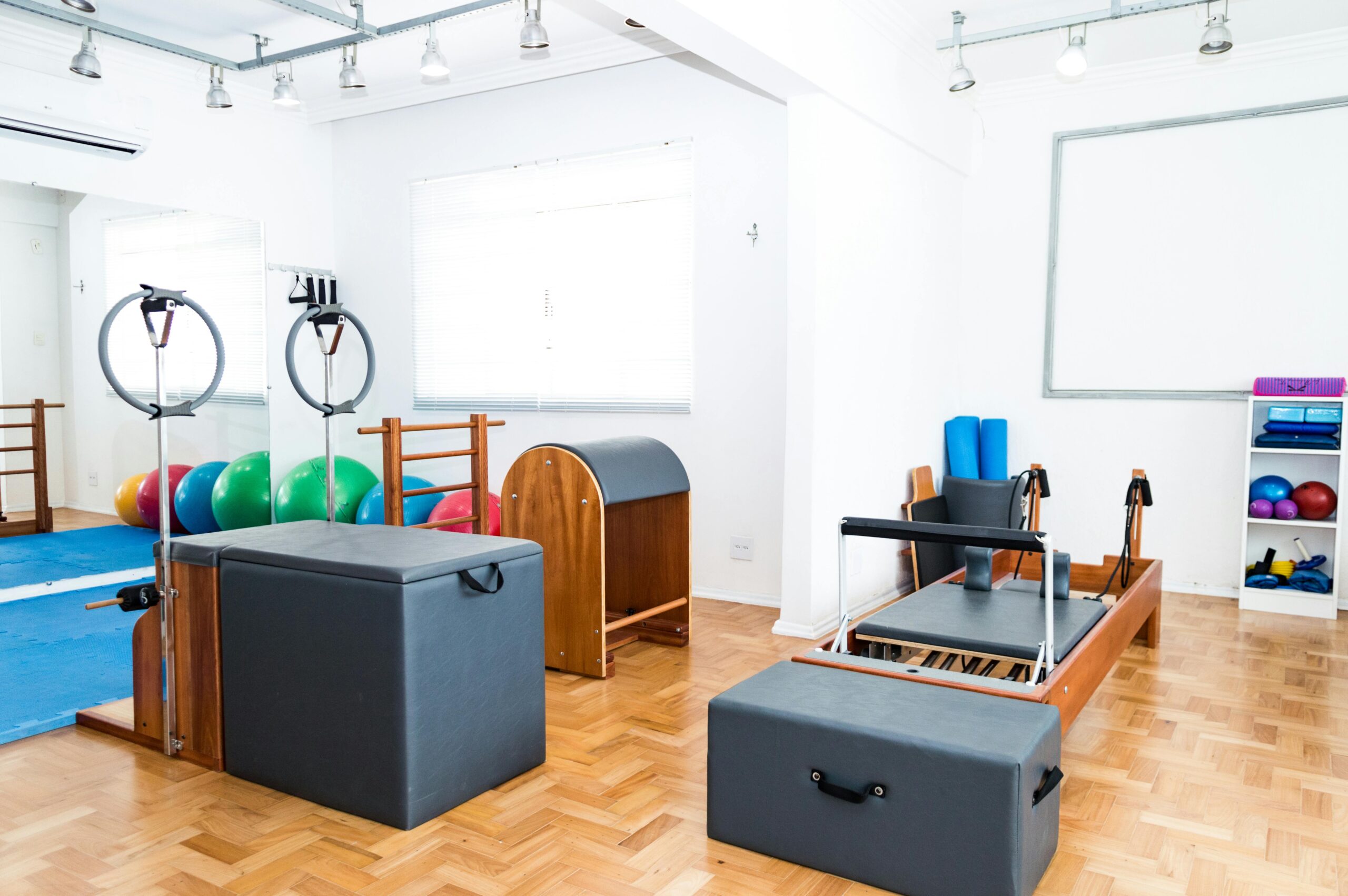
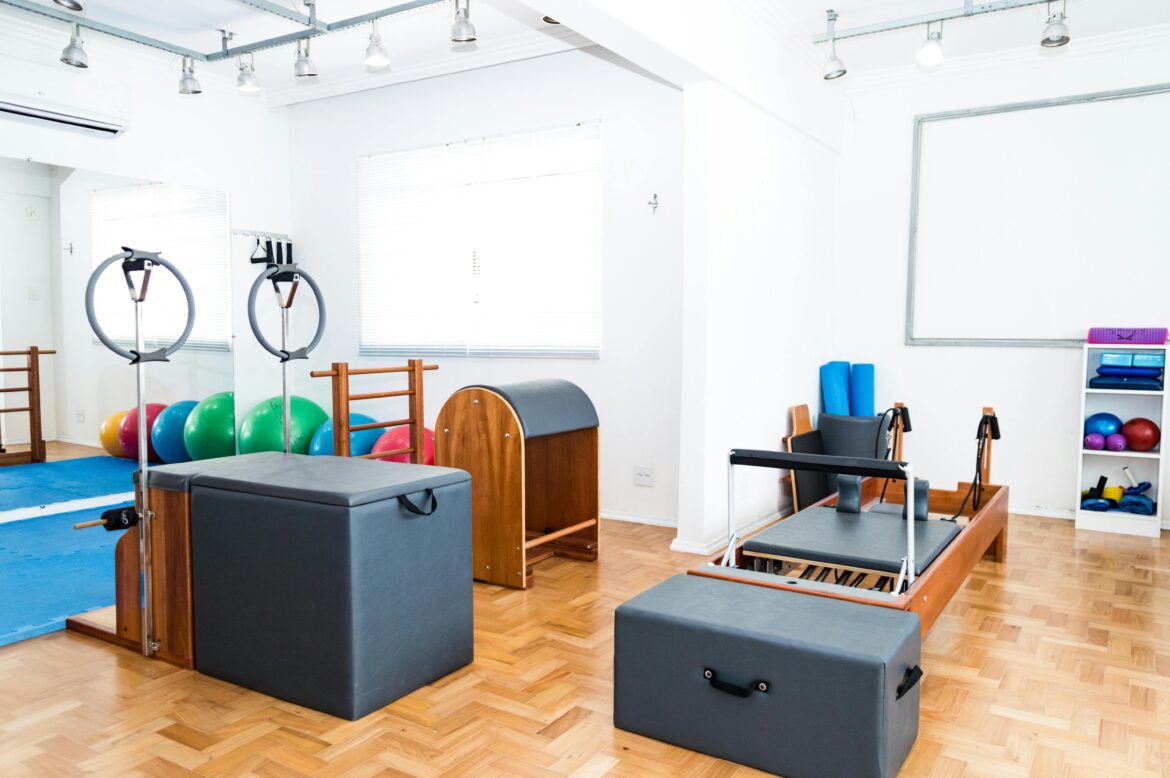
A Pilates studio with professional exercise equipment including spine correctors
A spine corrector works by supporting the natural curves of the spine while guiding movement through extension, flexion, and lateral bending patterns. For therapists, trainers, and movement professionals, it is one of the most effective tools for improving client outcomes in both rehabilitation and performance settings.
How Does a Spine Corrector Improve Spinal Health?
The curved surface of a spine corrector supports the thoracic spine during extension, which is the movement most restricted by modern desk-based lifestyles. Over time, limited thoracic extension leads to compensatory movement at the cervical and lumbar spine, increasing injury risk in both regions.
By draping over the corrector, the user opens the anterior chain (chest, shoulders, hip flexors) while strengthening the posterior chain (back extensors, glutes, hamstrings). According to the American Council on Exercise, regular spinal extension work improves posture, reduces upper back pain, and increases shoulder range of motion.
The design also supports controlled spinal flexion and side-bending exercises. This multi-directional capability makes the spine corrector more versatile than a foam roller or simple stretch routine. The fixed curve provides consistent support throughout the range of motion, which helps users develop mobility safely without overextending.
The right attire can also make Pilates more comfortable, with lightweight clothing allowing for unrestricted movement and Grip socks (grip socken) Gripliin providing additional traction and stability during floor-based exercises.
What Exercises Can You Perform on a Spine Corrector?
The range of exercises extends far beyond basic back bends. Here is a progression from foundational to advanced.
- Supported thoracic extension: Sit on the flat lip of the corrector and drape backward over the curve. This opens the chest and mobilizes the mid-back with minimal risk.
- Abdominal curls: Starting from the extended position, curl up through the spine segment by segment. The curve challenges the core through a longer range than a flat-surface crunch.
- Side-lying lateral flexion: Lie on your side over the curve to stretch the lateral trunk. This addresses the QL and oblique tightness common in asymmetric posture patterns.
- Swan preparation: Prone position over the curve with arms extended. Build back extensor strength while the corrector supports the torso and reduces lumbar compression.
- Hip flexor stretch: Kneel behind the corrector with the front shin on the flat portion. The angle creates a deep, controlled hip flexor stretch without straining the low back.
- Single-leg balance series: Stand behind the corrector with one foot on the curve. This adds an unstable surface challenge to single-leg work that improves ankle and hip stability.
Each exercise can be modified for beginners or progressed for advanced practitioners by adjusting body position, lever length, and load.
Who Benefits Most From Using a Spine Corrector?
The spine corrector serves a wide range of populations, not just Pilates enthusiasts.
Office workers with chronic upper back and neck tension benefit from the thoracic extension work that directly counteracts their daily posture. According to PubMed Central, spinal mobility exercises reduce musculoskeletal discomfort in sedentary populations when performed consistently.
Post-surgical rehabilitation clients use the corrector to rebuild trunk strength and mobility in a supported environment. The curve provides controlled range of motion that therapists can adjust based on the client’s recovery stage.
Older adults gain particular benefit because the corrector supports balance work and spinal extension without requiring them to lie flat on the ground, which many find difficult to get into and out of safely. The elevated surface makes the exercises accessible while still providing meaningful challenge.
Athletes use spine correctors for pre-competition warm-ups and recovery sessions. Thoracic mobility directly affects overhead performance in sports like swimming, tennis, volleyball, and weightlifting.
What Should You Look for When Choosing a Spine Corrector?
There are many models of spine correctors on the market, so it is an important consideration to get one that is accurate.
- Curve Profile: There are various curve depths offered by most resistance band brands. The shallower curves are more suitable for less active users or beginners while the deeper curves are more suitable for the more active, advanced user.
- Build material is varied – The Build material is High-density foam mounted on a strong wood or metal base, perfect for practicing at home.
- Contact: We look for our upholstery to contact your clothing and body, and prevent you from moving around in it. Vinyl and medical-grade synthetic leather work best in this department.
- Size: Most of our Spine Correctors are geared towards adults. We do have some sizes that are designed for the “petite” user and a barrel corrector for the taller user who needs a little more room on the corrector.
Although some established equipment manufacturers like some examples of what Elina Pilates, Align Pilates and BASI Systems suggest using as correctors in a studio setting, owners of Reformer equipment generally must find their own correctors or replacement parts. We highly recommend trying out a trial session with the actual model that you intend to purchase for studio or home use to ensure the correct curve profile for your body & practice goals.
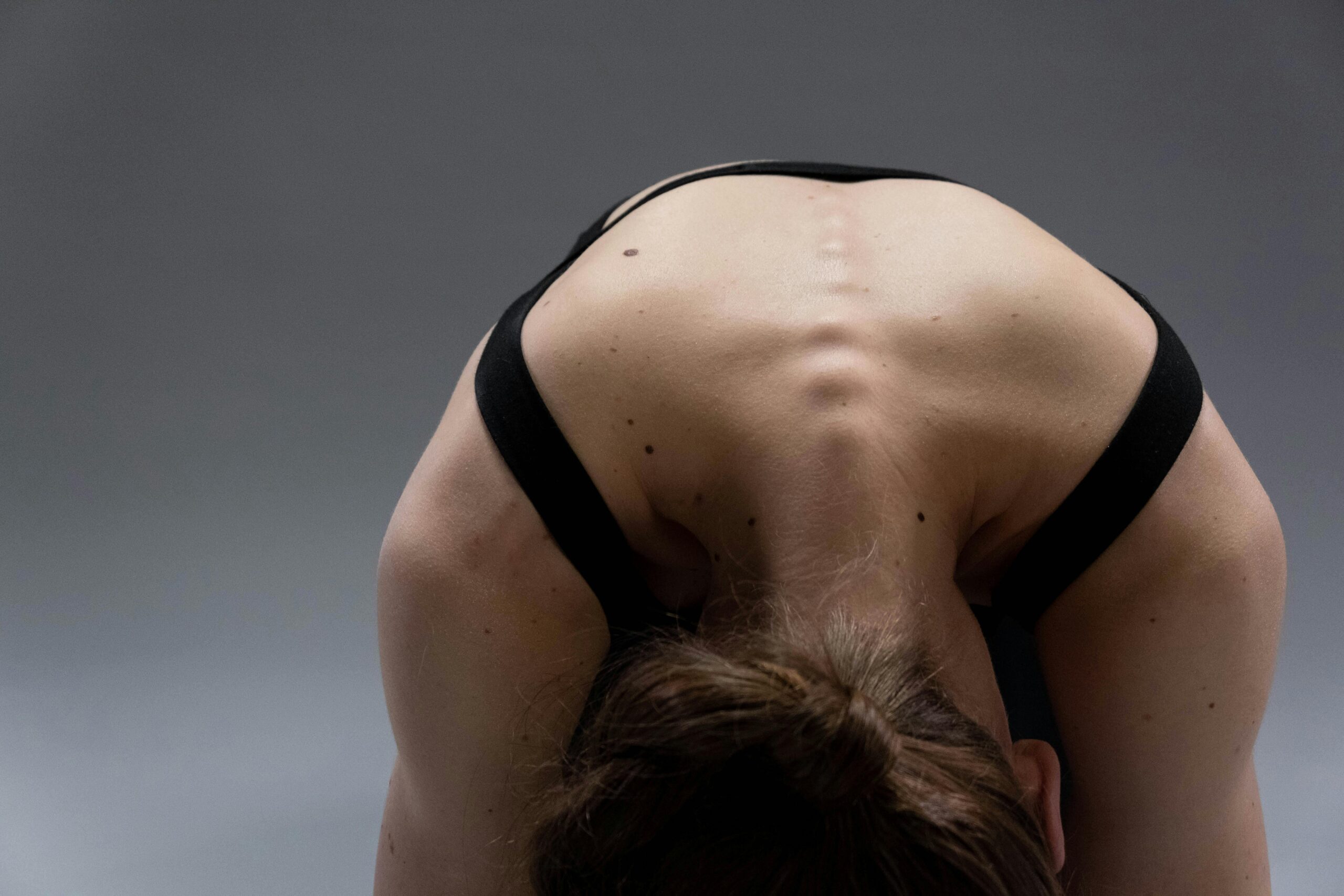
A person performing a spine extension exercise for back flexibility and mobility
How Do Movement Professionals Integrate Spine Correctors Into Client Programs?
The corrector can be incorporated into your movement programming in a variety of ways: as a warm up, as an alternate station to other movements that you do in your program, or as a gentle restorative modality that you use to conclude your practice.
Use this at initial assessment to assess thoracic mobility and engage the core. The fact that the corrector supports the body means that it will highlight movement flaws that are often suppressed and are often compensated for during bigger movements and exercises that you may be doing with the patient/client that may not be apparent during more unrestricted exercises/movements. It’s also very useful for the therapist to use even before you start to look at any exercise programming.
The Spine Corrector acts as a “circuit” – students can go through all the poses on their own, while the teacher can move from student to student, perfect for smaller classes where there is not enough time for one-on-one cuing.
For at home training, the Spine Corrector is a very efficient option for training many exercises and combinations of exercises, that normally would require the use of several props. The Spine Corrector is compact and can be stored upright against a wall.
Spine Corrector Essentials
The Spine Corrector is designed mainly for opening up the thoracic spine in extension, the most restricted spinal movement of all due to modern life. This makes it particularly useful in contrast to other methods that stretch and potentially damage the delicate rings of discs in the lower spine. This training equipment can be used for all types of movements like flexion, extension, lateral bending as well as balance training. These exercisers are useful for Office workers, Older adults, Patients in Rehabilitation and all types of Athletes.
Choose a profile for your ramps that suits your level of mobility. A shallower profile is more suitable for less mobile people whereas a deeper profile is more suitable for more mobile individuals. Movement professionals use it for client assessment and programing exercises as well as creating circuits for group classes. Home practitioners will find that there is plenty of variety from the one compact unit.
Building a Stronger, More Mobile Spine
We place a lot of emphasis on having a healthy spine in order to execute many exercises and movements efficiently. With or without a healthy spine, most individuals lose certain movements and postures as they incorporate more heavy lifting, sitting and bending into their daily routine. The Spine Corrector is a safe assistance tool for helping the body move into these corrected positions in order to unlock further mobility and enable more effective strength training. A simple tool for professionals and at home posture correctors alike.
Written by chloe@chloebenton.com
FAQ
Is a spine corrector safe for people with back pain?
Yes, for most types of back pain this can be done as long as you incorporate appropriate progressions into the movement. Start with supported extensions and do not progress too far into range until your body has adapted. Back extensions can be a safe and effective exercise for back pain as long as you do them correctly and modify them when necessary. For people with disc problems or active spinal conditions, consult with a physical therapist before starting this movement.
How often should I use a spine corrector?
Training should be progressive, being done on three to four sessions per week with high intensity with 2-3 sets of 10 repetitions per exercise. Within two to four weeks one can notice significant improvements in thoracic mobility. These movements can be done frequently, daily even, in a gentle extension manner and are generally safe for most adult individuals to perform.
What is the difference between a spine corrector and a Pilates barrel?
Although many consider a spine corrector and a Pilates barrel to be the same piece of equipment, there are in fact some very notable differences between the two. Essentially, the spine corrector is heavier than the Pilates barrel, therefore allowing for deeper, more intense movements.
I finally got to share with you all the new addition to our mobility family tree. This is our new spine corrector. You can see it’s got a kind of a stepped shape, a flat lip up here and then the curve up top. Right next to that is our new arc barrel. So that’s a fully rounded barrel, similar to the classic barrel we use. The flat lip of the spine corrector makes a great starting position for some of the seated work that we can do with this prop.
Can beginners use a spine corrector?
Yes. With the corrector you can start doing the simplest yet most effective exercises (seated extension, basic curls, etc.) and you will even find it easier to master them with this support that makes you learn many exercises more easily thanks to its curved surface.