
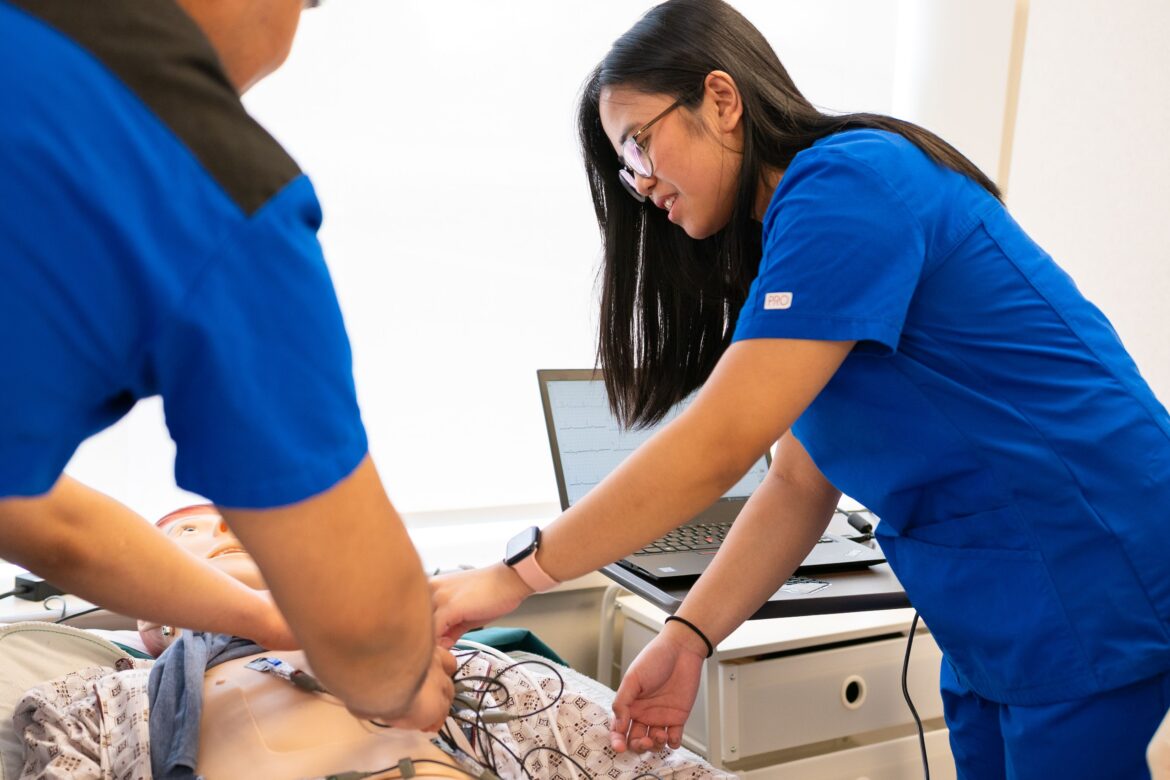
If you’re interested in nursing and don’t want to spend years circling the runway, accelerated can seem very appealing. It gives speed, focus and a direct route into a field that keeps growing. But fast doesn’t mean easy. It helps to know how these programs work, what life is like on a day-to-day basis and whether the pace of the program matches your goals, schedule and stress tolerance before you commit.

What an accelerated nursing path actually looks like
An accelerated nursing path is designed for students who want to move into nursing on a shorter timeline than a traditional route. In many cases, these programs are built for people who already have college credits or a bachelor’s degree in another subject.
The structure tends to be intense. You move through coursework quickly, cover a lot of material in a short period, and often juggle labs, clinical rotations, and exams at the same time. It’s not academic speed dating, but it can feel close.
When you explore accelerated nursing programs, pay attention to admission requirements, clinical expectations, and format. Some include online coursework paired with in-person clinical training. That setup can make the timeline more manageable, but the workload still demands serious planning.
Who tends to do well in a fast-track program
You don’t need superhero stamina, but you do need good habits. The students who do well in accelerated nursing programs are generally good at meeting deadlines, rebound quickly from setbacks, and can keep organized when it feels like everything is due at once.
Motivation won’t cut it. Time management will. Day one, a lot of people feel inspired. The real test comes in week seven when you are studying pharmacology and getting ready for a clinical shift and trying to remember if you have had coffee number three or four.
You might be a good fit if you:
- – Learns well with structure and clear deadlines
- – Able to study steadily, not in a panic
- – Are comfortable to ask for help early
- – Support from family, friends or employers
- – Flexible with changing plans
It helps to be honest with yourself. If your routine is already a mess, a quick program can exacerbate each weak point.
The workload is manageable, but only with a real plan
One of the biggest mistakes students make is to underestimate the weekly workload. Accelerated nursing study is not just “more homework.” It’s demanding material in a brisk pace, not leaving much room for procrastination.
You see, in nursing education, you have to use information, not just memorize it. You need to understand concepts well enough to use them in patient care situations.
Typically, a realistic strategy consists of:
- Setting up time on a calendar for studying
- Considering clinical days as non-negotiable work schedules
- Making time for travel, food, and sleep
Maintaining a backup mechanism for paperwork and deadlines
If you work part-time or have family responsibilities, outline those commitments before enrolling. Ambition is beneficial. A functioning functioning timetable is a better.
Cost, scheduling, and flexibility deserve close attention
Speed can save time, but it doesn’t automatically save money. Tuition, fees, transportation, uniforms, testing costs, background checks, and clinical supplies add up quickly. Even a well-designed program can become difficult if the financial side is shaky.
Look beyond the headline tuition number. Compare what is included and what you’ll likely pay separately. Also consider whether the schedule allows you to keep working, even in a limited way.
Important questions to ask include:
- – Are courses fully online, hybrid, or mostly in person?
- – How often do clinical schedules change?
- – Are there technology or lab fees?
- – Can you attend part-time, or is it lockstep only?
- – What kind of advising and academic support is available?
Flexibility matters, but don’t confuse flexible with easy. A hybrid format may help you manage commuting, yet your study hours still need to be consistent and protected.
Career outlook can be strong, but preparation still matters most
Nursing remains a field with broad demand, varied work settings, and room for long-term growth. You could work in acute care, pediatrics, public health, outpatient clinics, school nursing, or many other areas. That range is one reason people are drawn to the profession.
Still, job prospects depend on more than simply finishing a program. Employers look for clinical readiness, communication skills, professionalism, and your ability to handle responsibility without falling apart when the pace gets messy.
Licensure is another major step. After graduation, you’ll need to prepare for the NCLEX-RN, the exam required for registered nurse licensure in the United States. A fast academic timeline only works well if it leaves you truly prepared for that next hurdle.
Choosing a program should be less about speed alone and more about fit. If the training is rigorous, well supported, and realistic for your life, the fast route can be a smart one.

How to decide if this path fits your goals right now
The best decision usually comes from matching the program to your actual life, not your idealized life. It’s easy to picture the finish line and ignore what the middle will demand. Nursing school has a talent for exposing wishful planning.
Start with a personal audit. Look at your finances, your schedule, your stress level, and your reasons for choosing nursing. If you’re motivated by stable work, meaningful service, and strong career mobility, that can carry you far. If you mainly want the quickest route into any job, you may need to think harder.
Try speaking with current students, recent graduates, or nurses in your area. Ask what surprised them, what nearly derailed them, and what they’d do differently. Real answers tend to be more useful than polished marketing language.
A faster path can absolutely work. It just works best when you enter with open eyes, a steady plan, and enough humility to know that “accelerated” doesn’t mean effortless.
Written by Faizan Ali (faizanali.pnc@gmail.com)

