
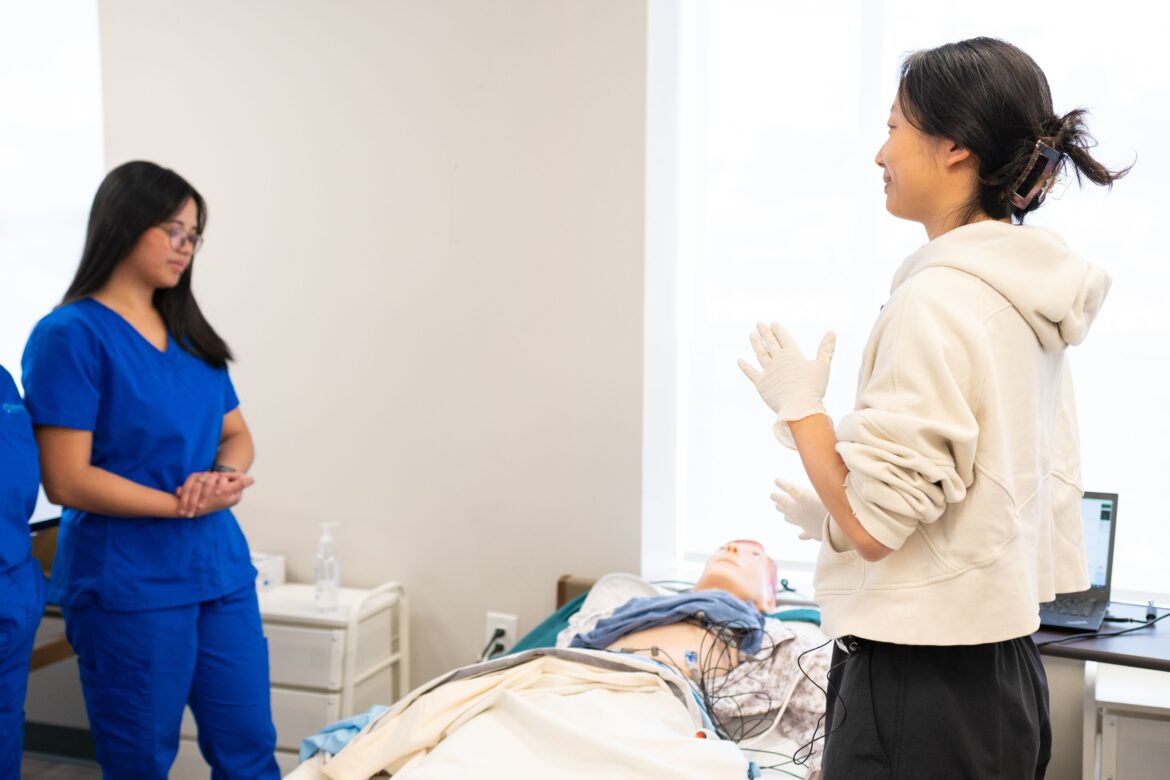
One of the rare professions where the work you do in your first year might be very different from the work you do twenty years later is nursing. The title remains unchanged. Nearly everything else is altered. While the reality is closer to a long sequence of responsibilities, each built on the confidence gained in the previous one, new nurses frequently envision a single profession that they will have for decades.
Nurses transition from general floors to specialized units, education, leadership, and advanced clinical practice with true autonomy across the nation and in huge healthcare institutions in Texas. Knowing that path early on makes the first few years far less complicated since you start comparing yourself to where you were last month instead of where you want to end up.
Looking at the Wider Picture Before You Begin
People who are drawn to caring for others usually want some sense of what the future holds before they commit several years to training. The job outlook is often the part that worries them most, because hiring needs shift from one state to another and a broad national picture rarely matches what a person actually finds near home. A clear, state-level view of where nurses are needed answers that concern directly, since it shows both the size of the need and how steady it is likely to remain. Anyone weighing this decision can start with a plain look at the nursing job outlook in Texas and use it as a reference point for how the profession is growing more broadly.
What the First Year in Nursing Really Looks Like
The first year is mostly about speed. Not the speed of your hands, although that comes too, but the speed at which you recognize what matters. New nurses arrive knowing a great deal in theory and very little about how a shift actually flows. They learn the rhythm of handovers, the small signs that a patient is heading in the wrong direction, the difference between a call that can wait ten minutes and one that cannot wait at all.
During those initial months, the majority of new nurses report feeling like they are always falling behind. It passes. It is replaced with a sort of silent efficiency, where tasks that formerly required complete focus become automatic and free up mental space for the things that actually require attention. The true indicator that someone has become a working nurse is that change, not any exam score.
The Skills That Carry You Beyond the Basics
 Clinical ability gets a new nurse through the door. It is rarely the thing that carries them upward. The nurses who advance tend to be the ones who develop skills that are harder to teach and harder to measure.
Communication sits at the top of that list. A nurse spends the day translating between patients who are frightened, families who want certainty, and doctors who need information fast and in order. Doing that well, repeatedly, under pressure, is a genuine skill. So is judgment, which is the ability to decide what to do when the situation in front of you does not match anything in your training. So is composure, because a calm nurse steadies an entire room.
Moving Into Specialized Areas of Care
Specialization is where nursing starts to feel like a distinct professional identity. A nurse who focuses on cardiac care, surgical recovery, oncology, mental health, or care of the elderly builds a depth of knowledge that general practice cannot match.
The work changes in character. Instead of managing a broad mix of needs, a specialized nurse handles a narrower range of situations with far greater sophistication. They recognize patterns quickly, anticipate complications, and often become the person other staff turn to for guidance. That reputation, built over years, is what opens the next set of doors.
Leadership, Teaching, and Roles Away From the Floor
Not every nurse wants to spend an entire career at the patient’s side, and the profession has built genuine alternatives for those who do not. Some move into managing units, where the work becomes staffing, standards, budgets, and the difficult job of supporting a team through hard weeks. Others move into teaching, either formally in classrooms or informally as the person responsible for guiding new arrivals.
Some move further still, into quality improvement, policy work, research, or roles that shape how care is delivered across an entire organization. These positions rely heavily on clinical credibility. A nurse who has never done the work struggles to improve it. The years spent in direct care are not left behind when someone takes on these roles. They are the qualification for them.
Staying Well While the Work Demands a Lot
 A long nursing career only happens if the person survives it in good shape. The profession asks a great deal, both physically and emotionally, and the nurses who last are the ones who take that seriously rather than treating exhaustion as a badge of commitment.
Practical habits matter more than good intentions. Protecting days off properly, keeping relationships outside of healthcare alive, finding colleagues you can speak honestly with, and recognizing when a role has become unsustainable are all part of managing a career rather than simply enduring one. Changing units or specialties is a legitimate response to burnout, not a retreat from it.
Planning a Career That Grows With You
The most useful way to think about nursing is as a profession that keeps offering new versions of itself. The person who entered wanting to help patients can spend a decade doing exactly that, then spend the next decade teaching others to do it, then move into a role where they shape how it is done across a whole organization.
That flexibility is the profession’s real strength. Interests change over a working life, energy levels change, and family circumstances change. Nursing accommodates all of it, because the underlying skills transfer so well from one role to the next. A nurse who chooses this work at twenty-two is not locking themselves into one job. They are joining a field that will keep offering them somewhere new to go as long as they want to keep moving.
Written by Faizan Ali (faizanali.pnc@gmail.com)