
Absorption matters, but fluid retention, fit, skin contact, and external protection can be just as important when choosing a dressing for ongoing wound drainage.
Choosing a dressing for a wound with moderate to high levels of exudate is not simply a matter of finding the product with the highest absorption number. A dressing also needs to keep absorbed fluid contained, fit the wound location appropriately, protect the surrounding area from external moisture, and remain manageable during repeated dressing changes.
Looking at these factors together can make it easier for patients and caregivers to compare silicone foam dressings for ongoing wound care.
1. Look Beyond Absorption Capacity
Absorption is usually the first feature people notice when comparing wound dressings.
For moderate to highly exuding wounds, sufficient capacity is important because the dressing needs to take in drainage during wear. However, absorption alone does not provide a complete picture of fluid management. A dressing may absorb fluid effectively but still allow moisture to move toward the edges or back toward the wound area if retention is limited.
That is why absorption and retention should be considered together.
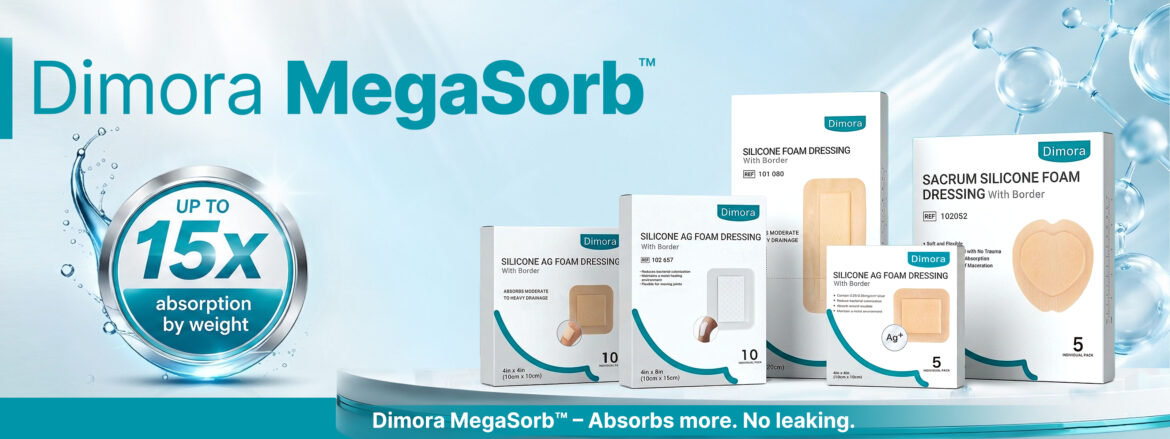
The Dimora MegaSorb™ Silicone Foam Dressing uses the MegaSorb™ Dual-Action Absorption System, designed to combine fluid absorption with stable retention.
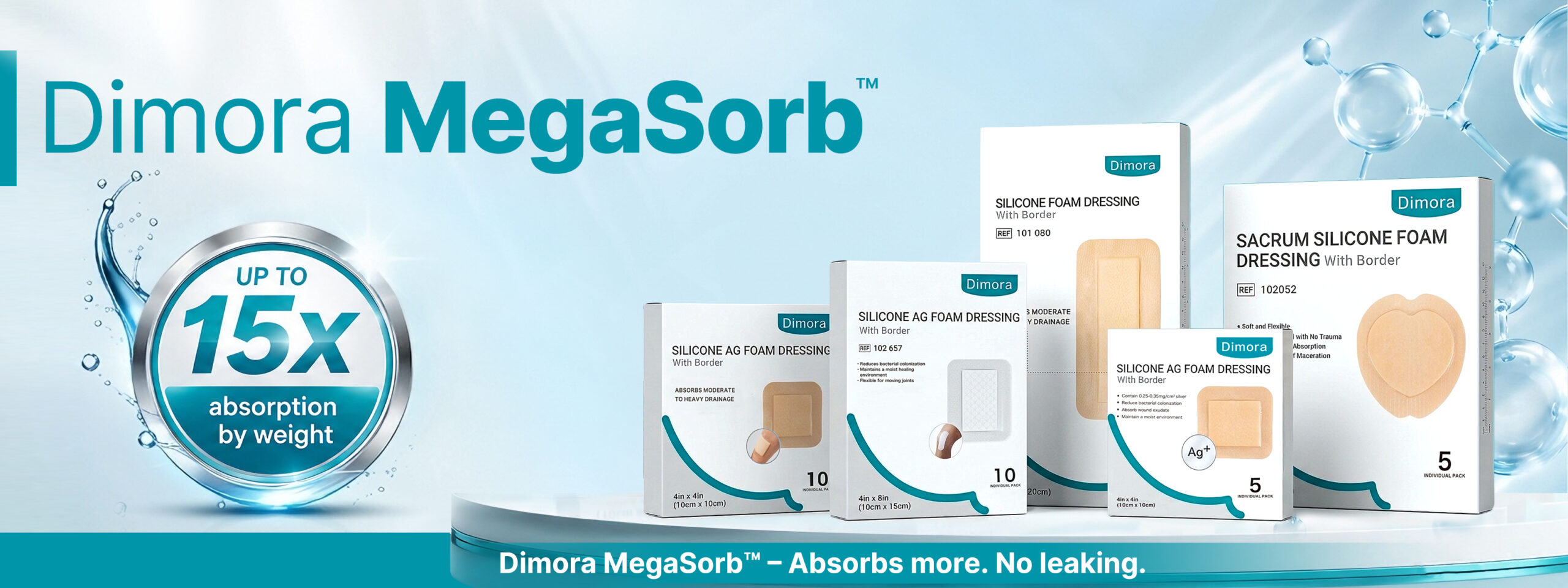
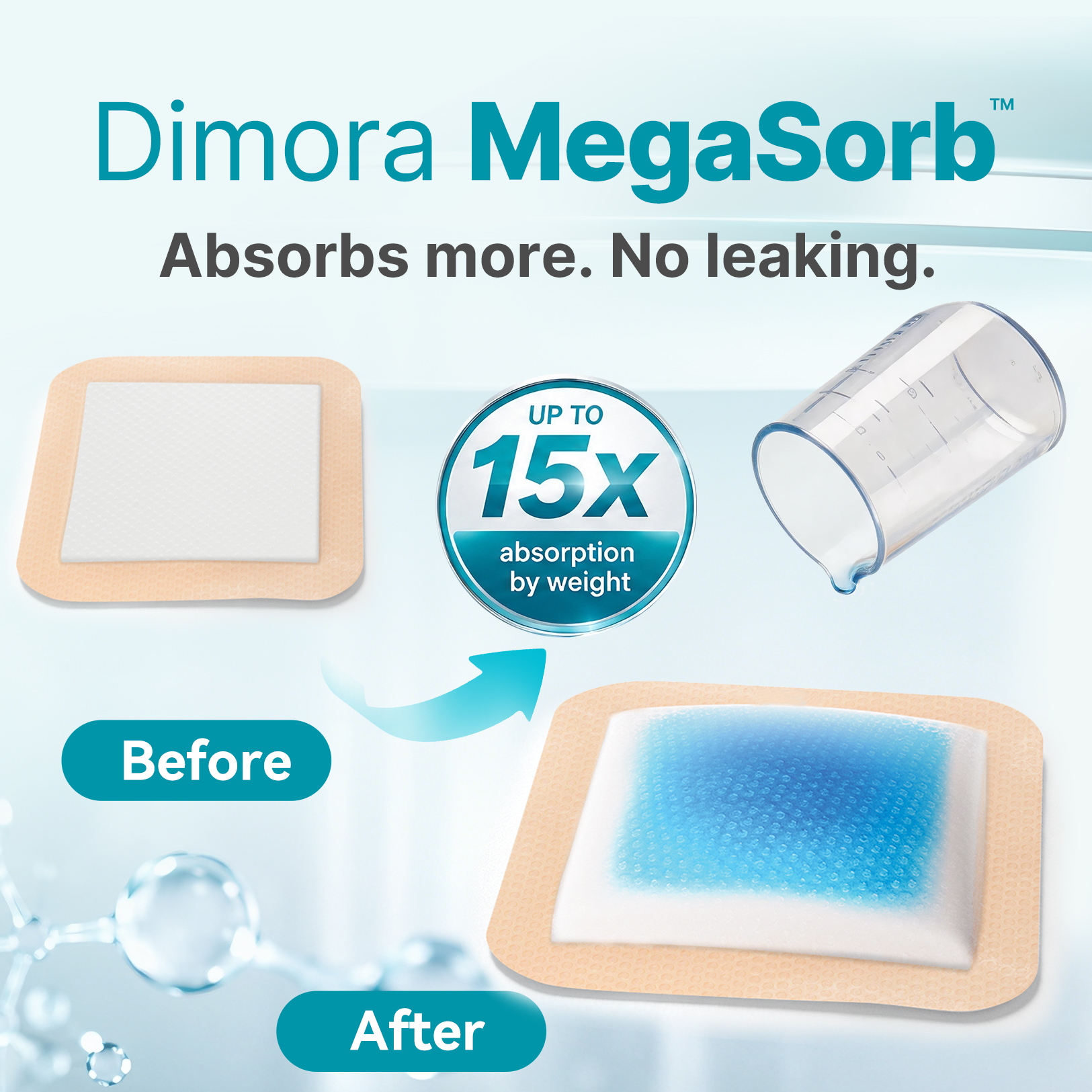
MegaSorb™ can absorb up to 15 times its own weight in wound exudate, helping support fluid management for moderate to high levels of drainage.
2. Consider How Well the Dressing Retains Fluid
A highly absorbent wound dressing should not only take in exudate; it should also help keep that fluid contained.
Stable fluid retention is designed to help reduce the risk of leakage and backflow, which can make wound exudate management more practical in home-care settings. This can also matter for the surrounding skin. When wound exudate spreads beyond the wound area and remains in prolonged contact with nearby skin, excess moisture may contribute to maceration.
For this reason, a useful question when comparing dressings is not just:
How much can it absorb?
It is also:
What happens to the fluid after it has been absorbed?
3. Match the Dressing Format to the Wound Location
Dressing shape is another consideration that can be easy to overlook.
Different areas of the body have different contours and movement patterns, so one format may not be equally suitable for every wound location.
The Dimora MegaSorb™ range includes several formats built on the same absorption platform.
The Square Silicone Foam Dressing provides a versatile format for a range of wound-care situations, including post-surgical and diabetic foot-related wound care.
The Sacral Silicone Foam Dressing is designed for the sacral region, where body contours can make dressing shape particularly important.
The Silver Silicone Foam Dressing is intended for specific care situations where antimicrobial management may be considered and should be selected according to product instructions and professional guidance.
The key consideration is therefore not simply which dressing is “better,” but which format is appropriate for the wound location and care requirements.
4. Pay Attention to the Skin Contact Layer
For people who require repeated dressing changes, the way a dressing interacts with surrounding skin also matters. An adhesive that pulls strongly during removal may make repeated care less comfortable, particularly when the surrounding skin is fragile or sensitive.
Dimora MegaSorb™ silicone foam dressing uses a medical-grade silicone contact layer designed to provide secure adhesion during wear while supporting gentler removal.

When comparing silicone foam dressings, it can therefore be useful to consider both sides of adhesion:
- Does the dressing stay in place during normal use?
- Is it designed to release gently when the dressing needs to be changed?
5. Check the Outer Protective Layer
The outer surface of a wound dressing also plays a practical role.
During everyday home care, the dressing may be exposed to external moisture and environmental contaminants.
Dimora MegaSorb™ silicone foam dressing uses a waterproof, breathable PU film outer layer designed to help block external water and contaminants while allowing the dressing to remain breathable.
This does not replace proper wound-care instructions, but it adds another consideration when selecting a dressing intended to remain in place during normal daily activities.
6. Think About the Entire Dressing-Change Routine
The best dressing choice is rarely based on a single specification.
For patients and caregivers managing moderate to high wound drainage, useful questions include:
- Does the dressing have enough absorption capacity for the expected level of exudate?
- Does it help retain fluid after absorption?
- Is the shape appropriate for the wound location?
- Is the contact layer designed for gentler removal?
- Does the outer layer provide protection from external moisture?
- Is the dressing appropriate for the specific wound-care scenario?
Looking at these factors together gives a more complete picture than focusing on absorption alone.
Using MegaSorb™ as One Example
Dimora MegaSorb™ Silicone Foam Dressing illustrates how these different considerations can be combined within one product platform.
Across its Square, Sacral, and Silver formats, the MegaSorb™ range shares the Dual-Action Absorption System, medical-grade silicone contact layer, and waterproof breathable PU film, while adapting the dressing format to different wound-care needs.
MegaSorb™ can absorb up to 15X its own weight in wound exudate, but its overall design also considers fluid retention, skin contact, external protection, and dressing format.
Takeaway
When choosing a dressing for moderate to high wound exudate, absorption capacity is important — but it should not be the only criterion.
Fluid retention, wound location, dressing fit, silicone contact, external protection, and the overall dressing-change routine all deserve consideration.
For patients and caregivers managing wound care at home, evaluating these factors together can make dressing selection more practical and easier to understand — helping support Dimora’s goal to Make Home Care Easy.
Written by Haihai Shai (shanhaino@gmail.com)