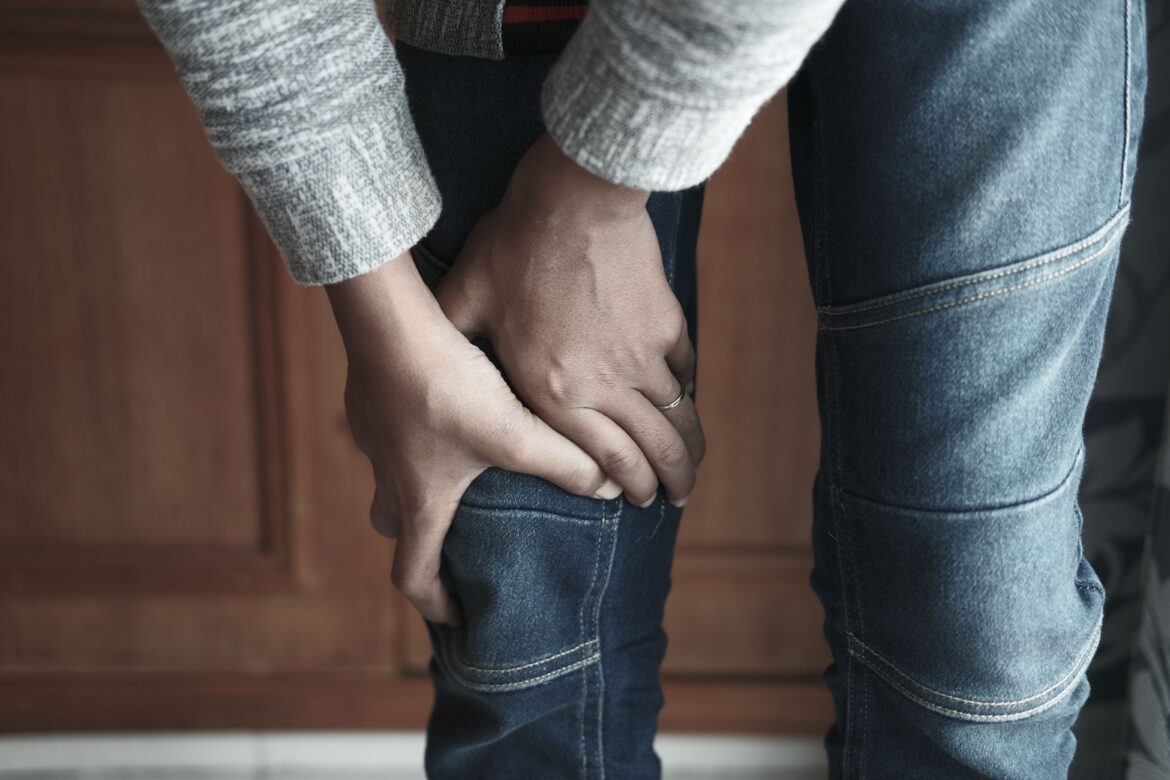
The focus is often on knee cartilage and bones, but the real heroes are the surrounding muscles. They act like a natural brace, as without them, the knee becomes vulnerable to injury and pain.
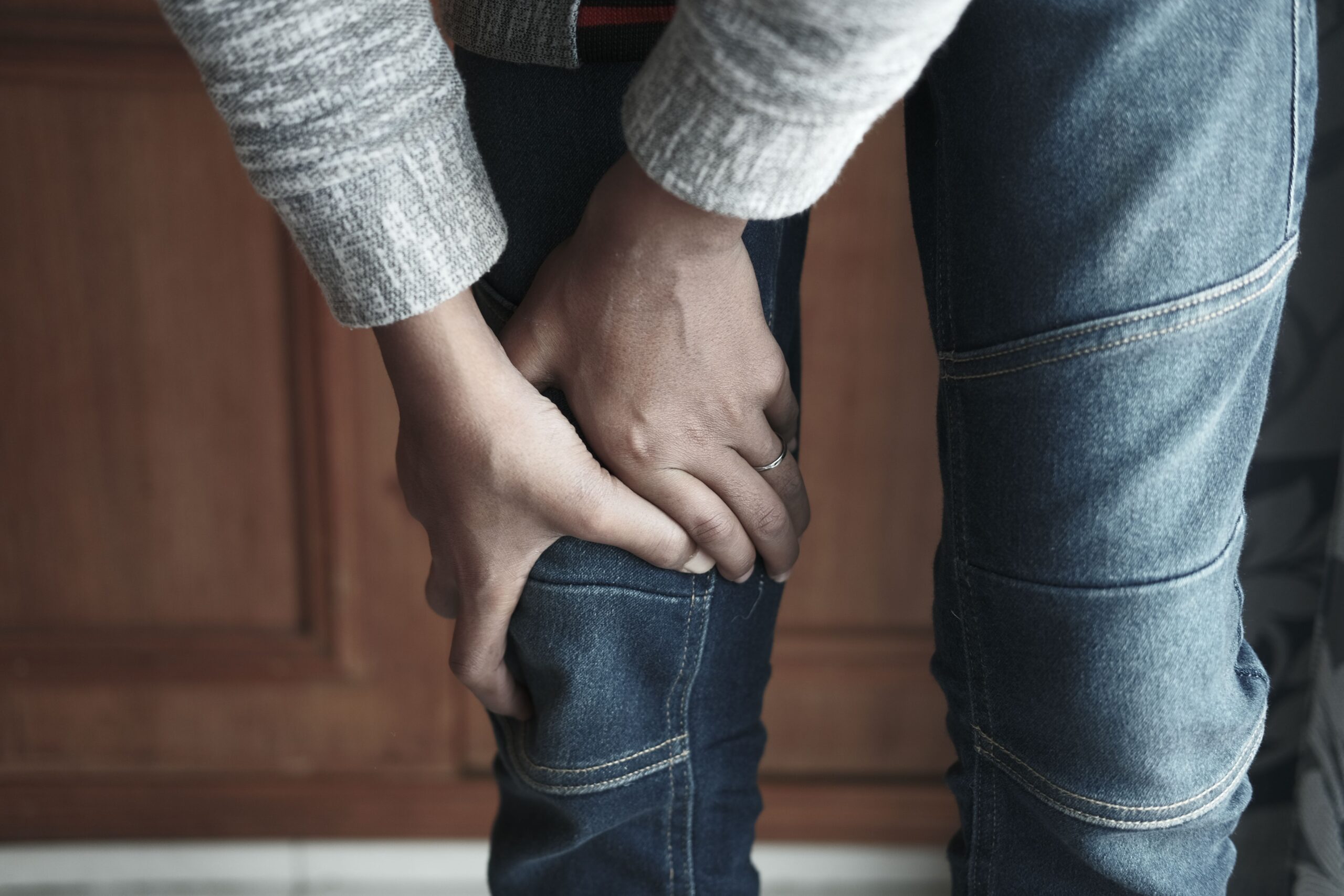
How Muscles Act as the Knee’s Natural Shock Absorbers
The knee is a hinge joint which means it is designed to allow us to bend our knee and straighten it. The hinge joint is stabilized by strong muscles around the joint including the quadriceps on the front of the thigh, the hamstrings on the back of the thigh and the calf muscles on the lower leg. Each time we go for a walk the force going through the knee joint is equal to two to three times our body weight. For runners and jumpers the force going through the knee can be as high as four to five times our body weight.
The strong quadriceps muscle helps to decelerate the lower leg and stop it moving too far forward in relation to the thigh. The hamstrings then straighten the knee to stop it going into hyperextension. The calf muscles also help stabilize the knee by helping to stabilize the foot when it hits the ground. These muscles function to slow down the lower leg and prevent excessive forward movement of the tibia relative to the femur. The Hamstrings straighten the knee by opposing the action of the quadriceps. The deeper the knee is bent the more the Hamstrings are contracted to prevent excessive hyperextension of the knee.
Strengthen your calf muscles: When you step down to the ground your ankle needs to be stable to transfer your body weight, your calf muscles are there to do this for you. Just like any other muscle in your body, if one of the muscles around your knee is weakened or underdeveloped it causes increased stress on the passive structures in your knee joint. The soft structures within your knee joint are your cartilage, menisci and ligaments. These structures can withstand a lot of stress but if overloaded they can wear down causing pain and stiffness.
Why a Specialist Will Always Emphasise Strength First
A top specialist knee surgeon will tell you the same thing: surgery should never be the first line of defence. After years of helping patients avoid or delay joint replacements, these experts in Sydney know that muscle weakness is often the root cause behind recurring knee problems. Before reaching for a scalpel, a good surgeon assesses how well a patient can activate their quadriceps and hamstrings.
- In many cases, moderate arthritis pain can be managed with targeted strength training alone, postponing surgery for years.
- For athletes with patellar instability or ACL injuries, post-surgical recovery depends almost entirely on rebuilding muscle control.
- Even after meniscus or ligament repairs, weak muscles are the single biggest predictor of poor long-term outcomes.
The logic is simple: a knee supported by strong muscles moves more predictably, experiences less friction, and recovers faster from everyday wear. Surgery fixes a structural problem, but only the muscle keeps it fixed.
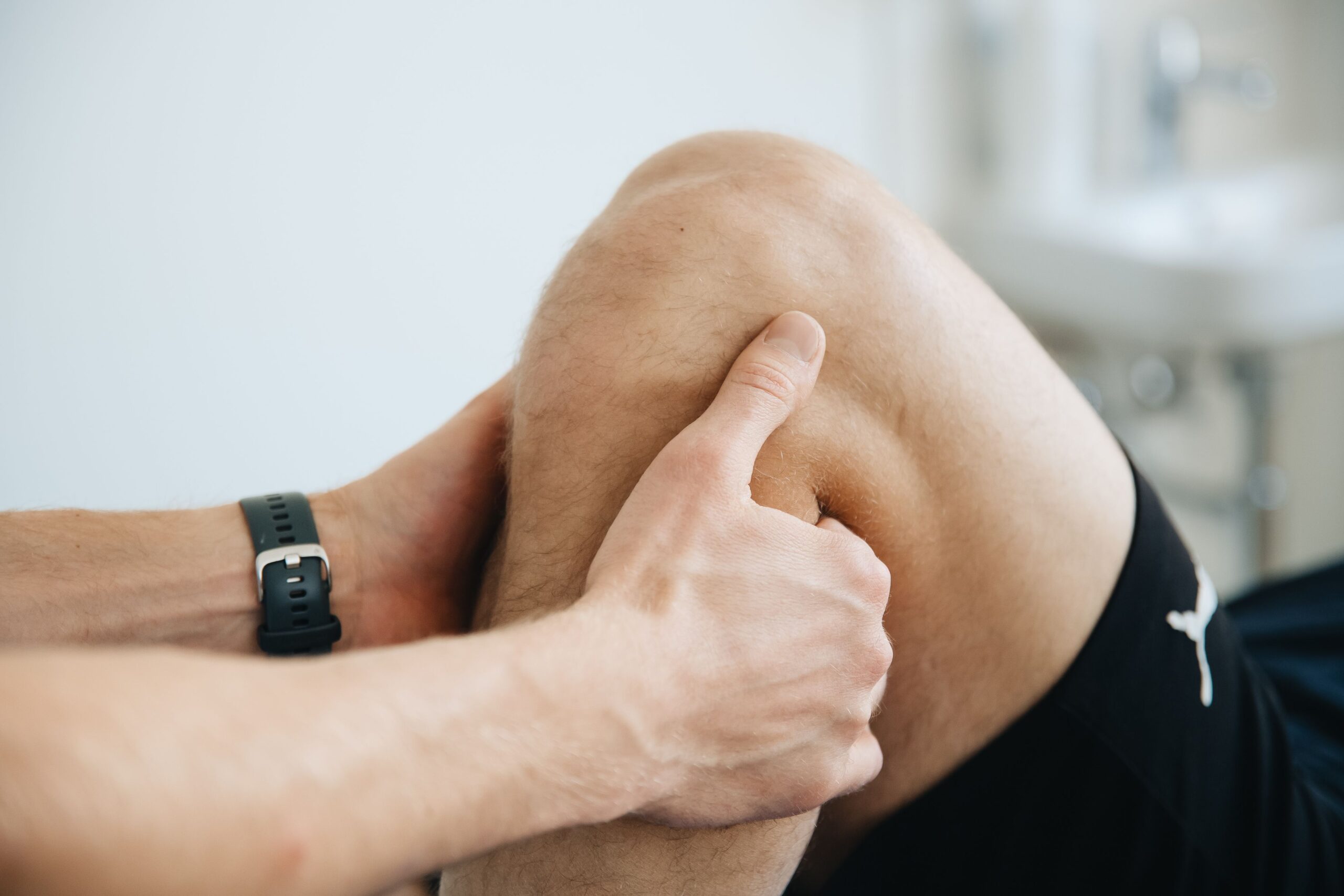
The Cycle of Weakness and Pain
Here’s one of the most frustrating things about knee problems: they feed on themselves. Pain makes you move less, moving less weakens your muscles more, and weaker muscles give your knee less support, which means even small activities start to hurt. That cycle has a name: arthrogenic muscle inhibition.
After an injury, your nervous system basically shuts down your quads to protect the knee. But that protective move backfires. Within two weeks of knee pain starting, your quads can lose up to 20% of their strength. That weakness shifts more work to your hamstrings and calves, creating imbalances that pull your kneecap out of line.
Breaking this cycle takes deliberate, low-impact strengthening. Even isometric moves, contracting the muscle without moving the joint, can start to turn things around. Once strength improves, pain often drops. Not because your knee healed, but because your muscles are finally doing their job again.
Which Muscle Groups Matter Most
Now to review the major muscle groups of the leg and how some are better at helping to protect the knee than others. It is also very important to review how performing exercises of quality are better than performing a high volume of poor quality lifts with poor form.
Strengthening Your Knee With 3 Important Muscle Groups and the Correct Exercises To Perform.
- Your Quadriceps (especially your VMO) – The VMO or medial quadriceps is a teardrop shaped muscle located just above the inside of your knee. This muscle is very important for helping to keep your kneecap or patella correctly tracking up the thigh when your knee is fully extended. A good set of exercises to increase strength in your quadriceps include straight leg raises, wall sits and step-ups (performed with the correct tracking of your knee over your second toe).
- Hamstrings – The Hamstrings are the ACL’s best friend and as such help to decrease forward shear force on the knee. To strengthen your knee through contraction of your Hamstrings, complete exercises such as bridges, band hamstring curls and Romanian deadlifts.
- Gluteus medius – There is a small muscle, located between the gluteus maximus and the piriformis, that is between your buttock and base of your spine. This muscle acts on the hip to laterally abduct your leg, or to move your leg away from your body’s midline. Additionally, the Gluteus medius acts on the knee by preventing it from going into valgus (inward) when walking. It is therefore very important to strengthen this muscle to correct an abducting contraction where the thigh is adducted (drawn toward the midline of the body) and to stabilize the knee during weight bearing activities.
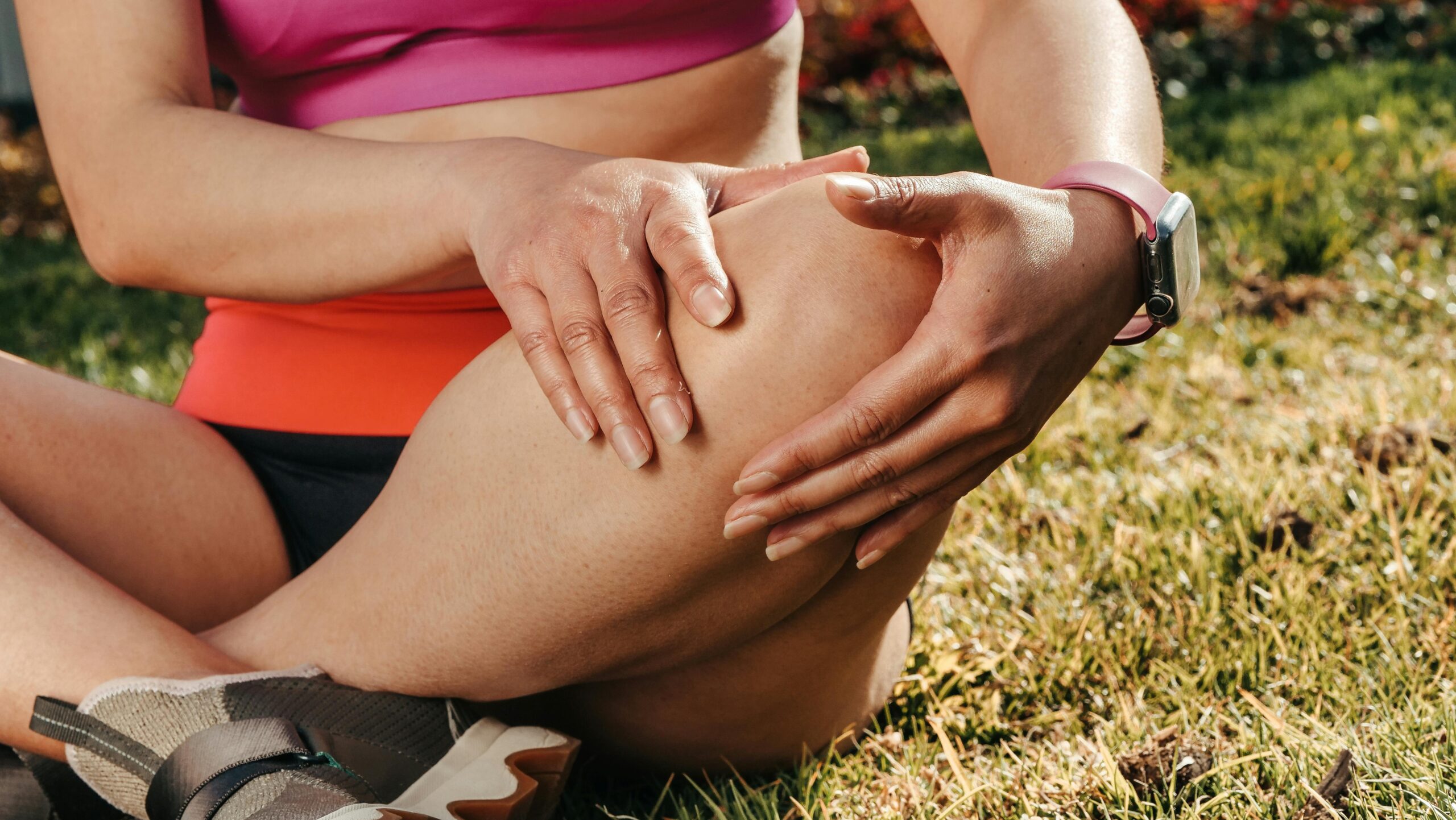
Building Strength Without Breaking the Joint
Strengthening your leg muscles before the damage is done to your knees is one of the best things you can do for your body. By training your knees before any damage occurs, you can also help alleviate problems caused by knee arthritis or previous injuries. However, you don’t have to go out and start lifting heavy to start building strength to protect your knees. In fact, by training smart and not hard, you can be doing great things for your body in just a few minutes a day. By incorporating the following 3 simple habits into your daily routine, you can start to see positive results in no time.
Use fundamental resistance training movements and consistently perform strength training exercises before problems develop. Strength training with bodyweight is highly effective to prepare the knees for future life activities and can be performed in 15 minutes or less each day. Performing strength training with low amounts of weight is also sufficient to become very strong. As opposed to doing long workouts every 1 to 2 weeks, the strength training performed on a daily basis will adequately prepare the knees for life’s activities.
Differentiate between pain and fatigue. Sharp pains and or sensations of something popping, grabbing or folding are cause for immediate cessation of exercise. Swelling of any portion of the knee is also cause for concern. On the other hand muscle fatigue that creates a burning sensation in a muscle or muscle group, eventually subside within an hour after cessation of activity are indicative of positive adaptations to training.
Adding Flexibility to Your Training. Tight muscle around the knee joint can cause the knee to move unevenly, putting stress on the joint. This can lead to further injury or pain over time. To combat this it is very important to make time in your training to stretch out your quads, hamstrings, and calfs. Getting strong in your leg muscles can help prevent the progression of your knee osteoarthritis. Find one thing to start to get strong at. Practice that one move until you can do it standing on one leg raised up off the ground while leaning against a wall sitting on the floor with back against the wall.
That’s it! That’s all it takes to get started to be able to strengthen your muscles in a way that will help to protect your knee for the rest of your life even a little bit of strength.
Written by Lea Collins