
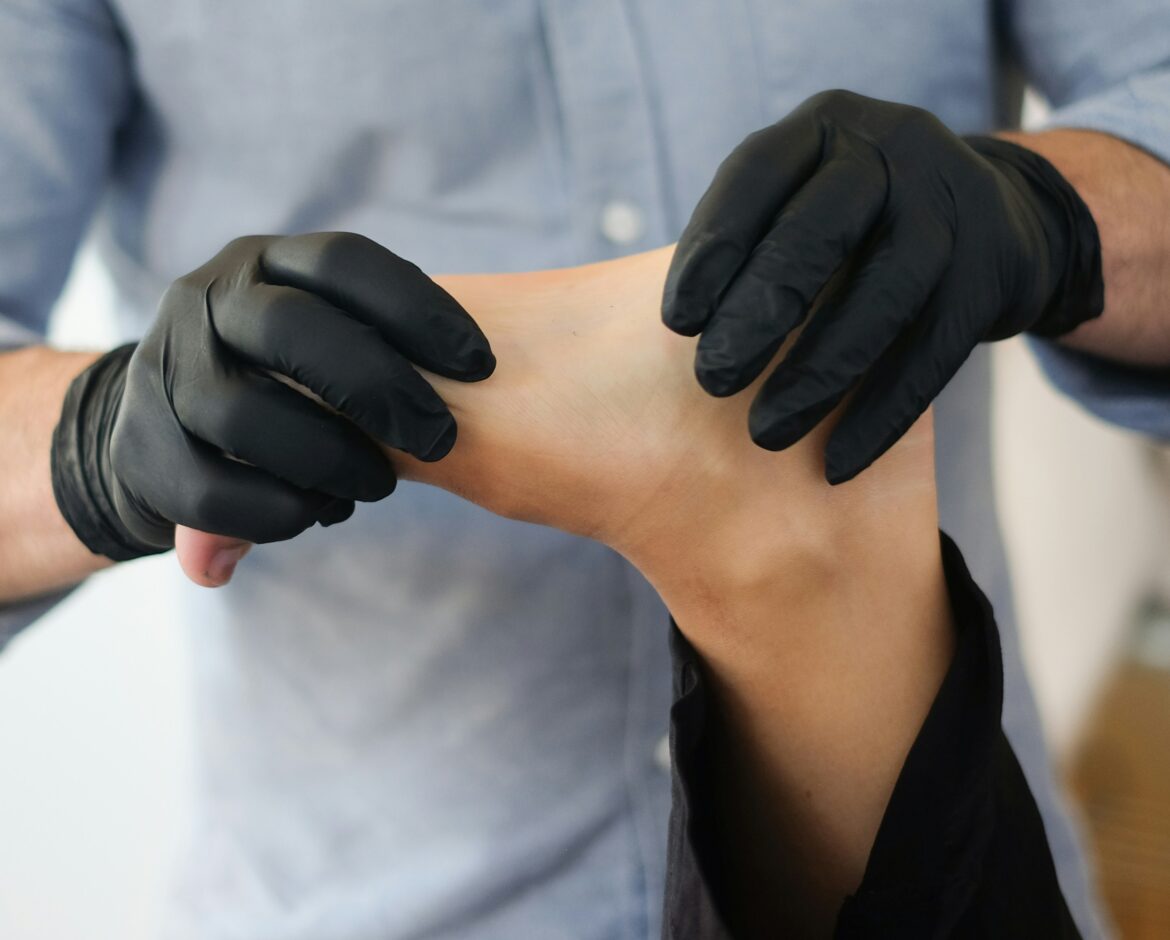
Plantar fasciitis is annoying for many reasons. One of them is the fact that you can feel the pain in your heel even though the problem isn’t limited to just the heel. You might notice it when you get out of bed or when you’ve been standing up for a while.

| Plantar fasciitis (a.k.a. plantar heel pain) causes pain or tenderness underneath the heel that can be extended towards the arch, with chronic cases causing degeneration of the plantar fascia instead of it being just inflammation. It’s also one of the most common causes of plantar heel pain in adults. – National Library of Medicine, BMJ Clinical Evidence |
Either way, whatever’s happening starts with the way your foot is handling your body weight every time it hits the ground.
Every time you step down, the arch of your foot is supposed to flatten a little. The problem here is that, sometimes, it drops too much or the heel moves more than it should. In those cases, the plantar fascia has to take on extra tension again and again.
One step like that is nothing, but a few thousand every day?
That’s a whole different story.
What Happens to the Plantar Fascia When the Arch Drops Under Load
When you walk, your foot is supposed to stay rigid. Every time your heel hits the ground and your weight moves forward, the arch lowers a little. That’s what helps your foot absorb the force and adjust to what’s under it.
This is called pronation, and up to a certain point, it’s not only normal, but also necessary.
If that movement isn’t controlled well or it’s excessive, you start having some problems. If the arch drops more than it should, your foot has no choice but to rely on the same tissues to keep things under control. It runs from your heel toward your toes and helps support the arch that’s under it. So when the arch lowers, what happens is the fascia is pulled tighter.
If that happens too much, those little strains add up. You really mightn’t notice it at first at all, but that’s quite normal. Give it some time, and you’ll definitely feel it. Also, your heel actually has a part to play here; it’s not just sitting there and doing nothing.
The plantar fascia is attached to the heel bone, so if the back of your foot keeps rolling in too much, it can make the arch drop even lower. In that case, the fascia has to work even harder.
How an Orthotic Can Change What Happens Under the Foot
The reason why orthotics are so useful is that they actually change what your feet are doing inside the shoes.
Here are some details on that:
It Gives the Arch Something to Lean On
 Your arch is supposed to move when you walk, so it’s not like you’re trying to hold it still. The problems start when it stops too much because that makes the plantar fascia work too hard. Plantar fasciitis insoles can help here.
They’ll give the arch something to press against instead of letting it sink toward the inside of the shoe. This will reduce how much the plantar fascia is being stretched/strained each step, plus the pressure will be more evenly distributed, which also helps.
The insole won’t replace the job your foot’s doing, though. It’ll just help keep that movement from going too far. So do keep that in mind.
It helps, but it’s not a cure.
It Keeps the Heel Steady, Which Helps the Rest of the Foot
A lot of the movement starts at the heel, so if it rolls in too much when your foot lands, the rest of the foot follows, and the arch drops along with it.
If you’ve ever seen orthotic insoles, you’ve probably noticed that they have a deeper heel cup, and this is why. It makes the heel more secure, and it prevents it from moving too much inside the shoe. To be clear, you shouldn’t try to stick your heel into one position because that would mess up the natural movement of your foot.
You just want to keep it from getting sloppy.
Cushioning Makes Repeated Steps Easier on the Heel
 Every time you take a step, your heel takes a hit.
And if you’re spending the majority of the day on tile or concrete, that’s not going to be comfortable. Cushioning in orthotic soles can take some edge off that, and you’ll appreciate them even more if your shoes are hard already.
Of course, cushioning isn’t the main point of orthotic soles, but it sure does help.
The Heel Doesn’t Have to Take Everything
When you have a shaped insole, the load your feet take gets spread out more evenly.
The heel is still the one taking the weight, of course, but it doesn’t have to do as much on its own. That’s important because there’s a lot more to plantar fasciitis than a few bad steps here and there.
The problem happens when that same ‘bad’ step is repeated over and over, and if you’re able to spread the pressure across more of your foot each time, the area under the heel that’s already irritated has it a little easier.
Conclusion
Orthotic insoles aren’t magic, and they won’t take away your plantar fasciitis like you waved a wand. That said, they can help A LOT. If you’re taking thousands of steps every day and you feel pain because of that, then it makes sense to change what happens during those steps. And orthotic insoles do exactly that.
Written by Tresha Smith (treshasmith.innovativelinks@gmail.com)