
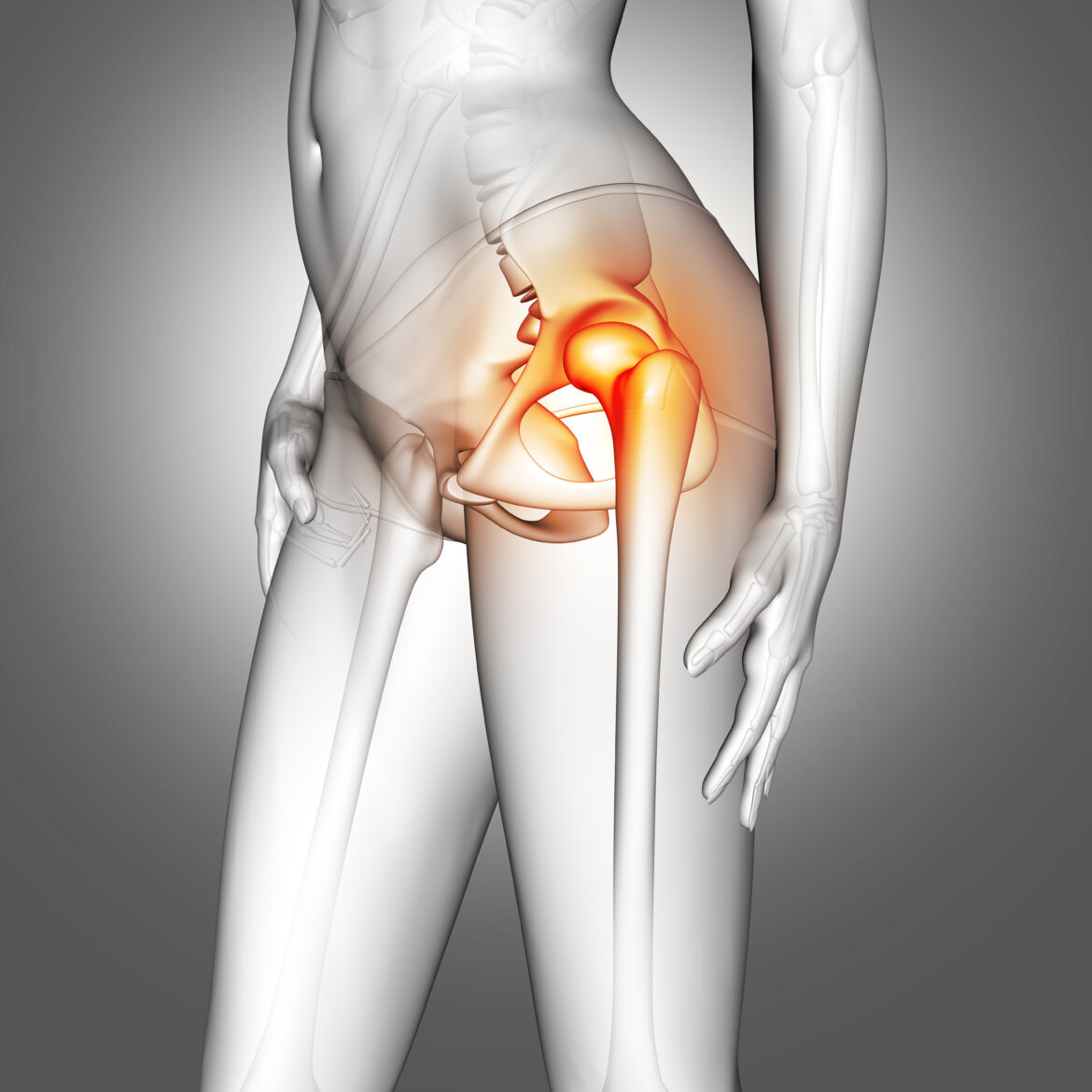
Total hip replacement is one of the most common orthopaedic procedures a manual therapist will encounter in practice, and it is one of the most reliably successful. That success is exactly why it turns up so often in treatment rooms: people who have had a hip replaced return to walking, hiking, gardening and dancing, and then they come to us with the soft tissue consequences of years of compensation before the surgery and months of altered movement after it.
Working with these clients is well within scope for a trained manual therapist. Doing it well requires knowing which surgical approach was used, what stage of healing the client is in, and which positions are genuinely off limits rather than merely unfamiliar.

Why the surgical approach changes your plan
The first question to ask a post-operative hip client is not where it hurts. It is which approach the surgeon used, and whether the surgeon gave them movement restrictions.
The posterior approach enters from behind, dividing or detaching the short external rotators. Traditional precautions after this approach limit hip flexion beyond about 90 degrees, adduction past midline and internal rotation, because that combination reproduces the direction in which the hip was dislocated during surgery.
The direct anterior approach works between muscle planes at the front of the hip rather than detaching muscle. Clinics that specialise in it, including practices describing their technique for hip replacement surgery through the direct anterior route, generally report fewer positional restrictions and earlier functional recovery, though many surgeons still advise avoiding combined extension and external rotation in the early weeks.
The lateral or anterolateral approach involves the abductor mechanism, which has implications for gluteus medius function and for the Trendelenburg pattern you may see months later.
Practice varies between surgeons, and the client’s own instructions always outrank a general rule you read somewhere. If they do not know their restrictions, that is a reason to contact the surgical team, not to guess.
Timeframes worth holding in mind
Most patients are walking with a frame or stick within a day of surgery. Dressings typically come off around two weeks. Many surgeons lift positional restrictions and permit driving at about six weeks, and full functional recovery is usually described as taking three to six months.
Those dates are a rough map, not a licence. A client at eight weeks with a healed incision and surgical clearance is a different proposition from a client at three weeks who has had a complication nobody mentioned to you.
What is reasonable in the early phase
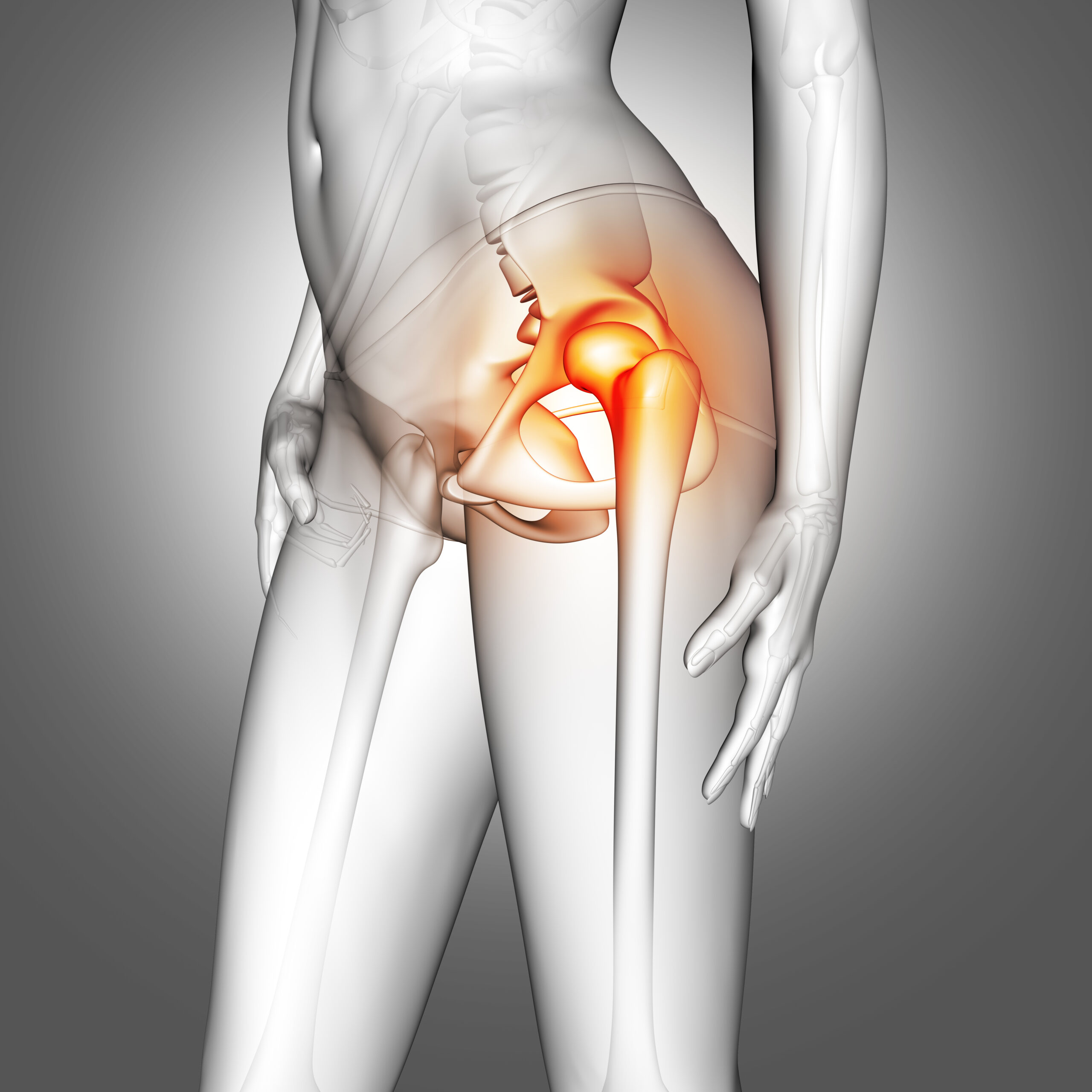
In the first several weeks, with clearance, useful work is largely away from the joint itself.
The lumbar paraspinals and quadratus lumborum are almost always involved, because years of an antalgic gait load them heavily. The contralateral hip and knee have been doing extra work for a long time. The thoracolumbar junction and the opposite shoulder, which has been driving a walking aid, are both worth examining.
Scar tissue work waits until the incision is fully healed and the surgeon or physiotherapist is comfortable with it, and then begins gently and distally before approaching the scar directly.
Positioning is where most of the practical difficulty lies. Side-lying on the operated side is usually uncomfortable early on, and side-lying on the unoperated side needs a pillow between the knees to prevent the operated hip falling into adduction. Prone positioning requires hip extension, which is relevant after an anterior approach. Many clients are more comfortable semi-reclined than flat for the first weeks.
What changes later
From roughly three months onwards, with surgical clearance, most of the usual toolkit is available. The work tends to shift from protective to restorative: addressing the adaptive shortening and weakness that accumulated during the arthritic years rather than anything caused by the surgery itself.
Common findings at this stage include persistent hip flexor tightness, a weak and inhibited gluteus medius with the lateral hip pain that accompanies it, adaptive changes through the lumbar spine, and an asymmetric gait pattern that has become habitual long after the reason for it was removed.
This is where manual therapy combines well with the client’s strengthening programme. Releasing a chronically shortened tensor fasciae latae and iliopsoas makes the gluteal work their physiotherapist has prescribed considerably more effective.
When to stop and refer

A small number of presentations are not ours to treat. Sudden severe pain with shortening or external rotation of the limb suggests dislocation and is an emergency. New warmth, swelling, redness or discharge around the incision, particularly with fever, raises the question of infection, and prosthetic joint infection is time-critical. Calf pain and swelling raises the question of deep vein thrombosis. New onset of pain in a hip that had settled, especially on weight bearing, warrants review rather than more treatment.
None of these are common. All of them are worth recognising quickly.
The useful habit
Ask the approach, ask about restrictions, ask who cleared them and for what, and write the answers in the file. Clients with a replaced hip are among the most rewarding people to work with, because the pain that brought them to you is usually mechanical, longstanding and genuinely responsive to good hands-on work. The caution is almost entirely in the first weeks, and the opportunity is in everything that comes after.
Written by adrianlau@hipkneeortho.com.sg

