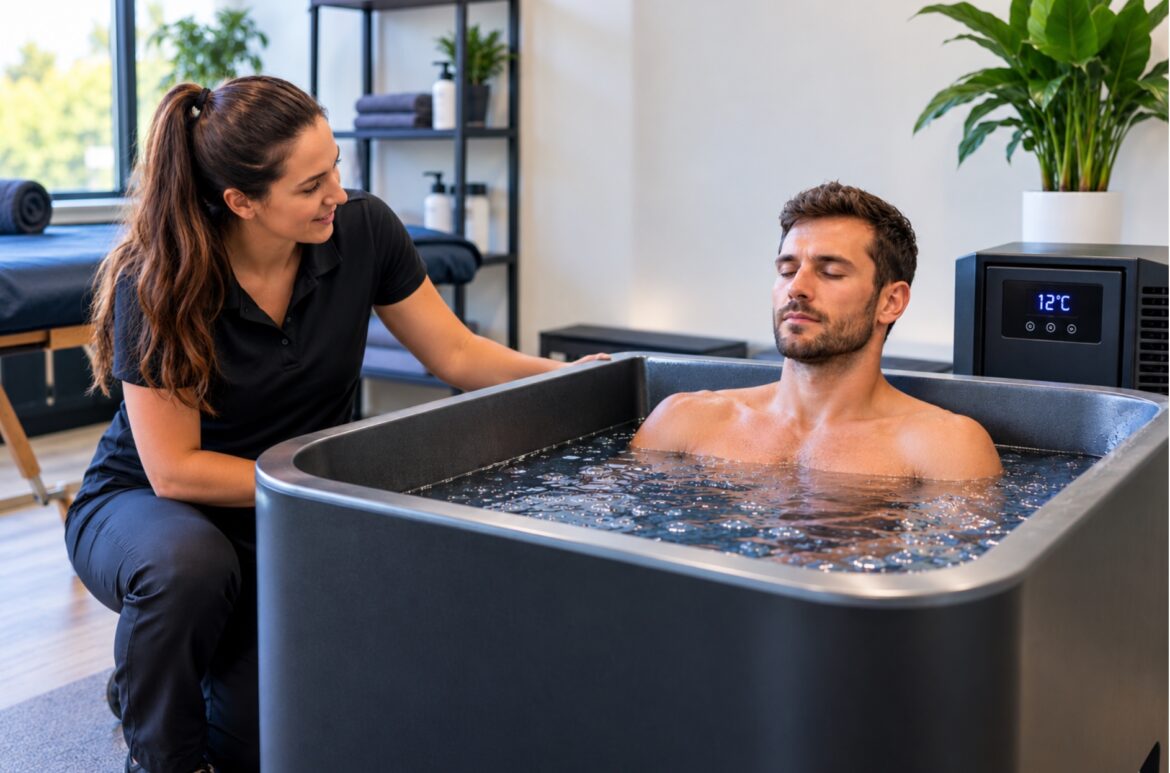
Cold plunges have moved out of elite athletic locker rooms and into the general health and wellness sector. Ice baths have a distinct place in almost every high-end physiotherapy clinic and sports massage studio, and for good reason. Practitioners have noticed a positive difference in their clients when cold water immersion is integrated into their treatment plan. Generally, clients report greater reduction in post-treatment soreness and faster turnaround times between treatments.
While cold plunges are gaining momentum in the wellness industry, many manual therapy practitioners remain uncertain about the best way to integrate cold water immersion into their practice. If you integrate cold water immersion into your treatment plan, it helps to be informed about the current state of the research, and how it can be used to alleviate muscular aches and pains. This article provides an overview of the current state of research on cold water immersion, how it can be used to address the aforementioned conditions, as well as provide a clear, applied framework for manual therapists on how best to use a commercial cold plunge in their practice.
What Happens to The Body During a Cold Plunge
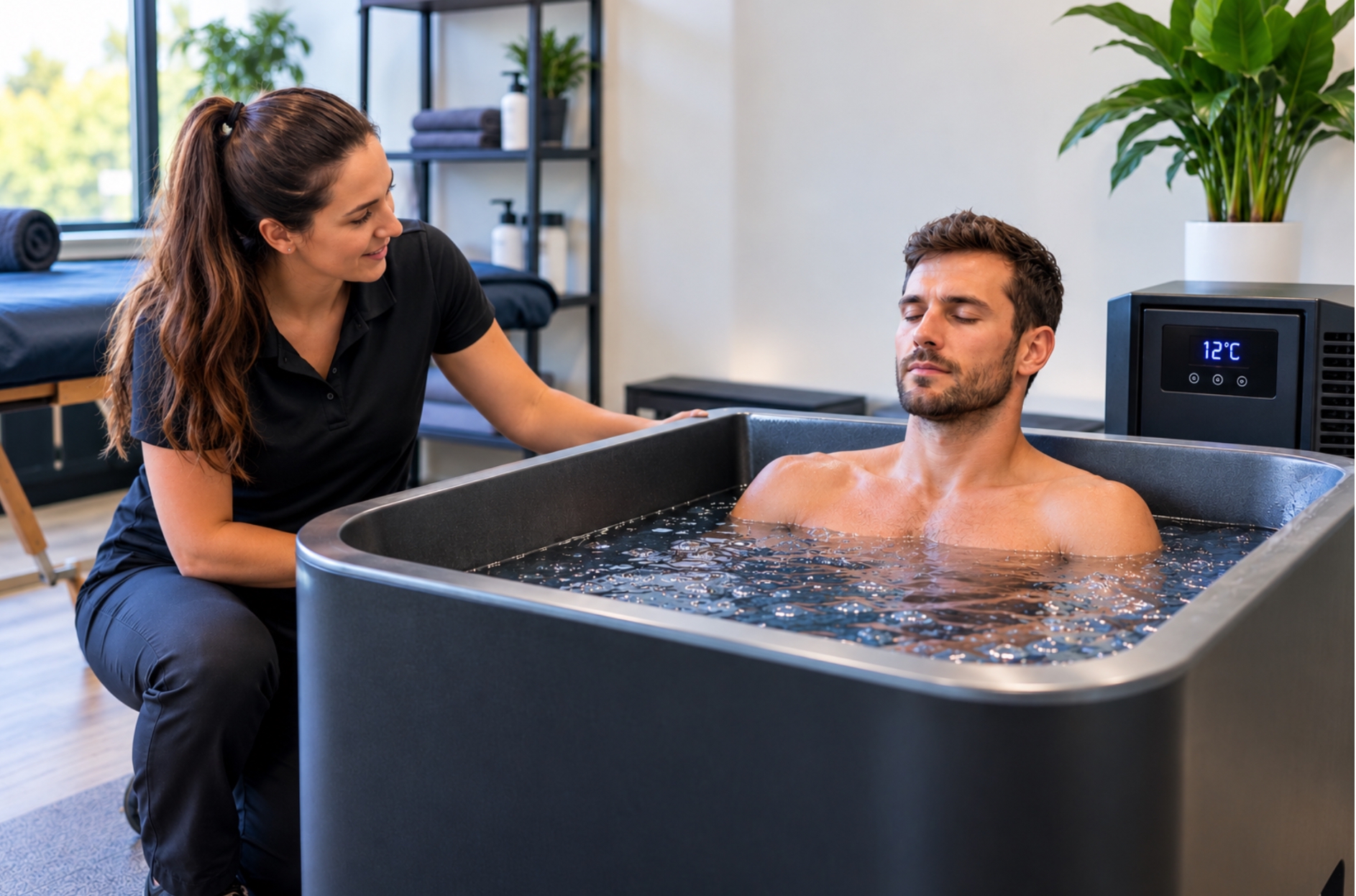
Cold water immersion is the process of sitting in water between 10°C and 15°C (50°F to 59°F) for 2 to 10 minutes. As soon as the body comes in contact with cold water, a series of rapid bodily changes occur.
Vasoconstriction is when the body constricts, or tightens, the blood vessels, pushing the blood away from the limbs and toward the core. This is the first step of a cold plunge. Rewarming the body causes the blood vessels to dilate, or widen, and sends blood back to the limbs. Many refer to this feeling as a “flush.” Some practitioners say this reduces stress and inflammation in tissues and gives muscles a greater range of motion. The effects of repeated cold plunges are still being researched.
Cold exposure also decreases the speed at which the nerves send signals to the brain. This is why people report feeling less sore after a cold plunge. Clients often report feeling lighter, freer, and less guarded in their movements.
Last, plunges are also reported to make people feel calmer and more alert. In turn, this also makes people more willing to do rehabilitation work. Cold exposure is also responsible for increasing concentration and alertness, likely because of the increased release of norepinephrine. People often report feeling mentally reset, refreshed, and sharp after a cold plunge.
Muscle Recovery
 According to the scientific literature, the most reliable effect of cold water immersion is a reduction in perceived muscle soreness after a grueling workout. A review of research studies indicated that individuals who performed cold plunges after high-intensity workouts reported lower muscle soreness in the following 24 to 96 hours compared to people who took a passive rest. The effect is larger with workouts that are high impact or eccentric, for example downhill running, plyometrics or heavy squats.
Additionally, several studies have shown that cold water immersion aids in the recovery process by making athletes feel ready to perform again faster. This is especially helpful for sports or events where there is very little time to recover between events.
Regarding the other side of the coin, there are studies that show cold water immersion after workouts actually inhibits muscle growth over time. The body builds and adapts to new stresses by using an inflammatory response and other signaling mechanisms. Cold inhibits these responses. Considering this, it is important to address the needs of the individual and integrate cold water immersion to be in line with the overall goals of the individual. In peak competition cycles where there is a heavy demand on the body, frequent use of cold water immersion is justified, as it is in a recovery period that is heavily focused on. During a training cycle focused on hypertrophy (muscle growth), it is prudent to take a break from cold water immersion for several hours after training.
Professional input is essential for situations like this because a personalized approach is always better and more appropriate than a broad stroke approach.
Complementing Manual Therapy With Cold Plunges
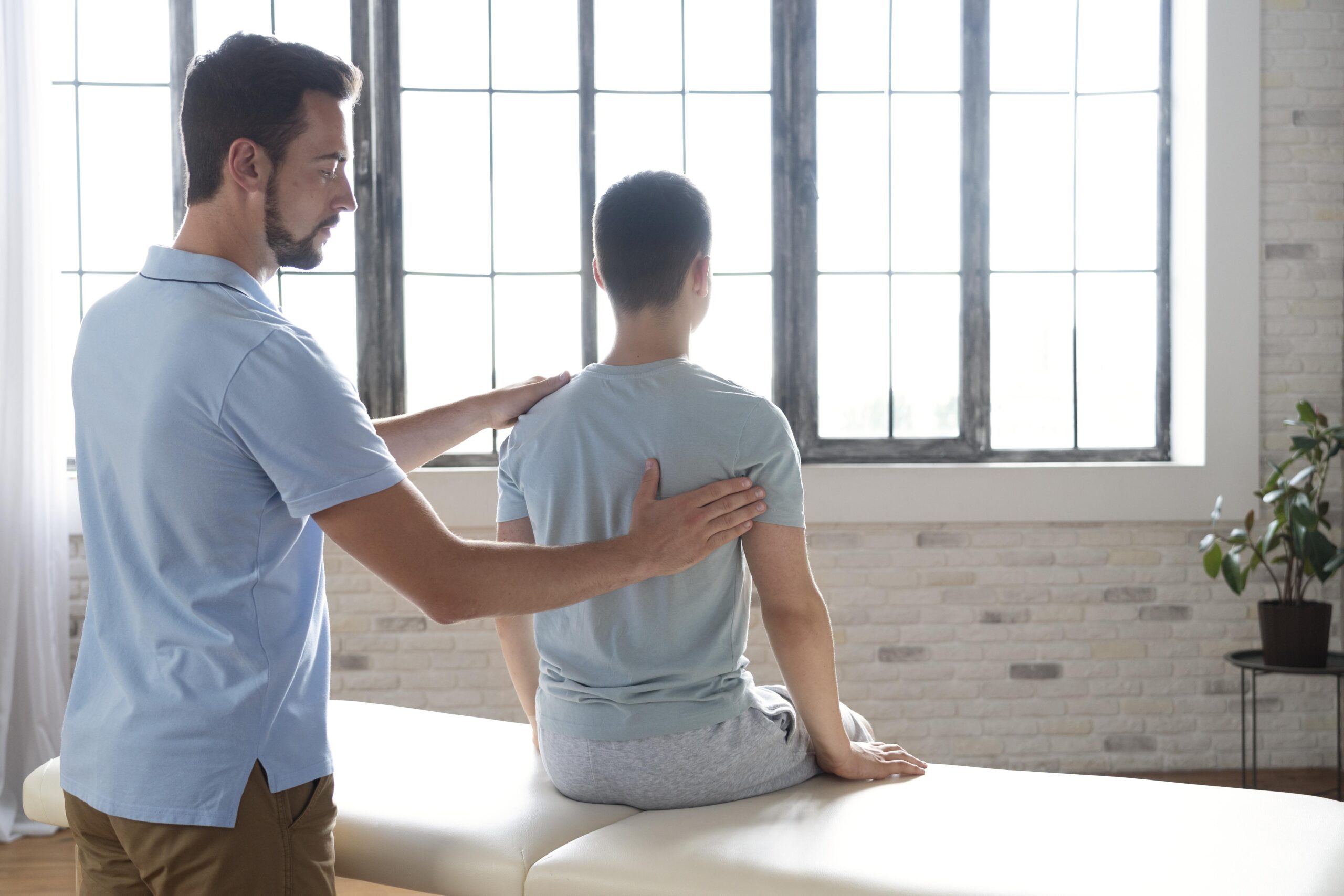 Though the mechanisms of action and affected systems vary, cold plunges and various forms of manual therapy (massage, myofascial release, joint mobilizations and stretching) complement each other in the therapy toolbox.
Prior to treatment. A quick cold plunge prior to treatment can lessen pain and muscle guarding. A short immersion can be useful for the client with muscle guarding, especially if the therapist is dealing with a muscle group in a defensive posture. This is especially helpful for post exercise soreness as cold plunges are not useful for treatment of acute injury. For injury, each case should be assessed individually.
Post treatment. Deep tissue work can cause soreness. A cold plunge after treatment can ease this soreness. Many therapists build a cold plunge into their protocol. This has been shown to lessen complaints after a visit.
In between treatment sessions. For clients on an ongoing rehabilitation or performance program, regular cold plunges can extend the benefits of care and give the client an active role in their own care between visits. There are psychological benefits as well. Client retention, referrals and long term results are enhanced when clients believe their visit was valuable.
Benefits of a Commercial Cold Plunge for a Practice
Home-grade tubs and makeshift ice baths work for individuals, but both quickly become problematic and limiting in a work setting. A commercial cold plunge is designed for frequent, repeat client use, and that difference is apparent.
Reliability of water temperature. Commercial cold plunges have industrial-grade chillers, which keep water at a constant temperature throughout the day. This means your clients get the same cold plunge treatment protocol each time and helps provide more consistent and reliable outcomes for your clients.
Water and Hygiene. A commercial cold plunge has a robust filtration system which helps keep the water clean and clear between client use. Some systems can be equipped with ozone or UV purification systems. This, along with easy drain systems, help protect your clients’ health and helps protect your business from negative reviews.
Capacity and Durability. A commercial cold plunge is designed for frequent, heavy use. Many systems are larger, which allows taller clients to fully submerge. Additionally, most systems are designed for commercial use, meaning they are sturdy and have easy access points for frequent use.
Efficient Workflow. A commercial cold plunge reduces the need for staff to constantly monitor ice levels and water temperature, freeing up staff time for more client-centered work.
Practice Value. Adding cold plunges as a new service, or as an add-on or membership perk, gives your business a new revenue stream and helps differentiate your practice from others in the area. Recovery-focused, evidence-informed cold therapy plunges are a valuable service that aligns with the philosophy of many existing, traditional practice services.
Best Practices
Although cold plunges are safe for most healthy adults, there are some safety considerations. The primary focus should be on client safety during the entire process.
 There are some pre-existing conditions which may put a client at risk when undergoing cold plunges. Some conditions include, but are not limited to, cardiovascular conditions, high blood pressure, Raynaud’s disease, cold urticaria, and circulation issues. Other conditions include pregnancy and active infection/wounds. All of these conditions should be evaluated on a case-by-case basis. If a client has any of the aforementioned conditions and has been cleared by their physician to take cold plunges, the conditions should be documented. Clients who have not been cleared to take cold plunges by their physician should not be allowed to take them.
Beginning gradually is the best way to introduce your clients to cold plunges. Begin with shorter time frames, around one to three minutes. Use the setting on the cold plunge to keep the water temperature at a slightly warmer temperature. Remind clients to practice deep breathing and controlled exhaling to help alleviate any rapid breathing they may experience.
Never let your clients take cold plunges unsupervised. Have a time limit set for each plunge and have clearly visible guidelines. Make your staff aware of the signs of cold plunging shock and what actions to take if a client feels unwell.
Next, the plan must be individualized. A distance runner, desk worker, and weightlifter are all different and require specific methods of recovery. The greatest outcomes are produced when client goals are integrated with assessment findings and realistic judgment.
Conclusion
While a cold plunge is not going to be a magical cure all, a form of recovery which has wide population support and is evidence based is going to be helpful in reducing pain and fatigue as well as supporting the restoration of the nervous system. Manual therapy practitioners have the added benefit of being able to utilize cold water immersion in support of hands-on techniques to help clients feel better during and after a session as well as helping clients feel better in the between session period. The literature emphasizes the importance of being flexible, especially as it relates to adjusting cold plunges with the training and competition schedule.
Written by Jason Wang. Jason is the Marketing Strategiest at Renu Therapy, a premier manufacturer of handcrafted cold plunge tanks and contrast therapy systems made in Southern California. Passionate about health optimization and physical longevity, Jason leads strategic growth, brand partnerships, and product innovation to help individuals build resilient minds and bodies through purposeful recovery rituals.