

Deciding whether to become a paramedic or a nurse is an important career choice. While both roles involve providing medical care, there are some key differences between the two professions. This article examines the training, job duties, work environment, salary, and career advancement opportunities for paramedics and nurses to help you determine which is the better fit for you.
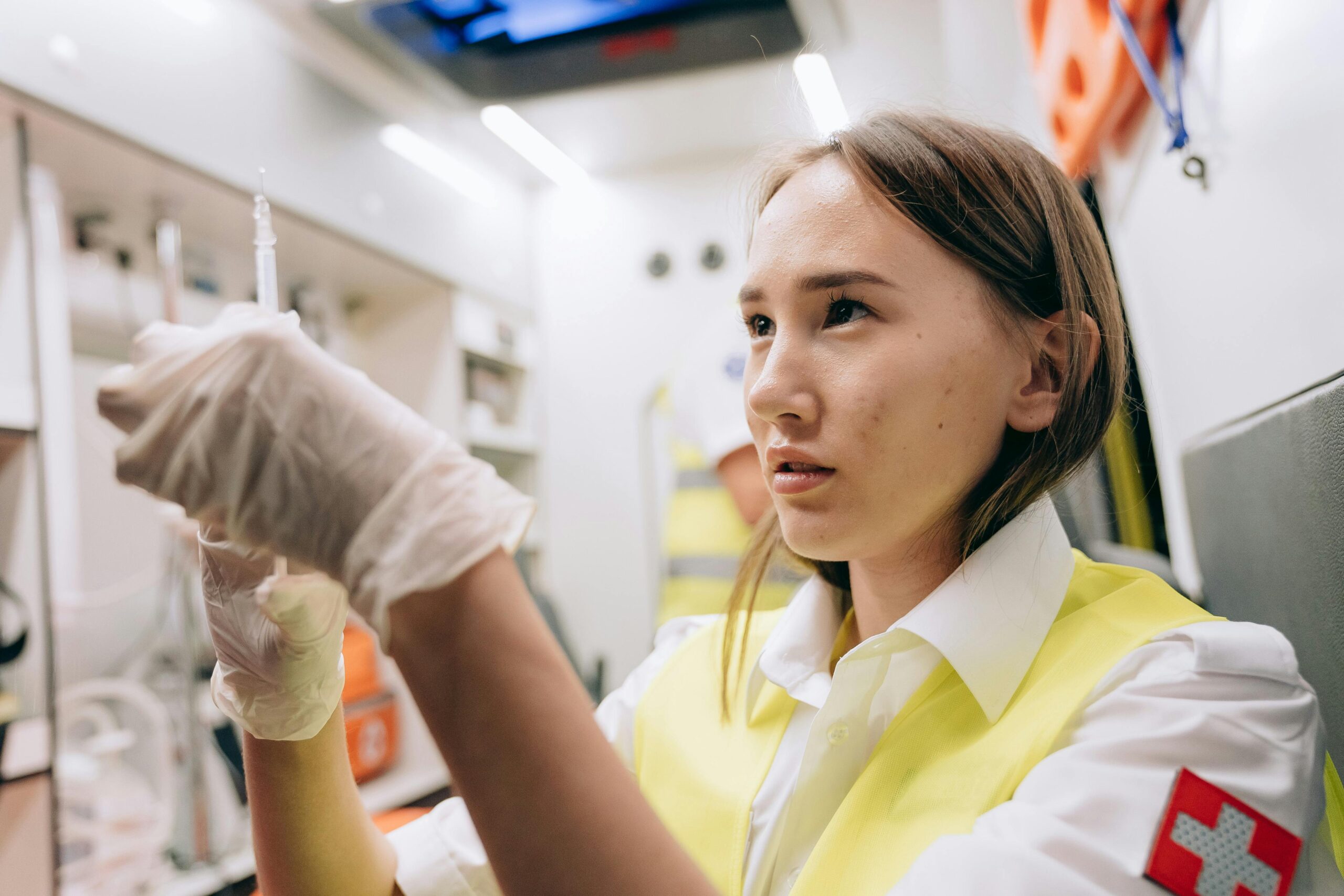
Training and Education
The first difference between paramedics and nurses is the required training and education.
To become a paramedic, you typically need an associate’s degree and certification. Paramedic programs involve around 1,200-1,800 hours of instruction and field training over 1-2 years. Coursework covers topics like anatomy, physiology, medications, and emergency medical services operations. Licensing requirements vary by state, but generally involve passing the National Registry exam.
To become a registered nurse (RN), you need either an associate’s degree in nursing (ADN) or a bachelor’s of science degree in nursing (BSN). BSN programs take 4 years to complete, while ADN degrees take 2-3 years. Nursing students take courses in anatomy, physiology, microbiology, psychology, and liberal arts. All prospective nurses must pass the NCLEX-RN exam to obtain licensure.
Some accelerated programs allow those with existing degrees to transition into nursing more quickly, like the EMT to nurse program for paramedics.
Overall, paramedic training is shorter, while nurses complete more advanced coursework and degrees.
Job Duties and Work Environments
Paramedics and nurses also differ in their daily job duties and work settings.
Paramedics primarily provide emergency medical services to patients in prehospital settings. They respond to 911 calls, perform medical assessments, and give lifesaving interventions like CPR, medications, IVs, and defibrillation. Paramedics operate ambulances, helicopters, and other emergency vehicles. They must be adept at making quick decisions independently in high-pressure situations.
Nurses provide broader patient care that includes preventive, rehabilitative, primary, and acute services. They work in various medical settings like hospitals, clinics, nursing homes, schools, and homes. Nurses monitor and record symptoms and progress, operate medical equipment, administer medications, and assist with activities of daily living. They collaborate closely with doctors and other healthcare professionals.
While paramedics spend their time out in the field, nurses usually work inside healthcare facilities under more controlled conditions. Both roles involve shift work and being on your feet for long periods.
Salary and Job Outlook
There is a pay difference between paramedics and nurses on average.
According to the Bureau of Labor Statistics, the median annual salary for paramedics was $53,180 as of 2023. The middle 80% earned between $38,520 and $79,430 per year.
Registered nurses had higher earning potential with a median salary of $86,070 annually. The middle 80% of RNs made between $63,720 and $132,680 per year.
Location, experience, specialty, and employer can impact income for both professions. Overtime is also common and typically paid at time-and-a-half.
Job growth projections are positive for both careers. Paramedic jobs are expected to increase by 7% before 2031, faster than average. RN jobs should grow 9% over the same period, about on par with the average growth rate. High demand, especially in underserved rural areas, contributes to the need for more paramedics and nurses.

Career Advancement Opportunities
Paramedics and nurses also differ in their career advancement potential.
Paramedics have fewer opportunities for promotion. With additional training, some paramedics advance to become paramedic supervisors, operations managers, administrative directors, or EMS instructors. Others leave the field and apply their skills in areas like law enforcement, firefighting, search and rescue, or 911 dispatch.
For nurses, career pathways are more extensive. With experience, RNs can specialize and get promoted into roles like nurse practitioner, nurse anesthetist, nurse midwife, or clinical nurse specialist. Administrative advancement options include charge nurse, head nurse, nurse manager, or healthcare executive. Nurses may also transition into nursing education or research.
There is more room for pay raises, leadership roles, and lateral moves into advanced clinical practice or teaching. Paramedics often need to change fields more substantially to continue moving up.
Which Should You Choose?
Deciding whether to become a paramedic or nurse depends on your career interests, goals, personality, and abilities. Consider which aspects of the job appeal to you:
- Paramedics enjoy high-stakes emergency medicine, independence, and flexibility. Nurses prefer broader patient care, collaboration, and work-life balance.
- Paramedics need strong crisis management skills. Nurses rely more on critical thinking, judgement, and communication abilities.
- Paramedics want faster training and career entry. Nurses seek greater advancement, pay, and variety long-term.
Whichever path you pursue, both paramedics and nurses provide meaningful lifesaving services. With passion and commitment, you can find success and satisfaction in either field. Thinking critically about the differences will help you make the best choice.
Written by Sally Giles.
Sally ran her own successful importing business for many years. She’s now living the dream as a freelance writer, walking her dogs through the forest most days.