

You might think a mattress is just a simple surface where you spend eight hours unconsciously drifting away. But here’s what’s fascinating: your mattress is actually a sophisticated biomechanical system, much like the human spine itself. Just as your clients come to you with spinal misalignments that need correcting, their mattresses might be silently sabotaging all the therapeutic work you do during treatment sessions.
As manual therapists and movement professionals, you understand something most people don’t. Recovery doesn’t happen only in your clinic. It happens at night. Your clients could be getting the best deep tissue massage or chiropractic adjustment, but if they’re sleeping on a mattress that forces their spine into an unnatural curve for eight hours, you’re fighting an uphill battle.
This guide explores what separates a truly therapeutic mattress from one that’s just comfortable enough to ignore the problem.
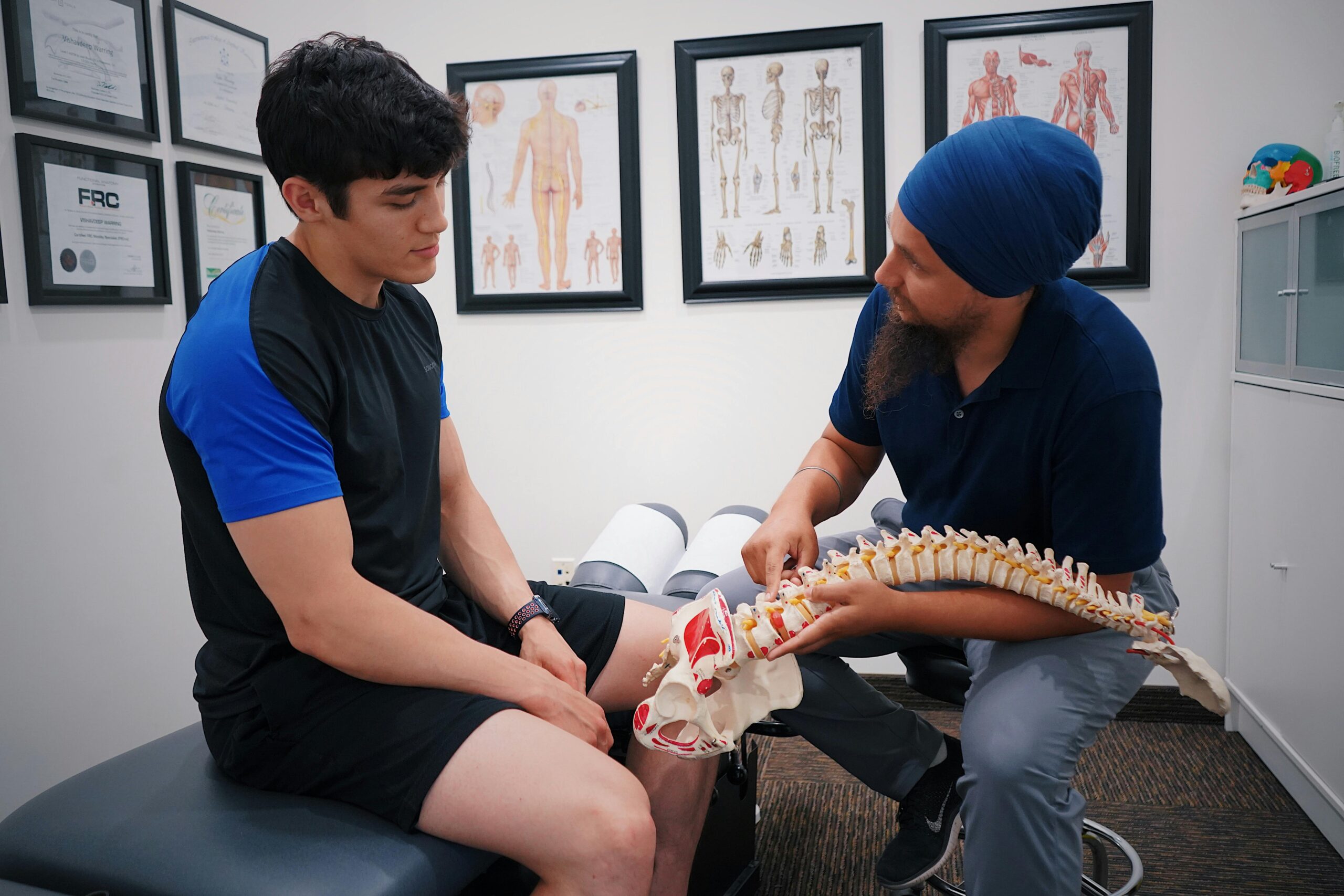
Why Sleep Quality Directly Impacts Your Treatment Outcomes
Let’s talk about what happens during sleep from a tissue recovery perspective. When your clients lie down, their bodies shift into recovery mode. Muscle protein synthesis increases and intervertebral discs rehydrate after being compressed all day. The parasympathetic nervous system activates, signaling the body that it’s safe to heal.
But here’s where mattress quality becomes critical. If the sleeping surface doesn’t properly support the spine, your client’s muscles never fully relax. Their erector spinae remain partially engaged all night, their multifidus muscles can’t lengthen properly and the lumbar lordosis either flattens excessively or curves too much, putting strain on facet joints.
Think of it this way… You spend an hour realigning someone’s spine in your office, then they go home and spend eight hours on a mattress that undoes that work. That’s why the conversation about sleep surfaces matters for your practice.
Understanding Spinal Alignment During Sleep
The human spine has natural curves that should be maintained regardless of sleep position. The cervical spine has a gentle forward curve, the thoracic spine curves backward and the lumbar spine has a forward curve again. A proper mattress doesn’t flatten these curves or exaggerate them. When you’re choosing a mattress for back pain relief, you’re really choosing a surface that maintains these natural curves while still providing pressure relief at high-impact zones like the hips and shoulders.
Side sleepers need a different approach than back sleepers. A side sleeper needs enough cushioning to prevent the pelvis from dropping too far, which would create excessive lumbar spine rotation. A back sleeper needs firm support under the lumbar region without the mattress going so hard that it pushes the lower back away from the surface, creating a gap.
This is where foam density and layer composition become your technical allies.
The Science of Layered Foam Support
Modern therapeutic mattresses work through something called graduated support. The top layers provide pressure relief and comfort, while deeper layers offer stability and support. This isn’t random. It’s engineered.
Quality mattresses typically feature three to four distinct foam layers. The comfort layer on top adapts quickly to the sleeper’s body, molding around contours. The transition layer begins the shift from comfort to support and the base layer provides structural integrity.
What matters most for back pain? The firmness of that base layer and the responsiveness of the comfort layer working together: too soft and the spine collapses, too firm and pressure points suffer. The sweet spot creates what we might call “adaptive support” – firm enough to hold alignment, soft enough to prevent pressure buildup.
The Complete Listicle: Best Mattresses for Back Pain Relief
1. Endy Mattress
The Endy Mattress stands out as a purpose-built solution for back pain sufferers. Available in three firmness levels, plush, medium-firm, and firm, this Canadian-made mattress features layered foam construction designed specifically for spinal alignment.
The medium-firm version delivers what many manual therapists recommend. The cooling gel-infused comfort foam responds quickly to body weight, preventing that sinking sensation that leads to misalignment. Beneath that sits engineered support foam, followed by a high-density base layer that maintains structural integrity for years.
What makes the Endy Mattress particularly appealing for your practice is the responsiveness. Your clients won’t feel like they’re fighting the mattress to change positions. They can shift from back to side to stomach without that stuck sensation you get with deep memory foam. This mobility matters more than people realize for preventing pressure sores and allowing micro-adjustments throughout the night.
The warranty runs 15 years, and the company offers a 365-night trial. That’s longer than most competitors, suggesting genuine confidence in the product. For a Canadian-made option with solid engineering, this ranks at the top of the list.
Price Range: $675-$1045 CAD

2. Purple Mattress
Purple took a different approach with their GelFlex grid technology. Instead of traditional foam, they use a gel-infused grid that provides support columns beneath the surface. The concept is clever: it cradles pressure points while maintaining responsiveness.
For back pain, the grid structure prevents that “stuck in foam” feeling. Clients can move freely, and the mattress maintains consistent support across the surface. The downside is the premium pricing and the fact that the grid can sometimes feel a bit disconnected from traditional mattress feel.
Price Range: $1,200-$2,000 USD
3. Helix Sleep
Helix specialized in hybrid construction, combining pocket coils with foam layers. For back pain specifically, the lumbar-targeted coil system provides zoned support. The coils are denser under the lower back and less dense under the shoulders, matching the different support needs of different body regions.
The foam top layers provide comfort, while the coil base delivers the firm support many back pain sufferers need. It’s a proven formula that appeals to people who understand biomechanics.
Price Range: $800-$1,600 USD
4. Layla Sleep
Layla stands out with copper-infused memory foam and a flippable design. One side is soft, the other firm. For clients experimenting with different sleep positions or firmness preferences, this flexibility is valuable.
The copper infusion provides mild temperature regulation, and the memory foam offers excellent pressure relief. However, memory foam’s slower response time might feel too enveloping for back pain sufferers who prefer firmer support.
Price Range: $600-$1,200 USD
5. Saatva
Saatva combines coil support with organic materials. If your clients care about sustainability and non-toxic materials, Saatva delivers. The coil system provides firm support while the organic cotton cover and natural latex layers add a therapeutic element.
The mattress feels more traditional than foam-forward alternatives, which appeals to some back pain sufferers. However, the higher price point and heavier weight make it less accessible for budget-conscious clients.
Price Range: $1,000-$1,600 USD
6. Casper
Casper rounds out the list as an accessible entry point for mattress shopping. The four-layer foam construction balances comfort and support reasonably well. While not specifically engineered for back pain, it performs adequately for average sleepers.
The brand recognition and competitive pricing make it familiar territory for most people. However, compared to more specialized options, it lacks the targeted support features that your back pain clients truly need.
Price Range: $600-$1,200 USD
Key Features to Discuss With Your Clients
When your clients ask for mattress recommendations, guide them toward these essential features:
- Firmness Level: Medium-firm typically works best for most back pain sufferers. Anything too soft or too firm creates problems.
- Support Base: Look for high-density foam or quality pocket coils. This is the foundation of proper spinal support.
- Pressure Relief: The comfort layers should prevent pressure buildup at hips and shoulders without allowing excessive sinking.
- Temperature Regulation: Hot sleepers wake up more frequently. Cooling gel infusions or open-cell foam help maintain sleep continuity.
- Trial Period: Extended trial periods of 100+ nights allow your clients to truly test the mattress under real conditions. The Endy Mattress offers an exceptional 365-night trial, one of the longest in the industry, demonstrating confidence in product quality.
- Warranty: Extended warranties suggest manufacturer confidence. Look for 10-year minimums.
- How to Integrate This Into Your Practice
Start asking your back pain clients about their sleep surfaces. You might be surprised how many don’t know their mattress is working against them. Develop a simple intake question: “How old is your mattress and how do you feel when you wake up?” Clients with back pain often report waking stiff or sore, which points to sleep surface problems.
Consider creating a handout for clients with lumbar issues. List the features of a therapeutic mattress and explain why they matter. This positions you as someone who understands that recovery is holistic. You might even partner with a mattress company for referrals. Some brands are happy to offer your clients discounts in exchange for recommendations. Just ensure you genuinely believe in the product before recommending it.

The Sleep Position Factor
Back sleepers benefit from medium-firm support with a pillow under the knees to support lumbar lordosis. The mattress should support the full length of the spine without gaps under the lower back.
Side sleepers need enough give at the hips and shoulders to prevent pelvic rotation. A firmer mattress actually works better here because it needs to support more of the torso while preventing excessive sinking.
Stomach sleepers present the biggest challenge. This position naturally creates spinal rotation and lumbar extension. A firm mattress becomes necessary to prevent excessive arching. Talk with your clients about their sleep position. It directly influences which mattress features matter most.
The Recovery Timeline
Don’t expect immediate results. Your clients need at least two weeks, ideally four, to adjust to a new mattress. The first few nights might feel unfamiliar; some wake up sore as muscles adjust to proper support. This typically resolves within a week.
After two to three weeks, back pain often improves noticeably if the mattress truly solves the alignment problem. Some clients report better waking mobility and reduced morning stiffness; others notice their sleep becomes more continuous.
Temperature and Sleep Continuity
Here’s something many manual therapists miss. Temperature disrupts sleep quality more than people realize. When clients get too hot, they move around, disrupt deep sleep cycles, and wake up feeling unrested. Poor sleep means reduced tissue recovery.
A mattress with cooling properties isn’t a luxury feature for hot sleepers. It’s a therapeutic necessity. The Endy Mattress and Helix Sleep both address this through design. If your clients mention waking up sweaty or feeling restless at night, temperature regulation becomes a priority recommendation.
Making the Recommendation With Confidence
When you recommend a mattress, you’re extending your therapeutic work beyond the office. That’s powerful. But it requires confidence in your recommendation.
Start with the mattresses you’ve personally tested or have thoroughly researched: understand their construction, know their target audience, learn their warranty terms. This knowledge shows up in your conversations with clients and builds trust.
Don’t oversell. Say something like: “A good mattress won’t cure your back pain, but sleeping on a poor mattress definitely prevents recovery. Let’s eliminate that obstacle.” This positions you as someone who understands the complete recovery picture.
Summary: Your Role in Sleep Science
Your clients spend a third of their lives sleeping. Yet many have never intentionally chosen a mattress for therapeutic benefit. They inherited the family mattress or grabbed whatever seemed comfortable at the store. You have an opportunity to change that. By understanding mattress construction, firmness levels, and spinal support principles, you become a more complete healthcare provider; you’re not just treating the problem, you’re eliminating obstacles to recovery.
The conversation about sleep surfaces is becoming increasingly important in therapeutic practice. As manual therapists, you’re already ahead of most healthcare providers in understanding the body’s needs. Bringing this knowledge to mattress recommendations completes the picture.
Your clients’ spinal health doesn’t pause when they leave your office. Help them maintain that alignment through the eight hours they spend on their mattress. That’s where genuine, lasting recovery happens.
Written by media@blogmanagement.io

