
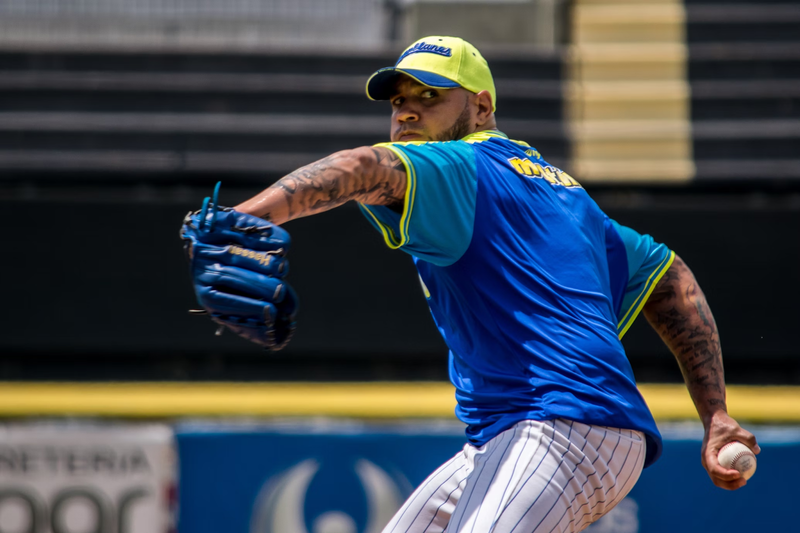
Baseball is one of the most asymmetrically demanding sports in existence. Pitching, throwing, and batting all generate repeated unilateral rotational forces, executed thousands of times across a season, creating specific muscular imbalance patterns that accumulate in ways few other team sports replicate.
Left unaddressed, those imbalances follow a predictable injury pathway through the shoulder, the medial elbow, and the lumbar spine. What follows is a muscle-group-by-muscle-group clinical reference for sports massage therapists and athletic trainers working with baseball athletes, covering what each group does, how dysfunction typically presents in-season, and which manual therapy and training interventions to prioritize for effective baseball injury prevention.
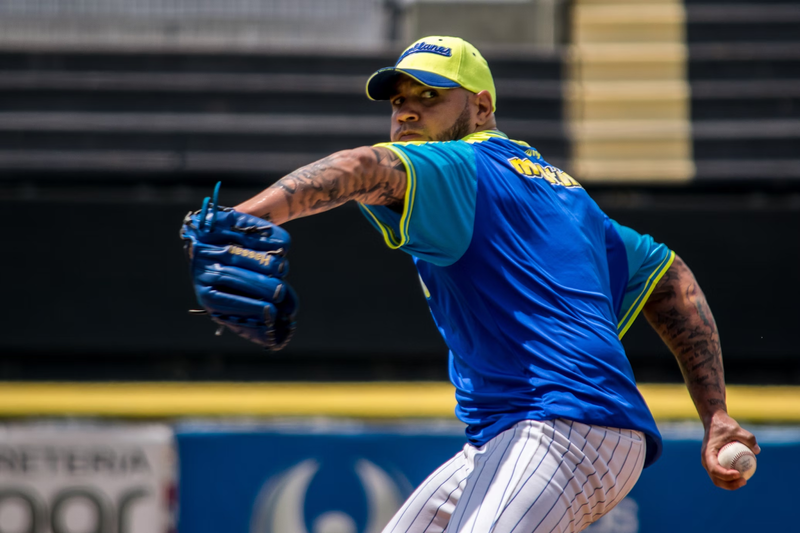 Image from Sports Gear Swag
1. Rotator Cuff Management For Pitchers
The four muscles of the rotator cuff work collectively to stabilize the glenohumeral joint through the extreme range of motion demanded by pitching mechanics. The supraspinatus, infraspinatus, teres minor, and subscapularis face intense stress during the deceleration phase of the throwing cycle. This phase imposes the greatest eccentric loading demand on the posterior cuff, making it the primary site of cumulative tissue stress over a long pitching schedule.
While front-office staff focuses on outfitting the roster with custom baseball team jerseys from Sports Gear Swag, clinical practitioners must focus on equipping the shoulder joint to withstand repetitive eccentric stress. Practitioners treating these athletes must recognize that tissue damage rarely appears simultaneously, since micro-trauma accumulates pitch by pitch.
The most common in-season dysfunction pattern begins with posterior cuff fatigue and adaptive shortening in the infraspinatus and teres minor. This shortening drives glenohumeral internal rotation deficit, which serves as a measurable, progressive marker that practitioners track as a leading indicator of impingement risk.
Subacromial impingement patterns compound rapidly with cumulative pitch counts if this deficit remains unmanaged. Surprisingly, high school pitchers throwing fewer than 30 full-power pitches daily show a significantly increased risk of shoulder and elbow injuries compared to those with higher volumes. These lower-volume throwers experience a 2.3-times greater injury risk occurring up to 45 days earlier in the season.
Targeted soft tissue release to the posterior capsule and infraspinatus serves as the primary hands-on manual therapy intervention. The sleeper stretch protocol remains a highly effective mobility intervention supported by a strong body of clinical evidence. Practitioners should pair soft tissue work with eccentric loading programs targeting the posterior cuff while monitoring the internal-to-external rotation strength ratio as a repeatable seasonal screening metric.
2. Forearm Flexor And Extensor Demands
The forearm flexor-pronator mass absorbs the medial elbow valgus stress generated at pitch release. Pitchers repeat this violent force across every throw throughout their entire season workload. Bat grip compounds this demand, placing a sustained compressive and eccentric load on the flexor-extensor complex across hundreds of plate appearances.
Medial epicondyle tenderness is the earliest reliable in-season indicator of flexor-pronator overload. Practitioners must treat this specific tenderness as an urgent warning marker rather than an isolated finding, because forearm flexor fatigue quickly progresses to cumulative ulnar collateral ligament stress.
Once UCL stress progresses to actual pathology, the pitcher faces a devastating, season-ending injury pattern. Any flexor-pronator overuse presenting alongside medial elbow symptoms should immediately flag the athlete for clinical intervention.
Longitudinal stripping techniques along the flexor-pronator mass offer the most effective soft tissue approach for managing in-season overload. Clinicians should combine this hands-on therapy with progressive wrist and forearm eccentric loading programs to build tissue resilience. Grip strength and endurance assessments provide a repeatable, low-cost screening tool that correlates directly with an athlete’s elbow loading capacity.

| Important: Medial epicondyle tenderness is the earliest reliable indicator of flexor-pronator overload; treat it as a warning marker, not an isolated finding, as it signals cumulative UCL stress and potential elbow-at-risk status. |
3. Hip Rotators And Kinetic Chain Health
Hip rotation generates and transfers ground-reaction force from the lower extremity through the trunk and directly into the throwing arm. This foundational kinetic chain sequence underpins both pitching mechanics and batting power.
A lead hip’s capacity to rotate and stabilize at foot strike links directly to arm health, so compromised hip function forces the body to redistribute rotational loads upward. This compensation pattern significantly increases injury risk at the shoulder joint, which already faces immense baseline stress. For context, a cohort study of Minor League Baseball pitchers revealed a shoulder injury incidence of 7.9 injuries per 10,000 athlete-exposures, alongside 4.8 elbow injuries.
Pitching and batting demand different hip movement profiles that require independent clinical assessment. Pitching relies on sequential rotational force transfer, while batting requires explosive bilateral hip drive into trunk rotation.
Hip rotator weakness or asymmetry serves as a measurable contributor to lumbar and shoulder overuse, because unabsorbed forces must be generated elsewhere in the chain. Glute inhibition patterns also emerge predictably under heavy in-season workloads, often before the athlete reports any specific gluteal symptoms.
Hip flexor and piriformis soft tissue release operates as an effective pre-practice preparation intervention. This is particularly crucial before throwing sessions and batting practice where hip mobility directly dictates movement quality.
Glute activation protocols like band-resisted clamshells or single-leg glute bridges should precede all field activities. Single-leg stability and hip rotation strength training build the specific capacity required to maintain kinetic chain integrity.
4. Thoracic Rotators And Trunk Demands
Batting demands explosive trunk rotation from the thoracic rotators across every at-bat in a long season. Pitching mechanics compound this stress by creating asymmetric lumbar loading that accumulates rapidly with an athlete’s pitch count. This seasonal pattern differs fundamentally from the bilateral trunk demands seen in most other team sports, subjecting the thoracic and lumbar spine to intense directional asymmetry.
The most common in-season clinical finding is thoracic mobility restriction masked by dangerous lumbar hypermobility. The lumbar spine begins moving through ranges it is not designed to sustain, which drastically increases lumbar injury risk.
Erector spinae guarding and chronic low-grade lumbar fatigue act as season-length accumulation markers rather than acute injury presentations. Routine trunk rotation asymmetry measurements help practitioners track the progression of this pattern before symptoms escalate into missed games.
Practitioners must prioritize thoracic mobility work before addressing specific lumbar symptoms. Treating the compensation site without restoring mobility at the restriction source only produces short-term relief followed by long-term recurrence.
Erector spinae myofascial release serves as an effective regular in-season maintenance intervention. Additionally, anti-rotation core stability training actively reduces asymmetric lumbar loads during pitching mechanics.
| Pro Tip: Prioritise thoracic mobility work before addressing lumbar symptoms; treating the compensation site without restoring mobility at the restriction source produces short-term relief and long-term recurrence. |
5. Serratus Anterior And Scapular Stability
 Healthy scapulohumeral rhythm depends entirely on the coordinated function of the serratus anterior and lower trapezius. These two key muscles position and control the scapula through the arm’s full throwing arc. Their combined role maintains optimal subacromial space and supports rotator cuff mechanical efficiency through every single throw.
When either muscle underperforms, the mechanical compromise propagates upward into impingement risk and downward into poor kinetic chain force transfer. Serratus anterior inhibition produces obvious scapular winging and disrupted upward rotation during movement screening. Lower trapezius weakness allows scapular elevation and anterior tilting under heavy loads.
This specific pattern progressively compromises rotator cuff efficiency and increases impingement risk with each successive pitch. Both dysfunctional patterns remain easily identifiable early in a season if systematic scapular kinematics assessments exist within the initial screening protocol.
Serratus anterior activation drills like wall slides and targeted push-up variations serve as highly effective pre-throwing preparation. Lower trapezius isolation through prone Y and T exercises provides a consistent in-season maintenance program that requires minimal equipment. Clinical soft tissue work applied to the thoracic paraspinals and posterior shoulder unloads the full stabilizer chain to support comprehensive scapular management.
The Path Forward
Addressing rotator cuff eccentric loading, managing medial elbow stress, reinforcing the kinetic chain at the hip, and maintaining scapular stabilizer function keeps baseball athletes off the injured list. Practitioners should share this five-muscle-group framework with athletic directors to establish better structural support for the entire roster.
| Author Profile: Sports Gear Swag is the leading online retailer of custom sports apparel and gear for teams, schools, and organizations of all sizes. Specializing in team jerseys, uniforms, and athletic apparel with a wide range of customization options. |

