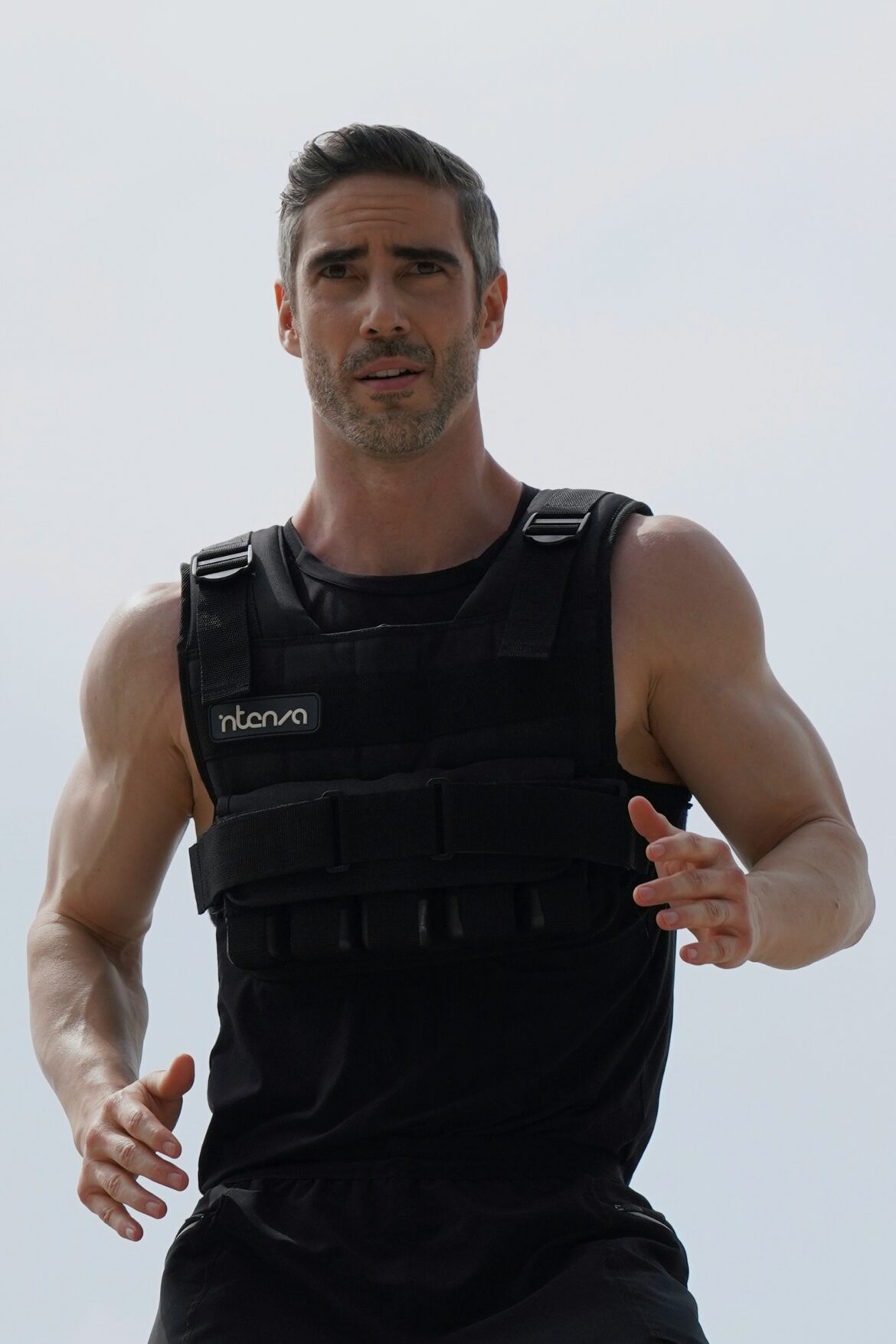
A weighted vest is more than just a way to add resistance to your daily activities such as walking or jogging. It can be used to add resistance to just about anything you do. But the greatest benefit to a weighted vest is that it can be used to create a full-body workout without any special equipment. Unlike most of the gym machines, which only isolate a few muscles at a time, a weighted vest causes your entire body to work as a resistance system. This means that in addition to making your workout more difficult, your bodyweight exercises can become very intense.
How a Weighted Vest Works on the Body
First, we must look at the physics behind a weighted vest and how the movements of the body and the load on the vest interact to create a demanding workout for the muscles of the body.
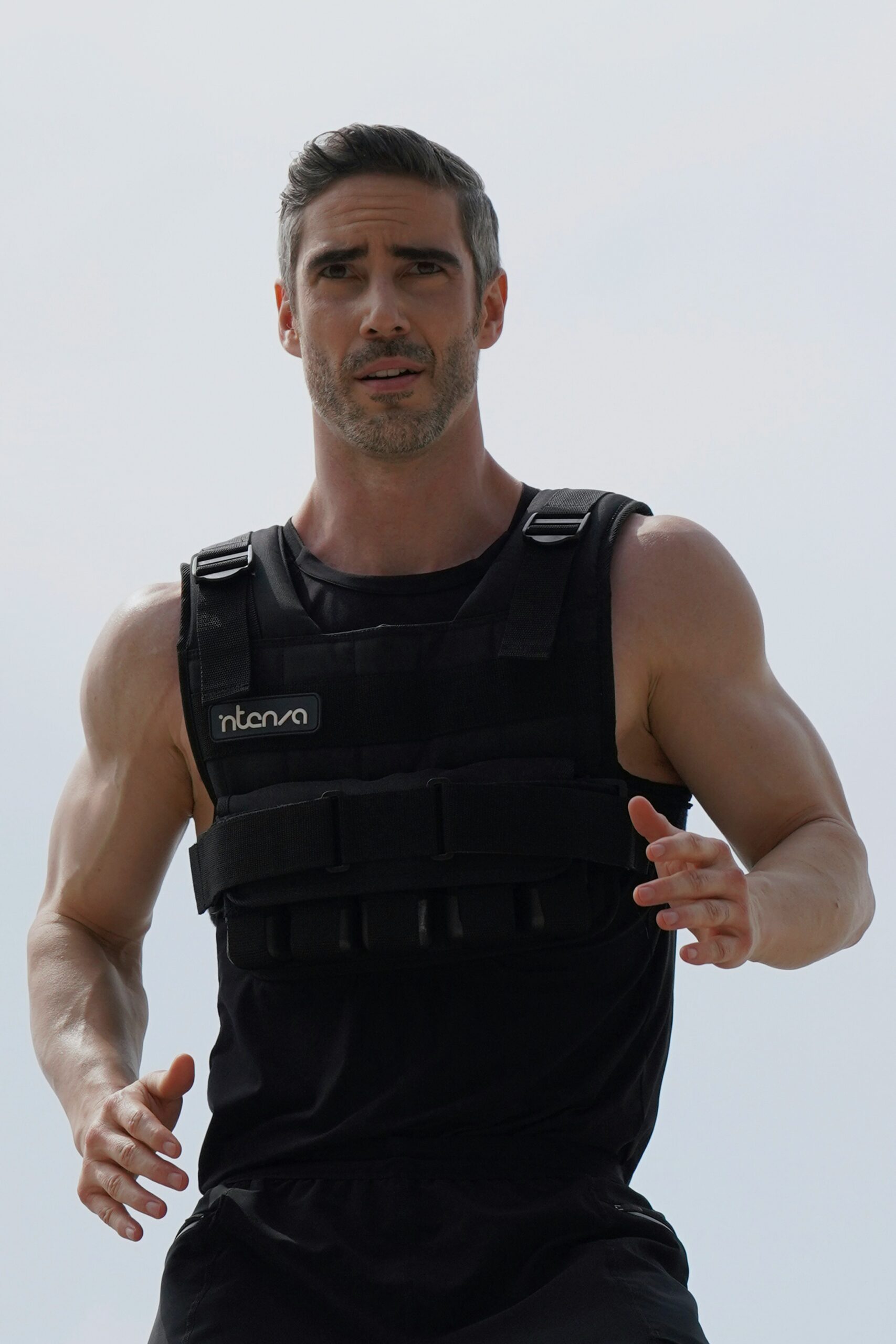
When you wear a weighted vest your body weight instantly increases. Although the weight of the vest on your back does not shift your center of gravity in any way your muscles will have to work even harder to move you in space. That means that your muscles have to work under greater mechanical disadvantage than they do when you are completing movements that are just bodyweight in nature. Therefore, whether you are completing simple bodyweight exercises (i.e. push-ups, squats and pull-ups) for general fitness or doing more advanced exercises that require external load (i.e. squats, lunges and step-ups for power and strength), wearing a weighted vest will have your muscles working even harder to complete the same movement.
As one moves while wearing a weighted vest the weight of the vest is distributed in the center of the torso. As one moves about, the center of mass of the weighted vest will move from side to side and from front to back. In order for the person to remain upright and to move about in the manner in which they desire, the body must work to stabilize the weighted vest in addition to completing the desired movement. The torso muscles and abdominal muscles work together to help to stabilize the body as well as to absorb any sudden movement that may occur while wearing a weighted vest. The body works hundreds of times per minute to stabilize the weighted vest and to move about in the desired fashion. The above type of movement is similar to the type of movements that are required for activities of daily living. As one wears a weighted vest and completes daily activities the muscles of the torso and the abdominal muscles are exercised in order to help to stabilize the body in various situations. The more that a weighted vest is used the more that the muscles of the torso and the abdominal muscles are worked.
Primary Muscle Groups Worked by a Weighted Vest
Lower Body Muscles (Main Drivers)
Your legs carry the brunt of the weight, making them the primary drivers during weighted vest training.
- Quadriceps: Your quads are heavily activated during walking, squats, lunges, and climbing stairs. The increased load forces them to generate more power to extend the knee, rapidly improving both strength and muscular endurance.
- Glutes (Gluteus Maximus, Medius): Your glutes are critical for hip extension. When walking or running with a vest, they fire intensely to push your body forward, especially during incline walking, hiking, or rucking.
- Hamstrings: Acting as the antagonist to your quads, the hamstrings assist in hip extension and crucial knee stabilization. They become particularly active when navigating uphill terrain.
- Calves (Gastrocnemius & Soleus): Your calves undergo constant activation during the gait cycle. Carrying extra weight increases the force needed to push off the ground with every step, making weighted walking exceptional for calf development.
Core Muscles (Stability Engine)
Your core acts as the bridge between your upper and lower body, absorbing the brunt of the vertical load.
- Rectus Abdominis: Popularly known as the “six-pack,” this muscle helps stabilize your trunk under load and prevents you from excessively leaning forward or hyper-extending your spine.
- Obliques (Internal & External): Your obliques control rotational stability. If you walk on uneven terrain or jog with a vest, these muscles fire to keep your torso perfectly squared.
- Transverse Abdominis: This deep, internal core muscle acts like a natural weight belt. It works continuously in the background to maintain intra-abdominal pressure and posture under load.
Upper Body Muscles (Postural Support System)
Even though a vest sits on your torso, your upper body must work overtime to support it.
- Trapezius: The “traps” support the heavy shoulder straps of the vest. They contract isometrically to prevent the weight from dragging your shoulders downward.
- Rhomboids: Located between your shoulder blades, the rhomboids retract your shoulders to counter the forward pull of the vest, preventing a rounded posture.
- Deltoids: Your shoulder muscles assist in overall upper-body stabilization under load, especially during dynamic movements.
- Erector Spinae (Lower Back): These muscles run along your spine and work tirelessly to maintain spinal alignment, preventing your torso from collapsing forward under the vertical weight.
Secondary Muscle Systems Activated
Beyond the primary movers, weighted vest training recruits several secondary systems.
Cardiovascular Muscles (Heart & Lungs)
Because your muscles require more oxygen to move the added weight, your heart and lungs work much harder. This raises your heart rate during simple activities like walking, delivering a powerful cardiovascular conditioning effect.
Hip Flexors
Your hip flexors must engage more intensely to lift your legs against gravity, particularly during weighted walking, running, and stair climbing.
Forearms & Grip (Indirect Activation)
While minor during standard walking, your forearms and grip are indirectly activated during rucking or when making manual adjustments to the vest during dynamic movements.
Muscle Activation by Exercise Type
The exact muscles you target will depend heavily on how you move while wearing the vest. Because a vest simply magnifies the resistance of your own body weight, changing your movement pattern completely shifts the mechanical load from one kinetic chain to another.
Walking with a Weighted Vest
When you wear an adjustable weighted vest for walking during a standard walk, your lower body handles the majority of the continuous resistance. Your calves, quadriceps, and glutes act as the dominant movers, pushing your added mass forward with every step. Meanwhile, your core stabilizers and lower back muscles work quietly as secondary supporters to keep your torso perfectly upright. This exercise is best for building baseline endurance, burning extra calories, and developing low-impact lower-body strength without overtaxing your joints.
Running or Jogging
Adding extra weight to your runs can be tough on your joints, which is why it’s very important to also work on your joint mobility. Also, make sure you have the adequate strength to handle the stress of running with extra weight. Many people add a weighted vest to their cardio routine in order to boost their power and their cardio fitness. This is a great way to get in shape, but you have to do it smartly in order to avoid injury.
Bodyweight Training (Push-ups, Squats, and Pull-ups)
When you’re wearing a weighted vest, every exercise you can perform with your body is automatically amped up to nearly match the resistance of a light weight at the gym. For instance, in a standard push-up, your chest, triceps and front of your shoulder are working intensively, and the core of your body is engaging to keep your hips down (in order to prevent you from lowering yourself into a bad position). With a weighted-vest on for your push-ups, the increased weight puts even more intense pressure on the previously-mentioned muscles, greatly boosting the intensity of your overall workout. When performing bodyweight squats with a weighted-vest, they can have the same intensity as doing a light-weighted back squat, for example. And bodyweight pull-ups (or ‘chin-ups’) with a weighted-vest increase the resistance on your back (especially your upper back), your grip, and your core, thereby intensifying the difficulty of hoisting your heavier-than-normal body up over the top of the bar.
Stair Climbing or Incline Walking
When walking up an incline, such as a hill or stairs, the body is placed in an position where the force of gravity is trying to push you back down the incline. In order to move up the hill, you must push yourself up with your posterior chain (glutes and hamstrings) and quadriceps. The deep core muscles are also engaged to try to keep you from leaning forward too much. Therefore, stair climbing or incline walking with a weighted vest is a great lower body exercise as well as an intense cardio workout.
Common Mistakes That Reduce Muscle Activation
- Wearing the vest too loose: A loose vest bounces around, which reduces the constant stabilization demand on your core and can cause chafing.
- Overloading too early: Adding too much weight too fast compromises your form, shifting stress away from your muscles and onto your joints.
- Only walking without progressive intensity: To keep muscles adapting, you must eventually increase the weight, speed, or incline.
- Ignoring core engagement: Forgetting to actively brace your abdomen can lead to an excessive forward lean, straining your lower back.
Final Words
A weighted vest is far more than just a leg training tool. It acts as a comprehensive, full-body resistance system that simultaneously challenges your core, posture, lower body, and cardiovascular health. Because the human body adapts as a unified system under load, wearing a vest forces holistic physical improvement. For the best results, start with a manageable weight, focus on pristine form, and use gradual progression to unlock your body’s full potential.
Written by Hafsa Sahzadi