Gluteus Medius – The Deltoid of the Hip

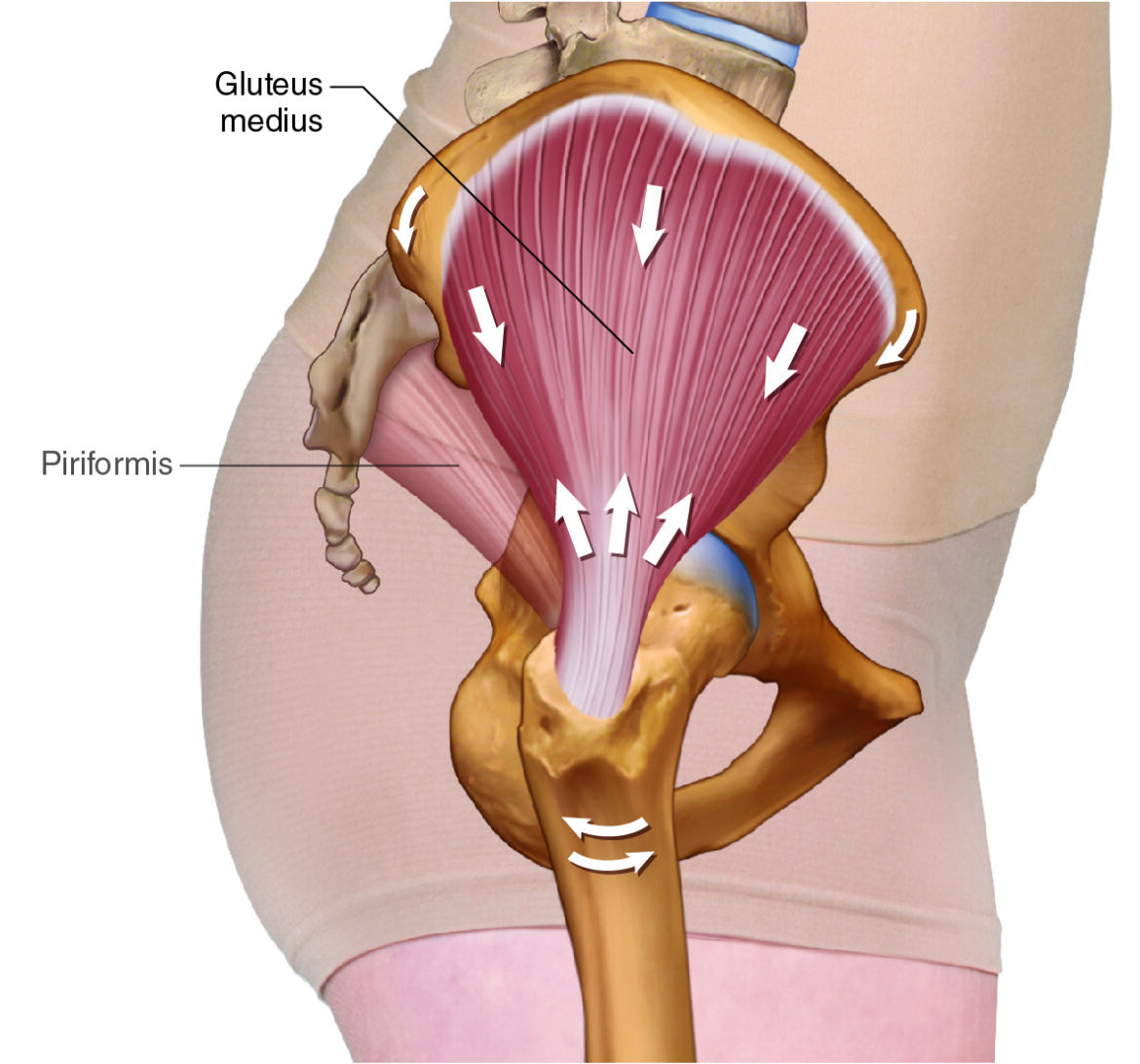
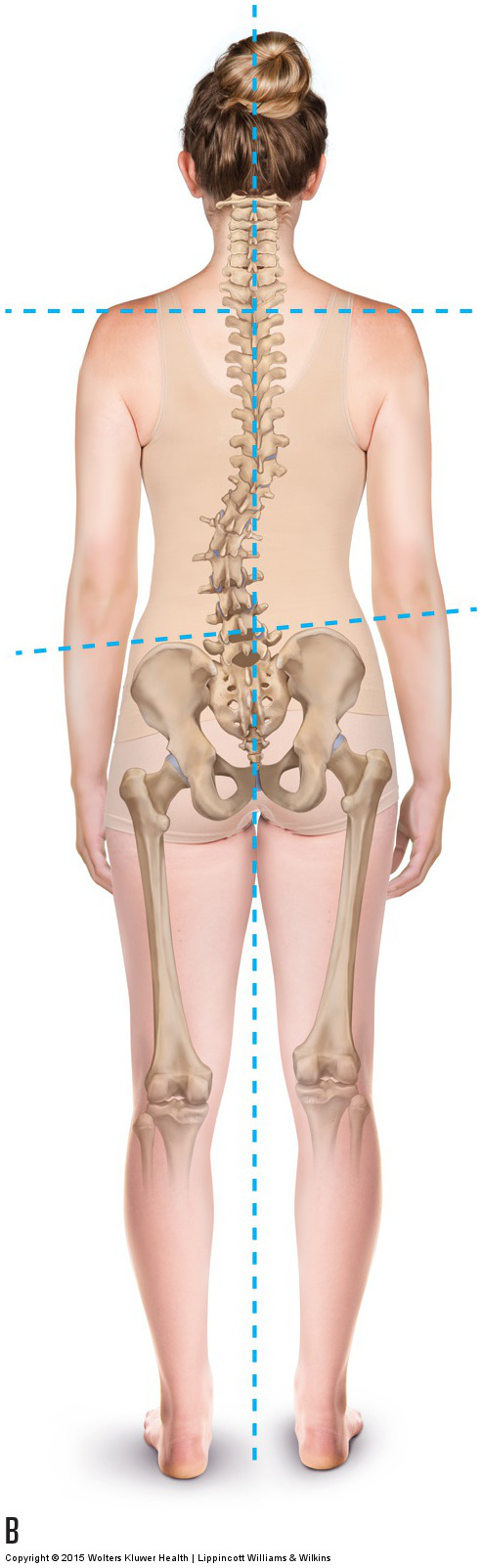
The gluteus medius is an incredibly important muscle. It is functionally important at the hip joint, especially with frontal-plane mechanics. And this can have implications with dysfunctional movement patterns (e.g., Trendelenburg gait) as well as postural distortion patterns of scoliosis. And just as fascinating is to see the relationship between glute medius structure and function at the hip joint and compare it to the structure and function of the deltoid at the shoulder joint. Indeed, the gluteus medius can be described as the deltoid of the hip.

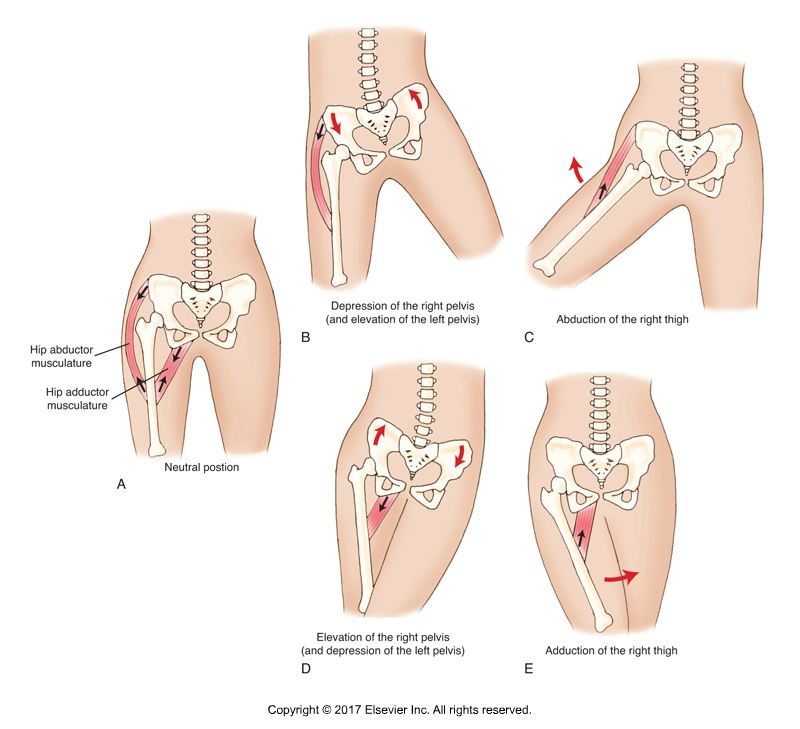
Tight hip abductor and/or adductor musculature can change the frontal plane posture of the pelvis, resulting in a scoliosis. Permission Joseph E. Muscolino. Kinesiology - The Skeletal System and Muscle Function, 3ed (Elsevier, 2017)

How Can Tight Muscles of the Hip Joint Cause a Scoliosis?

So, if hip abductor group on one side is tighter at baseline tone than the hip adductor group on that side, the pelvis will be pulled into depression on that side, resulting in a lumbar scoliosis that is convex on that side. Similarly, tight opposite-side hip adductor musculature can cause the same scoliotic curve.