An adductor strain, also known as a groin pull in lay terms, is a strain of the musculature that does adduction of the thigh at the hip joint.


Below you'll find a list of all posts that have been tagged as “pectineus”
An adductor strain, also known as a groin pull in lay terms, is a strain of the musculature that does adduction of the thigh at the hip joint.
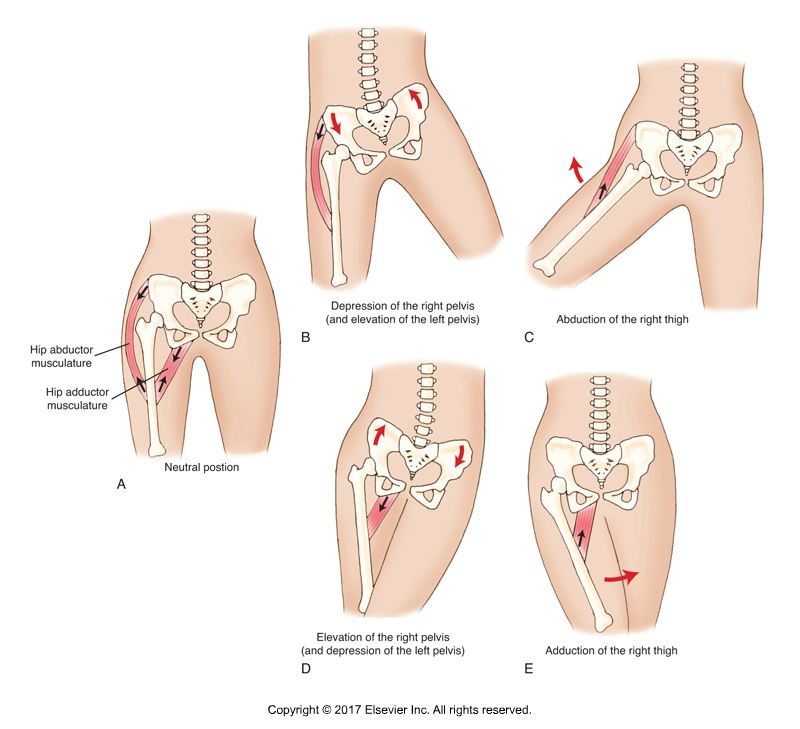
So, if hip abductor group on one side is tighter at baseline tone than the hip adductor group on that side, the pelvis will be pulled into depression on that side, resulting in a lumbar scoliosis that is convex on that side. Similarly, tight opposite-side hip adductor musculature can cause the same scoliotic curve.
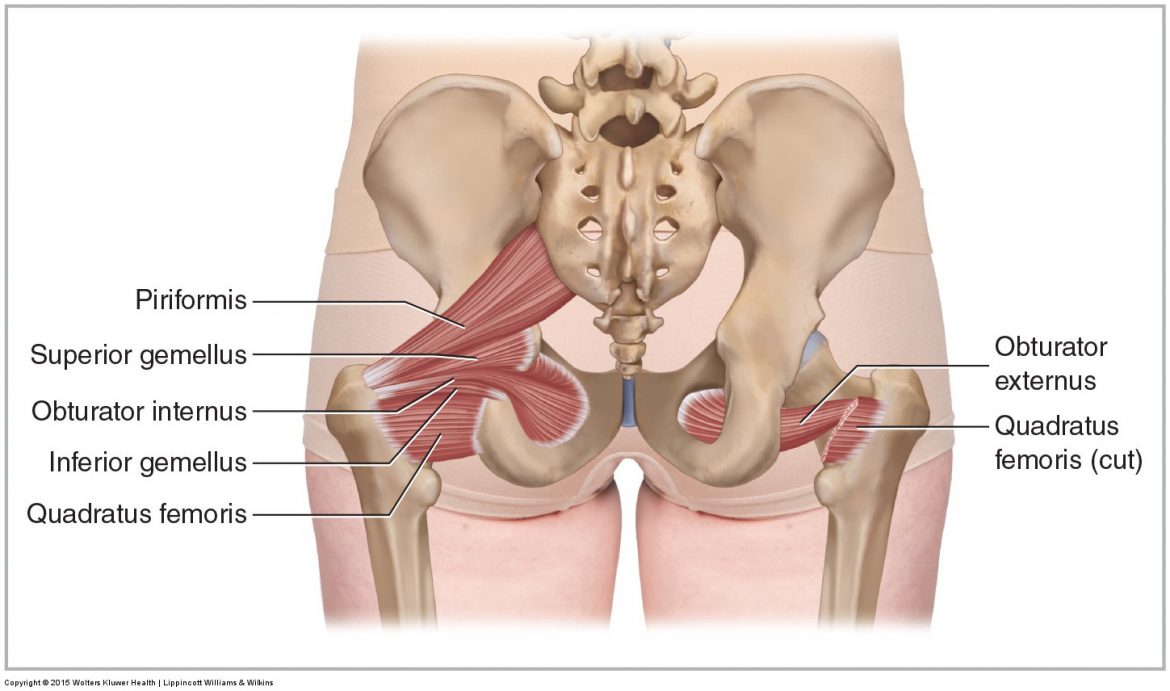
Pelvic musculature: 1. cross the LS joint onto the trunk 2. cross the hip joint onto the thigh/leg 3. pelvic floor muscles located wholly within the pelvis
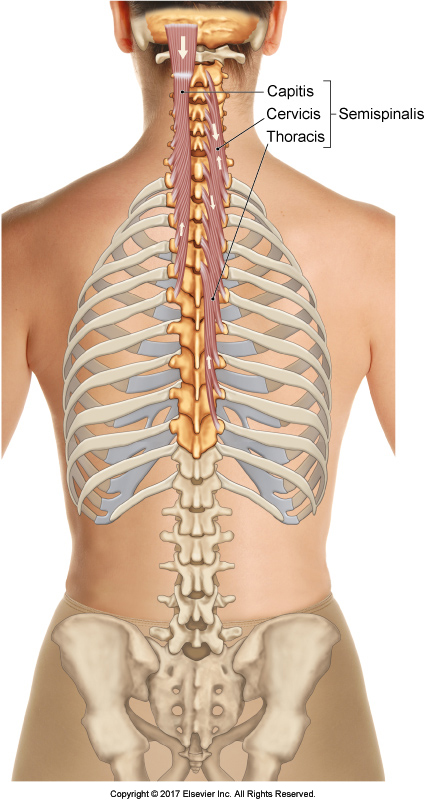
Semispinalis capitis, pectineus, & vastus lateralis are unusual suspect muscles, often overlooked by manual therapists, that can cause pain and dysfunction.
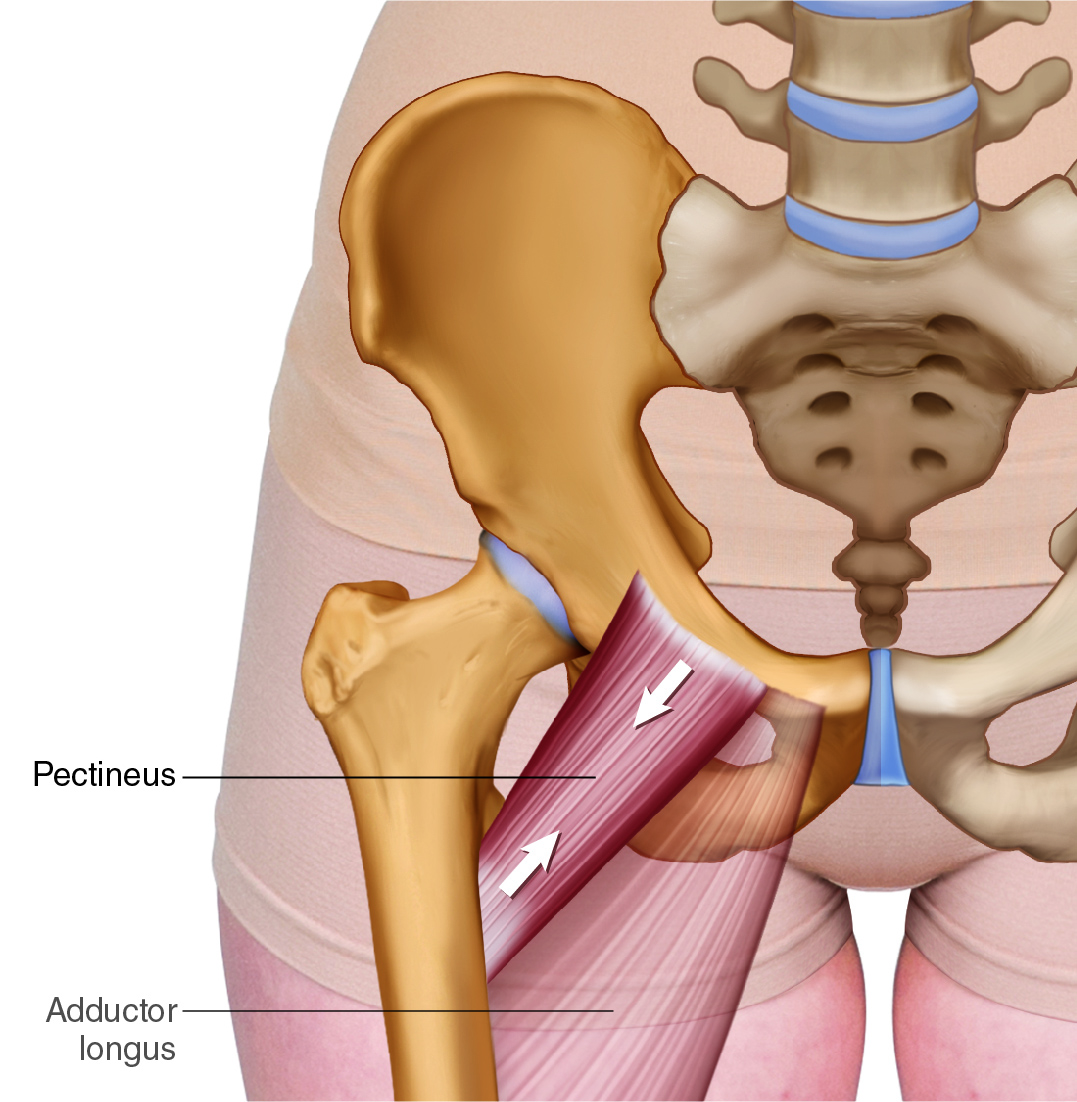
As a hip flexor, the pectineus is an extremely important muscle because of its involvement in the postural distortion pattern known as lower crossed syndrome. Because of the location of the pectineus medially, it is also considered to be part of the adductor group. As such, the pectineus is an excellent example of a transition muscle, being located within two functional groups.
Sometimes it is an unusual suspect, a less well-known muscle, that is the underlying cause of our client’s pain and dysfunction pattern.
