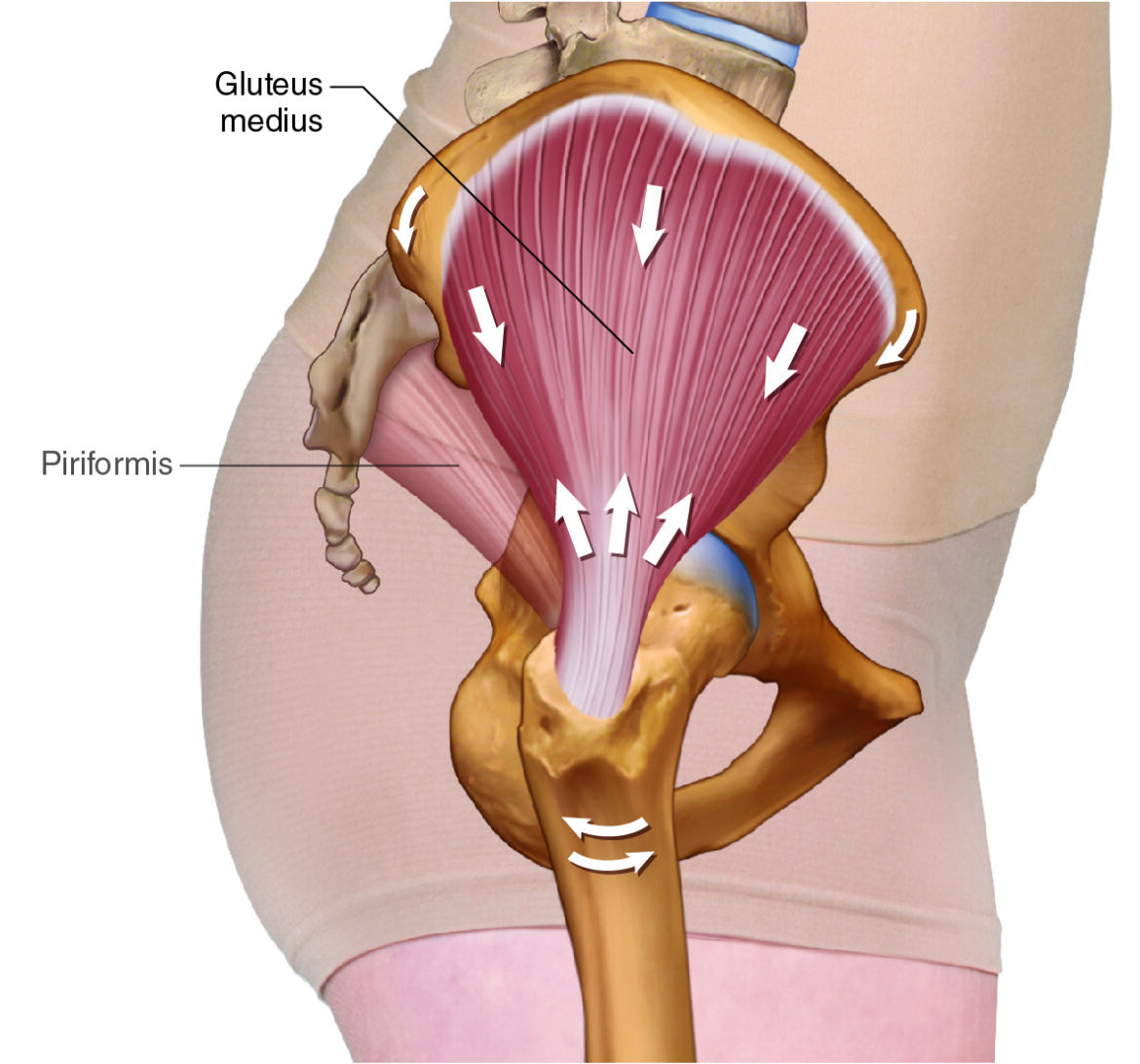
The gluteus medius is an incredibly important muscle. It is functionally important at the hip joint, especially with frontal-plane mechanics. And this can have implications with dysfunctional movement patterns (e.g., Trendelenburg gait) as well as postural distortion patterns of scoliosis. And just as fascinating is to see the relationship between glute medius structure and function at the hip joint and compare it to the structure and function of the deltoid at the shoulder joint. Indeed, the gluteus medius can be described as the deltoid of the hip.
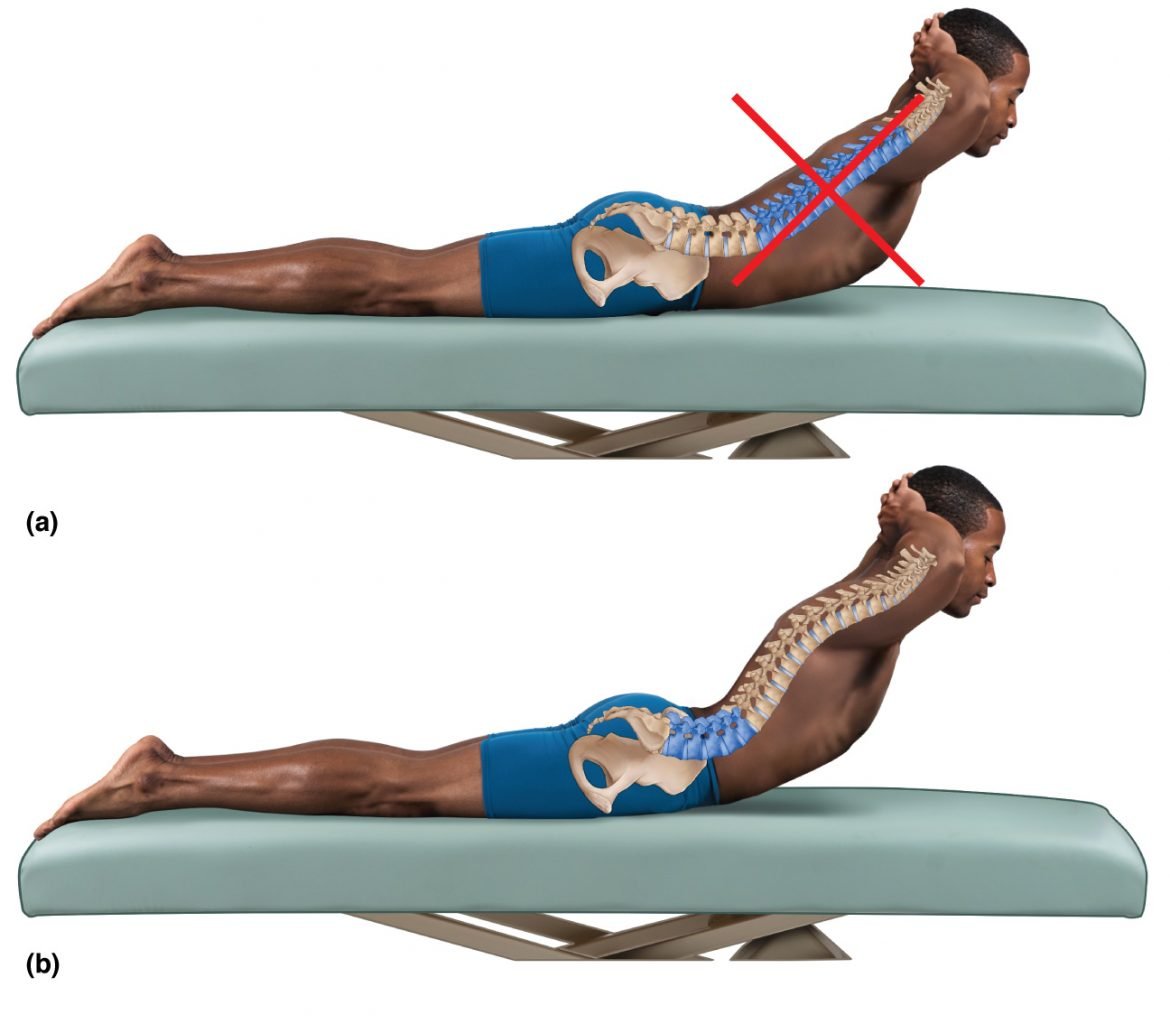
Stretching and Strengthening the Spinal Curves
The spine is an incredible structure, with both great stability but also tremendous mobility in all three cardinal planes.
Brief Review of Assessment and Treatment of Low Back Conditions
The following is a brief overview that links the low back condition with its corresponding assessment procedure and its corresponding treatment.
Scoliosis
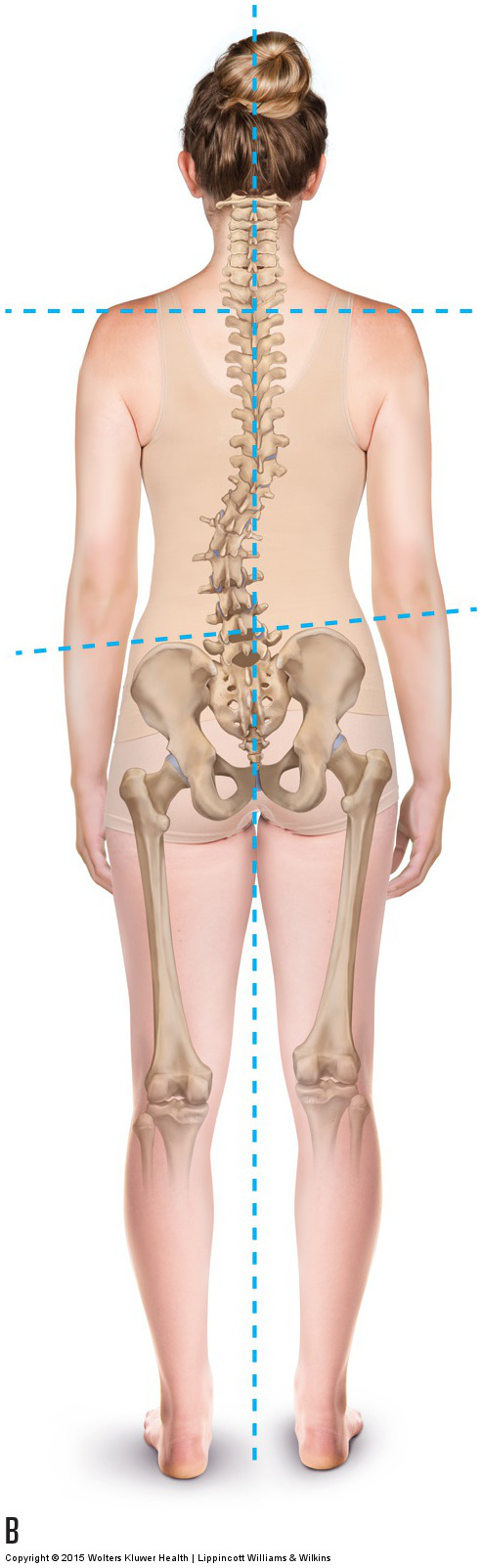
Scoliosis is a lateral flexion deformity of the spine. The spine should have curves in the sagittal plane, but a frontal plane curve is a scoliosis.
How to Keep Chronic Back Pain from Worsening
All it takes is adopting evidence-based approaches that include effective and risk-free pain management, guaranteed to provide long-term relief.
How Can Tight Muscles of the Hip Joint Cause a Scoliosis?
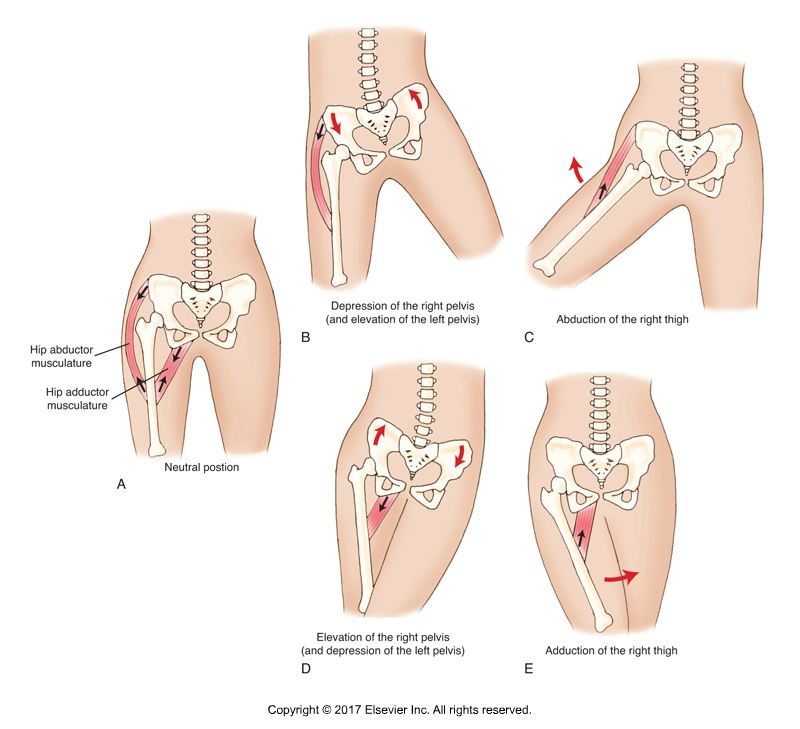
So, if hip abductor group on one side is tighter at baseline tone than the hip adductor group on that side, the pelvis will be pulled into depression on that side, resulting in a lumbar scoliosis that is convex on that side. Similarly, tight opposite-side hip adductor musculature can cause the same scoliotic curve.