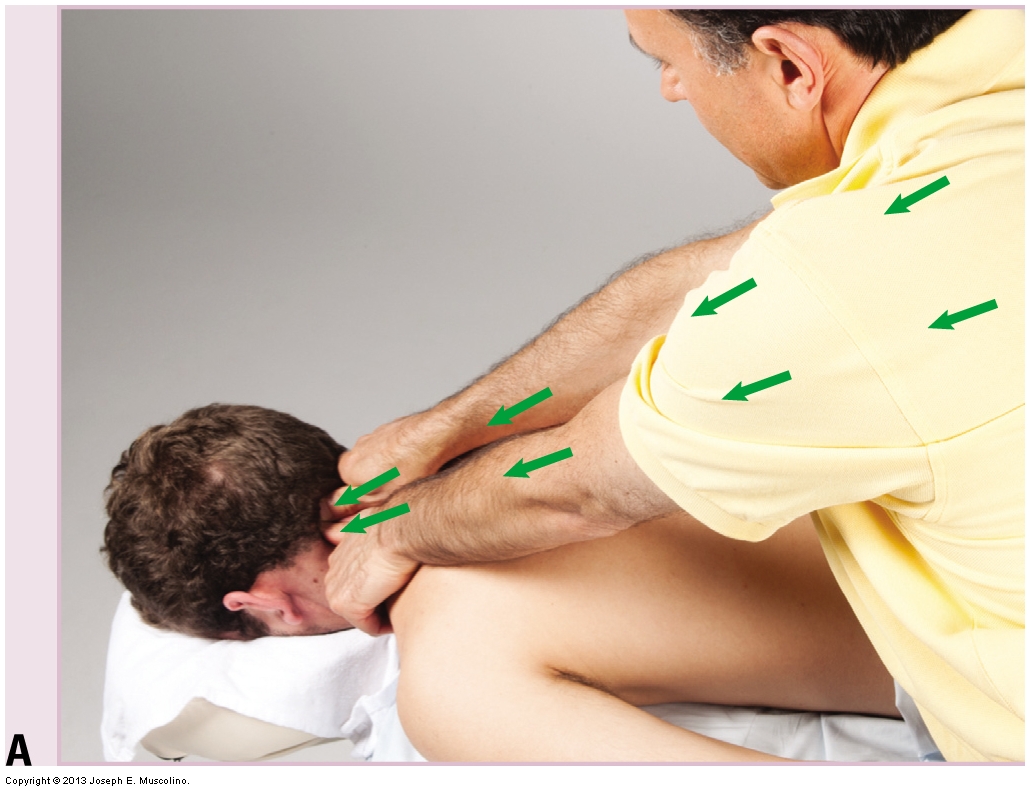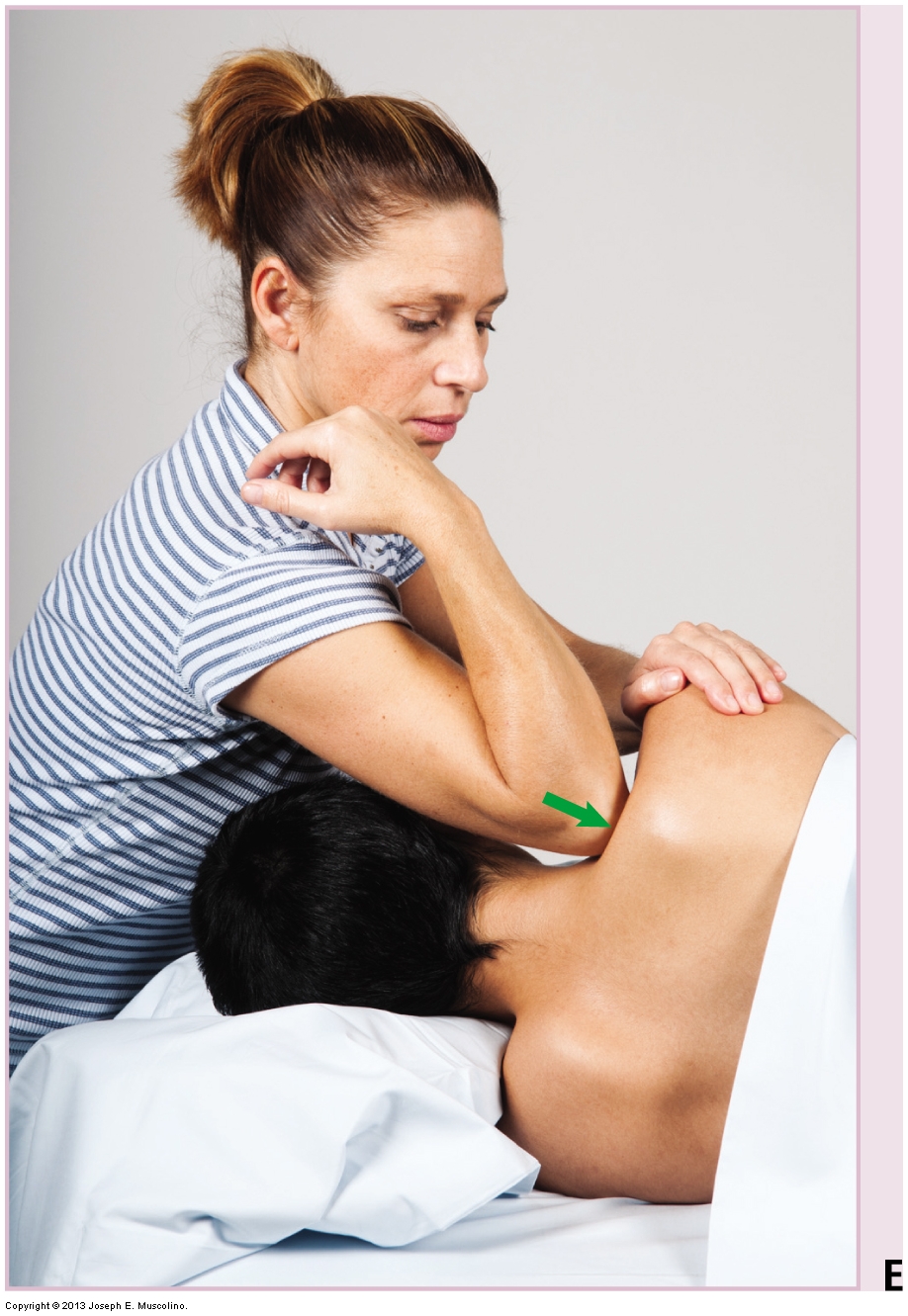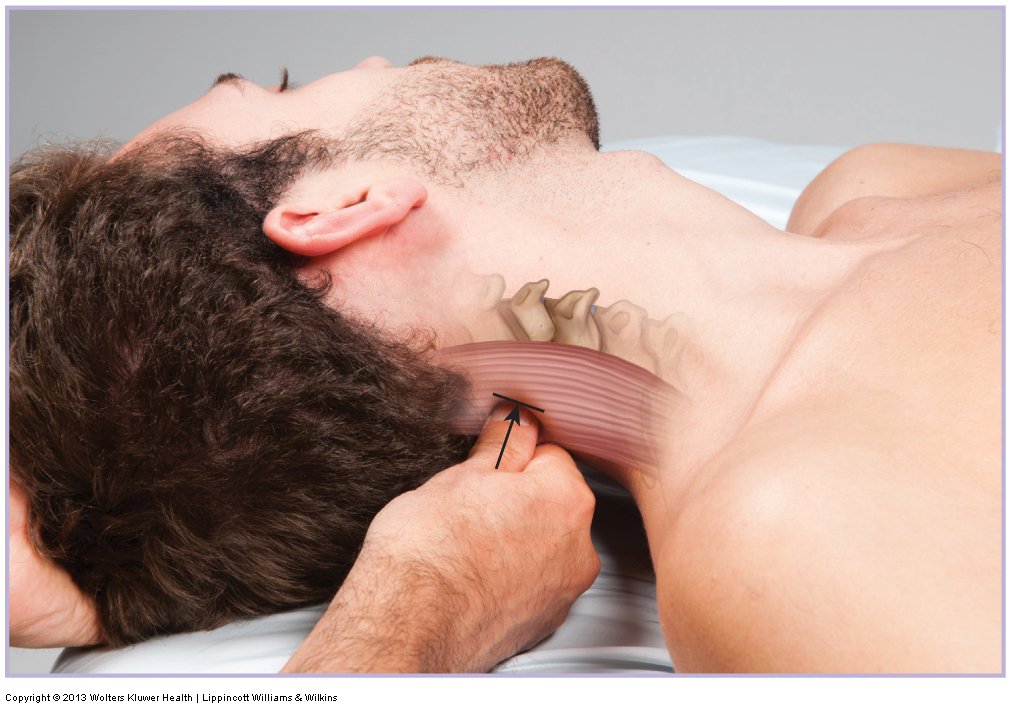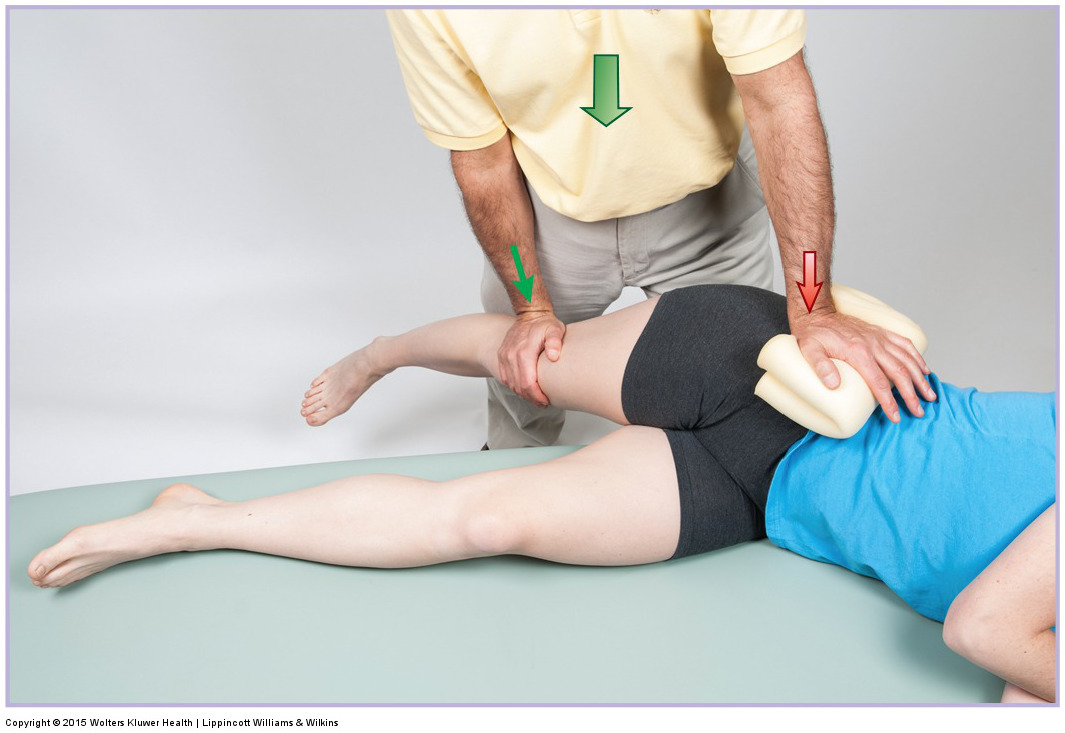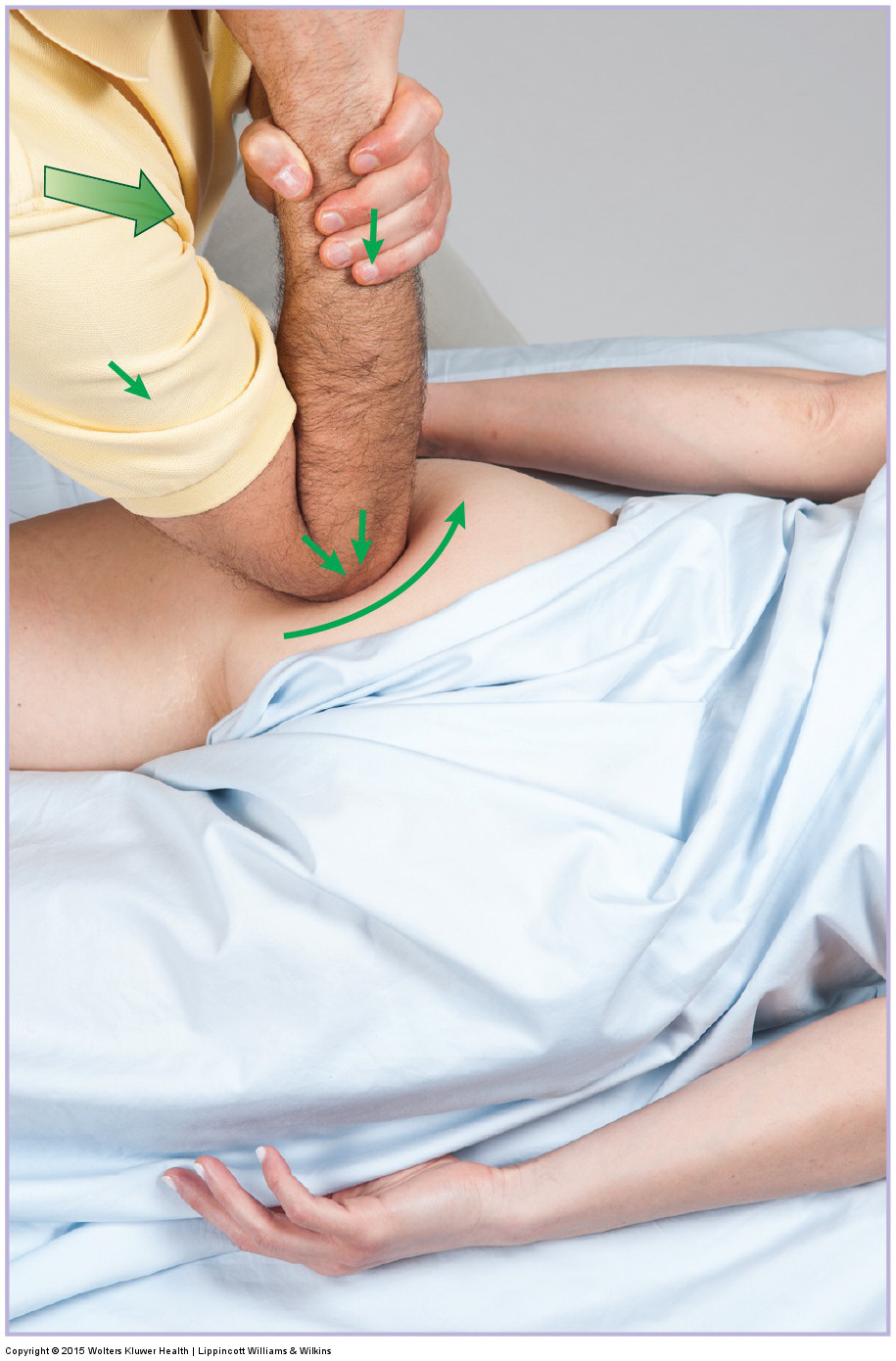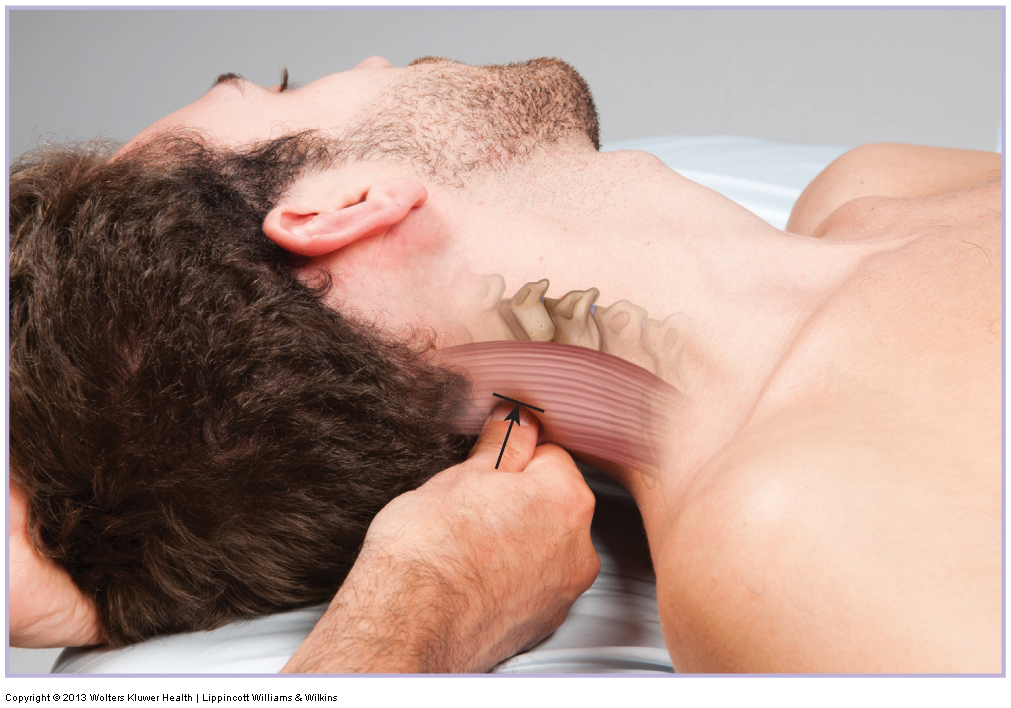
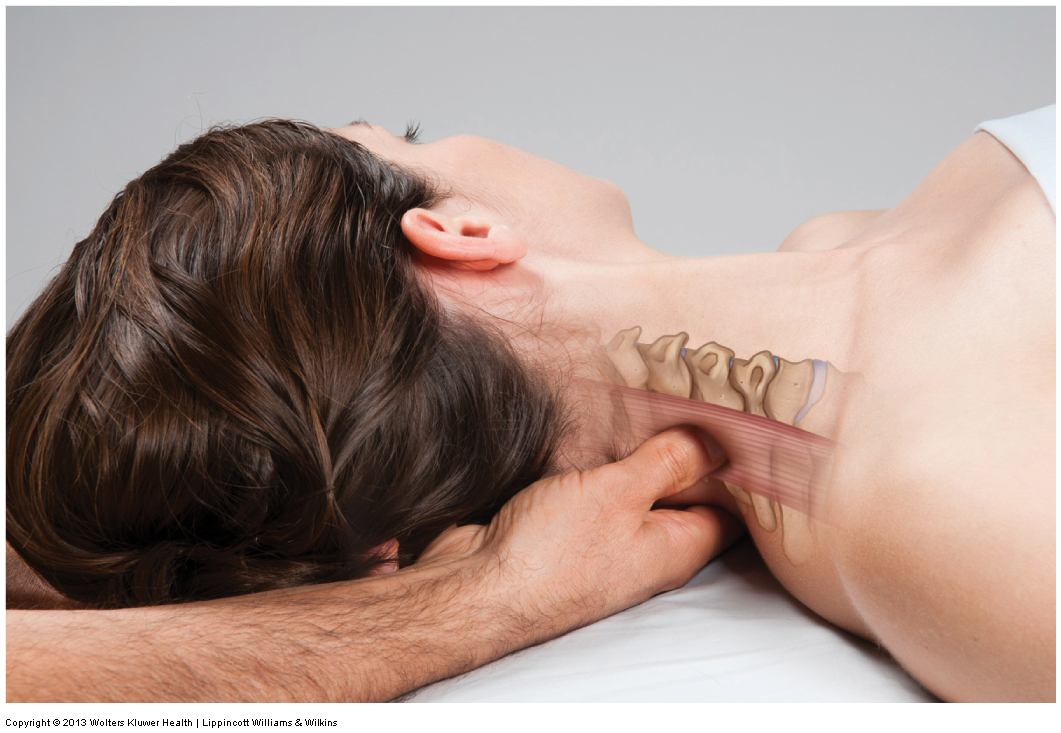
The science of performing deep tissue work to the neck follows the laws of physics and, whenever possible, involves the use of body weight and the contraction of larger muscles instead of smaller ones. The art of performing deep tissue work lies in exactly how these guidelines are carried out and applied.
Neck Deep Pressure Massage: Using Bodyweight and Muscular Effort
We can take advantage of our body weight to generate deep pressure massage into the client’s tissues by simply leaning into the client. Pressure derived this way is effectively free because it takes no effort on our part. For this reason, it should be used whenever possible.
Neck Deep Pressure Massage: Step by Step – Prone and Side-Lying
Side-lying position for deep pressure massage into the neck can be very effective and can allow for effective longitudinal as well as transverse cross-fiber strokes; however, it is important to avoid exerting deep pressure too far anteriorly onto the transverse processes of the client’s neck.
What Makes Kenyan Distance Runners the World’s Best?
Running economy for distance runners is a complex multi-factorial measure of running efficiency, which reflects the combined functioning of biomechanical, neuromuscular, metabolic, and cardio-respiratory factors, some of which are hereditary and some of which adapt to coaching.
Introduction to Deep Pressure Massage Technique for the Neck
Force for deep pressure can be generated in two ways: externally or internally. The external generation of force comes from the force of gravity by using our body weight. The internal generation of force comes from the contraction of our muscles.
Marjorie Brook – Proactive Ways to Prevent Postoperative Adhesion Formation
Gentle appropriate movement helps to prevent excessive scar tissue and keep scar tissue from limiting future movement.
Preventing Aching Muscles and Toxin Exposure This Holiday Season
Pulmonary fibrosis and mesothelioma cancer are just two examples of disease that can occur as a result of environmental or occupational toxin exposure.
The Price of Smart Phones – Ten Conditions Caused by Smart Phone Use
Following are ten of the most common dysfunctional postural patterns and injuries that may occur with smart phone (cell/mobile phone) use.
FREE DCOMT video – The Shoulder Corset
The shoulder girdle is probably better described as a shoulder corset. This Digital COMT by Dr. Joe Muscolino video describes why.
FREE DCOMT video – Stretching the Rectus Femoris Hip Flexor
Stretching all hip flexors, including the rectus femoris of the quadriceps group, is extremely important for clients with lower crossed syndrome.
Lumbar Spine Joint Dysfunction
The two most common causes of a hypomobile joint dysfunction are tight muscles, especially smaller, deeper intrinsic muscles, and fibrous adhesions.
Myofascial Trigger Points (Muscle Knots)
The four most common causes of a myofascial trigger point are: overuse of the muscle, chronic stretch, prolonged immobility, and trauma to the muscle.
Hypertonic / Tight Muscles of the Low Back and Pelvis
Four of the most common causes of tight muscles of the low back (or anywhere in the body) are: overuse, splinting, adaptive shortening, and overstretching.
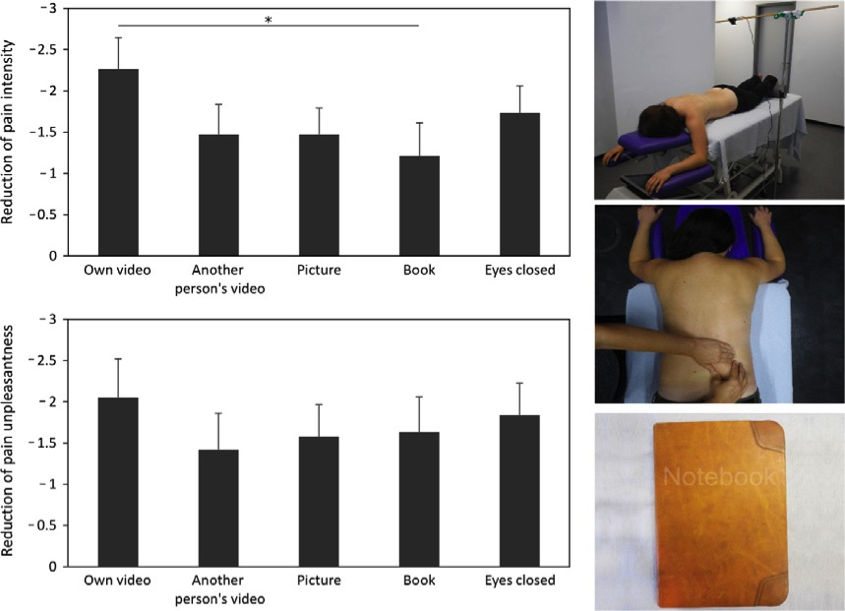
Watching your back being massaged improves outcomes
A study from Germany investigated whether watching one’s back during massage increases the analgesic effect of this treatment for lower back pain patients.
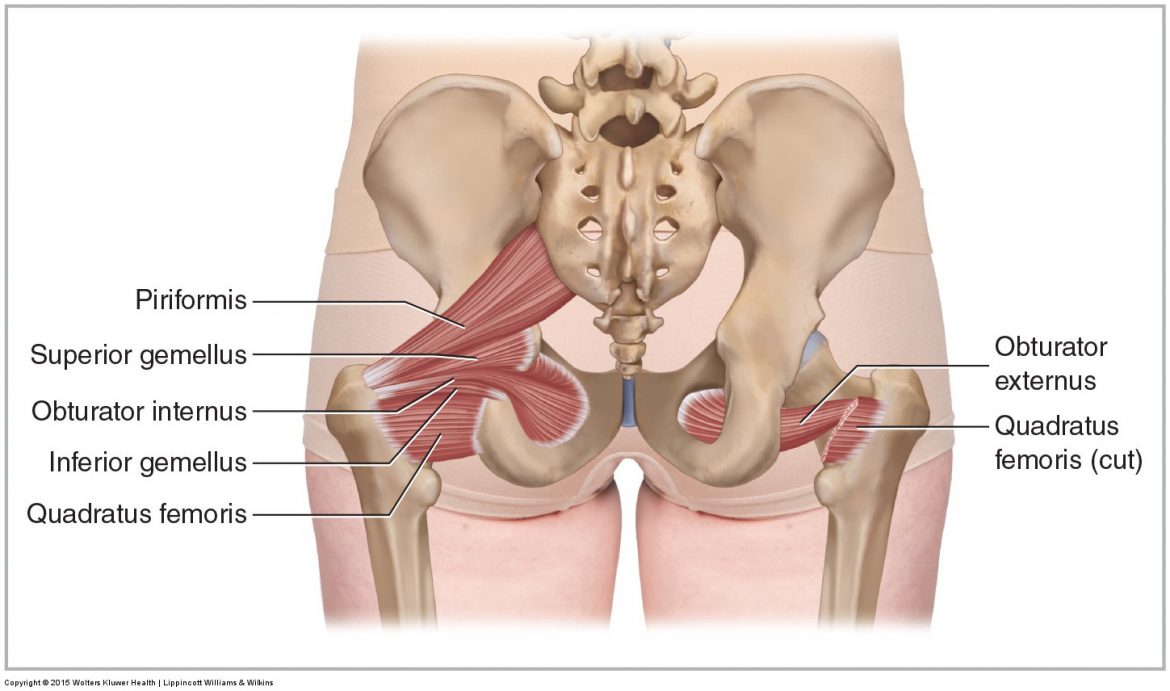
Muscles of the Pelvis
Pelvic musculature: 1. cross the LS joint onto the trunk 2. cross the hip joint onto the thigh/leg 3. pelvic floor muscles located wholly within the pelvis
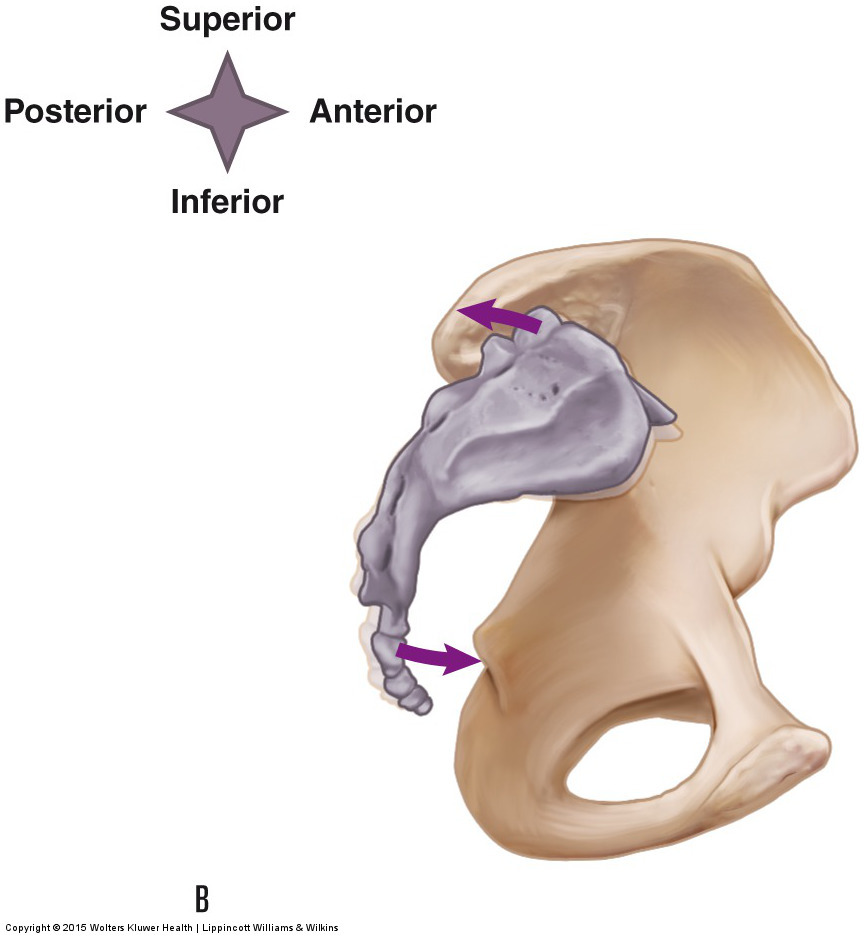
Motions of the Joints of the Pelvis (sacroiliac joints)
Motions of the Joints of the Pelvis This blog post article is an overview of the motions of the joints of the pelvis: the paired left and right sacroiliac joints and the symphysis pubis joint. For more complete coverage of …
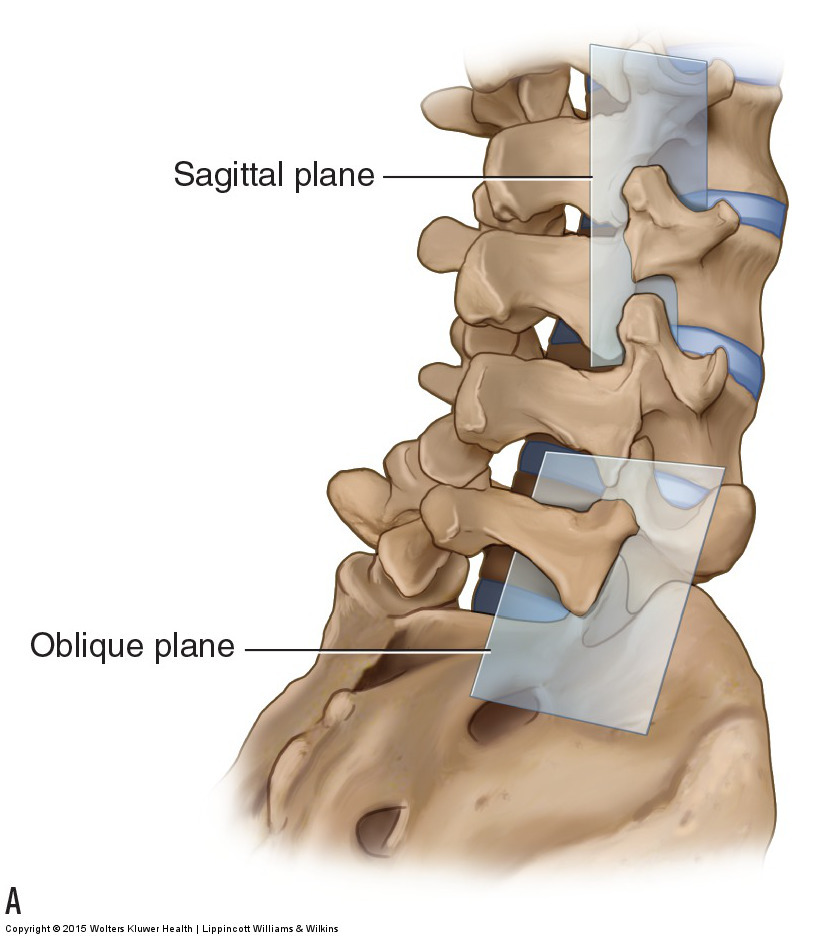
Joints of the Lumbar Spine (disc & facet) and Pelvis
In the lumbar spine, three joints are located between each two adjacent vertebrae: one disc joint and two paired (left and right) facet joints.
Bones of the Lumbar Spine and Pelvis
The low back is defined by the lumbar spine, composed of 5 vertebrae, named L1-L5. The pelvis is defined by the bones of the pelvic girdle.
Student Tip for Improving Memory – Memory is the residue of thought…
Two main points for improving memory: Memory is the residue of thought. A cue is needed to recall something that has been successfully committed to memory.
What is the “True” Function of the Gluteus Medius?
The major function of the gluteus medius is its “reverse” closed-chain action of pelvic depression at the hip joint to stabilize the pelvis when walking.
Client Communication – How is the pressure?
The most common question from a therapist to the client is: “How is the pressure?” The usual response is “Fine”, whether it is or not.
Massage on Stretch or Massage on Slack? Tips for Therapists & Teachers
Tip for Therapists: Massage on stretch for superficial tissues like the trapezius. Massage on slack for deeper tissues like the suboccipitals.
Thinking Fast Makes you Happier! – Tip for Teachers and Students
People become happier when they think fast. It does not matter what was, the simple act of generating thoughts quickly made the participants happier.
FREE DCOMT video – One Handed Towel Traction for the Neck with Shoulder Girdle Stabilization
Neck traction performed with a towel, along with stabilization of the shoulder girdle, thereby increasing the strength of the traction force.
What is Muscle Memory?
Muscle memory describes the concept that musculature contracts in patterns for both posture and motion, and these patterns reside in the nervous system.
Psoas Major Function: References
This blog post contains the cited research references for the eleven-part blog post series on Psoas Major Function that is found on Learnmuscles.com.
Psoas Major Function: Summary of Psoas Major Function
Looking at the psoas major from a biomechanical perspective might be the key to understanding this elusive and controversial muscle.
Psoas Major Function: Psoas Major and Fascial Pulls
The psoas major’s has extensive fascial connections. The psoas major is part of the deep front line myofascial meridian (anatomy train).
Psoas Major Function: Psoas Major and the Sacroiliac Joint
The psoas major crosses the hip and spinal joints. However, it is often overlooked that the psoas major also crosses the sacroiliac joint.
Psoas Major Function: Stabilization of the Spine by the Psoas Major
A healthy joint is both mobile and stable. However, some sources are concerned about the psoas major’s compression/stabilization effect upon the spine.